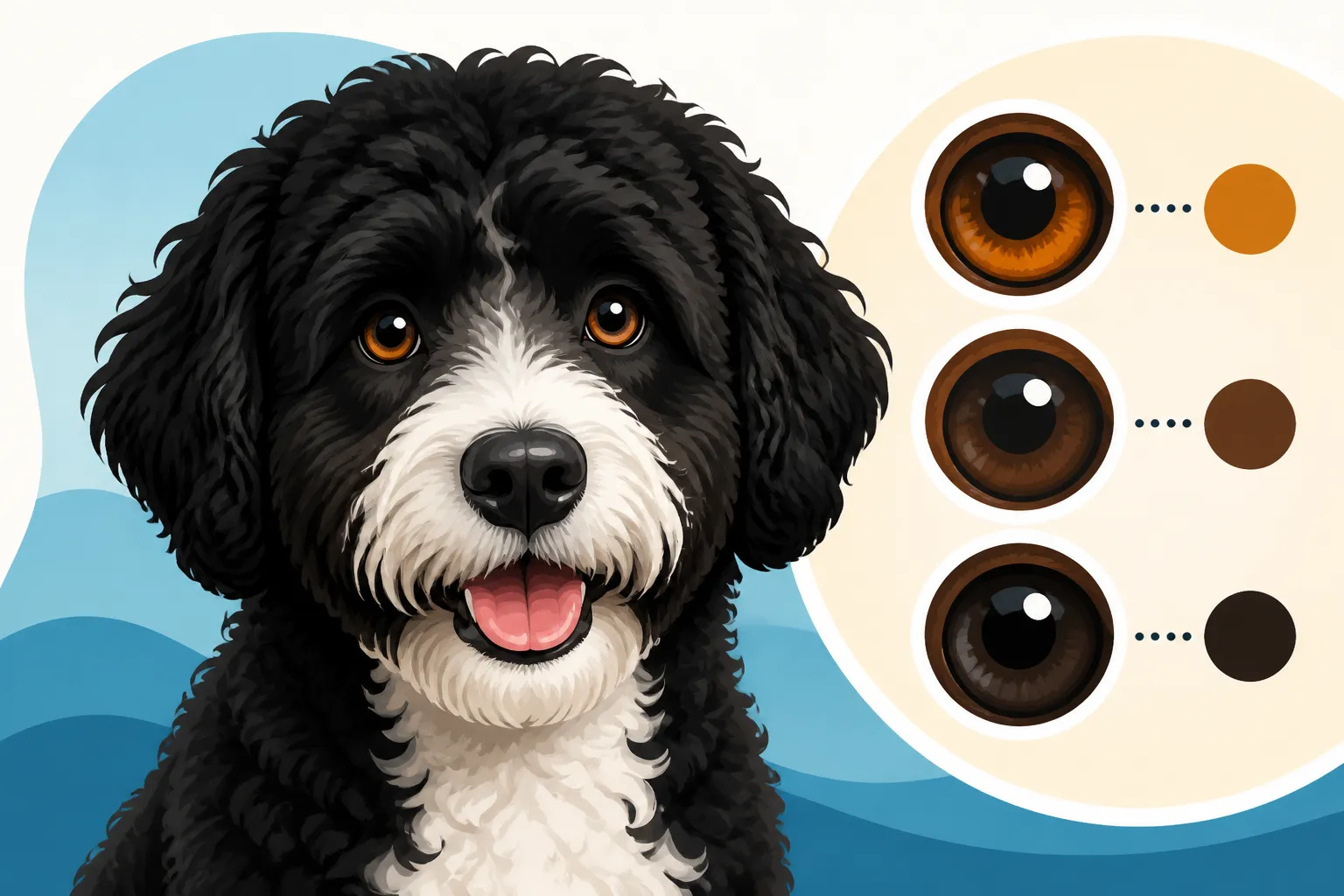
What Color a Portuguese Water Dog’s Eyes Should Be
A Portuguese Water Dog’s eyes should usually be black or some shade of brown, but the right color can look different depending on the dog’s coat and natural pigmentation. If you are comparing a puppy with the breed standard—or noticing a change in an adult dog’s eyes—this guide explains what is typical, what deserves a closer look, and when to call your veterinarian.
The eye colors expected in a Portuguese Water Dog
Black and brown are the standard colors
The Portuguese Water Dog breed standard describes the eyes as medium-sized, set well apart, and slightly oblique. They should be neither prominent nor sunken, and their color should be black or a shade of brown. A healthy dog’s eyes may look quite dark in one room and lighter in bright daylight, so lighting can make brown eyes appear almost black—or make a deep brown more apparent.
Brown does not mean one exact shade. A Portuguese Water Dog may have dark chocolate-brown eyes or a lighter, warmer brown. The important distinction is that brown eyes should still look naturally pigmented and clear. Bright yellow, green, or distinctly blue eyes are not the expected adult eye colors in the breed standard.
A dog’s coat color can influence how its eyes and eye rims appear, but it does not create a simple rule that every coat color must match one precise eye shade. For more on the breed’s appearance, see Curly or Wavy, Black or Brown: What a Portuguese Water Dog Looks Like and Which Colors a Portuguese Water Dog Comes In.
Eye rims are a separate part of the picture
It helps to distinguish the colored part of the eye from the skin or pigment around it. The breed standard describes the eye rims as black in black, white, and black-and-white dogs. In brown Portuguese Water Dogs, the rims may be various shades of brown. These details are about pigmentation around the eye; they do not mean the iris itself has to be the same color as the coat.
A brown dog with brown eye rims is not automatically showing an eye problem, and a black dog’s dark eye rims do not mean its irises must be black. Pigment may also be difficult to judge in photographs, especially when a dog has dark fur around the face or the image is taken in shade.
| Feature | What is generally expected |
|---|---|
| Iris color | Black or a shade of brown |
| Eye shape and placement | Medium-sized, set well apart, slightly oblique |
| Eye rims on black, white, or black-and-white dogs | Black |
| Eye rims on brown dogs | Various shades of brown |
| Appearance of a healthy eye | Clear, comfortable, and without persistent redness or discharge |
The standard describes breed type, not a diagnosis. A dog may have an unusual-looking eye and still need a veterinary examination to determine whether there is a health concern. Likewise, an eye color that seems to fit the standard does not rule out an eye disease.
Why a puppy’s eyes may look different
Puppy eye color can develop as the dog grows
Some puppies’ eyes look blue-gray or lighter shortly after they open. Pigment can deepen as a puppy matures, so an early photograph may not show the color the dog will have later. The timing and degree of change can vary between individual puppies. A puppy’s eyes can also appear different from one moment to the next because of sunlight, indoor lighting, and the contrast created by dark facial hair.
Rather than judging a very young puppy from a single image, look at the eyes in natural, indirect light and give development time. If you are choosing a puppy, ask the breeder how old the puppy was when the photographs were taken and whether the eyes have been examined as part of routine veterinary care. Eye color alone is not a substitute for health records or an examination.
For broader appearance details, including coat colors and markings, Which Colors the Portuguese Water Dog Standard Accepts is a useful companion topic. The standard’s description of appearance helps with understanding what is typical, but a breeder or veterinarian should not promise that a particular eye shade predicts the dog’s health or future temperament.
An unusual color is a reason to ask questions, not to panic
If a puppy has one blue-looking eye, two eyes that appear different colors, or an area of unusual pigment, do not try to diagnose the cause from a photograph. Lighting, camera effects, and reflections can make eyes look strikingly different. A veterinarian can inspect the eye itself and determine whether the appearance is simply pigmentation or something that needs attention.
Ask the breeder what they have observed and whether the puppy has had a veterinary check. If you are bringing the puppy home, mention the eye appearance at the first wellness appointment, particularly if it is new, changing, or accompanied by tearing, redness, squinting, or cloudiness. If your veterinarian recommends a specific grooming or care item, confirm that the item is appropriate for use near the eyes before ordering it; Chewy is one place owners may look for recommended pet supplies, but the product choice should come from the veterinary guidance.
Normal variation versus signs of an eye problem
Eye color by itself does not diagnose disease
A Portuguese Water Dog can have dark or light brown eyes without having an eye disorder. Conversely, an eye problem does not always begin with an obvious color change. Changes in vision, discomfort, inflammation, or cloudiness can matter more than whether an iris looks darker than expected.
Watch your dog in everyday situations. Does the dog hesitate on stairs it normally uses confidently? Does it bump into furniture, miss a tossed toy, or seem unusually cautious in dim light? Those behaviors can have many explanations, but if they are new or persistent, discuss them with your veterinarian. Breed-related eye conditions are a separate subject from eye color; Two Kinds of Retinal Atrophy in a Portuguese Water Dog explains why screening and veterinary assessment matter.
A small amount of sleep residue at the inner corners of the eyes can occur in many dogs. Persistent discharge, a sudden difference between the eyes, or a dog that keeps rubbing its face is different. Take note of when the change began, whether one or both eyes are involved, and whether your dog seems uncomfortable. Those details can help your vet decide how promptly the dog should be seen.
Contact a veterinarian promptly for sudden changes
A sudden cloudy or hazy appearance, pronounced redness, swelling, repeated squinting, pawing at an eye, or a visible injury warrants prompt veterinary advice. Eye problems can be painful and may worsen quickly, so do not wait for an eye color change to “settle” if the dog seems distressed. If the eye is held shut or the dog appears to have lost vision suddenly, seek urgent veterinary care.
Avoid using human eye drops, leftover pet medication, or home remedies unless a veterinarian has specifically instructed you to do so. A product that is suitable for one kind of irritation may be inappropriate for another. Even a gentle-looking wipe can be unsuitable for direct contact with the eye. If your veterinarian recommends a cleaning product or other supply, ask how and where it should be used; Chewy may be convenient for sourcing a vet-approved item, but it is not a substitute for an examination.
Routine wellness visits are also a good time to ask about the eyes, especially if you have noticed a gradual change. See How Often a Portuguese Water Dog Needs a Wellness Exam for more on regular checkups, and Whether a Portuguese Water Dog Puppy's Eyes Should Be Checked for questions to raise during puppy care.
How to assess eye color without overinterpreting it
Check the eyes in good light and watch for changes
For a simple at-home observation, look at your dog in soft daylight rather than relying on a flash photograph. Notice the iris color, the color of the rims, and whether both eyes look similar. Do not shine a bright light directly into the eyes or try to hold the eyelids open if your dog resists. A calm, brief look is enough to notice an obvious change; diagnosis belongs to a veterinary professional.
It can be helpful to take a clear photograph if you spot something new. Use the same general lighting when comparing later pictures, because a dark room, bright sunlight, or camera flash can change how the eyes appear. A photo may help you describe a gradual change to your vet, but it cannot show all the details an eye examination can reveal.
If the eyes look clear and comfortable and the color has been stable, there may be no reason to worry simply because one brown eye looks a little lighter than another dog’s. If you are unsure whether a change is new, check older photos and ask the breeder or your veterinarian what they observe.
Keep eye-area grooming gentle
Portuguese Water Dogs have coats that can grow around the face. Hair near the eyes may catch moisture or debris, and long strands can make it harder to see whether the eye is irritated. A groomer can help keep the area tidy, but trimming close to the eye requires care. Do not use scissors near a moving dog’s eye if you are not confident and experienced; ask a professional groomer or your veterinarian for a safe approach.
For regular grooming, ask the groomer to keep hair from obscuring the eyes without changing the dog’s natural appearance more than you want. If your veterinarian or groomer suggests a particular comb or grooming tool, check that it is suitable for use around the face before purchasing it. Chewy is one retailer owners may compare for general grooming supplies, but a tool should never be used in a way that risks touching or scratching the eye.
If the eye area is repeatedly wet, stained, or irritated, mention that pattern at the next appointment rather than assuming it is only a coat issue. Your veterinarian can check for underlying causes and advise whether any cleaning or grooming changes are appropriate. Information about the breed’s broader appearance and coat is available in Whether a Portuguese Water Dog's Coat Type Is Judged Against Color.
A Portuguese Water Dog’s expected adult eye color is black or a shade of brown, with eye-rim pigmentation that can vary with coat color. A puppy’s eyes may look lighter before pigment develops, and lighting can make adult eyes seem different from one photo to another. Focus on whether the eyes are clear, comfortable, and stable; sudden changes or signs of pain deserve veterinary attention.
Disclaimer
This article is for general informational purposes only and does not constitute professional advice. Laws, prices and regulations vary by location and change over time. Consult a qualified professional for guidance on your specific situation.