How a Portuguese Water Dog’s Ears Should Sit
A Portuguese Water Dog’s ears should hang naturally close to the sides of the head, with a heart-shaped outline and tips that do not extend below the lower jaw. Their ears are supposed to be floppy, not upright. This guide explains what normal ear placement looks like, what can affect appearance, and when a change may call for a veterinary check.
What Portuguese Water Dog ears should look like
Shape, placement, and how the ears are carried
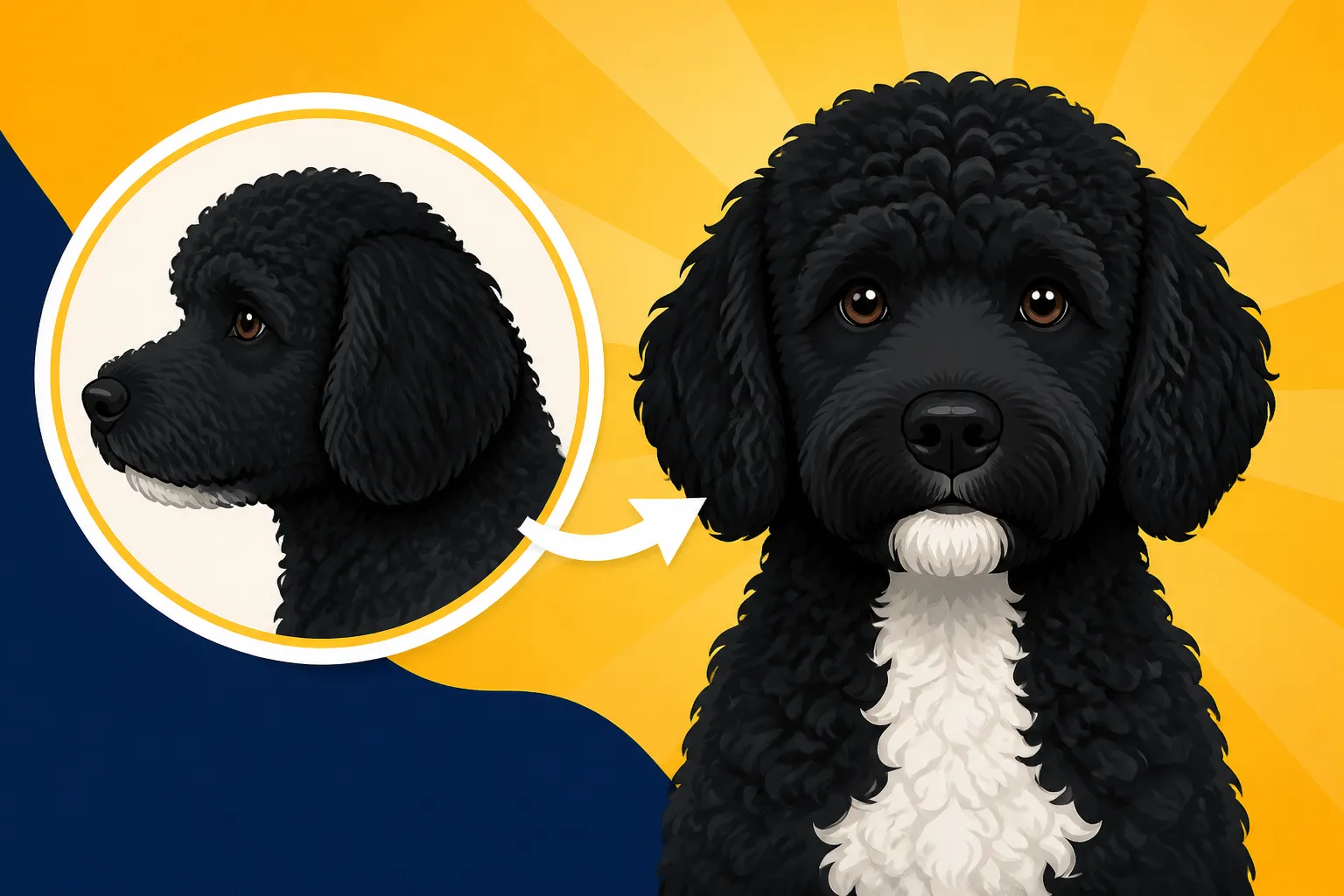
Portuguese Water Dog ears are pendant ears: they hang down rather than standing erect. The breed standard describes them as heart-shaped, with relatively thin ear leather, set high on the head and carried close to it. The tips should not reach below the lower jaw. Those details describe the general breed picture, not a reason to worry over tiny differences in an individual dog.
It helps to separate three things that people often blend together: set means where the ears attach to the head; shape describes their outline; and carriage is how the ears rest or move. A dog may have ears set high but carried loosely when relaxed, or draw them back when excited. Neither momentary change means the ears have changed position permanently.
The ears should look balanced with the head, not like rigid triangles or long, heavy flaps. The Portuguese Water Dog’s ear leather is covered with hair, so a thick coat or a recent trim can change how clearly the outline shows. For more on the breed’s overall proportions, see What a Correct Portuguese Water Dog's Outline Looks Like.
Why floppy ears are normal for the breed
An upright ear is not the goal for a Portuguese Water Dog. The ears hang naturally and may lift or shift a little when the dog is alert, listening, or moving. If your dog perks one ear slightly while watching a bird, then lets it fall back into place, that is ordinary ear movement—not a sign that the ear is becoming erect.
You may notice that the ears look different in photographs, too. A head turned toward the camera can make one ear appear shorter or higher. Wind, wet hair, grooming, and the dog’s expression all affect the silhouette. Compare your dog’s ears when they are calm and facing forward before deciding that something has changed.
A quick visual guide can help distinguish the breed’s expected appearance from common misunderstandings:
| Feature | Typical appearance | What not to assume |
|---|---|---|
| Ear carriage | Hanging close to the head | Upright ears are not the breed’s expected look |
| Ear set | High on the sides of the head | A slight difference in how the ears rest is not automatically abnormal |
| General outline | Heart-shaped, with relatively thin leather | A heavy coat can make the outline harder to see |
| Ear length | Tips should not extend below the lower jaw | Wet, uncombed hair can make the ears look longer |
| Momentary movement | Ears may lift, turn, or draw back with expression | A brief change in carriage does not mean a permanent change |
Why a Portuguese Water Dog’s ears may look different
Coat length and grooming can change the outline
A Portuguese Water Dog’s hair can make the ears seem larger, smaller, or lower than they are. When the ear coat is long, curls or waves may hang past the edge of the ear leather and create the impression of extra length. After a trim, the ear may look shorter or more defined, even though its underlying shape and attachment have not changed.
Grooming can also make one ear seem uneven. A little extra length on one side, a clump of damp hair, or a parting that falls differently can alter the outline. Before treating an appearance difference as a structural issue, brush the coat gently and look at both ears when the dog is standing naturally. Avoid pulling or cutting hair close to the ear opening just to make the ears match.
If you are uncertain about a trim, ask a groomer familiar with the breed to show you how the coat is being shaped around the ears. The aim is a tidy, comfortable coat—not a dramatic change to the dog’s natural ear carriage. If you are also learning the routine health checks that matter for this breed, How Often a Portuguese Water Dog's Ears Need Checking is a useful related topic.
Puppies and individual variation
A puppy’s head and coat change as the dog grows, so its ears may not look exactly like an adult’s. Hair length, developing proportions, and the puppy’s expressions can all make the ears look different from one week to the next. A relaxed puppy may let its ears hang evenly; a curious puppy may hold them back or angle them toward a sound.
There is natural variation among individual dogs. One Portuguese Water Dog’s ears may appear more clearly heart-shaped than another’s, while both can still have the expected hanging carriage. A single photograph or a comparison with a show dog is not a reliable way to assess your puppy. Breed standards describe an ideal type, while real dogs can differ in small ways.
If the ears suddenly look swollen, painful, unusually red, or markedly different from their usual appearance, that is a health question rather than a matter of breed type. Sudden changes deserve more attention than a stable difference in shape. When choosing a puppy, you can ask the breeder how the parents’ ears look and how they manage routine ear care, but a veterinarian is the right person to assess a medical concern.
Ear appearance and ear health are different questions
When an unusual look may signal discomfort
A floppy ear by itself does not mean an ear is unhealthy. Pay attention instead to changes in the skin and to your dog’s behavior. Repeated head shaking, persistent scratching, sensitivity when you touch the ear, a strong odor, redness, discharge, or swelling can point to irritation or infection. These signs are more meaningful than whether the ears look perfectly even.
Some dogs briefly shake their heads after swimming or waking up. That is different from frequent shaking that continues, returns repeatedly, or comes with rubbing and discomfort. If your dog yelps, guards its head, or seems off balance, contact a veterinarian promptly rather than trying to clean deep inside the ear.
Ear infections can have different causes, and the right treatment depends on what is going on. Avoid using leftover medication, household oils, or cotton swabs down the canal. A vet can examine the ear and recommend an appropriate plan. For more detail on warning signs and prevention, see Signs a Portuguese Water Dog's Ear Is Infected and Whether a Portuguese Water Dog Gets Ear Infections.
Swim days and routine checks
Portuguese Water Dogs often enjoy water, but swimming can leave moisture and debris around the ears. After a swim, gently dry the outside of each ear with a clean towel and check for visible grit or tangles. Keep the dog comfortable and do not force a finger, towel, or tool into the ear canal. If your dog has a history of ear trouble, ask your veterinarian whether a particular drying or cleaning routine is suitable.
For routine cleaning, use only a product recommended for your dog by a veterinary professional and follow its directions. Products sold by retailers such as Chewy may include ear cleaners, but a product being available for purchase does not mean it is right for every dog or every ear problem. If the ear is painful, very red, or producing discharge, arrange a veterinary assessment before putting cleaner in it.
A weekly visual check can be simple: lift the ear gently, look at the visible skin, notice any odor or debris, and compare with what is normal for your dog. You do not need to clean healthy ears on a rigid schedule unless your veterinarian advises it. If you are unsure what product to use, ask your clinic first; Chewy or a local pet supplier can be a place to obtain a vet-approved product once you know what you need. For more guidance, read What to Clean a Portuguese Water Dog's Ears With and Why a Portuguese Water Dog's Ear Canal Traps Water.
How to assess your dog’s ears without overreacting
A calm, practical at-home check
Choose a moment when your dog is settled, rather than trying to inspect the ears during a game or right after a bath. Look at the dog from the front and side, with the head in a natural position. Check whether both ears hang close to the head and whether their outline seems broadly balanced. Remember that the coat can disguise the ear’s true edge.
Then look at the visible parts of the ears for redness, swelling, unusual debris, or irritation. Notice whether your dog pulls away, flinches, or seems uncomfortable when you touch the outer ear. A dog that resists handling may simply need gradual, reward-based practice; however, a sudden reluctance to let you touch an ear can indicate pain.
If you want to keep track of a change, take a clear photo in similar lighting and from the same angle a few days apart. This is more useful than comparing a wet, freshly groomed ear with a dry, shaggy one. A picture can help you explain what you have noticed to your veterinarian, but it cannot replace an examination if symptoms are present.
When to contact a veterinarian
Arrange a veterinary check if you see persistent redness, swelling, discharge, a strong odor, repeated head shaking, ongoing scratching, or pain when the ear is handled. Sudden changes in balance or other signs that your dog is unwell also need prompt professional attention. Do not wait for an ear to look dramatically abnormal if your dog is clearly uncomfortable.
For a stable difference in ear length or shape without pain or skin changes, start by checking the coat and asking a breed-aware groomer or your veterinarian for perspective. The distinction is straightforward: appearance alone is usually about conformation or coat; discomfort and inflammation are reasons to investigate health.
Some owners look for ear-care supplies through Chewy after receiving a specific recommendation, while others use a local veterinary clinic or pet store. Whichever route you choose, match the product to your veterinarian’s instructions rather than selecting one simply because it is labeled for dogs. And if you are concerned about ear hair, avoid removing it automatically; Whether a Portuguese Water Dog's Ear Hair Should Be Removed covers why that decision should be individualized.
Disclaimer
This article is for general informational purposes only and does not constitute professional advice. Laws, prices and regulations vary by location and change over time. Consult a qualified professional for guidance on your specific situation.