Why a Portuguese Water Dog’s Adrenal Glands Fail
It’s a heartbreaking and often baffling moment for any Portuguese Water Dog owner when you first hear the words "Addison's disease." This condition, where your dog’s adrenal glands unexpectedly fail, can turn your world upside down, leaving you anxious and wondering what led to this diagnosis. You’re not alone in feeling this way; many owners struggle to understand why this happens, especially in a seemingly healthy, vibrant dog. This comprehensive guide will meticulously break down the intricate reasons behind adrenal gland failure in Portuguese Water Dogs, offering clarity and support as you navigate this challenging health journey.
The Adrenal Glands and Their Indispensable Functions
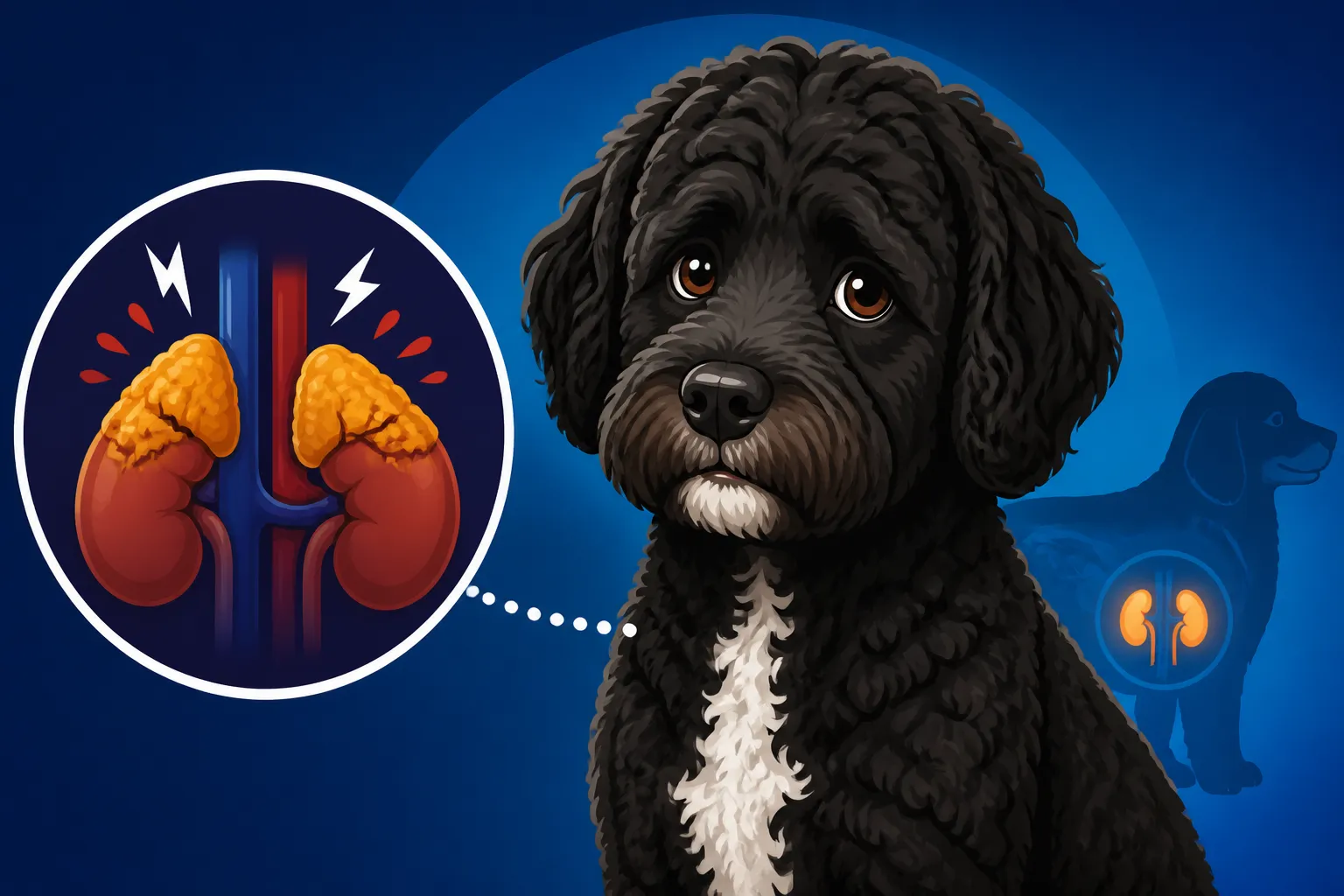
Before we can truly understand why these tiny, yet mighty, glands might fail, it's crucial to grasp what they actually do. Nestled snugly near your Portuguese Water Dog's kidneys, the adrenal glands are small powerhouses responsible for producing a variety of hormones that are absolutely essential for life. Think of them as the control center for many of the body's vital functions, from managing stress to balancing electrolytes. When they falter, the ripple effect throughout the entire system can be profound and devastating.
Anatomy and Hormonal Output
Each adrenal gland is made up of two distinct parts: the outer cortex and the inner medulla. The cortex is where the magic really happens when it comes to Addison's disease. It’s responsible for producing two main types of hormones that are critical for your dog’s well-being.
First up, we have glucocorticoids, with cortisol being the primary one. Cortisol is often dubbed the "stress hormone," but its role extends far beyond just responding to stressful situations. It's vital for regulating metabolism, helping your dog convert fats, proteins, and carbohydrates into energy. It also plays a significant role in suppressing inflammation and modulating the immune system. Without enough cortisol, your dog’s body struggles to handle everyday stressors, and its metabolism can go haywire.
Secondly, the adrenal cortex produces mineralocorticoids, with aldosterone being the star player. Aldosterone is a master regulator of electrolytes, specifically sodium and potassium, and it helps maintain blood pressure. Imagine a delicate balance within your dog’s body, where sodium and potassium levels need to be just right for proper nerve and muscle function, including the heart. Aldosterone ensures this balance. When aldosterone levels drop dramatically, the body loses its ability to regulate these crucial electrolytes, leading to severe and potentially life-threatening imbalances. These imbalances are often what cause the most acute and dangerous symptoms of an Addisonian crisis.
The inner medulla, on the other hand, produces catecholamines like adrenaline and noradrenaline, which are important for the "fight or flight" response, but their failure is generally not associated with Addison's disease. The focus for Addison's is squarely on the cortex and its hormone production.
The Impact of Hormone Deficiency
When the adrenal glands fail to produce these hormones in adequate amounts, your Portuguese Water Dog's body can't function correctly. Cortisol deficiency impacts energy levels, appetite, and the body’s ability to cope with illness or stress. Aldosterone deficiency leads to a dangerous imbalance of electrolytes, causing symptoms like weakness, vomiting, and even collapse. The severity of these deficiencies dictates the type and intensity of symptoms your dog might experience. It’s a cascading effect, where one hormone deficiency leads to a host of systemic problems that can be incredibly challenging to diagnose because they mimic so many other conditions.
Autoimmune Destruction: The Primary Cause of Adrenal Failure
For the vast majority of Portuguese Water Dogs diagnosed with adrenal gland failure, the root cause is primary hypoadrenocorticism, more commonly known as Addison's disease. This isn't just a simple malfunction; it's usually an insidious attack from within, where the dog's own immune system mistakenly identifies its adrenal glands as foreign invaders and systematically destroys them. It's a cruel twist of biology, where the very system designed to protect the body instead turns against one of its most vital organs.
When the Body Turns Against Itself
This autoimmune process is similar to autoimmune diseases seen in humans, such as Type 1 diabetes or Hashimoto’s thyroiditis. In the case of Addison's, the immune system produces antibodies that target and damage the cells in the adrenal cortex responsible for producing cortisol and aldosterone. Over time, as more and more of these cells are destroyed, the glands become incapable of producing sufficient hormones. This destruction often occurs gradually, which is why the early signs of Addison's can be so vague and intermittent, leading to its infamous nickname, "Why Addisons Is Called the Great Pretender in a Portuguese Water Dog". Owners often report their dogs having "off" days, periods of lethargy, or occasional gastrointestinal upset that comes and goes, making diagnosis a real challenge for even the most experienced veterinarians.
The autoimmune destruction is progressive. It's not a sudden event but a slow decline. By the time clinical signs become apparent, a significant portion (often over 90%) of the adrenal cortex tissue may already be non-functional. This is why early detection is so critical, although often incredibly difficult given the non-specific nature of initial symptoms.
Genetic Predisposition in Portuguese Water Dogs
It's no secret that some breeds are more prone to certain health conditions than others, and unfortunately, the Portuguese Water Dog is one of those breeds with a known predisposition to Addison's disease. This isn't just bad luck; it points strongly to a genetic component. While the exact genes responsible haven't been fully mapped out, it's widely accepted that there's a hereditary basis that makes PWDs more susceptible to this autoimmune attack.
Researchers and breeders have observed that Addison's tends to run in certain lines of Portuguese Water Dogs. This suggests that certain genetic markers or combinations of genes increase a dog's risk of developing the disease. It’s not necessarily a simple dominant or recessive gene, but rather a complex inheritance pattern, likely involving multiple genes, which makes it harder to predict and eliminate through breeding. Discussions around "Whether Addisons Runs in Portuguese Water Dog Lines" are frequent within the breed community for this very reason.
Because of this genetic link, responsible breeders often pay close attention to the health history of their breeding stock, looking for any incidence of Addison's in the lineage. While there isn't a definitive "Whether a DNA Test for Portuguese Water Dog Addisons Exists" yet to pinpoint carrier status like there is for some other conditions, careful pedigree research and open communication among breeders are crucial steps in trying to reduce its prevalence. This is a significant concern for the breed, and ongoing research is vital to better understand and combat this genetic vulnerability.
Less Common Forms of Adrenal Gland Failure
While primary autoimmune Addison's disease is the most frequent culprit behind adrenal gland failure in Portuguese Water Dogs, it's worth understanding that there are other, albeit rarer, ways these crucial glands can falter. These distinctions are important because they can influence diagnosis and treatment.
Secondary Addison's Disease
Imagine the adrenal glands as employees and the pituitary gland in the brain as their manager. The pituitary produces a hormone called Adrenocorticotropic Hormone (ACTH), which tells the adrenal glands to produce cortisol. In secondary hypoadrenocorticism, the adrenal glands themselves are perfectly capable of making cortisol, but they aren't getting the memo from the pituitary. This happens when the pituitary gland isn't producing enough ACTH.
The causes for a lack of ACTH can vary. It might be due to a tumor in the pituitary, though this is quite rare. More commonly, it can be a consequence of long-term administration of exogenous corticosteroids (like prednisone) which are then abruptly withdrawn. If your dog has been on steroids for an extended period for conditions like allergies or inflammatory bowel disease, their body stops producing its own cortisol because it's getting it from an external source. If these medications are stopped too quickly, the adrenal glands, which have essentially been on vacation, don't "wake up" fast enough to produce cortisol on their own. This is why veterinarians always recommend tapering off steroid medications very slowly to allow the adrenal glands time to resume their normal function. The symptoms of secondary Addison's are usually related solely to glucocorticoid deficiency, meaning dogs often don't experience the severe electrolyte imbalances seen in primary Addison's, making it a slightly different diagnostic and treatment challenge.
Atypical Addison's and Medication-Induced Issues
A particularly frustrating variant for owners and vets alike is atypical Addison's disease. In this form, the adrenal glands fail to produce enough glucocorticoids (cortisol), but their mineralocorticoid production (aldosterone) remains normal. This means your Portuguese Water Dog might show all the classic signs of Addison's like lethargy, poor appetite, vomiting, and weight loss, but their electrolyte levels (sodium and potassium) will be completely normal. This can throw a real curveball during diagnosis because the normal electrolytes might lead a vet to rule out Addison's too quickly, delaying proper treatment. The "What a Portuguese Water Dog's Yearly Bloodwork Should Cover" often includes these electrolyte checks, so it’s something to keep in mind.
Another cause of adrenal gland suppression can be certain medications. While not strictly "failure," some drugs used to treat other conditions can inadvertently affect adrenal function. For example, drugs used to treat Cushing's disease (the opposite condition, where too much cortisol is produced) work by suppressing adrenal activity. If the dosage is too high or the dog is overly sensitive, these medications can push the dog into an iatrogenic (medication-induced) Addisonian state. This underscores the importance of close monitoring when any powerful medications are prescribed.
The Unique Vulnerability of the Portuguese Water Dog
It's a tough truth that Portuguese Water Dogs, magnificent and energetic as they are, carry a genetic legacy that unfortunately makes them more susceptible to certain health issues, including adrenal gland failure. This isn't a flaw in the breed's character, but a consequence of its history and the way modern breeds have developed.
The Breed's Genetic Bottleneck
Like many purebred dogs, Portuguese Water Dogs experienced a significant "genetic bottleneck" in their history. By the early 20th century, the breed faced near extinction as their traditional working roles on fishing boats diminished. A dedicated group of enthusiasts in Portugal and later in the United States worked tirelessly to save the breed, but this meant rebuilding the population from a very small number of foundation dogs.
While this effort was commendable and successful in preserving the breed, it inevitably led to a reduced genetic diversity. When a breed’s gene pool is small, any genetic predispositions to disease present in those foundational dogs can become more concentrated and widespread throughout the subsequent generations. This phenomenon is why "Addisons Disease Is Common in Portuguese Water Dogs". If a founding dog carried genes that made it more susceptible to autoimmune diseases, those genes would then be passed down, increasing the likelihood of conditions like Addison's appearing in the breed today. This is a common challenge across many breeds that have faced similar near-extinction events.
The Autoimmune Connection in PWDs
The heightened prevalence of Addison's in Portuguese Water Dogs strongly suggests a strong hereditary component, likely involving genes that regulate the immune system. We know that autoimmune diseases are not usually caused by a single gene, but rather a complex interplay of multiple genes, often combined with environmental triggers. In PWDs, there appears to be an inherent genetic tendency for the immune system to misfire and attack the adrenal glands.
This genetic vulnerability is a primary reason why "What Addisons Disease Does to a Portuguese Water Dog" is such a pertinent concern for owners of this breed. It’s not just about a dog being unlucky; it’s about a breed-specific tendency that requires vigilance and proactive management. For instance, the "The Age Addisons Appears in a Portuguese Water Dog" can vary, but it's often seen in young to middle-aged dogs, sometimes catching owners completely off guard when their seemingly healthy companion starts showing subtle, confusing symptoms.
Managing a PWD with Addison's disease is a lifelong commitment, and understanding the financial implications is critical. "Treating Addisons for the Rest of a Portuguese Water Dog's Life" involves regular medication and veterinary check-ups. This is where pet insurance can be a real lifeline. Companies like Healthy Paws offer comprehensive plans that can help alleviate the burden of ongoing treatment costs, ensuring your beloved PWD gets the care they need without you having to worry endlessly about the bills.
Diagnosing Adrenal Gland Failure
Diagnosing Addison’s disease in Portuguese Water Dogs can be tricky, precisely because its early signs are so non-specific. Often, owners notice a gradual decline in their dog's energy, intermittent vomiting or diarrhea, decreased appetite, or unexplained weight loss. These are all symptoms that could point to a myriad of other less serious conditions, making Addison's a master of disguise.
The Challenge of Early Detection
Because the symptoms are so vague, it’s easy for both owners and even veterinarians to initially overlook Addison's. Your dog might have a few "off" days, then seem to bounce back, only for the symptoms to return a few weeks later. This waxing and waning nature of the illness often delays diagnosis until an Addisonian crisis occurs. A crisis is an acute, life-threatening emergency where your dog might suddenly collapse, have severe vomiting, diarrhea, or go into shock. This is often the point where the disease is finally confirmed.
When Addison's is suspected, the definitive diagnostic test is the ACTH stimulation test. This test involves measuring your dog’s cortisol levels before and after administering synthetic ACTH. A dog with Addison’s will show little to no increase in cortisol production, confirming the adrenal glands' inability to respond. This test, along with baseline bloodwork that checks electrolytes (sodium and potassium), can provide a clear picture. For instance, low sodium and high potassium are strong indicators of primary Addison's.
Long-Term Management and Support
Once diagnosed, Addison’s disease is highly manageable with lifelong medication. Most dogs receive a daily oral corticosteroid replacement (like prednisone) and a mineralocorticoid replacement, usually in the form of a monthly injection (Percorten-V or Zycortal). These medications effectively replace the hormones the adrenal glands can no longer produce, allowing your Portuguese Water Dog to live a full, normal life. It’s truly remarkable how quickly dogs can rebound once they are on the correct medication.
Regular veterinary check-ups and bloodwork are crucial to monitor your dog’s response to medication and adjust dosages as needed. This ongoing care, while essential, does come with a cost, which is why considering options like pet insurance from providers like Healthy Paws can be incredibly beneficial. They can help cover a significant portion of the expenses related to lifelong conditions like Addison's, offering peace of mind. Knowing "How a Portuguese Water Dog With Addisons Is Treated" and the costs involved is a vital part of responsible ownership. The overall "What a Portuguese Water Dog Costs Over Its Lifetime" can be significantly impacted by chronic conditions, so planning ahead is wise.
| Hormone Type | Key Hormone | Primary Function | Impact of Deficiency in Addison's |
|---|---|---|---|
| Glucocorticoids | Cortisol | Stress response, metabolism, inflammation, immune modulation | Lethargy, poor appetite, vomiting, weakness, inability to cope with stress |
| Mineralocorticoids | Aldosterone | Electrolyte balance (Sodium/Potassium), blood pressure | Dehydration, low blood pressure, dangerous electrolyte imbalances (high potassium, low sodium), heart issues, collapse |
This table highlights the dual nature of primary Addison’s disease, affecting both glucocorticoid and mineralocorticoid production, leading to a complex array of symptoms. For atypical Addison's, only cortisol is deficient, while aldosterone levels remain normal.
Caring for a Portuguese Water Dog with adrenal gland failure is a journey, but with understanding, diligent veterinary care, and the right support systems (like insurance from Healthy Paws), your companion can continue to thrive. Don't hesitate to reach out to your vet at the first sign of any concerning symptoms, as early intervention can make all the difference.
Disclaimer
The information provided in this guide is intended for educational purposes only and should not be considered a substitute for professional veterinary advice. Always consult with a qualified veterinarian for any health concerns or before making any decisions about your Portuguese Water Dog's care and treatment.