Which Registry Holds Portuguese Water Dog Health Results
It can feel incredibly daunting, like searching for a needle in a haystack, when you're trying to track down reliable health information about a Portuguese Water Dog's lineage. You want to make an informed decision, whether you're bringing a new puppy home or just trying to understand your current companion's background, but the sheer volume of information, or lack thereof, can be overwhelming. This guide is here to demystify the process, shining a light on the key registries and resources that hold the vital health results for Portuguese Water Dogs, helping you navigate the complexities with confidence.
The Challenge of Tracing a Portuguese Water Dog's Health History
One of the biggest frustrations for any prospective or current Portuguese Water Dog owner is trying to piece together a comprehensive health history. Unlike some other breeds with very centralized databases, finding all the relevant health clearances for a PWD can sometimes feel like a treasure hunt. You might hear whispers of genetic tests, hip scores, or eye certifications, but where do you actually see these results, and how do you know they're legitimate? It’s not just about getting a piece of paper; it’s about understanding the health landscape of your dog's family tree to predict potential issues and ensure you’re making the best choices for their long-term well-being. This proactive approach is crucial, especially when considering the costs associated with treating unforeseen conditions, which is why many owners also look into pet insurance options from providers like Healthy Paws to help manage potential veterinary expenses down the line.
It's a common misconception that simply having a pedigree certificate tells you everything you need to know. While a pedigree shows the family tree, it rarely includes the actual health test results of those ancestors. This gap in information can lead to anxiety, particularly when you're investing emotionally and financially in a new puppy. You want assurances, and you deserve transparency. Knowing which registries and databases breeders use, and how to access them, empowers you to ask the right questions and verify the answers.
Understanding Key Health Registries and Their Data
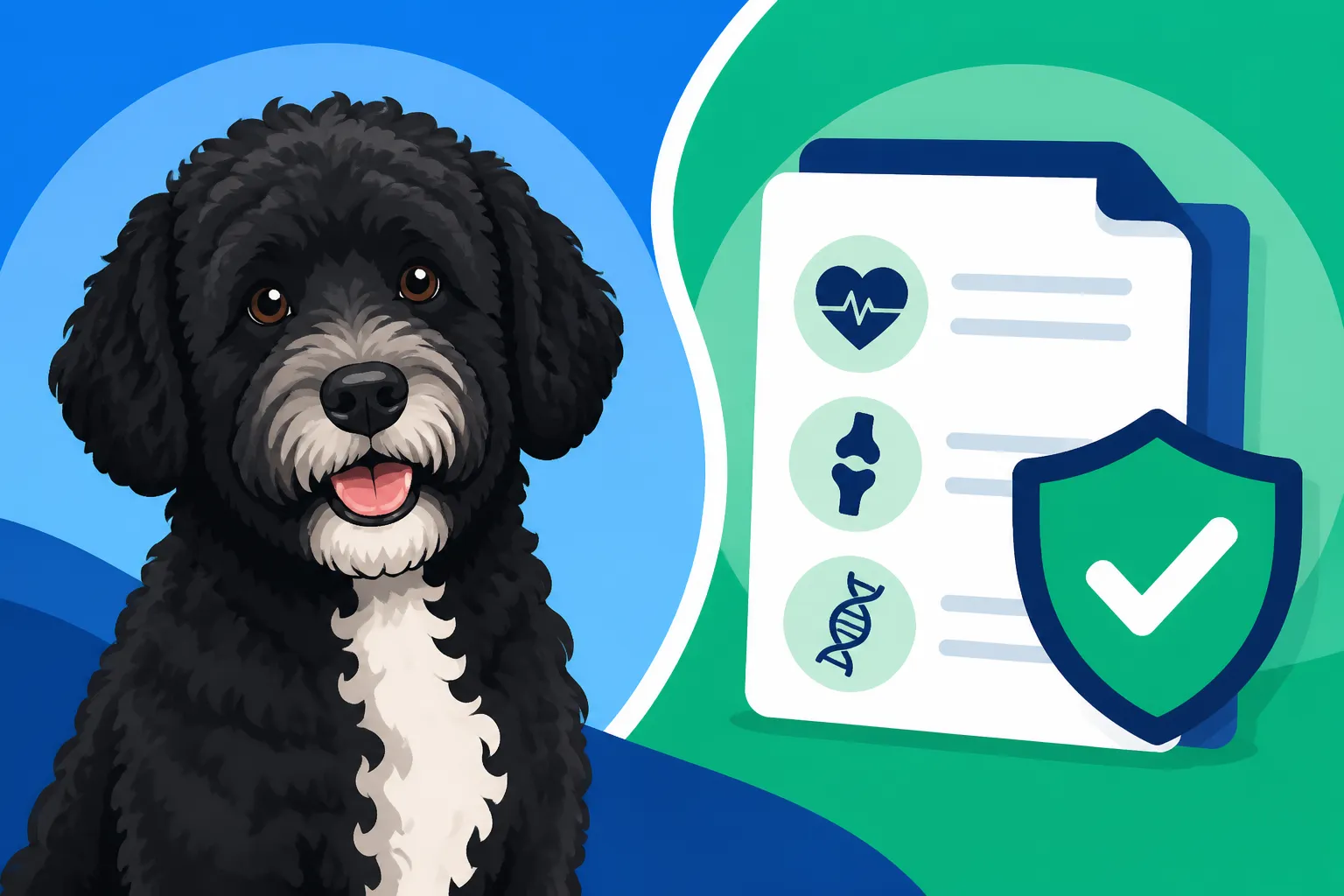
When it comes to official health records for Portuguese Water Dogs, a few key registries stand out. These aren't just random lists; they are comprehensive databases maintained by reputable organizations dedicated to canine health. Each one plays a specific role in documenting genetic screenings and physical clearances, providing a critical layer of transparency for responsible breeding and ownership. Think of them as the official archives for canine wellness, allowing you to delve deeper than a simple "clear by parentage" claim.
The Orthopedic Foundation for Animals OFA
The Orthopedic Foundation for Animals, universally known as OFA, is probably the most widely recognized and respected organization for canine health clearances in North America. They maintain a public database of health certifications for various conditions, particularly those affecting the musculoskeletal system and eyes. For Portuguese Water Dogs, the OFA database is invaluable for checking on specific clearances related to hips, elbows, patellas, and eyes.
When a breeder submits X-rays for hip or elbow evaluations, or eye exam results, the OFA's board-certified veterinary specialists review them. They then issue a certification and enter the results into their public database. This means you can often look up a dog by its registered name or number and see its individual OFA history. For example, you can see if a dog has "Good" or "Excellent" hips, or if their elbows are "Normal." You might even find results for thyroid panels or cardiac clearances. It’s important to remember that these are evaluations at a specific point in time, and some conditions, like certain eye issues, may require yearly re-certifications. Breeders who are committed to health will consistently update these records, and a quick search on the OFA website can provide a wealth of information. If a breeder shows you a certificate, it's always wise to cross-reference it with the OFA's online database to ensure accuracy and authenticity. This commitment to rigorous health testing is one of the reasons why a tested Portuguese Water Dog litter costs what it costs, but it’s an investment in your dog's future.
The Canine Health Information Center CHIC Program
The Canine Health Information Center, or CHIC, is another crucial resource, often working in conjunction with breed-specific clubs and the OFA. The CHIC program aims to identify a recommended set of health screenings for specific breeds, including the Portuguese Water Dog, that breeders should ideally complete. It provides a centralized point of reference for all the various health tests pertinent to a particular breed. To earn a CHIC number, a dog must have all the health tests recommended by its breed's parent club completed and the results publicly available in the OFA database, regardless of whether the results are normal or abnormal. This "all-or-nothing" approach is really helpful because it means a breeder can't pick and choose which good results to show you while hiding less favorable ones.
For Portuguese Water Dogs, the CHIC requirements typically include:
- Hip Dysplasia: Evaluated by OFA or PennHIP.
- Elbow Dysplasia: Evaluated by OFA.
- Eye Examination: Performed by a board-certified veterinary ophthalmologist, often part of the Canine Eye Registry Foundation (CERF) program, now mostly handled through OFA's eye certification. These should be done annually or biennially.
- Progressive Retinal Atrophy (PRA): DNA test for prcd-PRA, and often for Early Onset PRA as well. These are the Two Kinds of Retinal Atrophy in a Portuguese Water Dog.
- GM1 Gangliosidosis: DNA test. This is a devastating neurological disorder, and checking Whether GM1 Still Appears in Portuguese Water Dogs is critical.
- Juvenile Dilated Cardiomyopathy (JDCM): DNA test. This condition can kill a puppy fast, which is why breeders run The Age JDCM Kills a Portuguese Water Dog.
- Improper Coat (IC): DNA test. This is a coat variant, not an illness, but Improper Coat in a Portuguese Water Dog Is Genetic, Not Illness.
- Thyroid: OFA thyroid certification.
- Cardiac: OFA cardiac evaluation, ideally by a board-certified cardiologist.
When you see a dog with a CHIC number, it signifies that the breeder has gone above and beyond to complete all recommended health screenings. While it doesn't guarantee the dog is free of all issues, it shows a commitment to transparency and responsible breeding practices. You can search the CHIC database on the OFA website, as CHIC essentially acts as a portal to aggregated OFA data for specific breeds. Many breeders proudly display their dogs' CHIC numbers, and you should always verify these.
The Portuguese Water Dog Club of America PWDCA
Beyond the overarching OFA and CHIC programs, the Portuguese Water Dog Club of America (PWDCA) is the official parent club for the breed in the U.S. and maintains its own health and genetics committee. The PWDCA works closely with the OFA and other research institutions to promote health testing and research specific to the breed. While they don't host a separate, standalone public health registry like OFA, they are instrumental in defining what tests are essential for Portuguese Water Dogs. Their website is a fantastic resource for information on breed-specific health concerns, recommended testing protocols, and breeder education.
The PWDCA actively encourages breeders to participate in the CHIC program and provides guidance on the Which Health Tests a Portuguese Water Dog Breeder Should Run. They often fund research into PWD health issues, like Addison's Disease, which is common in Portuguese Water Dogs, and they work to ensure the breed's genetic diversity. If you're looking for a breeder, checking for their affiliation with the PWDCA and their adherence to the club's health guidelines is a strong indicator of a responsible breeding program. While you won't search for individual dog health results directly on the PWDCA site, they provide links and information that lead you to the OFA/CHIC databases where the data lives.
Here's a quick comparison of these key resources:
| Registry/Program | Primary Function | Data Type | Public Access | What It Tells You |
|---|---|---|---|---|
| Orthopedic Foundation for Animals (OFA) | Centralized database for canine health certifications. | Hip/Elbow scores, eye exams, cardiac, thyroid, some DNA results. | Yes, by dog name/ID. | Specific individual test results (e.g., "Good Hips," "prcd-PRA Clear"). |
| Canine Health Information Center (CHIC) | Program for breed-specific health testing recommendations. | Aggregated OFA data meeting breed club standards. | Yes, through OFA portal. | Dog has completed all recommended breed health tests (results public, normal or not). |
| Portuguese Water Dog Club of America (PWDCA) | Breed parent club; promotes health testing and research. | Educational resources, recommended tests, links to OFA/CHIC. | Yes, informational. | What tests should be done; supports breed-specific health initiatives. |
Accessing and Interpreting Health Information
Once you know which registries to look at, the next step is actually accessing the information and understanding what it all means. This can still be a bit tricky, but with a few pointers, you'll be well on your way to becoming an informed Portuguese Water Dog health detective. When dealing with breeders, always ask for specific registered names of the sire and dam so you can perform your own checks. Reputable breeders should be eager to share this information and proud of their dogs' health clearances.
Searching the OFA Database Effectively
To search the OFA database, head to their official website (offa.org). You'll usually find a "Search Health Database" option. You can search by registered name (e.g., "Waterdog's Ocean Breeze") or by the registration number (e.g., AKC, UKC). It’s crucial to use the exact registered name as it appears on official paperwork. Sometimes breeders provide kennel names, which might not be the dog’s full registered name, so be sure to clarify.
Once you find a dog, you'll see a list of all its submitted health results. For example, under "Hips," you might see "OFA Good" or "OFA Excellent." For genetic tests like JDCM or GM1, you'll see "Clear," "Carrier," or "Affected." A "Clear" result means the dog does not carry the gene for the specific disease. A "Carrier" means the dog carries one copy of the gene but is generally not affected by the disease itself, though it can pass the gene to its offspring. An "Affected" dog has two copies of the gene and will likely develop the disease. This is particularly relevant for conditions like GM1 Gangliosidosis and the Portuguese Water Dog puppy that never reaches six months. Understanding these terms is vital when evaluating potential breeding pairs, as you wouldn't want to breed two carriers together. Even if you don't plan to breed, this information is invaluable for your own dog's health outlook, prompting discussions with your vet, and potentially influencing your choice of pet insurance policies from companies like Healthy Paws.
What to Look for in a Puppy's Parents
When considering a Portuguese Water Dog puppy, it's not enough to just check the parents' health. You need to understand the implications of their results for the puppies. For recessive genetic diseases like JDCM, GM1, and prcd-PRA, both parents should ideally be "Clear." If one parent is a "Carrier," the other parent must be "Clear" to ensure no puppies are "Affected." This is why The Four DNA Tests Every Portuguese Water Dog Breeder Runs are so important. Responsible breeders will meticulously plan their pairings to avoid producing affected offspring.
For polygenic conditions like hip and elbow dysplasia, which are influenced by multiple genes and environmental factors, you're looking for parents with good scores (e.g., "Good" or "Excellent" hips, "Normal" elbows). While perfect scores don't guarantee a puppy won't develop an issue, they significantly reduce the risk. It’s also good to look at the health of the parents' siblings and ancestors if possible, as this gives a broader picture of health in the line. Don't be shy about asking a breeder to walk you through the OFA results for their dogs and explain what each certification means for the puppies they are producing. They should be transparent about their health testing practices and be able to provide clear evidence.
Beyond the Public Databases: Breeder Transparency
While the public registries are fantastic tools, remember that not every test result might be listed there, or a breeder might have conducted more recent tests that haven't been uploaded yet. This is where breeder transparency becomes paramount. A good breeder will:
- Provide copies of all health certificates: Not just a verbal assurance. Ask to see the actual OFA certificates, eye exam reports, and DNA test results for both parents.
- Explain their breeding philosophy: They should be able to articulate why they chose a particular pairing, what health concerns they are screening for, and how they interpret their dogs' genetic profiles.
- Discuss any known health issues in their lines: No dog or line is 100% perfect. A truly honest breeder will be open about any challenges they've faced and how they are working to mitigate them through careful selection and testing.
- Offer a health guarantee: Most reputable breeders will have a clause in their contract offering a guarantee against certain genetic diseases. Read this carefully to understand what it covers.
- Be a resource for life: A good breeder remains a point of contact for the lifetime of your dog, willing to answer questions and provide support.
You might also hear about microphthalmia in a Portuguese Water Dog, a rare genetic eye condition. While not a routine OFA test, breeders concerned about it may have private screenings or DNA panels if available. The more a breeder actively participates in and discusses these health initiatives, the better.
The Role of Genetic Testing Labs
Behind the registries are the laboratories that actually perform the DNA tests. While OFA records the results, the tests themselves are often processed by specialized canine genetics labs. Knowing about these labs can be helpful, especially if you want to understand the source of the data or if you need to conduct additional tests yourself.
Popular Canine Genetic Testing Labs
Several prominent labs conduct the DNA tests essential for Portuguese Water Dogs. One of the most well-known is Embark Veterinary (now often partnered with OFA for seamless result submission), which offers comprehensive DNA panels that test for over 250 genetic health conditions and traits, including all the key PWD diseases like JDCM, GM1, and Improper Coat. Another widely used lab is Paw Print Genetics, which also provides breed-specific health panels. The Which Lab Runs the Portuguese Water Dog JDCM Test article goes into more detail about specific testing options.
These labs provide detailed reports that indicate whether a dog is clear, a carrier, or affected for each tested condition. Many breeders now use these comprehensive panels, which can simplify the testing process and provide a very thorough genetic profile. The results from these labs are what breeders then submit to OFA to get official certification and a CHIC number. When you see a "clear by parentage" claim, it means the parents were tested and found clear, and therefore their offspring are presumed clear, though many responsible breeders will still test puppies or at least adult breeding dogs to confirm status.
Understanding "Clear by Parentage"
A term you'll frequently encounter is "clear by parentage." This means that a dog's parents were genetically tested and found to be "clear" for a specific recessive genetic disease, and therefore, their offspring are also considered clear for that same disease without needing to be tested themselves. While this can be a convenient way to reduce testing costs for every single puppy in a litter, it relies heavily on the accuracy of the parentage information and the initial tests.
For example, if both the sire and dam are "prcd-PRA Clear," then all their puppies will inherently be "prcd-PRA Clear." This is an acceptable practice for certain genetic conditions. However, it's crucial that the parent dogs themselves were tested and that their results are verifiable on public databases like OFA. A reputable breeder will always be able to show you the specific DNA test results for the parents that substantiate any "clear by parentage" claims. Without documented proof of the parents' clear status, a "clear by parentage" claim is just that—a claim—and should be treated with caution. This is part of What a Portuguese Water Dog Breeder Should Have Tested to ensure confidence in their breeding program.
Beyond the Initial Purchase: Long-Term Health Records
The journey of health records doesn't stop once you bring your Portuguese Water Dog home. Throughout their life, you'll be accumulating your own set of health documents—vaccination records, annual check-ups, specialist visits, and any treatments they receive. Keeping these organized is just as important as understanding their initial genetic background. These records become essential for your dog's ongoing care, and they're particularly important if you ever need to make a claim with your pet insurance provider, such as Healthy Paws, or if you move and need to transfer care to a new veterinarian.
Maintaining Your Dog's Personal Health Folder
It's a really smart idea to create a physical or digital folder for all your Portuguese Water Dog's health records. This should include:
- Vaccination records: Dates of all core and non-core vaccines, like rabies, distemper, parvovirus, and potentially leptospirosis if your dog swims in lakes and ponds.
- Veterinary visit summaries: Notes from annual wellness exams, dental cleanings, and any other consultations.
- Test results: Copies of any bloodwork, urinalysis, or other diagnostic tests.
- Medication history: A list of all medications, dosages, and dates administered.
- Specialist reports: If your PWD sees a dermatologist, ophthalmologist, or cardiologist, keep those reports handy. For instance, if your vet recommends an echocardiogram, ensure you save those results, as What an Echocardiogram Costs on a Portuguese Water Dog can be substantial.
- Pet insurance documentation: Policy details, claim forms, and records of submitted claims.
Having all this information readily accessible will streamline vet visits, ensure continuity of care, and be invaluable in an emergency. It also helps you track your dog's health trends over time, which is especially important as they age and you begin Caring for a Portuguese Water Dog Past Nine.
The Importance of Ongoing Health Monitoring
Even with excellent genetic clearances and careful breeding, health issues can arise. Regular veterinary check-ups are paramount for early detection and intervention. Your veterinarian will perform physical exams, recommend routine bloodwork, and discuss any changes in your dog's behavior or condition. For Portuguese Water Dogs, who are prone to certain conditions like Addison's Disease and hypothyroidism, ongoing monitoring of symptoms is key.
For example, Signs a Portuguese Water Dog Has Addisons can be subtle, and early diagnosis is crucial. Similarly, routine eye exams are recommended to monitor for any changes, even if initial PRA tests were clear. Your personal records, combined with the comprehensive health records from the initial registries, give you the fullest picture of your Portuguese Water Dog's health journey. This holistic approach ensures you are not just reacting to problems but proactively managing your cherished companion's well-being for their entire The Twelve to Fifteen Years a Portuguese Water Dog Gets.
Disclaimer
The information provided in this article is for general informational purposes only and does not constitute veterinary advice. Always consult with a qualified veterinarian for any health concerns or before making any decisions about your pet's medical care.