Why a Groomer Charges More for a Matted Portuguese Water Dog
It’s a scenario many Portuguese Water Dog owners know all too well: you pick up your beloved, freshly groomed PWD, only to be hit with a bill that’s significantly higher than you expected. Often, the culprit is matting – those dense, tangled knots that seem to appear out of nowhere. It's frustrating, certainly, but there's a good reason why groomers have to charge more when your fluffy companion comes in looking more like a woolly mammoth than a sleek water dog. This guide will walk you through why those extra charges happen, what groomers face when dealing with matted coats, and most importantly, how you can prevent it from happening again.
The Tangled Truth: Why Matting Happens to Your PWD
It’s easy to feel a pang of guilt or embarrassment when your groomer points out matting. But honestly, it's a common challenge for Portuguese Water Dog owners, and it’s rarely a sign of neglect. The unique nature of their coat makes them incredibly prone to matting, even with consistent care.
The Unique Nature of the Portuguese Water Dog Coat
Portuguese Water Dogs are renowned for their magnificent, non-shedding coats. This is a double-edged sword, however. Unlike dogs with shedding undercoats that naturally release old hair, the PWD's single coat, whether curly or wavy, simply keeps growing and accumulating dead hair within its own structure. This creates a dense, plush canvas that, when left unchecked, very quickly forms into tight, felt-like mats. Their coat is designed to be waterproof and protective in the water, but on land, this very quality makes it a mat magnet.
Think about it: their hair is wonderfully thick and somewhat coarse, acting like a natural wetsuit. This density means that individual hairs don't just fall out; they get caught in the surrounding curls or waves. Every time your PWD rolls around, goes for a swim, or even just rubs against furniture, these loose hairs intertwine with the healthy ones. Without regular, thorough brushing, these small tangles escalate, tightening closer to the skin, becoming impenetrable knots in a matter of days. It’s why understanding What a Portuguese Water Dog's Coat Is Made Of is so important for proper care.
Common Causes of Matting
Matting doesn't just spontaneously generate, though it can sometimes feel that way! There are several common culprits that contribute to its formation, and recognizing them is the first step in prevention.
One of the most frequent causes is, simply, a lack of consistent and effective brushing. It’s not enough to just run a brush over the top of the coat; you need to line brush or section brush, getting all the way down to the skin. If you’re just skimming the surface, the undercoat (or the trapped dead hair) is still matting underneath, hidden from view. Many owners struggle to find the right tools or technique, leading to missed spots that then become problem areas. If you're wondering How Long Brushing a Portuguese Water Dog Takes, it's a commitment, but a necessary one.
Another major contributor, especially for a water-loving breed like ours, is swimming without proper post-swim care. While PWDs adore the water, diving into the lake or ocean and then air-drying can be disastrous for their coats. The water causes the individual hairs to clump and twist together, and as it dries, these clumps shrink and tighten into mats. You absolutely must brush and thoroughly dry your PWD after every swim, which is a big undertaking. Think about it, if you have a great resource like Chewy for getting high-quality, absorbent towels and a good force dryer, it's an investment that pays off in preventing those dreaded mats.
Beyond that, friction points are notorious for matting. Areas like behind the ears, under the armpits, around the collar or harness, and where their legs meet their body are constantly rubbing. This friction causes the hair to tangle and felt together rapidly. Even a day-long walk with a harness on can create a perfect storm for mats if the coat isn't brushed out thoroughly both before and after. Finally, don't underestimate the "coat change" period, usually between 8-18 months of age, when the softer puppy coat transitions to the denser adult coat. During this time, matting can happen at an accelerated rate, requiring even more vigilant brushing. Why a Portuguese Water Dog Mats Worst During the Change is a frustrating reality for many new owners.
The Groomer's Perspective: More Time, More Skill, More Risk
When your Portuguese Water Dog arrives at the groomer with a matted coat, it’s not just a minor inconvenience for them. It fundamentally changes the entire grooming process, turning a routine appointment into a significantly more challenging and time-consuming endeavor.
The Labor-Intensive Process of Dematting
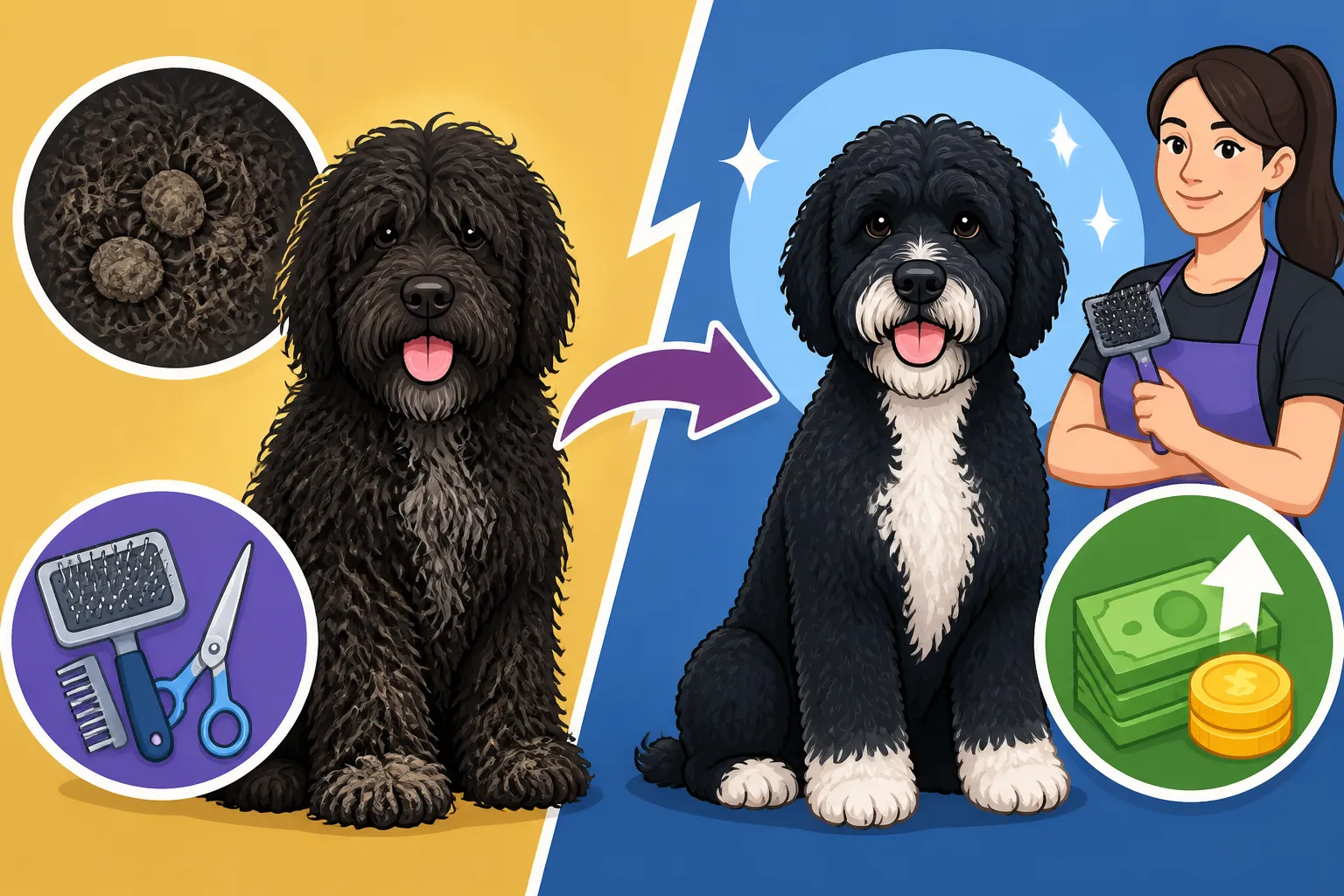
Imagine trying to untangle a ball of yarn that has been repeatedly knotted, stepped on, and soaked in water. That’s a bit like what a groomer faces with a matted Portuguese Water Dog. Dematting is not just "brushing"; it’s a delicate, painstaking, and often physically demanding process that requires immense skill and patience.
First, groomers often have to carefully assess the extent and severity of the matting. Is it just a few small tangles, or is the entire coat a solid pelt? They have specialized tools, like dematting rakes, mat splitters, and a variety of slicker brushes and combs, but these are only effective up to a certain point. Each mat must be carefully worked out, section by section, starting from the outside and slowly working inward, always ensuring they don't pull on the dog's skin. This requires a gentle but firm hand, and it takes an incredible amount of time – often hours longer than a standard groom for a well-maintained coat. The groomer might need to use a detangling spray (you might find some great options for home use on Chewy as well) or a conditioning treatment to help loosen the knots. It's a precise art, aimed at saving as much coat as possible while prioritizing the dog's comfort.
Health and Safety Concerns
Beyond the extra effort, severe matting presents significant health and safety risks for both your dog and the groomer. Mats, especially those tight against the skin, can cause a multitude of problems. They restrict air circulation, creating a breeding ground for skin infections, hot spots, and parasites. The constant pulling can cause extreme discomfort, pain, and even hematomas (blood blisters) if the skin is stretched too tightly. In severe cases, mats can restrict movement, making walking or even lying down painful for your PWD.
For the groomer, working on a matted dog is fraught with danger. The tight mats pull the skin taut, making it incredibly easy to accidentally nick or cut the dog with clippers or scissors. A sudden movement from a stressed or painful dog can lead to serious injury to both the dog and the groomer. Many matted dogs are also in pain, which can make them fearful, anxious, or even aggressive during the grooming process. Groomers are professionals who care deeply about the animals they work with, and they will always prioritize the dog's well-being. If dematting is going to cause excessive pain or stress, a responsible groomer will often recommend shaving the dog down. This might be a tough decision for an owner, but it's often the most humane option. Should any skin issues arise from severe matting, having a pet insurance plan like those offered by Healthy Paws can provide peace of mind for unexpected vet visits.
The "Set Price" Myth and Matting Surcharges
Many owners come into a groomer expecting a fixed price for their dog's breed. However, the "set price" for a Portuguese Water Dog typically applies to a dog with a well-maintained, tangle-free coat. Matting completely changes the equation.
Groomers operate businesses, and their time, skill, and equipment are valuable. When a dog comes in matted, the groomer has to dedicate significantly more time to that one dog, which often means they cannot take on other appointments or that their entire schedule gets thrown off. This lost income, combined with the increased labor and risk, is why matting surcharges are not only common but necessary. These charges compensate the groomer for the additional hours, specialized techniques, and inherent risks involved. The cost structure reflects the difference between a routine service and a restorative, often therapeutic, process. It's about fairness to the groomer and acknowledging the immense effort required to safely and effectively deal with a matted coat.
Preventing Matting and Managing Grooming Costs
The good news is that preventing severe matting is entirely within your control. A proactive approach to grooming, both at home and with a professional, will not only keep your Portuguese Water Dog comfortable and healthy but also save you money on those unexpected grooming surcharges.
Establishing a Regular Home Grooming Routine
This is the absolute cornerstone of preventing mats. Your PWD's coat needs daily attention, or at the very least, every other day. Invest in the right tools: a high-quality slicker brush that can reach the skin, a sturdy metal comb (preferably a greyhound comb with both wide and narrow teeth), and a good detangling spray.
The key is "line brushing" or "section brushing." Don't just brush the top layer. Part the hair down to the skin, brush a small section from the skin outwards, then part another line slightly above it and repeat, working your way across the dog. Pay extra attention to those friction areas: behind the ears, under the chin, the armpits, the groin, and around the tail. These spots are mat magnets. After swims, even a quick dip in the tub, use a force dryer to thoroughly dry the coat, and brush as you dry. Never let a PWD air dry naturally after getting fully wet, as this is a recipe for mats. Many owners find that offering a high-value treat, like a small piece of a quality protein from Ollie, can make brushing sessions a much more positive experience for their PWD. Remember, How Long Home Grooming a Portuguese Water Dog Takes Weekly can vary, but it’s a commitment that prevents bigger problems.
The Importance of Professional Grooming Schedules
Even with diligent home care, regular professional grooming is essential for a Portuguese Water Dog. Most PWDs need to visit the groomer every 4 to 8 weeks, depending on their coat type, lifestyle, and your ability to maintain their coat at home. These regular appointments allow the groomer to trim the coat, thoroughly bathe and dry your dog, and catch any small mats before they become serious problems.
Think of it like dental check-ups for yourself: you brush daily, but you still need professional cleanings. Your groomer can provide a full, even clip that's hard to achieve at home, and they have the powerful drying equipment that makes a huge difference in preventing mats. Establishing a consistent schedule with a trusted groomer means they get to know your dog's coat and temperament, making each visit smoother. It also significantly reduces the chances of needing costly dematting services. Being proactive is always cheaper than being reactive. For example, knowing How Often a Portuguese Water Dog Needs Clipping can help you budget and plan accordingly.
When to Opt for a Shave Down
Sometimes, despite your best efforts, or perhaps due to unforeseen circumstances, your PWD's coat becomes severely matted. In these situations, the kindest and most humane option is often a full shave down. While it might be a shock to see your fluffy dog shorn short, it removes all the painful mats, allows the skin to breathe, and provides a fresh start.
A good groomer will discuss this option with you and explain why it's necessary. They will reassure you that the coat will grow back, and in the meantime, your dog will be free from pain and discomfort. It's important to remember that a shave down is not a sign of failure, but rather a responsible choice for your dog's welfare. Once shaved, you have a clean slate to begin a proper grooming routine. You can learn more about How a Portuguese Water Dog Can Be Shaved Down and what to expect during the regrowth process.
Understanding the Grooming Cost Structure
It helps to understand how groomers determine their pricing, especially when you're looking at those matting surcharges. It's not arbitrary; it's based on very real factors that impact their work.
Factors Influencing Grooming Prices
Several elements go into a groomer's base price for a Portuguese Water Dog. First and foremost is the dog's size. A larger PWD simply has more coat to work with, requiring more time, shampoo, and drying effort. The coat type—curly or wavy—can also play a role; some groomers find very dense, tight curls more challenging to brush through than a looser wave.
The dog's temperament is another huge factor. A calm, cooperative dog makes the grooming process much smoother and quicker. A fearful, anxious, or aggressive dog requires extra time, patience, and often a second pair of hands, which naturally increases the cost due to the added labor and stress on the groomer. Finally, the specific services requested (full groom, bath and tidy, specific clip like a lion clip versus a retriever clip) all contribute to the base price. Portuguese Water Dogs generally fall into a higher price bracket for grooming due to their dense, high-maintenance coats.
How Groomers Charge for Matting
When it comes to matting, groomers typically charge in one of two ways: an hourly rate for dematting time, or a flat-fee surcharge based on the severity of the matting.
- Hourly Dematting Rate: Many groomers will add an hourly rate to their standard grooming fee for the extra time spent carefully working out mats. This is often transparently communicated, with the groomer letting you know the additional cost per hour before proceeding. This method ensures you only pay for the actual time and effort involved.
- Flat-Fee Surcharge: Other groomers might have a tiered system for matting surcharges (e.g., light, moderate, severe). They'll assess your dog's coat upon arrival and inform you of the additional fee based on their evaluation. This provides a clear, upfront cost, though it may not always reflect the exact time spent.
Regardless of the method, these charges are designed to cover the significantly increased time, skill, and physical strain involved in dealing with a matted coat, as well as the inherent risks. A professional groomer should always discuss any matting and potential surcharges with you before starting the groom. This transparency is key to managing expectations and understanding the value of their specialized service. Remember, preventing serious matting can help avoid these extra expenses and ensure your PWD's well-being.
| Grooming Scenario | Time Allotment (approx.) | Groomer Effort | Dog's Experience | Cost Impact |
|---|---|---|---|---|
| Well-Maintained Coat | 2-3 hours | Standard | Relaxed, routine | Base price only |
| Light Matting | 3-4 hours | Moderate | Mild discomfort | Minor surcharge |
| Moderate Matting | 4-6 hours | High | Noticeable pain | Significant surcharge |
| Severe Matting/Pelted | 2-4 hours (shave down) | Extreme | Painful, stressful | Highest surcharge (often includes shave down) |
This table provides a general overview, but actual times and costs will vary depending on the individual groomer, dog's size, and specific matting severity.
Taking care of a Portuguese Water Dog's coat is a labor of love, but it’s crucial for their health and comfort. Understanding why groomers charge more for a matted PWD isn't about shaming owners; it's about appreciating the specialized work involved and equipping you with the knowledge to maintain their beautiful coat properly. Regular home grooming, consistent professional appointments, and clear communication with your groomer are your best tools for keeping your PWD happy, healthy, and looking their best, all while avoiding those surprising extra fees.
Disclaimer
This article is for general informational purposes only and does not constitute professional advice. Laws, prices and regulations vary by location and change over time. Consult a qualified professional for guidance on your specific situation.