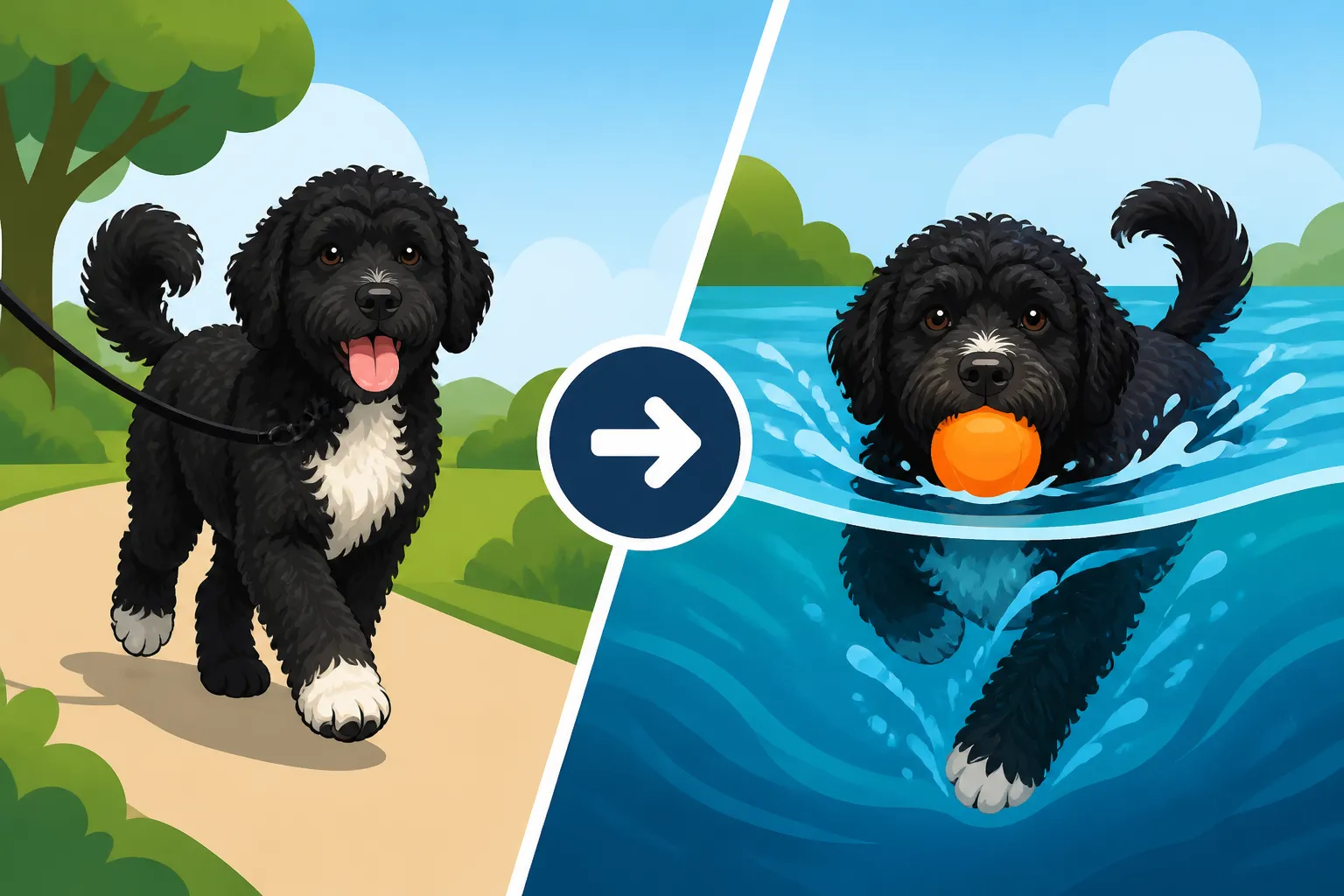
Whether Swimming Replaces Walking for a Portuguese Water Dog
It’s a common thought among Portuguese Water Dog owners, or those dreaming of bringing one home: "My PWD is a water dog, so if they swim for hours, surely that’s enough exercise, right?" While swimming is undeniably fantastic for these athletic, web-footed companions, believing it can wholly replace regular walks and land-based activities is a mistake that can lead to an under-stimulated, potentially problematic pup. This guide will explore why swimming is a valuable part of their routine, but ultimately, why it cannot, and should not, be your Portuguese Water Dog's sole form of exercise.
Why Your Portuguese Water Dog Needs More Than Just a Swim
Let's be real, seeing a Portuguese Water Dog joyfully dive into the water, paddle with incredible grace, and retrieve endlessly can make you think, "Wow, they're getting a workout!" And they are, no doubt. But to truly understand why swimming alone isn't enough, we need to go back to what these incredible dogs were bred for, and what their bodies and minds truly crave. They are, at their heart, working dogs, and that means they need a comprehensive approach to staying healthy and happy.
The Historical Context of the Portuguese Water Dog's Work
The Portuguese Water Dog originated along the coast of Portugal, where they were indispensable companions to fishermen. Their job wasn't just to swim; it was a complex set of tasks that required both physical prowess and keen intelligence. They would retrieve broken nets, herd fish into nets, and even carry messages between boats. This wasn't just about splashing in the sea. It was about problem-solving, endurance, and working alongside a human partner.
Think about it: running along the shore, scrambling over rocks, jumping into and out of boats, these activities engaged a full range of muscles and senses. They needed to be agile on land as well as powerful in the water. So, when we consider their exercise needs today, we're not just looking for a calorie burn; we're looking to fulfill their ancestral drive for varied physical and mental challenges. Skipping out on land exercise ignores a huge part of what makes a PWD, well, a PWD. For more on their origins, check out A Portuguese Water Dog Was Bred to Work a Boat, Not a Yard.
The Importance of Mental Stimulation
Beyond the physical, Portuguese Water Dogs are notoriously smart and independent thinkers. They thrive on challenges that engage their brains. A long swim, while physically tiring, often doesn't provide the same mental engagement as a walk through a new neighborhood with novel sights, sounds, and smells. On a walk, they're processing information, practicing leash manners, and making decisions. They're engaging their olfactory senses in a way swimming rarely does. Without this mental workout, even a physically exhausted PWD can be bored, and a bored PWD often finds their own, sometimes destructive, ways to entertain themselves. This is why a diverse exercise routine is critical to their overall well-being.
The Benefits and Limitations of Swimming for Your PWD
Swimming is, without a doubt, one of the best activities you can share with your Portuguese Water Dog. It’s fantastic for their physical health, but it does have its limits when considered as a complete exercise regimen.
The Undeniable Advantages of Water Work
There’s a reason why Portuguese Water Dogs are synonymous with water. Their unique coat, webbed feet, and powerful rudder-like tail make them supremely adapted for aquatic pursuits.
- Low-Impact Exercise: For a dog with a long life ahead, or one entering their senior years, swimming offers an incredible full-body workout without the harsh impact on joints that running on pavement can cause. This is particularly beneficial for breeds prone to hip or elbow issues, or for maintaining joint health in general. Many owners find that Why Swimming Protects a Portuguese Water Dog's Joints offers valuable insights here.
- Cardiovascular Health: Swimming is a fantastic cardiovascular exercise. It gets their heart pumping, strengthens their lungs, and builds endurance. A 30-minute intense swim can often be as tiring, if not more so, than an hour-long walk on land, due to the constant resistance of the water.
- Muscle Development: Water provides resistance from all directions, leading to comprehensive muscle engagement. It builds lean muscle mass across their shoulders, back, and hindquarters, contributing to a strong, athletic physique.
- Mental Engagement (in a different way): While not the same as a walk, the act of retrieving, diving, and navigating water can be mentally stimulating in its own right, especially if you introduce new toys or challenges. Many PWDs live for the thrill of the chase in the water.
Why Swimming Isn't a Standalone Solution
Despite its many benefits, relying solely on swimming neglects several crucial aspects of a Portuguese Water Dog's overall health and behavioral needs.
- Limited Muscle Groups: While swimming works many muscles, it doesn't engage all the same muscle groups as land-based activities. Running, jumping, and changing direction on varied terrain utilize stabilizer muscles, core strength, and leg muscles in ways that constant forward propulsion in water simply doesn't. Think about a human swimmer versus a runner – they develop different kinds of strength and agility. Your PWD needs both.
- Lack of Varied Sensory Input: Water environments, while exciting, tend to be more uniform in sensory input compared to a walk. A walk exposes your dog to a rich tapestry of smells, sounds, and sights – other dogs, people, traffic, birds, squirrels, new textures underfoot. This diverse sensory experience is vital for a dog's mental health, confidence, and ability to navigate the world calmly. Without it, they might become less adaptable or more reactive in unfamiliar situations.
- No Leash Training Practice: This might seem obvious, but if your dog only swims, they aren't practicing leash manners. Learning to walk politely on a leash, ignoring distractions, and responding to commands in a busy environment are essential life skills. These skills cannot be honed in the water. For new owners, getting a handle on this is crucial, and structured training programs, like those offered by BAXTER & Bella, can be immensely helpful in teaching these foundational skills from the get-go, setting your PWD up for success on both land and water.
- Paw Health and Conditioning: Your PWD’s paws need conditioning for different surfaces. Soft sand or water is very different from pavement, gravel, or rocky trails. Regular walks help toughen their paw pads, reducing the risk of injuries when they do encounter harder surfaces. It's a subtle but important aspect of their physical resilience.
The Indispensable Role of Walking and Land Exercise
Even though your Portuguese Water Dog might try to convince you otherwise with their excited barks at the sight of water, those daily walks and land adventures are absolutely non-negotiable for their well-being. They simply offer things that swimming cannot.
Developing Different Muscle Groups and Agility
When your PWD trots, canters, or gallops across varied terrain, they are using a completely different set of muscles than they do when swimming. Think about the quick pivots and bursts of speed in a game of fetch in the park, or the careful balance required to navigate a hilly trail. These activities build agility, strengthen ligaments and tendons, and improve proprioception – their awareness of their body in space.
A brisk walk, even on a leash, allows for changes in pace, direction, and elevation that challenge your dog in unique ways. Running up a grassy hill, for instance, engages the hindquarters and core muscles with explosive power. Dawdling and sniffing works the neck and back muscles. These varied movements are essential for developing a well-rounded physique, preventing imbalances, and maintaining overall athleticism. If you’re curious about just how much ground they need to cover, reading How Many Miles a Portuguese Water Dog Needs on a Dry Day can give you a better idea.
Crucial Socialization and Environmental Exposure
Walking is one of the primary ways your Portuguese Water Dog learns about the world. Every outing is a lesson in socialization. They encounter other dogs, people, bicycles, strollers, and the sounds of urban or rural life. This exposure, when managed positively, builds confidence and helps them become well-adjusted, calm members of society. Without it, a dog that only ever experiences water or their own backyard might become anxious, fearful, or reactive when faced with novel situations.
These varied experiences also provide rich mental stimulation. Their powerful noses pick up a myriad of scents that tell them stories about who has been there, what they ate, and where they went. This "sniffing time" is incredibly enriching and satisfying for dogs, allowing them to engage with their primal instincts in a safe, controlled way.
Training Opportunities and Relationship Building
Walks are a prime opportunity to reinforce training and strengthen your bond with your Portuguese Water Dog. Practicing loose-leash walking, "leave it" when encountering distractions, or a reliable "come" command are all integral to a well-behaved dog. These aren't just about obedience; they're about clear communication and trust between you and your pup.
Furthermore, these shared experiences on land contribute significantly to your relationship. It’s a chance for you to be a benevolent leader, guiding them through new experiences, and for them to rely on you. It's not just about exercise; it's about partnership. A sturdy, waterproof leash and collar, readily available on Amazon, can make these training walks more comfortable and secure, especially if you also enjoy taking them near water.
Creating a Balanced Exercise Routine for Your Portuguese Water Dog
The secret to a truly happy and well-adjusted Portuguese Water Dog isn't choosing between swimming and walking; it's embracing both and adding even more variety to their routine. A balanced approach ensures they get all the physical and mental stimulation they need, leading to a calmer, more contented companion.
Combining Aquatic and Land Activities
Think of your PWD's week as a mosaic of activities. Some days might be heavy on the water work, perhaps a long session at the local lake or a trip to a dog-friendly beach where they can indulge their love for retrieving. Other days should focus on vigorous land exercise. This might mean a long hike through local trails, a spirited game of fetch in a securely fenced yard or dog park, or even an agility class.
A good rule of thumb is to aim for a mix. Maybe two or three days a week involve dedicated swimming sessions, and the other days include longer, more challenging walks or runs. On all days, shorter potty breaks and sniff walks are still essential. The goal is to avoid monotony and ensure different parts of their body and brain are regularly engaged. For inspiration on what a full day might look like, take a look at What a Portuguese Water Dog Does All Day.
Incorporating Structured Training and Mental Games
Beyond physical exercise, don't underestimate the power of mental work. Portuguese Water Dogs are intelligent and thrive on having a "job." Short, consistent training sessions throughout the day can be just as tiring as a physical workout. This could involve:
- Obedience Practice: Reinforcing basic commands like sit, stay, down, and recall in various environments.
- Puzzle Toys: Toys that require your dog to figure out how to get a treat can provide excellent mental stimulation. There’s a huge variety available on Amazon that can keep them engaged when you're busy.
- Scent Work: Hiding treats around the house or yard and encouraging your PWD to find them taps into their natural scenting abilities and is incredibly rewarding.
- New Tricks: Teaching your dog new tricks isn't just for entertainment; it builds their cognitive abilities and strengthens your bond.
A well-structured training program, like those offered by BAXTER & Bella, often integrates these mental challenges, which can be invaluable, especially during a puppy's formative months. They teach you how to effectively engage your dog's mind, making them more receptive to all forms of exercise and training.
Monitoring and Adjusting
Every Portuguese Water Dog is an individual. Their energy levels, age, and health will dictate the ideal amount and type of exercise. A young, exuberant pup will likely need more intense activity than a senior dog. Always observe your dog's cues. Are they still bouncing off the walls after a long swim? Then they probably need more land exercise. Are they limping or excessively tired after a long hike? Perhaps a swim would be a better choice for recovery.
Regular vet check-ups are crucial to ensure your dog is fit for their activity level. Be mindful of extreme weather conditions, adjusting exercise intensity and duration accordingly. The beauty of the Portuguese Water Dog is their adaptability, but it’s up to us, their human companions, to provide a thoughtful and varied routine that truly meets all their needs.
Summary of Exercise Essentials for Your PWD
To truly encapsulate the differences and necessities, here's a quick overview of what each type of activity brings to your Portuguese Water Dog's life:
| Activity Type | Key Benefits | Limitations (if relied on solely) | Essential Contribution |
|---|---|---|---|
| Swimming | Low-impact cardio, full-body muscle development, excellent for joint health. | Limited varied sensory input, no leash manners practice, not all muscle groups engaged. | Builds endurance and muscle, protects joints, provides joy. |
| Walking/Running | Develops agility, works diverse muscle groups, paw conditioning. | Can be high-impact, less full-body than swimming, less intense cardio. | Essential for coordination, strength, and overall robustness. |
| Environmental Exposure | Builds confidence, reduces reactivity, provides rich mental stimulation via senses. | Not directly provided by repetitive swimming, limited during focused training. | Crucial for mental well-being and social adjustment. |
| Structured Training | Teaches obedience, problem-solving, strengthens human-dog bond. | Limited direct physical exercise, needs to be paired with movement. | Fulfills mental needs, improves behavior, creates partnership. |
Ultimately, a Portuguese Water Dog is a dynamic breed that thrives on diversity. Thinking you can replace the complexities of a walk with endless laps in the water would be selling your amazing dog short. Embrace their love for water, but never forget the vital role that solid ground plays in their happy, healthy, and well-behaved life.
Disclaimer
This article is for general informational purposes only and does not constitute professional advice. Laws, prices and regulations vary by location and change over time. Consult a qualified professional for guidance on your specific situation.