Caring for a Portuguese Water Dog Past Nine
Portuguese Water Dog aging after nine brings physical changes like reduced energy, joint stiffness, and declining senses.
Know what to watch for.
Breed-specific conditions, screening and DNA tests, what surgery actually costs, and the daily habits that stretch a healthy lifespan.

Portuguese Water Dog aging after nine brings physical changes like reduced energy, joint stiffness, and declining senses.

Portuguese Water Dog breeders must perform specific health tests to prevent genetic diseases in puppies and protect future generations.

Portuguese Water Dog lifespan ranges from twelve to fifteen years, influenced by genetics, environment, and proper veterinary care.
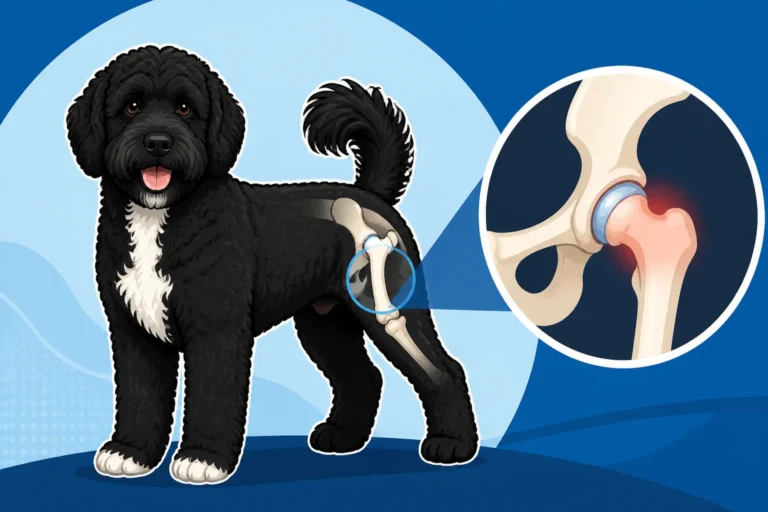
Hip and joint dysplasia in Portuguese Water Dogs causes pain and mobility issues, but early detection helps maintain comfort.

Portuguese Water Dog improper coats are purely genetic hair texture variations rather than illnesses or poor health signs.

Addisons Disease in Portuguese Water Dogs involves deficient adrenal hormones that disrupt metabolism, electrolyte balance, and stress response.

Portuguese Water Dog retinal atrophy includes prcd-PRA and Early Onset PRA, explaining symptoms, genetic testing, and blindness.

GM1 Gangliosidosis is a fatal genetic disorder causing neurological deterioration in Portuguese Water Dog puppies under six months.

Juvenile dilated cardiomyopathy causes fatal heart failure in young Portuguese Water Dog puppies within months of birth.

Four DNA tests for Portuguese Water Dog breeders prevent genetic diseases like Juvenile Dilated Cardiomyopathy in puppies.