Taking a Portuguese Water Dog to the Coast
The coast is a fantastic playground for a Portuguese Water Dog, but the excitement of crashing waves, new smells, and endless sand can quickly turn into a chaotic experience if you're not prepared. Taking your water dog to the beach isn't just about letting them run wild; it requires thoughtful planning to ensure safety, minimize stress for both of you, and protect the delicate coastal environment. This guide will walk you through everything you need to know, from pre-trip essentials to post-adventure care, ensuring your PWD's beach day is a joyful and safe one.
Preparing for Your Portuguese Water Dog's Coastal Adventure
Before you even load up the car, a successful beach trip with your Portuguese Water Dog starts long before you feel the sand between your toes. Proper preparation is key to a fun, safe, and stress-free experience for everyone involved. Think about what your PWD will need, what potential hazards exist, and what rules you'll need to follow.
Essential Gear for Beach Safety
Bringing the right equipment can make all the difference between a great day and a stressful one. First and foremost, a well-fitting, brightly colored life jacket is a non-negotiable item, even if your PWD is an accomplished swimmer. You might think, "But my Portuguese Water Dog was bred for water!" and you'd be right – their strong swimming ability and How much a Portuguese Water Dog's webbing adds to its speed are legendary. However, strong currents, sudden deep drop-offs, or exhaustion from extended play can quickly overwhelm even the most capable swimmer. A life jacket provides buoyancy and often has a handle on the back, which is incredibly useful for lifting your dog out of the water or helping them navigate tricky spots.
Beyond the life jacket, consider a long, waterproof leash. This allows you to give your dog more freedom to explore safely, especially in areas where off-leash might not be permitted or where distractions are plentiful. Don't forget fresh water and a portable bowl, because ocean water is not safe for dogs to drink. Collapsible silicone bowls are perfect for this and easily found on Amazon. Quick-drying towels are also a must-have, not just for cleaning up, but for helping to prevent skin issues that can arise from prolonged dampness.
Training for Off-Leash Freedom and Recall
The dream of many PWD owners is to let their dog run and play freely on a vast, open beach. While this is certainly possible, it hinges entirely on rock-solid recall and impulse control. A Portuguese Water Dog is an intelligent, energetic breed that was A Portuguese Water Dog was bred to work a boat, not a yard, meaning they're often highly independent thinkers with a strong drive to explore and retrieve. The sights, sounds, and smells of a beach—seagulls, other dogs, children, waves—are incredibly distracting.
Before you even consider letting your PWD off-leash, practice their recall in increasingly distracting environments. Start in a quiet park, then move to busier areas, always rewarding them enthusiastically when they return. Consider investing in an online training program like BAXTER & Bella, which often provides structured lessons for building these essential skills. Remember, a reliable "come" isn't just about convenience; it's about safety. It means you can call your dog back from a potentially dangerous situation, like an approaching wave or an aggressive dog. A strong "leave it" command is also crucial for preventing them from snatching something undesirable from the sand or water.
Understanding Beach Regulations and Etiquette
One of the biggest mistakes owners make is assuming all beaches are dog-friendly or that "dog-friendly" means "unleashed chaos." Beach access rules vary wildly by location and even by time of year. Some beaches might allow dogs only during off-peak hours or in designated areas, while others may require leashes at all times. Always check the local regulations before you go. Websites for local parks departments, tourism boards, or even a quick search online can provide this information.
Beyond the written rules, there's also an unspoken etiquette to consider. Always pick up after your dog – no one wants to step in that kind of coastal "treasure." Keep your dog under control, especially around children, other dogs, and wildlife. Even if your PWD is the friendliest dog on earth, not everyone appreciates a boisterous greeting from a wet, sandy canine. Be mindful of nesting birds or sensitive ecological areas, and keep your dog away from them. How a Portuguese Water Dog can be trusted near a lake applies to coastal environments too; it's about mutual respect for nature and other beachgoers.
Making the Most of Your PWD's Beach Day
Once you've done your homework and packed your bags, it's time to enjoy the coast! This is where your Portuguese Water Dog truly shines, embracing their heritage and reveling in the water.
Enjoying the Water: Swimming, Fetch, and Exploration
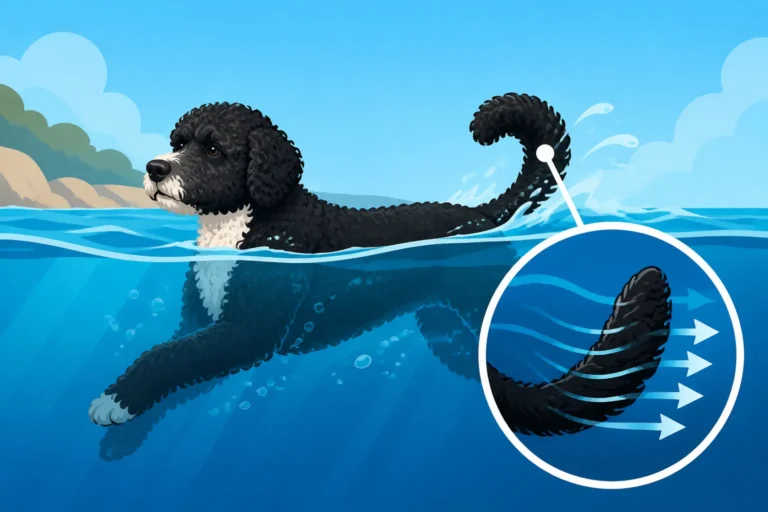
This is what your Portuguese Water Dog lives for! Their webbed feet and rudder-like tail make them natural swimmers, and the ocean is their ultimate playground. Throw a buoyant retrieve toy for them to fetch from the waves. This isn't just fun; it's an excellent way to provide mental and physical stimulation. Just be mindful of how far out they go and keep an eye on currents. For a detailed understanding of their aquatic prowess, you might enjoy reading What a Portuguese Water Dog was bred to do on a boat.
Let your PWD explore the shoreline, investigate tide pools, and chase after their favorite floating toy. This sensory experience is incredibly enriching for them. Remember, however, that How long a Portuguese Water Dog can stay in cold water is not infinite, even for this hardy breed. Monitor them for signs of shivering or fatigue, and ensure they take breaks on the sand to warm up and rest. Always be ready with their life jacket, especially if you plan for extended periods of play in unpredictable waters.
Land-Based Fun and Socialization
While the water is often the main draw, don't overlook the joys of land-based beach activities. A long walk along the beach, sniffing all the interesting coastal scents, can be just as tiring and fulfilling as a swim. You can practice "stays" with the waves crashing in the background, reinforcing their training in a challenging environment. This is a great opportunity to refine your Teaching a Portuguese Water Dog to wait on the bank.
If other dogs are present and friendly, supervised playtime can be wonderful for socialization. Just remember to gauge the energy levels of all dogs involved and be prepared to intervene if play gets too rough or overstimulated. Bring a variety of toys, some specifically for water play and others for sand. Keep an eye on your dog's energy levels; a beach day is incredibly exciting, and a PWD might not know when to quit, potentially leading to overexertion. This is particularly important since How much exercise a Portuguese Water Dog needs is substantial, and a beach day can easily surpass their usual daily requirements.
Hydration and Sun Protection
It's easy to forget about basic needs when you're having so much fun, but hydration is paramount. Running, swimming, and playing in the sun can quickly lead to dehydration. Always have plenty of fresh water available and encourage your PWD to drink frequently. Even though your dog will be in and out of the ocean, salt water can actually dehydrate them if ingested, and it should never be a substitute for fresh water.
Sun protection is also important, especially for Portuguese Water Dogs with lighter pigmentation on their nose or ears, or those with very short clips. While their dense coat offers some protection, exposed skin can still burn. You can find dog-specific sunscreens on Amazon designed for their sensitive skin. For very hot days, consider sticking to morning or late afternoon beach visits when the sun's intensity is lower to prevent overheating. Your PWD might handle the water well, but prolonged sun exposure on the sand is a different challenge.
Post-Beach Care: Keeping Your PWD Healthy and Happy
The fun doesn't end when you leave the beach. Post-coastal care is essential to keep your Portuguese Water Dog healthy and prevent potential issues from sand and salt.
The Importance of a Thorough Rinse and Dry
This step is critical. Saltwater, sand, and other beach grime can irritate your PWD's skin and coat if left on. As soon as possible after leaving the beach, give your dog a thorough rinse with fresh water. If you have access to a shower or hose, use it. Pay special attention to their paws, between their paw pads, and their face, as sand can easily get trapped in these areas. For information on how salt can affect their coat, you might find Whether salt water hurts a Portuguese Water Dog's coat helpful.
After rinsing, drying is just as important. Your Portuguese Water Dog's dense, water-resistant coat, while great for swimming, can take a long time to air dry, creating a damp, warm environment perfect for bacterial or yeast growth. Use several absorbent towels, and if your dog tolerates it, a force dryer can speed up the process immensely. Many PWD owners invest in one for home grooming, and they are widely available on Amazon. Ensuring they are completely dry, especially down to the skin, will prevent a host of skin problems like hot spots.
Protecting Skin, Coat, and Ears from Salt and Sand
The combination of salt and sand can be a recipe for irritation. Trapped sand can rub against the skin, causing abrasions or sores, especially in areas like the armpits, groin, or between the toes. Salt residue can dry out the skin, leading to itchiness and flakiness. Regular brushing after drying can help remove any remaining sand or debris from their coat.
Their ears are particularly vulnerable after a swim. A Portuguese Water Dog's floppy ears and ear canal structure can trap water, creating a prime breeding ground for ear infections. This is a common issue for water-loving breeds, and it's why Why a swimming dog gets ear infections is so important to understand. After every swim, gently clean and dry your PWD's ears with a vet-approved ear cleaning solution. You might even consider cotton balls or specialized ear protection if your dog is prone to recurrent infections.
Checking for Unwanted Souvenirs
A quick once-over is not enough. You need to do a thorough check of your PWD for any "souvenirs" they might have picked up. This includes foxtails, burrs, tiny shell fragments, or even ticks. Pay close attention to their paw pads, under their tail, behind their ears, and in their dense coat. How to check a Portuguese Water Dog for lumps is a good habit to incorporate after any outing, not just beach trips, as it helps you become familiar with your dog's normal body and notice anything unusual early on.
Sometimes, after a particularly active day, your PWD might feel a little stiff or sore. This is normal, especially if they're not used to the intense full-body workout that swimming in waves provides. Gentle massage can help, and ensuring they have a comfortable, warm place to rest will aid recovery. Always monitor for limping or signs of discomfort that persist, which could indicate a minor injury from stepping on something or twisting a joint.
Common Coastal Challenges and Solutions
Even with the best preparation, unexpected situations can arise at the beach. Being aware of potential problems and having a plan can help you manage them smoothly.
Managing Enthusiasm and Distractions
A Portuguese Water Dog's excitement level at the beach can be off the charts. They see water, they want to go! This boundless enthusiasm, while endearing, can lead to them pulling strongly on the leash, ignoring commands, or even trying to herd children or other dogs into the water. Remember their strong working drive; they're accustomed to being "on task." Channeling this energy into appropriate activities, like retrieving, can be very effective.
If your PWD is overly excited, take a moment to calm them down before letting them loose (if allowed) or beginning play. A few minutes of quiet attention or a short walk on a leash away from the main activity can help them reset. Using a high-value treat for recall practice can also help cut through the distractions. The consistent training methods offered by services like BAXTER & Bella are invaluable for building this kind of focus in high-stimulus environments.
Encountering Wildlife and Other Dogs
Coastal environments are teeming with wildlife, from shorebirds to crabs, and sometimes even larger marine animals. A Portuguese Water Dog's natural prey drive might kick in, leading them to chase birds or investigate curious smells. It's crucial to keep your dog under control to protect both the wildlife and your dog. A loose dog chasing birds can disturb nesting sites or stress animals, and your dog could get injured by a defensive animal.
When it comes to other dogs, not all interactions are positive. Some dogs are not friendly, some are fearful, and some owners prefer not to have their dogs approached. Always ask before allowing your PWD to greet another dog. Read body language carefully—both your dog's and the other dog's—for signs of stress or discomfort. If you're unsure, keep your dog leashed and maintain distance. Beaches can be crowded, and managing multiple interactions requires constant vigilance.
Preventing and Addressing Overheating or Overexertion
Even though Portuguese Water Dogs love water, they are not immune to the effects of heat and overexertion. Long periods of intense activity, especially on hot days, can lead to heatstroke. Signs of overheating include excessive panting, drooling, lethargy, bright red gums, or staggering. If you notice any of these, immediately get your dog into the shade, offer cool water, and apply cool, damp towels to their body, especially their belly and paw pads. Seek veterinary attention if symptoms don't improve quickly.
To prevent these issues, plan your beach trips for cooler parts of the day. Take frequent breaks from intense play, encouraging your PWD to rest in the shade. Offer water consistently. Monitor How much a working Portuguese Water Dog eats and adjust their diet if they're particularly active on beach days, ensuring they have enough energy without overdoing it. Remember that the intense stimulation of a new environment can make them push past their physical limits without realizing it.
| Item | Purpose | Notes |
|---|---|---|
| Life Jacket | Safety, buoyancy, handle for lifting | Essential even for strong swimmers, especially in currents or open water. Bright colors for visibility. |
| Long, Waterproof Leash | Controlled exploration, safety in restricted areas | Gives freedom while maintaining control. Important for practicing Whether a Portuguese Water Dog recalls out of water. |
| Fresh Water & Bowl | Hydration, rinsing mouth of salt water | Crucial for preventing dehydration. Collapsible bowls are convenient. |
| Quick-Drying Towels | Post-swim cleanup, preventing skin irritation | Absorbent microfibre towels work best. |
| Dog-Specific Sunscreen | Protects exposed skin (nose, ears) from sunburn | Use on light-colored or clipped areas. |
| Buoyant Fetch Toy | Water play, retrieval, mental stimulation | Choose toys that float and are easy for your PWD to spot and pick up. |
| Ear Cleaner | Prevents ear infections from trapped water | Use vet-approved solution after every swim. See Whether a Portuguese Water Dog's ears should be dried inside. |
| Poop Bags | Mandatory cleanup | Be a responsible owner, leave no trace. |
| First Aid Kit | Minor injuries, cuts, scrapes | Include antiseptic wipes, paw balm, gauze. |
| Force Dryer | Speeds up drying, prevents skin issues | Highly recommended for full coat drying, especially after heavy swimming. |
Ultimately, a trip to the coast with your Portuguese Water Dog should be an incredible bonding experience. With proper planning, diligent training, and mindful care, you can ensure many happy and healthy adventures by the sea for both of you.
Disclaimer
This article is for general informational purposes only and does not constitute professional advice. Laws, prices and regulations vary by location and change over time. Consult a qualified professional for guidance on your specific situation.