Teaching a Portuguese Water Dog to Stay in the Boat
It’s a truly unique challenge, isn't it? You have this magnificent Portuguese Water Dog, a breed practically synonymous with water, bred for centuries to work alongside fishermen, and all they want to do is be in the water. The problem arises when "in the water" means jumping out of your boat at an inopportune moment, chasing a duck, or trying to retrieve something you absolutely don't want them to. This guide is all about tackling that very specific frustration: how to teach your spirited Portuguese Water Dog to stay calmly and reliably in the boat, ensuring safety and enjoyment for everyone on board.
Understanding Your Portuguese Water Dog's Natural Drive
Before we even think about training, it's crucial to acknowledge who your Portuguese Water Dog truly is. These dogs weren't just bred near water; they were integral crew members on fishing vessels off the coast of Portugal. Their instincts are wired for aquatic work, whether that was retrieving lost gear, carrying messages between boats, or even How a Portuguese Water Dog Worked a Net. They possess an unparalleled love for the water, combined with incredible athleticism and a strong desire to be involved in whatever their human companions are doing.
The Instinct to Jump and Retrieve
Imagine for a moment being on a small fishing boat hundreds of years ago. A fish slips from the net, or a piece of tackle goes overboard. The Portuguese Water Dog's job was to spring into action, retrieve it, and bring it back. That drive, that immediate response to something in the water, is still deeply embedded in their DNA. So, when your dog sees a ripple, a bird, or a floating stick, their first thought isn't "I should stay here," but "My human might need me to get that!" Understanding this helps us approach training with empathy and realistic expectations. It's not disobedience; it's instinct. It’s also why simply yelling "no!" when they launch themselves over the side rarely works long-term.
Their Deep Connection to Water Work
For a Portuguese Water Dog, water isn't just a place to cool off; it's their office, their playground, their ancestral home. They are powerful swimmers with webbed feet and a rudder-like tail, built perfectly for the aquatic environment. How Naturally a Portuguese Water Dog Swims is a testament to their breeding. This inherent love for water can make teaching them to wait and stay in a boat feel like an uphill battle. They might be perfectly behaved on land, but the sight and smell of water can transform them into an unstoppable force. It's like asking a child to sit still in a candy store – the temptation is immense.
Laying the Groundwork: Essential Obedience and Impulse Control
Before you even think about stepping foot in a boat, you need to ensure your Portuguese Water Dog has a rock-solid foundation of basic obedience and, more importantly, impulse control. Trying to teach "stay in the boat" without these basics is like trying to build a house without a foundation. It just won't hold.
Mastering "Stay" and "Place" on Land
Your PWD needs to understand and reliably perform a "stay" command, not just for a few seconds, but for extended periods and with increasing distractions. Practice this in various environments, gradually increasing the time and distance you are away from them. The "place" command, where they go to a designated spot (like a mat or a dog bed) and remain there, is also invaluable. This teaches them to settle and be calm in a specific location, which translates beautifully to a boat. Use high-value treats and positive reinforcement. A program like BAXTER & Bella, which focuses on positive training methods and building a strong foundation, can be really helpful here, offering structured lessons that emphasize these crucial commands in a way that respects your PWD's intelligence and desire to please.
Developing Strong Impulse Control
This is arguably the most critical component. Impulse control means your dog can resist the urge to do something appealing (like chasing a squirrel or jumping for a toy) until you give them permission. For a Portuguese Water Dog, this specifically means resisting the urge to jump into the water.
Start small:
- "Leave It": Practice with treats on the floor, then moving objects, then people. This command teaches them to ignore something tempting.
- Waiting at doors: Make them wait for your release cue before going through a doorway.
- Waiting for food: Don't let them eat their meal until you give the release cue.
These exercises build mental discipline and teach your dog that good things come to those who wait for your signal. Remember, What Motivates a Portuguese Water Dog is often food, toys, and pleasing you, so use these to your advantage.
Socialization and Desensitization
Exposure to different sounds, sights, and movements from an early age helps create a well-adjusted dog. If your dog is already nervous about new environments or sudden movements, a boat will only amplify those anxieties, making training much harder. Introduce them to varied environments, strange noises, and unstable surfaces (like a wobbling platform or a wobbly plank) in a positive way. This helps them build confidence and cope better with the dynamic nature of a boat. Ensure they are comfortable with strangers and other dogs too, as you might encounter these on the water or at the dock. The First Year With a Portuguese Water Dog Puppy is a prime time for this kind of foundational work.
Gradual Introduction to the Boat Environment
Now that your PWD has stellar impulse control and a solid "stay," it's time to introduce the boat. This process must be slow, positive, and broken down into tiny steps. Rushing it will only create anxiety or reinforce unwanted behaviors.
Step-by-Step Desensitization on Land
Start with the boat out of the water, ideally in your yard or driveway. The goal is to make the boat a neutral, even positive, place.
- Initial greetings: Let your dog approach the boat at their own pace. Reward any calm interaction, even just sniffing it. Don't force them inside.
- Inside the boat: Once they're comfortable near it, encourage them to step inside. Lure them with treats or a favorite toy. Reward heavily for all four paws in the boat. Use your "place" command.
- Settling in: Bring a comfy mat or dog bed into the boat. This creates a familiar, safe space for them. Use toys and chew items to help them relax. Feed meals in the boat.
- Handling movement: Gently rock the boat while they are inside. Start with slight movements and gradually increase. Reward for calm behavior.
This slow introduction helps them understand that the boat is a safe, stationary object before introducing the added complexity of water.
First Experiences on Water, Still Tied
Once your dog is totally comfortable in the boat on land, it's time for the first water experience.
- Dockside bonding: Tie the boat securely to a dock or shoreline. Let your dog explore the boat while it's in the water, but still tied. This introduces the sensation of floating and the sounds of the water without the distraction of movement or the temptation of swimming away.
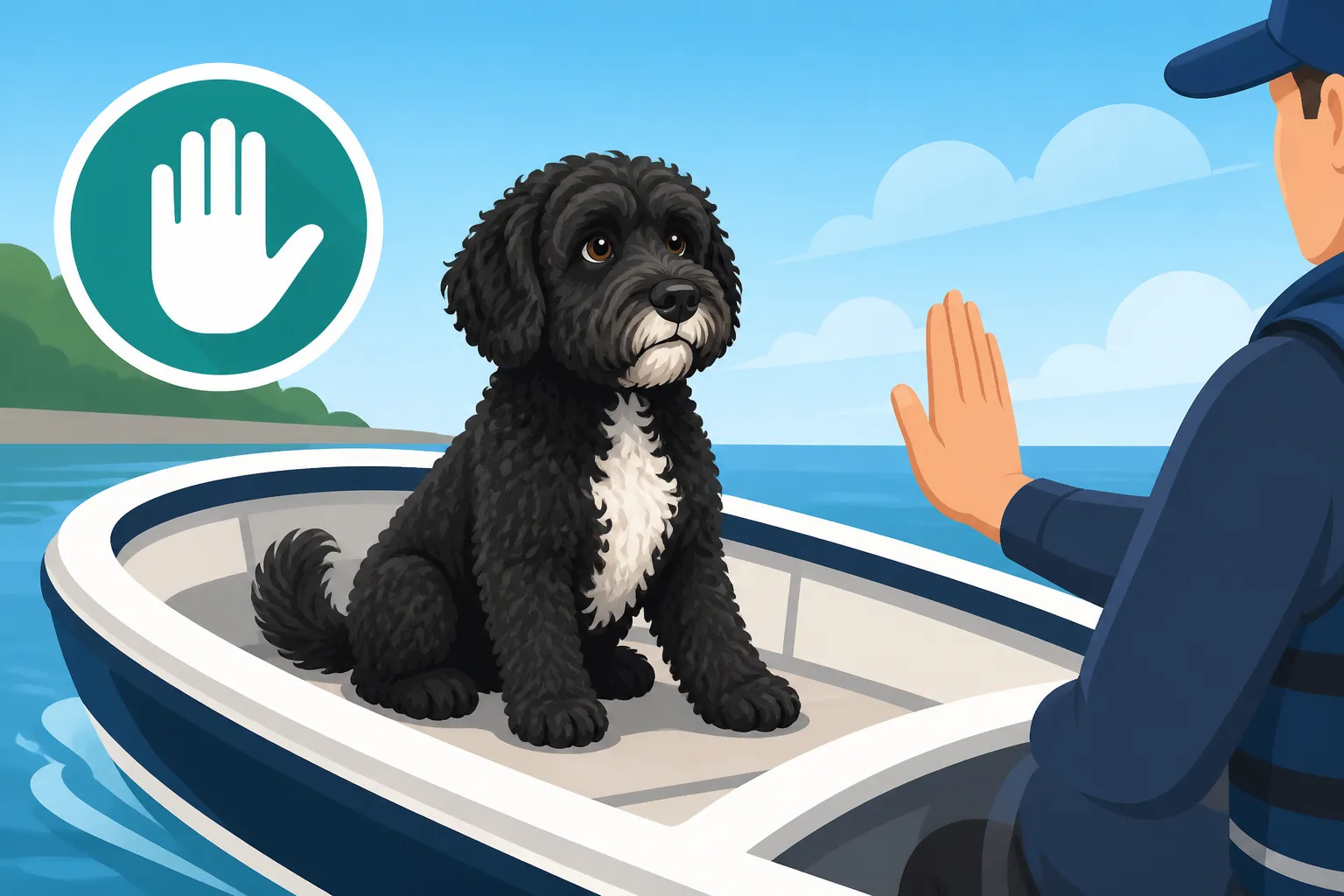
- "Stay" practice: Practice your "stay" and "place" commands with short durations. Reward generously. If they attempt to jump out, gently redirect them back to their spot with your "place" command, without scolding. The key is to make staying in the boat the most rewarding option.
- Controlled water entry/exit: If you want your PWD to be able to get into the water on command, set up specific cues. For example, "Okay, swim!" to release them. This reinforces that jumping is only allowed with permission. Teaching a Portuguese Water Dog to Wait on the Bank is a good parallel skill to develop here. You want to instill that same respect for boundaries around the boat.
Short Trips with High Reinforcement
When your dog is confidently staying in the tied boat, begin very short, gentle trips.
- Start with minimal distractions: Choose a calm day on still water. Avoid areas with a lot of wildlife or other boats initially.
- Focus on "stay": Keep practicing your "stay" and "place" commands. Have plenty of high-value treats and a favorite chew toy ready.
- Positive reinforcement for calm: Reward every moment they are relaxed and staying in their designated spot. If they get antsy, bring the boat back to shore, get out, and practice impulse control on land before trying again. Keep sessions short and positive.
- Gradually increase duration and activity: As they improve, you can slowly increase the time on the water and introduce gentle movement. If you want them to retrieve from the boat, start by throwing an item from the boat after giving a release cue, then have them return to the boat (not just the water) to receive a reward. Remember, How Long a Portuguese Water Dog Will Keep Retrieving can be a very long time, so you need to manage their desire to work!
Training Specific Boat Behaviors and Addressing Challenges
Even with the best foundation, teaching a PWD to stay in a boat has its nuances. Here's how to refine specific behaviors and tackle common hiccups.
Managing Excitement and the Desire to Jump
The biggest hurdle for most PWD owners is preventing the jump. This is where your deep dive into impulse control pays off.
- Anticipate and interrupt: Learn your dog's "pre-jump" signals—the sudden stiffness, the intense stare, the shift of weight. At the first sign, give your "leave it" or "stay" command, and immediately reward their compliance. This teaches them to check in with you before acting on instinct.
- Leash management: For the initial trips, keep your dog on a short leash, even if they're usually off-leash reliable. A hands-free leash, perhaps worn across your body, can give you a subtle way to prevent a jump without pulling abruptly. This is not for correction, but for gentle guidance back to their spot. You might also consider a comfortable, well-fitting Which Harness a Portuguese Water Dog Can Swim In that allows for easy handling without choking.
- "Relax" cue: Teach a specific cue for relaxation, like "relax" or "settle." Practice this initially in calm environments. When your dog is lying down, breathing easily, gently pet them and say your relaxation cue. Eventually, you can use this cue in the boat to encourage calm.
Designated "Stay" Zones and Safety Gear
Creating a specific "place" in the boat for your dog to stay is incredibly effective. This could be a non-slip mat, a soft bed, or even a designated spot on the floor.
- Visual cues: Use a distinct mat or bed for their "place" command. This visual boundary helps them understand where they should be.
- Securing their spot: Ensure their spot is comfortable and stable. If the boat moves, you don't want them sliding around, which can create anxiety. Non-slip material is essential.
- Life Vest: Always, always use a dog-specific life vest for your PWD when in a boat. While they are exceptional swimmers, a life vest offers extra visibility, flotation, and a handle for easy retrieval if they do go overboard unexpectedly. It's a critical safety measure, just like a human wearing one.
| Training Phase | Location | Key Behaviors / Goals | Tools & Tips |
|---|---|---|---|
| Foundation | Home/Yard | Reliable "Stay," "Place," "Leave It," "Wait" | High-value treats, clicker, BAXTER & Bella program, comfy mat |
| Boat Introduction | Dry Land (Yard) | Comfort in and around the boat (stationary) | Favorite toys, chew items, feed meals in boat |
| Tied Boat | Water (Dockside) | Calmness with water sounds/movement (tied) | Non-slip mat, high-value rewards, short sessions |
| Moving Boat | Calm Water | "Stay" in boat while moving, controlled exit | Leash, life vest, ample treats, anticipate & redirect |
Handling Distractions and Reinforcing Good Choices
Portuguese Water Dogs are intelligent and alert, meaning distractions are everywhere.
- Start with low distractions: Gradually introduce higher levels of distraction. Begin on a quiet lake, then move to areas with more activity (other boats, ducks, people).
- Reward generously for ignoring: When a bird flies by and your dog looks but doesn't react, that's a jackpot moment! Reward heavily. You are reinforcing their choice to ignore the temptation and focus on you.
- Practice "look at me": A strong "look at me" command helps refocus their attention on you when distractions are high. This is about making you more interesting than the environment. What a Portuguese Water Dog Needs Every Day includes mental stimulation, and this kind of focused training provides just that.
- Consistency is key: Everyone in the boat needs to be on the same page with commands and expectations. If one person allows jumping and another doesn't, you'll confuse your dog.
What if They Still Jump Out?
Despite all your best efforts, sometimes a PWD's instincts will take over.
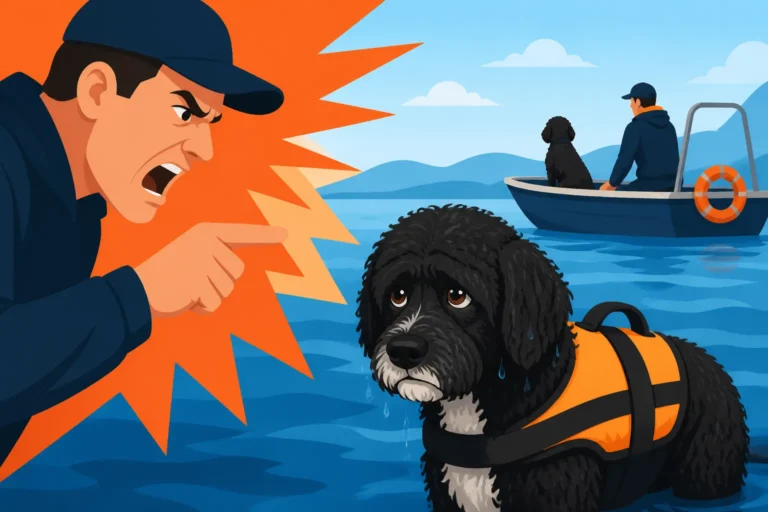
- Avoid punishment: Yelling or punishing them after they've already jumped will likely only teach them to be afraid of you or the boat, not to stay. What a Harsh Word Does to a Portuguese Water Dog's Water Work can be very detrimental.
- Retrieve calmly: Get them back into the boat as calmly and efficiently as possible. Use the handle on their life vest if necessary.
- Re-evaluate: Once they are back in, don't just continue. Take a break. Re-evaluate what might have gone wrong. Was the distraction too high? Was the session too long? Did you miss a pre-jump signal?
- Go back a step: If it happens repeatedly, it means you've probably progressed too quickly. Go back to a previous step where they were successful and build confidence there again before trying to move forward. Perhaps practice on the tied boat, or even on dry land, for a few more sessions. You can find many products on Amazon, such as longer tethers or even portable exercise pens, to help define their 'stay' zone more clearly in a controlled environment.
Remember, teaching a Portuguese Water Dog to stay in the boat is a journey, not a destination. It requires patience, consistency, and a deep understanding of this incredible breed. Their intelligence means they learn quickly, but their strong instincts mean you need to be smarter and more consistent than the pull of the water. With dedication, you'll soon have a reliable boat companion who understands when it's time to work, and when it's time to simply enjoy the ride with you.
Disclaimer
This article is for general informational purposes only and does not constitute professional advice. Laws, prices and regulations vary by location and change over time. Consult a qualified professional for guidance on your specific situation.