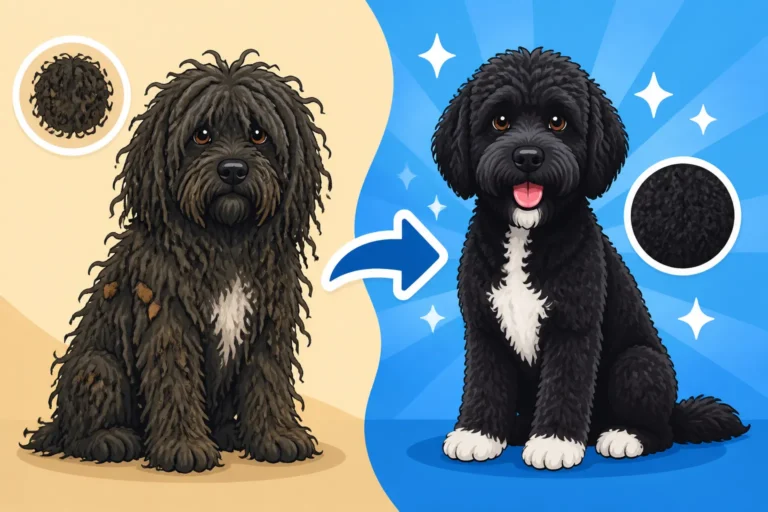
The Clip You Choose Decides a Portuguese Water Dog’s Grooming Bill
One of the first things that captures your heart about a Portuguese Water Dog is their incredible coat – whether it's the tight curls or the flowing waves, it's certainly a showstopper. But many new owners quickly discover that this magnificent coat comes with a significant ongoing commitment, both in time and money. The clip you choose for your beloved PWD isn't just about aesthetics; it profoundly dictates your grooming bill, whether you're paying a professional or investing in the tools and time to do it yourself. This guide will walk you through the various grooming styles for Portuguese Water Dogs, detailing the costs associated with each, so you can make an informed decision that suits both your lifestyle and your budget.
The Marvelous (and Demanding) Portuguese Water Dog Coat
Before we even dive into the different styles, it's absolutely crucial to understand the unique characteristics of a Portuguese Water Dog's coat. This isn't just fluffy fur; it's a highly functional, specialized coat designed for aquatic work, and it behaves very differently from many other breeds you might be familiar with. Knowing these traits is the first step to truly appreciating why PWD grooming costs can be so substantial.
The Two Distinct Coat Types: Curly vs. Wavy
Portuguese Water Dogs come in two primary coat types: curly and wavy. While both are single-coated (meaning no undercoat), non-shedding, and generally considered hypoallergenic, they each present their own set of grooming challenges and preferences. The curly coat is typically soft, compact, and forms tight, cylindrical curls that don't easily open up to the skin. It almost looks like a soft, dense fleece. The wavy coat, on the other hand, is generally softer and longer, with a slight sheen, and falls in more open, often shaggy waves rather than tight curls.
Many people assume a curly coat would be harder to manage, but often it's the wavy coat that can be trickier if not properly maintained, simply because its longer strands can tangle more easily if neglected. However, both types demand consistent attention to prevent matting, which is the bane of every PWD owner's existence. Understanding What a Portuguese Water Dog's Coat Is Made Of can help you appreciate its unique structure.
It's a common misconception that because they don't shed, PWDs are "easy" on the grooming front. Nothing could be further from the truth! Instead of shedding hair onto your furniture, their loose hair gets caught within the existing coat, creating knots and tangles. This is precisely why regular brushing and clipping are non-negotiable. Whether your PWD has tight curls or flowing waves, neglecting their coat for even a few weeks can lead to a matted mess that’s painful for your dog and costly to fix.
The Dreaded Mat: Why PWD Coats are Prone to Tangling
Mats are the ultimate enemy of the Portuguese Water Dog coat, and they form faster than you might imagine. A mat is essentially a dense clump of knotted hair that pulls on the dog's skin, causing discomfort, pain, and potentially skin infections if left unattended. Areas like behind the ears, under the collar, in the armpits, and around the tail are notorious hotspots for mat formation. These areas experience a lot of friction and are often overlooked during quick brushing sessions. You can learn more about Where a Portuguese Water Dog Mats First.
The single coat, while great for allergy sufferers, is also a prime reason for matting. Without an undercoat to provide some structure and prevent hair from wrapping around itself, the fine, often soft strands of a PWD's coat just intertwine. Add in water – which PWDs adore – and you have a recipe for disaster. When wet, the hair clumps together, and if not thoroughly dried and brushed out, those clumps quickly turn into felt-like mats that are incredibly difficult, and sometimes impossible, to brush out without causing significant pain to your dog. Many owners wonder Whether a Portuguese Water Dog Mats After Swimming, and the answer is a resounding yes, if not properly cared for.
Preventing mats is a daily battle, especially if your PWD is actively swimming or running through brush. It requires consistent brushing, careful drying after every water adventure, and proactive clipping. If you let mats get out of control, not only will your dog be in pain, but your grooming bill will skyrocket, as professional groomers often charge extra — sometimes a lot extra — for de-matting services due to the time, effort, and specialized tools required. In severe cases, a full shave-down might be the only humane option, which is both upsetting for the owner and an additional expense.
Exploring Traditional Portuguese Water Dog Clips
When people think of a Portuguese Water Dog, two iconic clips often come to mind: the Lion Clip and the Retriever Clip. These styles are steeped in the breed's history and tradition, reflecting its working heritage. While visually striking, each comes with its own set of grooming requirements and, consequently, its own impact on your wallet.
The Eye-Catching Lion Clip: History and High Maintenance
The Lion Clip is perhaps the most distinctive and historically significant clip for the Portuguese Water Dog. It involves shaving the hindquarters, muzzle, and a portion of the tail down to the skin, while leaving the front half of the body, the chest, head, and a plume at the end of the tail in full coat. This unique style wasn't just for show; it was traditionally used by fishermen to allow the dogs greater agility and buoyancy in the water while still providing warmth to their vital organs in colder climates. The thought was that the heavy coat on the front provided insulation, while the shorn rear offered less drag in the water.
While fascinating from a historical perspective, maintaining a Lion Clip today is a considerable undertaking and one of the most expensive options for a Portuguese Water Dog. Because parts of the coat are grown out long, these areas require daily, thorough brushing to prevent matting. The contrast between the shorn and full areas means precise clipping is needed every few weeks to keep the lines crisp and defined. This level of detail and frequency demands a highly skilled groomer, and their expertise comes at a premium. Consequently, Why a Portuguese Water Dog's Lion Clip Costs More is immediately apparent.
The Lion Clip isn't just about the professional groomer's bill; it also impacts your daily routine. Owners must be vigilant about brushing and conditioning the longer sections, especially after swims. Neglecting this even for a few days can result in heavy matting in the long portions of the coat, which then requires professional de-matting or even a complete shave-down, erasing the beautiful lion silhouette. For a pet owner, the sheer commitment often outweighs the aesthetic appeal, making it a rare choice outside of the show ring.
The Practical Retriever Clip: A Popular Choice for PWDs
The Retriever Clip is by far the most popular and practical choice for pet Portuguese Water Dogs today. This style involves clipping the entire body to a uniform length, usually between 1/2 inch to 1 inch, while leaving the hair on the head slightly longer for a more natural, balanced look. The goal is a tidy, athletic appearance that highlights the dog's muscular build without the dramatic contrasts of the Lion Clip. It’s a functional clip designed to keep the dog comfortable, clean, and mat-free, especially for active dogs who spend a lot of time swimming or playing outdoors.
From a cost perspective, the Retriever Clip is generally more affordable than the Lion Clip. While it still requires professional grooming every 4-8 weeks to maintain the length and shape, the uniform cut is less labor-intensive and doesn't demand the same level of precise artistry as the Lion Clip. Many groomers find this style much quicker to execute, which translates to a lower hourly rate for the owner. You might also find it easier to perform some maintenance yourself between professional grooms if you're inclined.
For most active Portuguese Water Dogs, this clip offers the best balance of aesthetics, comfort, and manageability. The shorter length significantly reduces the chances of matting, especially after swimming, as the hair dries more quickly and doesn't have as much length to tangle. This means less daily brushing for the owner and fewer emergency visits to the groomer for de-matting. It's truly a win-win for both dog and owner, making it the most sensible choice for the vast majority of PWD families. What the Retriever Clip Leaves and What It Takes is mostly about utility and comfort.
Alternative Clips and Their Cost Implications
While the traditional Lion and Retriever clips are well-known, many Portuguese Water Dog owners opt for alternative styles that prioritize ease of maintenance and comfort, often leading to significant savings in grooming costs. These "pet clips" or even full shave-downs are common solutions for busy families or dogs with particular coat challenges.
The Convenient Pet Clip: Short, Sweet, and More Affordable
The "pet clip" for a Portuguese Water Dog is essentially a variation of the Retriever Clip, often even shorter and more uniform. Think of it as clipping the entire body down to a very short, manageable length – sometimes as short as 1/4 inch or even less – for maximum ease of care. The goal here is purely practicality: to minimize brushing, reduce matting risk to almost zero, and keep the dog clean and comfortable with minimal effort. The head might be blended slightly or kept short to match the body.
This is undoubtedly the most budget-friendly option when it comes to ongoing grooming bills. Because the coat is kept so short, professional grooms can be spaced out further, typically every 8-12 weeks, depending on how fast your dog's hair grows and your personal preference. The groomer's time is also significantly reduced compared to longer clips, as there's less hair to wash, dry, and meticulously trim. This translates directly to lower fees per visit. Many owners find this clip liberating, especially those whose dogs are constantly in the water or getting into muddy adventures.
While it might not have the traditional flair, the pet clip is often the happiest choice for both the dog and the owner. The dog enjoys freedom from mats and quick drying times, while the owner enjoys a significant reduction in both grooming costs and daily maintenance efforts. It frees up more time and money for other activities, like training, fetching, or just cuddling. Which Clip Suits a Pet Portuguese Water Dog is almost always the shortest, most practical option for day-to-day life.
The "Restart Button" Shave Down: When It's Needed and What It Costs
Sometimes, despite an owner's best intentions, a Portuguese Water Dog's coat can become severely matted. This isn't just a cosmetic issue; dense mats can be incredibly painful, restrict movement, and lead to skin problems. When mats are too extensive or too tight to safely and humanely brush out, a full shave down becomes the only viable option. This means clipping the entire coat down to a very short length, often with a very fine blade, effectively hitting the "reset button" on the coat. It's not a clip chosen for style, but out of necessity and compassion for the dog.
A full shave down, while necessary in severe cases, is one of the most expensive grooming services you can incur. Groomers charge a premium for de-matting and shave-down services because they are incredibly time-consuming, physically demanding, and often involve delicate work to avoid nicking the skin under tight mats. The process can take several hours, requiring specialized blades, extra care, and often multiple blade changes due to dulling from the dense, matted hair. This is why a groomer might charge significantly more, sometimes several hundred dollars, for a shave-down compared to a regular maintenance clip. You might find yourself asking Why a Groomer Charges More for a Matted Portuguese Water Dog after such an experience.
Beyond the initial cost, a shave down also requires careful aftercare. The dog's skin, suddenly exposed, might be sensitive or prone to sunburn. The coat will take time to regrow, and during this period, the owner must be extra diligent with brushing as the new coat comes in to prevent future matting. While it's a difficult decision to make, a shave down is often the most humane way to relieve a dog from the pain of severe matting and provide a fresh start for proper coat care.
Deciphering Professional Grooming Bills for Your PWD
When you choose to rely on professional groomers for your Portuguese Water Dog, you're not just paying for a haircut. You're paying for expertise, specialized equipment, and the significant time and effort involved in handling a breed with such a demanding coat. Understanding what goes into that final bill can help you budget better and appreciate the service you're receiving.
Standard Services and How They Impact the Price
A standard professional grooming appointment for a Portuguese Water Dog typically includes several components: a thorough bath with high-quality shampoo and conditioner, a full blow-dry (often with a high-velocity force dryer to penetrate the dense coat), nail trimming, ear cleaning, and finally, the actual clipping and styling. Each of these steps is crucial for maintaining your PWD's health and appearance, and each contributes to the overall cost.
The primary factor influencing the price, as highlighted by our main topic, is the chosen clip. A Retriever Clip, with its uniform length, generally takes less time than a Lion Clip, which requires meticulous shaping and blending of different hair lengths. The size of your dog also plays a role; a larger PWD simply has more coat to manage than a smaller one, extending the grooming time. Moreover, the frequency of grooming impacts the per-visit cost; while more frequent visits mean paying more often, they can prevent more costly issues like matting. Therefore, How Often a Portuguese Water Dog Needs Clipping directly correlates with your annual expenditure.
Some groomers also offer tiered pricing based on the dog's temperament or coat condition. A PWD who is well-behaved, stands patiently for grooming, and has a well-maintained, mat-free coat will likely incur a standard fee. However, a dog who is anxious, squirmy, or arrives with a few tangles might require more time and patience from the groomer, potentially leading to a slightly higher charge. Building a good relationship with your groomer and ensuring your dog is comfortable with the process can help keep costs predictable.
De-matting Fees: The Hidden Expense You Want to Avoid
Ah, de-matting fees – the bane of many PWD owners' budgets. These are additional charges that groomers levy when a dog's coat has developed mats that need to be carefully worked out before the regular clipping can even begin. As discussed, Portuguese Water Dogs are highly prone to matting, and if left unattended, even small tangles can quickly become dense, painful mats. Professional groomers view de-matting as a separate, labor-intensive service, and rightly so.
De-matting is not simply brushing. It involves patiently and gently separating and removing knots using specialized tools and conditioning sprays, often section by section, inch by painful inch. This process is time-consuming, can be uncomfortable for the dog, and requires significant skill to avoid damaging the coat or irritating the skin. Most groomers charge by the hour for de-matting, and these hourly rates can be quite high. It's not uncommon for de-matting fees to add a substantial amount to the base grooming price, sometimes doubling or even tripling the total cost for a severely matted dog. This is precisely why preventing mats through regular home care is the ultimate money-saver.
To avoid these costly surprises, honest communication with your groomer is key. If you know your dog has some tangles, mention it when you book the appointment. A good groomer will assess the coat upon arrival and discuss the severity of the matting and the estimated de-matting fees with you before starting work. Sometimes, if the mats are too severe or the dog is too distressed, the groomer might advise a shave-down instead of de-matting, which, while also costly, is often the most humane option for the dog. Regular brushing at home is your best defense against these unwelcome additional charges.
Geographic Variations and Groomer Expertise
The cost of professional grooming for your Portuguese Water Dog isn't uniform across the board; it can vary significantly based on your geographical location and the individual groomer's experience and reputation. Just like many other services, grooming prices tend to be higher in urban areas or regions with a higher cost of living compared to rural or less affluent areas. This reflects overhead costs like rent, utilities, and staff wages, which are naturally higher in certain locales.
Beyond location, the groomer's expertise plays a pivotal role in pricing. A highly experienced groomer specializing in PWDs, who understands the breed's coat characteristics and traditional clips, will likely charge more than a general groomer who might have less specific breed knowledge. Their skill allows them to achieve a more precise, aesthetically pleasing cut and to handle challenging coats or temperaments with greater ease. These expert groomers often have a loyal clientele and may command higher fees due to demand and quality of service. Finding a groomer who truly understands The Lion Clip Costs a Portuguese Water Dog Owner Daily Brushing and how to manage those longer sections effectively is invaluable.
It's always a good idea to research local groomers, read reviews, and even ask for recommendations from other Portuguese Water Dog owners in your area. Don't be afraid to call around and get quotes, but also understand that the lowest price isn't always the best value. A slightly higher-priced groomer who does an excellent job and keeps your dog comfortable might save you money in the long run by preventing coat issues or needing fewer touch-ups. Consider it an investment in your dog's well-being and your peace of mind.
Taking the Clippers into Your Own Hands: Home Grooming
For many Portuguese Water Dog owners, the sheer cost and frequency of professional grooming can be daunting. This often leads to considering home grooming as a way to save money. While it's definitely possible to groom your PWD yourself, it's important to understand that it requires a significant upfront investment in tools, a steep learning curve, and a considerable time commitment. It's not just about picking up a pair of scissors and hoping for the best!
The Initial Investment in Essential Grooming Tools
Deciding to groom your Portuguese Water Dog at home means you'll need to outfit yourself with a complete set of quality tools. This isn't a cheap endeavor, but it's a one-time cost that can pay for itself over time compared to regular professional grooming. The absolute essentials include a good pair of dog clippers with multiple blade sizes (such as #10, #7F, #5F, #4F), clipper oil and coolant, a sturdy slicker brush, a wide-toothed comb, straight and curved grooming shears, thinning shears, nail clippers or a Dremel, ear cleaning solution, and a high-quality dog shampoo and conditioner. A non-slip grooming table is also highly recommended for your safety and your dog's comfort and stillness.
Beyond the basic cutting tools, a force dryer is practically a non-negotiable item for a Portuguese Water Dog, especially if they swim regularly. Their dense, water-repellent coat takes forever to air dry, and if left damp, it can lead to skin issues and matting. A force dryer quickly and efficiently blasts water out of the coat, ensuring it's thoroughly dry. While the initial outlay for all these tools can run into hundreds of dollars, remember that you're investing in a toolkit that will last for years, saving you countless professional grooming fees. For more details on what you might need, check out What Home Grooming Equipment Costs for a Portuguese Water Dog.
Choosing the right clippers is paramount. Portuguese Water Dog coats are thick and dense, and cheap, underpowered clippers will quickly become frustrated, pull hair, and overheat, making the experience unpleasant for both you and your dog. Investing in a professional-grade set of clippers that can handle the volume and texture of their coat is essential. Many seasoned owners find value in brands known for durability and strong motors. Chewy offers a wide selection of grooming tools, from clippers to brushes, making it a convenient one-stop shop for setting up your home grooming station.
Learning Curve and Time Commitment for DIY Grooming
The financial savings of home grooming are clear, but the cost in terms of time and skill should not be underestimated. Grooming a Portuguese Water Dog is an art form, and it takes practice, patience, and a steady hand to achieve a professional-looking result without causing injury. Most new home groomers start with a shorter, simple pet clip, as more intricate styles like the Lion Clip require advanced skills. You’ll spend considerable time watching tutorials, reading guides, and practicing on your cooperative (or not-so-cooperative) dog.
The time commitment for each grooming session is substantial. A full groom, including bathing, drying, brushing, and clipping, can easily take anywhere from 2 to 4 hours, especially when you're first learning. And this isn't a one-and-done deal; depending on the clip you maintain, you'll need to repeat this process every 4 to 8 weeks, with daily or weekly brushing in between. It's important to be realistic about How Long Home Grooming a Portuguese Water Dog Takes Weekly. Many people underestimate the sheer physical effort and mental focus required.
Beyond the actual grooming, there's the ongoing maintenance. Your PWD's coat needs daily or at least every-other-day brushing to prevent mats from forming, particularly in friction areas. This is a 15-30 minute commitment that can't be skipped. If your dog loves water, every swim requires a thorough rinse and blow-dry session to prevent matting and skin irritation. So, while you're saving on professional fees, you're investing a significant amount of your own time and effort into maintaining that beautiful coat.
The Ongoing Costs of Maintaining a Home Grooming Routine
Even once you've made the initial investment in tools, home grooming isn't entirely free. There are ongoing consumables and maintenance items that contribute to your overall grooming budget. Clipper blades need to be sharpened periodically or replaced when they become dull, typically every few months depending on usage. Clipper oil and coolant are used with every grooming session to keep your clippers running smoothly and prevent overheating. Shampoos, conditioners, and ear cleaners are also recurring expenses.
Consider the cost of electricity, especially if you're frequently using a high-powered force dryer for an hour or more at a time. While individually these might seem small, they add up over a year. You might also find yourself needing to replace brushes or combs that wear out over time. It's a continuous investment, even if it's less than paying a professional groomer. You might ask Whether Grooming a Portuguese Water Dog at Home Saves Money, and the answer is generally yes, but not without these ongoing minor expenses and a major time commitment.
Another aspect to consider is the potential for mistakes. While you'll get better with practice, nicks, uneven cuts, or missed mats can occur. In some cases, a severe mat you couldn't handle might still necessitate an emergency professional visit. So, while home grooming offers significant savings, it's crucial to factor in these ongoing costs and the potential for a "rescue" groom if things go awry. It's a journey, not just a one-time decision.
Long-Term Budgeting for Your Portuguese Water Dog's Grooming
Understanding the immediate costs of grooming is one thing, but truly owning a Portuguese Water Dog means looking at the long game. Their lifespan is typically 12-15 years, and those grooming expenses, whether professional or DIY, accrue year after year. Factoring these into your long-term budget is essential for responsible pet ownership.
Projecting Annual Grooming Expenses Based on Clip Choice
Let's get down to some numbers. The clip you choose has a dramatic effect on your annual grooming costs. For a standard professional Retriever Clip, you might be looking at grooms every 6-8 weeks. If we consider 7 visits a year, that's a baseline. A Lion Clip, due to its complexity and more frequent touch-ups, could easily require 8-10 professional visits annually, and each visit would be at a higher price point. On the other end, a very short pet clip might only need 4-6 visits a year.
Here's a simplified breakdown to illustrate the difference. Please note that these are hypothetical examples, and actual prices vary wildly by region and groomer:
| Clip Type | Frequency (Professional) | Estimated Cost Per Groom | Estimated Annual Cost | DIY Time Investment (Weekly) |
|---|---|---|---|---|
| Lion Clip | Every 4-6 weeks (8-10x/year) | Higher range | Very High | 30-60 minutes daily |
| Retriever Clip | Every 6-8 weeks (6-8x/year) | Mid-range | High | 15-30 minutes, 3-4x/week |
| Short Pet Clip | Every 8-12 weeks (4-6x/year) | Lower range | Moderate | 10-15 minutes, 2-3x/week |
| DIY (Retriever/Pet) | Never (except emergencies) | Initial tool investment | Low (consumables only) | 1-2 hours for full groom (monthly), plus daily brushing |
This table clearly shows that your clip choice isn't just a single decision; it's a recurring financial commitment. Over Twelve Years of a Portuguese Water Dog, Priced Out, grooming becomes one of the most significant line items in your pet ownership budget, second only to food and potential veterinary care. If you choose the DIY route, your financial cost per year significantly decreases, but your time investment escalates dramatically.
When budgeting, always factor in a little extra for unexpected situations. Even with the best intentions and home grooming, there might be a year where a bad mat forces a professional shave-down, or your clippers break and need replacing. Having an emergency fund or considering pet insurance for unforeseen circumstances (though grooming typically isn't covered, related skin issues could be) is always a smart move for pet owners.
Unexpected Grooming Scenarios and How to Prepare
Life with a Portuguese Water Dog is rarely predictable, and that includes their grooming needs. Unexpected scenarios can crop up, suddenly inflating your grooming expenses. One common issue is a sudden, severe matting crisis due to a missed brushing session, a particularly muddy adventure, or a prolonged period of illness where regular grooming fell by the wayside. This almost always leads to a costly professional de-matting session or a full shave-down. These emergency grooms are almost always more expensive than a routine appointment.
Another scenario could be skin issues or allergies that require specialized shampoos or more frequent bathing and drying. While not directly grooming styles, these conditions impact the grooming process and can add to your product costs. If your PWD develops a skin infection under a mat, that’s a vet bill on top of the groomer’s charge. This is where pet insurance, like a plan from Healthy Paws, can be incredibly valuable, covering the unexpected veterinary costs associated with skin infections or other health issues that might complicate grooming.
It’s also wise to consider the "aging factor." As a Portuguese Water Dog gets older, they might become less tolerant of long grooming sessions or develop joint issues that make standing on a grooming table uncomfortable. This might necessitate more frequent, shorter grooming appointments, or finding a groomer with specialized senior dog handling experience, which could come at a higher price. Alternatively, you might need to invest in special grooming equipment at home, like a hydraulic grooming table, to ensure your senior PWD remains comfortable. Planning for these eventualities allows you to provide the best care without financial strain.
Making the Best Grooming Decision for Your PWD and Your Wallet
Choosing the right clip for your Portuguese Water Dog is a highly personal decision that balances several factors: your dog's comfort, your lifestyle, aesthetic preferences, and, of course, your budget. There's no single "right" answer, but making an informed choice is key to a happy dog and a solvent wallet.
Prioritizing Your Dog's Comfort and Your Lifestyle
Ultimately, your Portuguese Water Dog's comfort and well-being should be the top priority. A heavily matted coat is painful and unhealthy, regardless of how much you love the look of a long, flowing mane. For active, swimming PWDs, a shorter clip (like the Retriever or a pet clip) is almost always the most practical and comfortable choice. It dries faster, collects less debris, and is significantly less prone to matting, allowing your dog to fully enjoy their adventurous life. This freedom from discomfort translates to a happier, healthier dog who can do what they were bred to do.
Your lifestyle also plays a massive role. If you have a demanding job, a busy family, or simply aren't keen on spending hours each week brushing, a shorter clip maintained by a professional groomer is probably your best bet. It might seem more expensive per visit, but the peace of mind and time saved can be invaluable. Conversely, if you enjoy hands-on dog care, have the time to dedicate to regular brushing, and are willing to learn, home grooming can be incredibly rewarding and cost-effective. However, be honest with yourself about your commitment level – a neglected coat is always more expensive and painful in the long run.
Think about how much you want to engage with your dog's coat maintenance. Do you love the look of the full coat, understanding it requires significant daily brushing? Or do you prefer a wash-and-wear approach, even if it means a shorter cut? The best clip is the one that allows your PWD to be a PWD – active, happy, and comfortable – while fitting seamlessly into your daily life.
Partnering with Your Breeder and Groomer for Guidance
Don't feel like you have to navigate the world of Portuguese Water Dog grooming alone! Your breeder is an invaluable resource, having years of experience with PWD coats. They can offer insights into Whether a Curly Portuguese Water Dog Is Harder to Dry versus a wavy coat, recommend specific brushes or techniques, and even provide guidance on what blade lengths work best for your dog's specific coat type. They've seen it all, and their advice can save you a lot of trial and error (and money!).
Building a strong relationship with a professional groomer is equally important. A good groomer isn't just a clipper; they're a partner in your dog's health and well-being. They can assess your dog's coat condition, recommend the most suitable clip based on their lifestyle, and even teach you basic maintenance tips for between appointments. They can explain How Many Grooms a Portuguese Water Dog Needs a Year for various clips and help you budget. Don't hesitate to ask questions, discuss your budget concerns, and seek their professional opinion. They can spot potential skin issues, ear infections, or matting hotspots before they become serious problems.
Whether you choose a classic Lion Clip, a practical Retriever Clip, or a super-short pet style, the key is consistency and care. Regular grooming, whether done by you or a professional, is non-negotiable for a Portuguese Water Dog. By understanding the costs, the time commitment, and the needs of their unique coat, you can ensure your PWD remains happy, healthy, and beautifully coiffed throughout their wonderful life with you.
Disclaimer
This article is for general informational purposes only and does not constitute professional advice. Laws, prices and regulations vary by location and change over time. Consult a qualified professional for guidance on your specific situation.