How a Curly Coat Differs From a Wavy Coat
One of the most common questions new Portuguese Water Dog owners, or those simply admiring the breed, ask is about their coat. It's not just a matter of aesthetics; understanding whether your PWD has a curly or wavy coat can dramatically impact your daily grooming routine, your dog's comfort, and your budget. This guide will walk you through the distinct characteristics of each coat type, the practical implications for owners, and how to best care for your beloved water dog, no matter their glorious locks.
Understanding the Portuguese Water Dog Coat Standard
When you first dive into the world of Portuguese Water Dogs, you quickly learn about their unique, single coat that is a hallmark of the breed. Unlike many double-coated breeds, PWDs don't have an undercoat, which is part of what makes them popular with allergy sufferers. But even within this single-coat characteristic, there are distinct variations that breeders and enthusiasts recognize: the curly and the wavy. Both are considered correct and desirable by the breed standard, but they present very different experiences for the owner.
The Genetic Basis of Coat Type
The difference between a curly and a wavy coat isn't just random; it's rooted in genetics. While we don't need to get into complex scientific jargon, it's enough to understand that specific gene combinations dictate the texture and pattern of a PWD's hair. Reputable breeders often consider these genetic factors when planning litters, aiming to produce healthy puppies with characteristic coats. This genetic inheritance is why you might see both coat types even within the same litter, depending on the parents' genetic makeup. The core of it, though, is that both are natural expressions of the breed's unique genetic blueprint.
Purpose of the Working Dog's Coat
It's crucial to remember that the Portuguese Water Dog's coat wasn't bred for looks alone; it was developed for function. These dogs were integral to the fishing fleets of Portugal, leaping into icy waters to retrieve lost tackle, herd fish into nets, and carry messages between boats. Their dense, water-resistant coat was their protective suit, keeping them warm in cold water and shielding their skin from the elements. Whether curly or wavy, the coat's primary purpose was insulation and protection. This heritage still influences how we care for their coats today, ensuring their skin stays healthy and their coat maintains its protective qualities, especially for those PWDs still enjoying their natural affinity for water.
The Curly Coat: Characteristics and Challenges
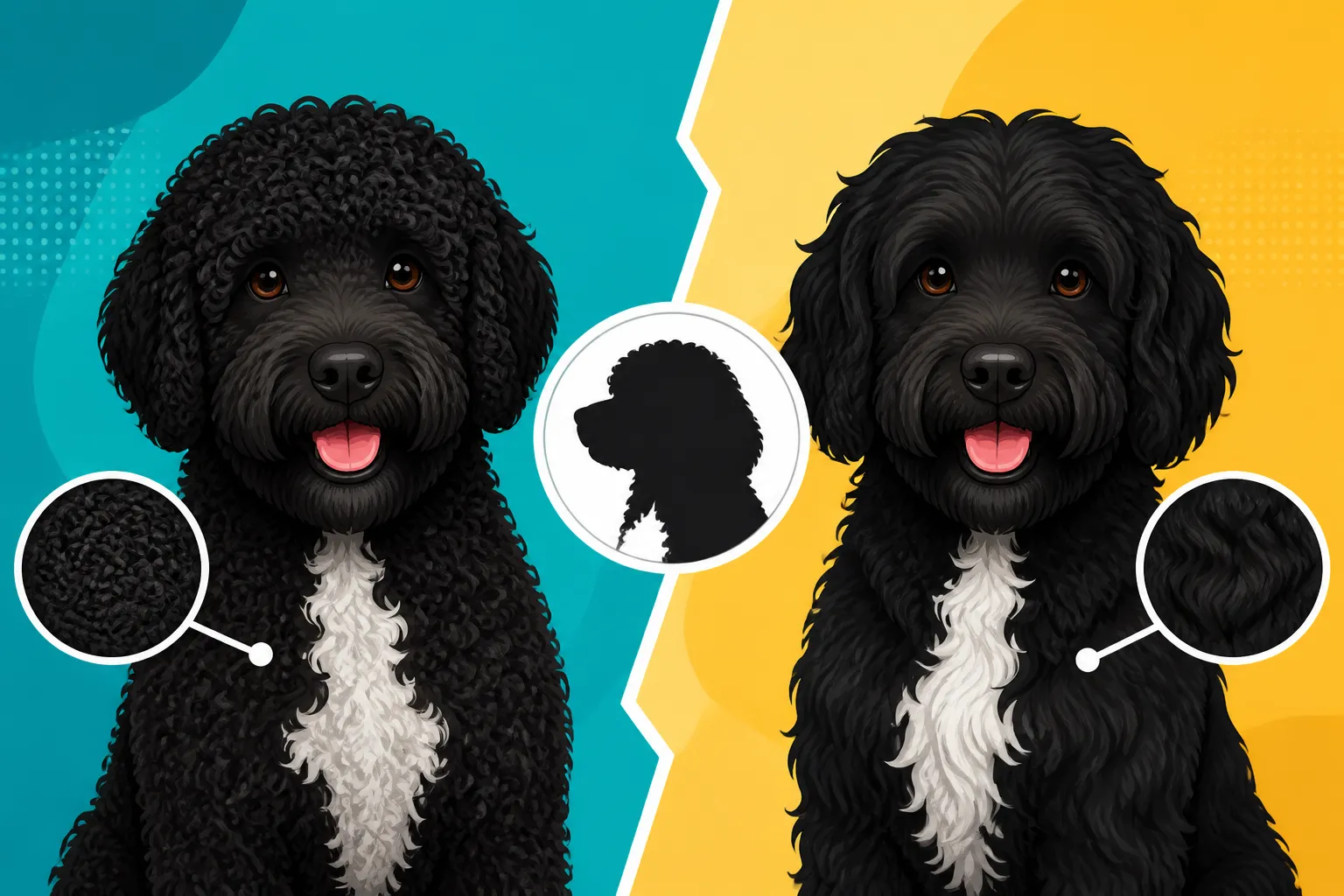
Ah, the curly coat! This is often what people picture when they think of a Portuguese Water Dog. It’s a magnificent sight – dense, tight curls that form cylinders or ringlets. But with that beauty comes a distinct set of grooming needs that owners need to be prepared for.
Texture and Density
A curly coat is characterized by compact, cylindrical curls that can range from loose spirals to tight ringlets. The hair itself is generally fine but very dense, giving the dog a robust, plush appearance. When you run your hand through a curly coat, you'll feel the springiness of the individual curls and the overall thickness. This density is fantastic for insulation and protection in water, but it also means that shed hair doesn't fall out easily. Instead, it gets trapped within the other curls, forming the perfect storm for mats if not regularly addressed. This trapped hair is a key reason why PWDs are often considered "hypoallergenic," as the dander and shed hair don't readily disperse into the environment.
Matting Tendencies
Let's be real, mats are the curly-coated PWD owner's nemesis. Because the shed hair gets caught in the tightly wound curls, it forms tangles that, if left unchecked, quickly escalate into solid felt-like mats. These mats are not just unsightly; they can be incredibly painful for your dog, pulling on their skin and even causing skin infections if moisture gets trapped underneath. Common areas for mats include behind the ears, under the armpits, around the collar or harness, in the groin, and on the hocks. It's a never-ending battle, or at least it feels that way sometimes! Regular and thorough brushing, all the way down to the skin, is the only way to prevent this discomfort. Neglecting a curly coat, even for a few days, can lead to matting that requires extensive, and sometimes painful, professional intervention. You might even find yourself looking for specialized detangling sprays or brushes on sites like Chewy to try and keep ahead of the game.
Drying Time and Importance
The dense nature of the curly coat means it acts like a sponge, absorbing and holding a significant amount of water. This makes drying a curly-coated PWD a lengthy and crucial process. Simply air-drying, especially after a full swim, is not an option if you want to prevent skin issues and matting. The trapped moisture against the skin creates a breeding ground for bacteria and yeast, leading to hot spots and other dermatological problems. Many owners of curly-coated PWDs invest in high-velocity force dryers (available on Amazon, for example) to thoroughly dry their dogs down to the skin. This isn't just about preventing mats; it's about maintaining their skin health. Drying a Portuguese Water Dog After Every Swim is not just a suggestion, it's a necessity. It’s also why many owners opt for shorter clips, which we'll discuss later, as they significantly reduce drying time and matting risk.
The Wavy Coat: Characteristics and Management
Now, let's talk about the wavy coat. While still unmistakably a Portuguese Water Dog, the wavy coat offers a different aesthetic and, thankfully, a slightly different grooming experience.
Texture and Flow
The wavy coat is characterized by soft, flowing waves rather than tight curls. The hair lies somewhat flatter against the body, creating a more relaxed, shaggier look. The individual hairs are generally thicker than those found in a curly coat, and they have a distinct sheen. When a wavy-coated PWD runs, their coat has a beautiful, almost liquid motion. This coat type can also form cords if left completely ungroomed, similar to Poodles or Komondors, but it's not the typical look for a pet PWD. For many, the wavy coat offers a slightly less intense visual density, though it's still incredibly lush and beautiful.
Shedding Characteristics
While it's often said that Portuguese Water Dogs don't shed, that's not entirely accurate. They have a single coat that grows continuously, and like all mammals, they do lose dead hair. The difference is how that hair is shed. In a wavy coat, the shed hair still tends to get caught within the longer waves, much like with a curly coat, but perhaps not as intensely. This means you won't find tumbleweeds of dog hair rolling across your floors like you might with a Labrador. However, if not brushed regularly, that trapped hair will still lead to tangles and mats. The "shedding" is more about managing the dead hair that wants to stay put in the coat than about loose hair flying everywhere. This makes How a Portuguese Water Dog Is Hypoallergenic a common question, and the answer lies in this minimal dispersal of dander and shed hair.
Grooming Needs
Grooming a wavy coat still requires dedication, but some owners find it slightly less demanding than a curly coat. The looser waves can be a bit more forgiving if you miss a day of brushing, but that doesn't mean you should make a habit of it! Regular, thorough brushing is still paramount to prevent mats, especially in those high-friction areas. The goal is to reach the skin with your brush and comb, ensuring no tangles are forming at the base of the hair shaft. Because the hair can grow quite long and flowing, owners often opt for clips that keep the coat at a manageable length, preventing it from dragging on the ground or collecting too much debris during outdoor adventures. While a wavy coat may dry a bit faster than a super-dense curly coat due to its slightly less compact nature, a force dryer is still highly recommended, especially after swimming, to ensure the skin is completely dry.
Practical Differences for Owners: Grooming, Drying, and Lifestyle
Understanding the physical differences between curly and wavy coats is one thing, but how does that translate to daily life with your Portuguese Water Dog? The reality is, your dog's coat type will influence many aspects of their care and your routine.
Daily Brushing Routines
Regardless of whether your PWD has a curly or wavy coat, daily brushing is non-negotiable if you want to keep them mat-free, comfortable, and healthy. For a curly coat, the brushing needs to be incredibly diligent. You need to line-brush, section by section, ensuring you get right down to the skin. Missing even a small spot can lead to a mat forming deep in the coat, which then becomes a nightmare to remove. Many curly-coated PWD owners dedicate 15-30 minutes every single day to brushing, sometimes more if their dog is actively swimming or has a particularly thick coat. A sturdy slicker brush and a metal comb (think Greyhound comb) are your best friends here. You might even find specialty brushes recommended by groomers for dense coats on sites like Chewy.
For a wavy coat, while daily brushing is still highly recommended, some owners might find they can stretch it to every other day if their dog isn't getting wet or running through heavy brush. However, the same principle applies: you must brush down to the skin. The slightly coarser texture of wavy hair can sometimes make mats feel a bit tougher to work out if they do form, so consistency is key. Neglecting either coat type will inevitably lead to painful, skin-tight mats that often require shaving, which can be upsetting for both you and your dog. How Long Brushing a Portuguese Water Dog Takes is a question with a variable answer, but always a significant time commitment.
Bathing and Drying Techniques
Bathing a Portuguese Water Dog, regardless of coat type, is a commitment. Their coats are designed to repel water to a degree, meaning it takes a good soak to get them thoroughly wet. Always use a high-quality shampoo designed for dogs, and follow up with a good conditioner to help with detangling. The key, however, is the drying. As mentioned before, a force dryer is practically essential. For curly coats, the tight curls act like sponges, holding water close to the skin. For wavy coats, while perhaps slightly less dense, the sheer volume of hair still means it retains a lot of moisture.
Without a force dryer, you're looking at hours for your PWD to air dry, during which time mats can form as the hair settles, and skin issues can brew. When using a force dryer, ensure you are systematically drying the dog down to the skin, lifting the hair, and moving the nozzle to prevent concentrating heat in one spot. This process, even with a powerful dryer, can take anywhere from 45 minutes to over two hours, depending on the dog's size, coat thickness, and length. Never let your PWD air dry after a swim and then skip a brush; this is a recipe for disaster.
Professional Grooming Frequency
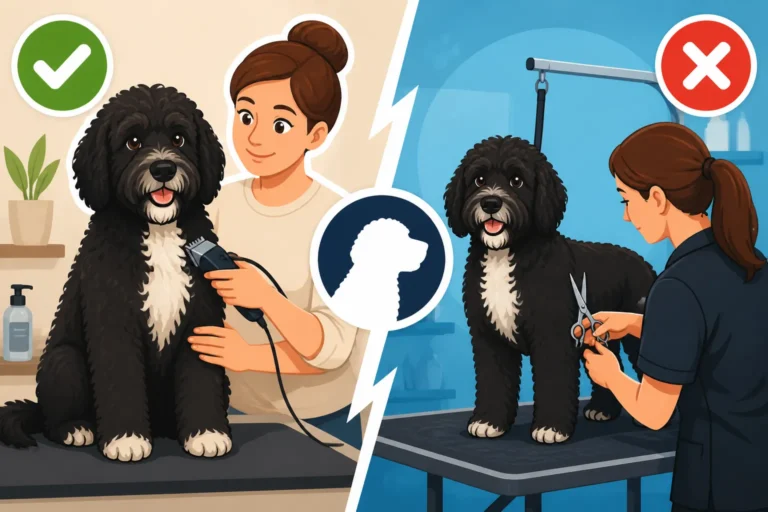
Even if you're a dedicated home groomer, most PWD owners rely on professional groomers at least periodically. For a curly-coated PWD, many owners choose to keep their dog in a shorter "retriever clip" (or even a puppy clip) year-round to minimize the daily brushing struggle. This might mean a professional groom every 6-8 weeks. Groomers are skilled at dematting, clipping, and drying, which saves you a lot of time and effort. If you prefer a longer coat or the traditional "lion clip," you might need professional grooming more frequently, perhaps every 4-6 weeks, or supplement with very rigorous daily home grooming. The Retriever Clip Is the Coat Most Portuguese Water Dogs Wear because it is simply more practical for active pet dogs.
Wavy-coated PWDs also benefit from professional grooming on a similar schedule. While the waves might appear less prone to matting at first glance, the length and density still require attention. A professional groomer can maintain a consistent length, trim the feet and sanitary areas, and check for any hidden mats that you might have missed. They also have the tools and experience to thoroughly bathe and dry your dog, ensuring optimal coat and skin health. It's an investment, but one that pays off in a healthy, happy dog and less stress for you.
| Feature | Curly Coat | Wavy Coat |
|---|---|---|
| Texture | Dense, cylindrical, tight ringlets | Soft, flowing waves, often shaggier |
| Appearance | Plush, compact, "poodle-like" | More open, less dense visually, "shaggy" |
| Matting Tendency | Very high, due to trapped shed hair | High, but sometimes slightly less intense |
| Drying Time | Long, holds significant water, force dryer essential | Long, still holds much water, force dryer highly recommended |
| Brushing Needs | Daily, thorough line-brushing to the skin | Daily to every other day, thorough brushing to the skin |
| Common Clips | Retriever Clip, Lion Clip (less common for pets) | Retriever Clip, Puppy Clip |
| "Hypoallergenic" | Yes, trapped hair prevents dander dispersal | Yes, trapped hair prevents dander dispersal |
Beyond Appearance: Health and Coat Type
While the visual and grooming differences between curly and wavy coats are significant, it's also worth touching on whether these coat types have any bearing on a PWD's overall health or other characteristics. Generally, the coat type itself isn't directly linked to specific health conditions, but coat maintenance certainly is.
Coat Changes with Age
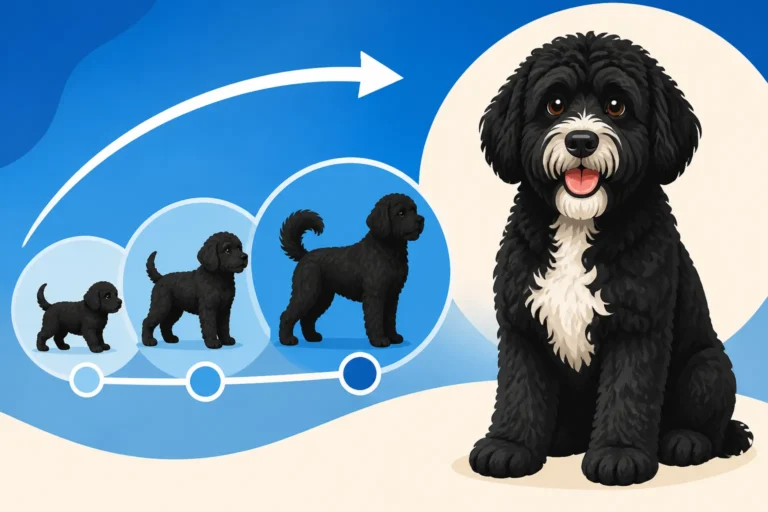
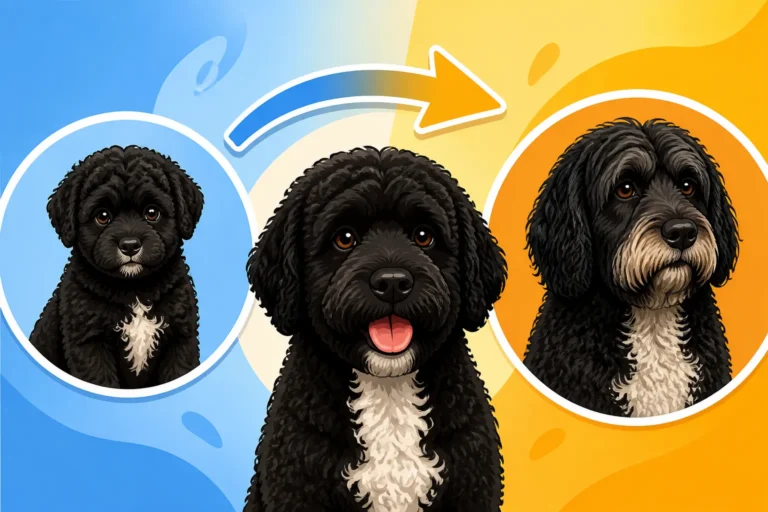
It's not uncommon for a Portuguese Water Dog's coat to change slightly as they mature. Puppies often have a softer, fluffier "puppy coat" that gradually transitions to the adult texture. This transition period, usually between 6 and 18 months, can be a particularly challenging time for grooming, as the old puppy coat sheds out and gets tangled in the incoming adult coat. Mats can form quickly and seemingly out of nowhere during this phase, requiring extra diligence. Both curly and wavy coats will go through this change. As a PWD ages into its senior years, you might notice the coat texture softening again, or perhaps some thinning in certain areas. This is a natural part of aging and is generally not specific to one coat type over another. You may also notice some graying, particularly around the muzzle and eyes, regardless of their base coat color. What Changes in an Aging Portuguese Water Dog's Coat can be a concern for owners, but many changes are benign.
"Improper Coat" Misconception
When discussing PWD coats, it's important to clarify the difference between a naturally curly or wavy coat and what breeders refer to as an "improper coat." An improper coat, often denoted as "IC," is a genetic fault characterized by a soft, fluffy, shedding coat that lacks the characteristic water-resistant texture of a proper PWD coat. It’s essentially a throwback to an ancestral gene that should have been bred out. These dogs might shed considerably more and often don't have the protective qualities of a true PWD coat. Neither a curly nor a wavy coat is an "improper coat"; both are correct and desirable. The presence of an improper coat is usually identified through a DNA test and is a distinct genetic issue separate from the curly vs. wavy distinction. A reputable breeder will always test for this and share the results. What Improper Coat Means in a Portuguese Water Dog is a key piece of information for any potential owner.
Making Peace with Your PWD's Unique Coat
Ultimately, whether your Portuguese Water Dog has a curly or a wavy coat, the fundamental truth remains: their coat is a defining characteristic that requires consistent care and attention. There's no "easy" option here; both types are high-maintenance in their own way.
Embracing the Differences
Instead of viewing the coat type as a burden, many PWD owners learn to embrace it as part of the unique charm of the breed. Each curl and wave tells a story of a dog bred for a specific, demanding job. The bond you form during grooming sessions can actually be a wonderful thing, a quiet time for connection and affection. It's also incredibly rewarding to see your PWD with a beautifully maintained, healthy coat, reflecting the care you put into them. Remember, a PWD's coat is part of their identity, a functional marvel that protected their ancestors in the rough seas.
Essential Tools for Both Types
To successfully manage your PWD's coat, you'll need a toolkit of essentials:
- Slicker Brush: For general brushing and loosening tangles. Get a good quality one that can penetrate the dense coat.
- Metal Comb (Greyhound comb): Essential for checking your work and finding hidden mats. The coarse teeth can get through dense hair, and the finer teeth are good for sensitive areas like ears and face.
- Force Dryer: A non-negotiable for thoroughly drying the coat after baths or swims. You can often find a good selection of these professional-grade dryers on Amazon.
- Quality Shampoo and Conditioner: Look for products that are moisturizing and suitable for thick, curly coats. Your local pet store or online retailers like Chewy will have options.
- Blunt-nosed Scissors: Handy for carefully snipping out small, unmanageable mats or trimming around the eyes.
- Clippers: If you plan to do any home grooming or maintain a shorter clip, investing in a good set of clippers with various blade sizes (e.g., a 10, 7F, 5F blade) is a must.
- Ear Cleaner: Because PWDs love water, their ears need regular attention. A good ear cleaning solution will help prevent infections.
Regardless of curly or wavy, the core message is this: dedication to regular grooming is not just about aesthetics; it's about your Portuguese Water Dog's health, comfort, and well-being. Knowing what to expect from their particular coat type simply helps you prepare for the wonderful journey ahead.
Disclaimer
This article is for general informational purposes only and does not constitute professional advice. Laws, prices and regulations vary by location and change over time. Consult a qualified professional for guidance on your specific situation.