Whether Two Carriers Produce an Improper Coat
It's incredibly frustrating when you're trying to understand the nuances of Portuguese Water Dog genetics, especially when terms like "carrier" and "improper coat" get thrown around. As responsible owners and potential breeders, we all want to ensure the health and proper appearance of these magnificent dogs. This guide is here to demystify the inheritance patterns of the improper coat gene, specifically addressing whether breeding two carrier dogs will result in puppies with this distinct coat type.
Deciphering the Improper Coat Gene in Portuguese Water Dogs
The "improper coat" in Portuguese Water Dogs (often abbreviated as IC) isn't a health issue, but rather a deviation from the breed standard that affects the texture and shedding properties of their beautiful coats. It's a topic that comes up quite a bit in breed circles, as it impacts everything from showing prospects to grooming routines. If you're wondering What an Improper Coated Portuguese Water Dog Looks Like, imagine a coat that feels softer, more like a fluffy lamb's wool, often appearing sparse or flat, and sometimes even shedding more than the typical PWD coat. This is a stark contrast to the dense, waterproof, non-shedding (or very low-shedding) curly or wavy coats that are characteristic of the breed.
The cause of this improper coat lies within a specific gene. Thanks to advancements in canine genetics, we now know that this trait is inherited in a simple recessive pattern. This means a dog needs to inherit two copies of the specific gene mutation—one from each parent—to express the improper coat phenotype. This genetic understanding is incredibly valuable for breeders, allowing them to make informed decisions and avoid unintentional pairings that could produce puppies with this trait. The good news is that DNA testing has become standard, so breeders no longer have to guess.
The Genetic Basis of Improper Coat
The gene responsible for the improper coat is known as the FGF5 gene, and the specific mutation is often referred to as the IC or improper coat allele. Dogs inherit two copies of every gene, one from their mother and one from their father. For the FGF5 gene, there are typically two relevant alleles we're concerned with in Portuguese Water Dogs: the 'normal' allele (let's call it 'N') and the 'improper coat' allele (let's call it 'ic').
Here's how the combinations work:
- N/N (Clear): This dog has two copies of the normal gene. It will have a proper Portuguese Water Dog coat and cannot pass on the improper coat gene to its offspring. It's "clear" of the gene.
- N/ic (Carrier): This dog has one normal gene and one improper coat gene. It will have a proper Portuguese Water Dog coat because the normal gene is dominant. However, it carries the improper coat gene and can pass it on to its puppies. These dogs are perfectly healthy and have the desired coat type themselves.
- ic/ic (Affected): This dog has two copies of the improper coat gene. It will display the improper coat, meaning its coat will be softer, less dense, and may shed more.
Understanding this simple recessive inheritance is key to preventing improper coats in future generations. It's why many reputable breeders will happily share Which Gene Causes Improper Coat in a Portuguese Water Dog information and their dogs' testing results with prospective buyers.
Why It's Not a Health Concern
It's crucial to reiterate that an improper coat is purely a cosmetic trait and does not impact the dog's health, temperament, or ability to perform as a Portuguese Water Dog. An improper coated PWD can still be an excellent companion, a loving family member, and participate in many activities. They are Whether an Improper Coated Portuguese Water Dog Is Healthy in every other way, and often just require slightly different grooming care. While it's not desirable for show dogs due to breed standards, for a pet owner, it's really just a matter of preference and understanding the grooming implications. For instance, their softer coat might be more prone to matting if not brushed regularly, similar to how Curly or Wavy: the Two Portuguese Water Dog Coats have different grooming needs.
The Mechanics of Recessive Inheritance: When Carriers Mate
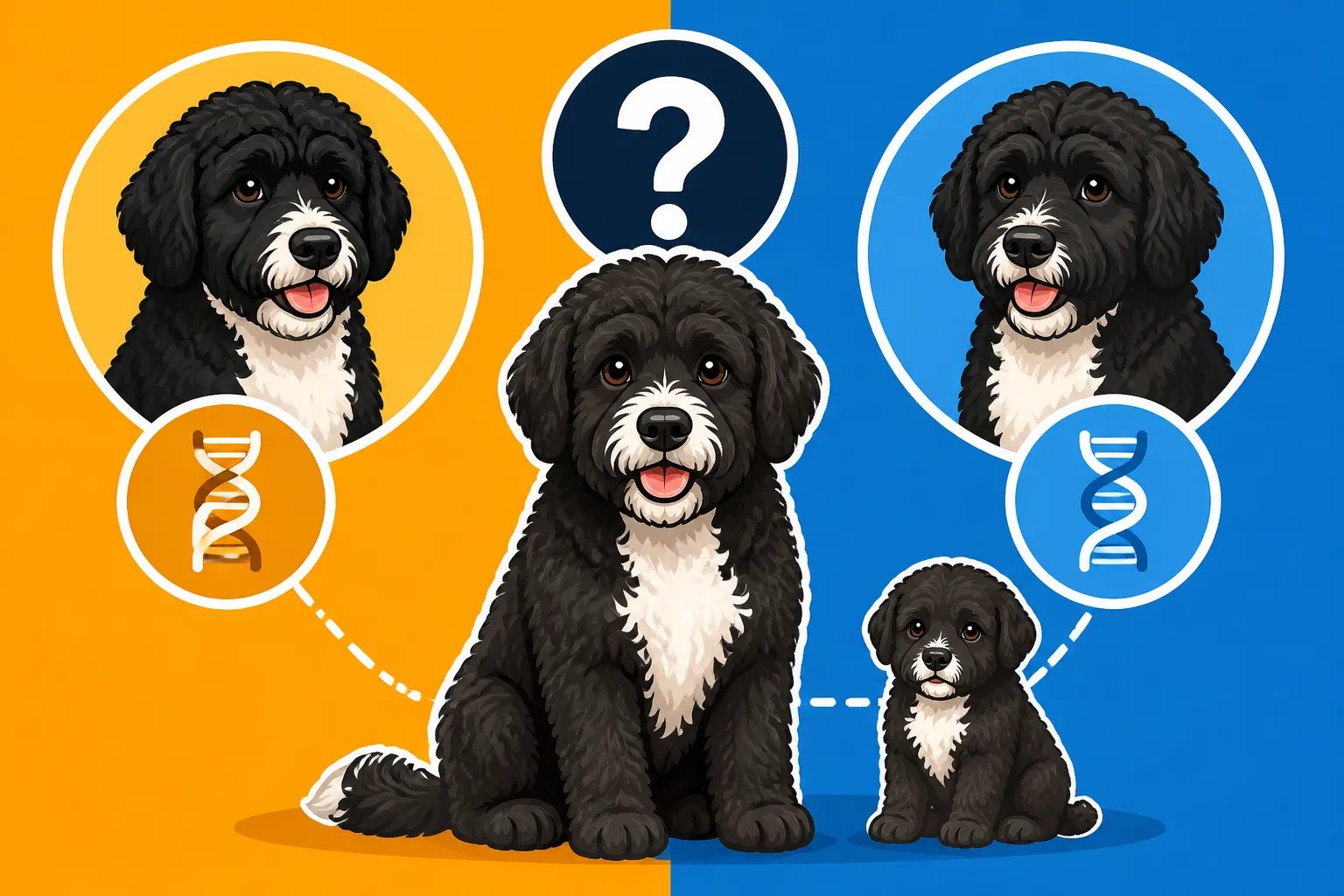
Now, let's get to the heart of the matter: what happens when two Portuguese Water Dog carriers for the improper coat gene are bred together? This is where the magic (or in this case, the genetics) of recessive inheritance truly plays out. It’s a bit like playing the lottery, but with predictable probabilities. When two dogs who each carry one copy of a recessive gene (N/ic) are bred, there are four possible combinations for each puppy, and these combinations don't always result in a proper coat.
Imagine each parent as a bag with two marbles: one 'N' marble and one 'ic' marble. When they have a puppy, they each randomly contribute one marble to that puppy.
Here are the potential outcomes:
- N from Parent 1 + N from Parent 2 = N/N (Clear): The puppy receives a normal gene from both parents. This puppy will have a proper coat and will not carry the improper coat gene.
- N from Parent 1 + ic from Parent 2 = N/ic (Carrier): The puppy receives a normal gene from one parent and an improper coat gene from the other. This puppy will have a proper coat but will be a carrier, just like its parents.
- ic from Parent 1 + N from Parent 2 = ic/N (Carrier): Same as above, just the genes came from the opposite parents. This puppy will also have a proper coat and be a carrier.
- ic from Parent 1 + ic from Parent 2 = ic/ic (Affected): The puppy receives an improper coat gene from both parents. This puppy will display the improper coat.
This means that statistically, if you breed two carriers (N/ic x N/ic), each puppy in the litter has:
- A 25% chance of being N/N (clear)
- A 50% chance of being N/ic (carrier)
- A 25% chance of being ic/ic (improper coat)
So, yes, to answer the core question, two carriers can and will produce puppies with an improper coat, statistically in 25% of the litter. This is a fundamental principle of Mendelian genetics.
Understanding the Probabilities for Each Puppy
It's important to remember that these percentages apply to each individual puppy within a litter, not necessarily the exact distribution within a single litter. You could have a litter of four puppies where all four have proper coats, or where all four have improper coats, though these extremes are less likely. The larger the number of puppies, the closer the actual distribution will get to these statistical probabilities. For example, if you have a litter of eight puppies from two carrier parents, you would statistically expect two clear, four carriers, and two with improper coats.
This is why DNA testing is so vital for responsible breeders. They want to avoid producing puppies with the improper coat not because it's unhealthy, but because it deviates from the breed standard and can be an unexpected surprise for new owners. Many excellent breeders utilize tests like those run by Healthy Paws to ensure they understand the genetic makeup of their breeding stock. These tests are part of a comprehensive screening process that includes The Four DNA Tests Every Portuguese Water Dog Breeder Runs to prevent genetic issues.
Why DNA Testing is Essential for Breeders
For any breeder aiming to adhere to breed standards and be transparent with potential puppy buyers, DNA testing for the improper coat gene is non-negotiable. Knowing the genetic status of both sire and dam allows breeders to make informed pairing decisions to either avoid the trait entirely or manage its appearance.
Here's how breeders use this information:
- Avoidance: The easiest way to avoid improper coat puppies is to never breed two carriers together. If one parent is clear (N/N) and the other is a carrier (N/ic), all puppies will have proper coats, but 50% will be carriers (N/ic) and 50% will be clear (N/N). No puppies with improper coats will be produced.
- Strategic Breeding: In some cases, a breeder might have an exceptional dog that is a carrier and wants to use it in their program. They would then only breed that carrier dog to a clear (N/N) dog. This ensures no improper coat puppies are produced, while still allowing the valuable traits of the carrier parent to be passed on. The resulting carrier puppies (N/ic) would then need to be carefully placed in homes or potentially used in future breeding, always being bred to clear dogs.
- Transparency: Reputable breeders are always open about the genetic status of their dogs. They will readily show you results from tests, like those from reputable labs often used by Healthy Paws, for improper coat and other important genetic conditions. This transparency builds trust and ensures you know exactly what you're getting. You should always ask Which DNA Results to Ask a Portuguese Water Dog Breeder For.
| Parent 1 Genetic Status | Parent 2 Genetic Status | Probability of Clear (N/N) Puppy | Probability of Carrier (N/ic) Puppy | Probability of Improper Coat (ic/ic) Puppy |
|---|---|---|---|---|
| Clear (N/N) | Clear (N/N) | 100% | 0% | 0% |
| Clear (N/N) | Carrier (N/ic) | 50% | 50% | 0% |
| Clear (N/N) | Affected (ic/ic) | 0% | 100% | 0% |
| Carrier (N/ic) | Carrier (N/ic) | 25% | 50% | 25% |
| Carrier (N/ic) | Affected (ic/ic) | 0% | 50% | 50% |
| Affected (ic/ic) | Affected (ic/ic) | 0% | 0% | 100% |
This table clearly illustrates why breeding two carriers together is the only scenario (besides breeding a carrier to an affected, or two affected dogs) that will produce puppies with the improper coat itself.
The Reality of Owning an Improper Coated Portuguese Water Dog
While the breed standard dictates the desired coat types, an improper coat doesn't mean a dog is any less deserving of love, care, or a full, active life. In fact, many people find the softer texture quite endearing! If you've ended up with an improper coated PWD, either intentionally or by surprise, understanding their specific needs is important. For a deeper dive, you can explore topics like Whether an Improper Coated Puppy Is Sold Cheaper, as they sometimes are due to not meeting show standards.
Grooming an Improper Coat
The primary difference you'll notice with an improper coat is in the grooming department. While standard PWD coats require diligent brushing to prevent matting, especially behind the ears and under the harness, an improper coat typically needs even more attention. The texture is often finer and more prone to tangling and matting.
- Increased Brushing: You'll likely need to brush your improper coated PWD more frequently, perhaps daily, to prevent mats from forming. A good pin brush and a steel comb will be your best friends.
- Shedding: Unlike the characteristic low-shedding nature of the breed, an improper coat will shed noticeable amounts of hair. This is something to be aware of if you chose a PWD specifically for its minimal shedding.
- Clipping: Regular clipping is still essential. You might find that the coat doesn't grow as thick or as long as a standard coat, but it will still benefit from routine trims to maintain hygiene and comfort.
- Bathing and Drying: While a proper PWD coat can take ages to dry, an improper coat might dry a bit faster due to its less dense nature. However, thorough drying is always important to prevent skin issues, just like with any PWD.
Don't be discouraged by these differences. With a consistent grooming routine, an improper coated PWD can look just as handsome and be just as comfortable as their proper-coated counterparts.
Living a Full Life
An improper coat doesn't hinder a Portuguese Water Dog's inherent love for water, their intelligent and active nature, or their desire to be involved in family life. They will still swim with gusto, enjoy retrieving, and thrive on mental and physical exercise. They are still the same loyal, intelligent, and often goofy companions that PWDs are known to be. You'll find they need just as much engagement and activity as any other PWD, and that active lifestyle might even impact How a Portuguese Water Dog's Coat Hides Weight Loss, making regular hands-on checks important.
These dogs are full of life and eager to please, and their coat type is just one small aspect of their overall being. Many people find the look of an improper coat appealing, and as long as the dog is healthy and happy, that's what truly matters. Responsible breeders, regardless of whether they produce a carrier or an affected puppy, ensure that all their dogs are placed in loving, appropriate homes. You might also be interested in what The Twelve to Fifteen Years a Portuguese Water Dog Gets truly entails for these wonderful dogs, regardless of their coat.
Finding a Responsible Portuguese Water Dog Breeder
If you're looking for a Portuguese Water Dog puppy, whether you're concerned about improper coats or other genetic conditions, the most important step is to find a truly responsible breeder. A good breeder prioritizes the health and welfare of their dogs above all else and is transparent about their breeding practices. They will know What a Portuguese Water Dog Breeder Should Have Tested and will happily share the results.
Here's what to look for:
- Health Testing: Demand proof of genetic health testing for both parents, including for improper coat, GM1 Gangliosidosis, Juvenile Dilated Cardiomyopathy (JDCM), and progressive retinal atrophy (prcd-PRA, and EOPRA), as well as OFA certifications for hips and elbows. Reputable breeders use labs often recommended by breed clubs and may even offer proof of testing through services like Healthy Paws for their dogs. Asking Whether a Portuguese Water Dog Breeder Shows the JDCM Result is a good starting point.
- Transparency: A good breeder will openly discuss their breeding goals, their dogs' pedigrees, and any health concerns in their lines. They won't shy away from questions about the improper coat gene or any other genetic condition.
- Support: They will be a resource for you throughout your dog's life, offering advice and support. They'll also provide a comprehensive contract that outlines health guarantees and their expectations for puppy owners. Understanding What a Portuguese Water Dog Breeder Contract Requires is vital.
- Limited Registration: Most pet puppies are sold on limited registration, meaning they cannot be bred or shown in conformation, which helps protect the breed from irresponsible breeding.
- Waitlists: Be prepared for a waitlist. Reputable breeders don't have puppies available at all times. They breed strategically and responsibly, which often means a longer wait for a well-bred puppy.
By doing your homework and choosing a breeder wisely, you can significantly reduce the risk of unexpected genetic conditions and ensure you bring home a healthy, happy Portuguese Water Dog.
Disclaimer
This article is for general informational purposes only and does not constitute professional advice. Laws, prices and regulations vary by location and change over time. Consult a qualified professional for guidance on your specific situation.