The Lion Clip Costs a Portuguese Water Dog Owner Daily Brushing
The stunning, distinctive look of a Portuguese Water Dog in a full Lion Clip can turn heads everywhere you go, projecting an image of elegance and breed history. However, many new or prospective owners underestimate the sheer dedication required to maintain this magnificent coat. This comprehensive guide will walk you through the undeniable truth: a Lion Clip demands daily, thorough brushing, explaining why it's critical, what tools you'll need, and the significant time and financial commitments involved to keep your PWD happy and healthy.
Understanding the Allure and Reality of the Lion Clip
There's something truly majestic about a Portuguese Water Dog sporting a classic Lion Clip. It's a style deeply rooted in their history, a nod to their working heritage on the fishing boats of Portugal. But beyond the striking appearance, this clip comes with a very real, very demanding grooming routine that owners must be prepared for.
The Iconic Look and Its Heritage
For centuries, Portuguese Water Dogs were indispensable crew members on fishing vessels along the Iberian coast. Their distinctive clip wasn't just for aesthetics; it served a practical purpose. The shaving of the hindquarters, muzzle, and a portion of the tail allowed for greater mobility and less drag in the water, while the longer hair on the chest and head provided vital warmth and protection against the cold Atlantic winds and water. It's a look that whispers tales of maritime adventure and hardy working dogs, making it incredibly appealing to breed enthusiasts and those who appreciate its historical significance. Many people are first drawn to the breed by seeing a beautifully presented PWD in a Lion Clip, often at dog shows or in media, and fall in love with the sophisticated, almost regal silhouette it creates.
However, that initial admiration often doesn't reveal the extensive effort behind maintaining such a precise and dramatic style. What looks effortlessly chic is, in reality, the result of hours of meticulous grooming, both at home and with a professional. The stark contrast between the fully clipped areas and the profuse, flowing hair demands constant attention to prevent matting and ensure the coat remains healthy and comfortable for the dog. Without a deep understanding of its requirements, the dream of a show-stopping Lion Clip can quickly turn into a grooming nightmare, leaving both dog and owner frustrated.
What the Lion Clip Entails
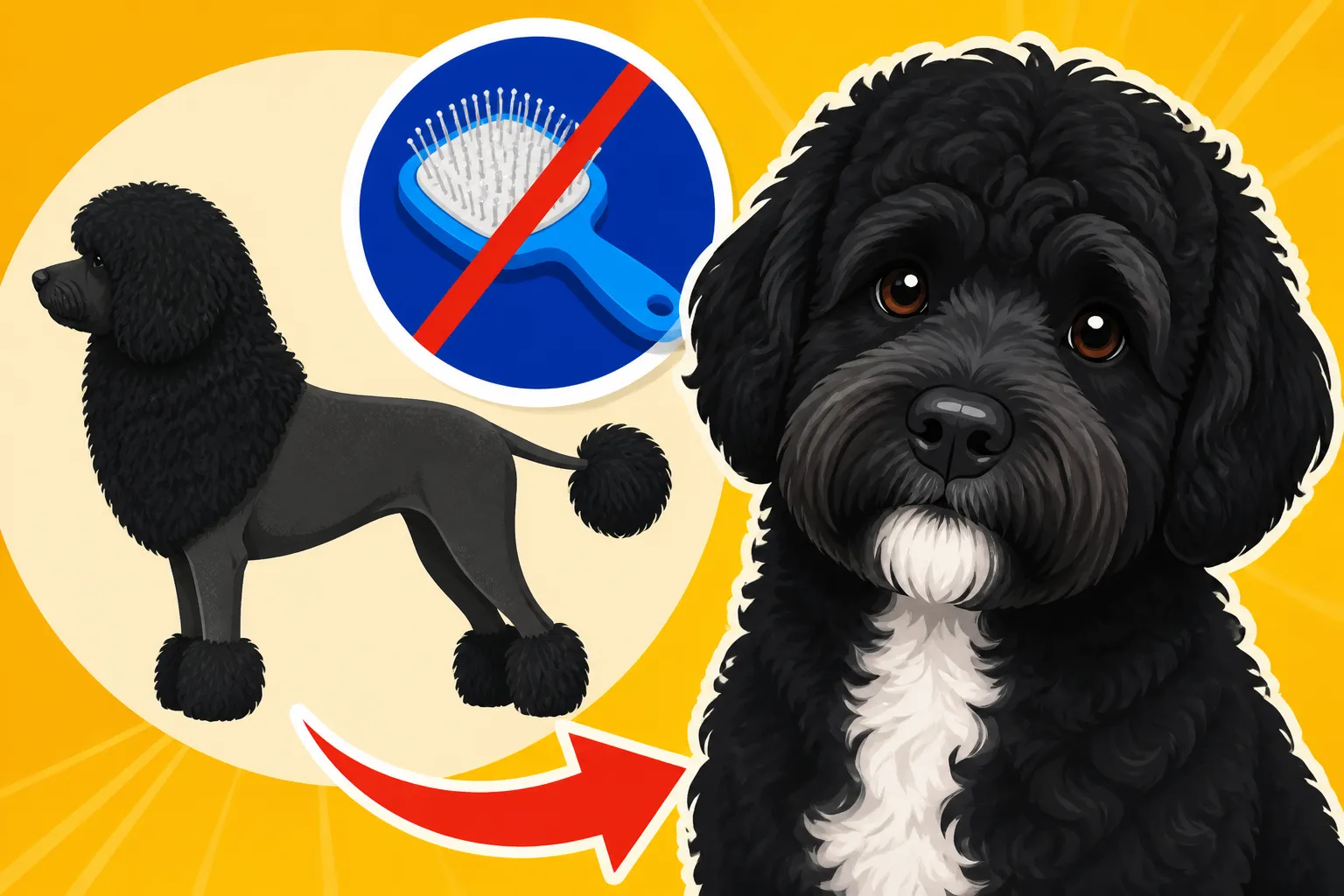
At its core, the Lion Clip involves shaving down specific areas of the dog's coat while leaving other sections long and flowing. Typically, the hindquarters from the last rib to the hock joint are shaved short, often leaving a bracelet or cuff of hair just above the hock and sometimes a small plume at the very tip of the tail. The muzzle and face are also clipped short, often leaving a distinct topknot on the head. The rest of the body – the chest, forelegs, and head – is left in its natural, full length. This creates the "lion-like" appearance, with a thick mane of hair contrasting sharply with the shorn rear.
Historically, this specific clip wasn't just about speed in the water; it was about balancing insulation and efficiency. Shaving the back half helped the dogs move easily through the water while still providing enough warmth in their vital organs and over their joints. For modern PWDs, especially those not actively working in icy waters, the clip is largely an homage to this heritage and a preference for a traditional aesthetic. However, the lengthy sections of hair, particularly around the chest, armpits, and undercarriage, are prime real estate for mats. The longer the hair, the more aggressively it seeks to tangle, felt, and knot into uncomfortable, painful masses. This dramatic variation in coat length means that maintenance isn't uniform across the dog; some areas need intense, daily attention, while others require less frequent care, making the overall routine quite complex.
The Daily Brushing Imperative: Why It's Non-Negotiable
If you're considering a Portuguese Water Dog in a Lion Clip, you must understand that daily brushing isn't just a suggestion—it's an absolute necessity. Skipping even a day can quickly lead to painful, skin-tight mats that are far harder to remove than to prevent. This isn't like a quick brush-through for a shedding breed; it's a methodical, detailed process crucial for your dog's comfort and health.
The Nature of the Portuguese Water Dog Coat
The Portuguese Water Dog is renowned for its unique, single coat, which comes in two distinct types: curly and wavy. Unlike many other breeds, PWDs have no undercoat, which is why they are often touted as a "hypoallergenic" choice for allergy sufferers. This single layer of hair is, however, incredibly dense and grows continuously, much like human hair. Instead of shedding, the loose hairs get trapped within the existing curls or waves. While this means less hair on your furniture, it also means these trapped hairs will quickly intertwine with the growing coat, forming mats if not regularly brushed out.
The difference between the curly and wavy coats also plays a role in how they mat. Curly coats tend to be more tightly wound, often forming dense, ringlet-like curls. These tight curls can lock together very easily, creating small, hard knots close to the skin. Wavy coats, on the other hand, have softer, more flowing waves. While they might appear less prone to matting at first glance, the longer, looser waves can still tangle into large, flat sheets of felted hair, especially in areas of friction. Regardless of whether your PWD has a curly or wavy coat, both types will mat aggressively without consistent, diligent grooming, especially when left long in the Lion Clip. It’s a trade-off: enjoy the low-shedding benefit, but embrace the high-maintenance grooming.
The Science of Matting in a Lion Clip
Matting isn't just a surface problem; it's a serious issue that affects the dog's skin, comfort, and overall health. In a Lion Clip, the longer sections of hair are specifically designed to retain length and volume, which unfortunately makes them prime targets for mat formation. Mats occur when loose, dead hairs become tangled with live hairs, then tighten and condense due to movement, friction, and moisture. Think about how a piece of yarn tangles and then shrinks when you pull on it; dog hair does something similar, creating a dense, often impenetrable mass.
For a Portuguese Water Dog in a Lion Clip, certain areas are particularly vulnerable. The armpits, behind the ears, the groin area, the hocks, and any areas where a harness or collar rubs are common hotspots. These are areas of high friction and often where moisture can linger. The dense, long coat on the chest and flanks, left to its full glory in the Lion Clip, is especially prone to this. When your dog moves, plays, or even just sleeps, these long hairs rub against each other, trapping any loose hair and quickly forming knots. If these small knots aren't brushed out daily, they will grow larger, tighter, and closer to the skin, pulling on the skin and causing significant discomfort, pain, and even skin infections beneath the mat. Water exposure, a staple of a PWD's life, only exacerbates the problem, causing wet hair to clump and felt together even more quickly as it dries. This means that a joyous swim can turn into a matting disaster if not followed by immediate, thorough grooming.
Essential Tools for Daily Lion Clip Brushing
You can't tackle the formidable task of daily Lion Clip maintenance with just any old brush. Having the right tools is not just a luxury; it's a necessity that will save you time, reduce frustration, and, most importantly, keep your Portuguese Water Dog comfortable and mat-free. Investing in quality equipment from the start will make all the difference in achieving that pristine Lion Clip look.
The Non-Negotiable Brushes and Combs
When it comes to brushing a Portuguese Water Dog in a Lion Clip, two tools stand head and shoulders above the rest: a high-quality slicker brush and a sturdy metal comb. The slicker brush is your primary weapon against tangles. Look for one with firm, angled pins that are long enough to reach through the dense coat all the way to the skin. There are various sizes and pin densities, so you might try a few to find what works best for your dog's specific coat type—curly or wavy—and the length you're maintaining. You'll use this brush for the main "line brushing" technique, separating the coat into small sections and systematically brushing from the skin outwards. Without a slicker that effectively penetrates the coat, you'll only be brushing the surface, leaving mats to form underneath.
Once you've thoroughly brushed a section with the slicker, the metal comb comes into play. This is your mat detector. A good metal comb will have both wide and narrow-set teeth. After slicker brushing a section, run the wide-toothed side of the comb through it. If the comb glides through smoothly from skin to tip, you've done a good job. If it snags, you've found a hidden tangle that needs more attention with the slicker. Then, follow up with the finer-toothed side to ensure even the smallest knots are gone. For particularly stubborn, but small, mats that you absolutely cannot brush out, a dematter tool can be used with extreme caution to cut through the mat, rather than trying to cut it out. However, this should be a last resort and performed very carefully to avoid cutting the dog's skin, which is surprisingly easy to do beneath a tight mat. Brands available on platforms like Chewy or Amazon offer a wide selection of these essential grooming tools, making it easy to find professional-grade equipment.
Sprays and Conditioners for Easier Detangling
Working with a dry Portuguese Water Dog coat, especially one prone to matting like in a Lion Clip, is a recipe for static, breakage, and discomfort. This is where detangling sprays and leave-in conditioners become invaluable allies in your daily grooming routine. A good detangling spray acts as a lubricant, reducing friction between the brush pins and the hair, allowing tangles to separate more easily without causing pain to your dog. It can also help to prevent static electricity, which can make the coat even more prone to knotting. Many detangling sprays also contain conditioners that help to soften the coat, making it more pliable and less likely to break during brushing.
Applying a light mist of detangling spray before you begin each section of brushing will dramatically improve the ease and effectiveness of your efforts. You don't want to soak the coat, just dampen it slightly. For some PWDs, especially those with particularly dense or wavy coats, a leave-in conditioner applied after bathing and before drying can keep the coat supple and less prone to felting. These products help to maintain the coat's natural moisture balance, preventing it from becoming brittle and more susceptible to matting. Regularly conditioning the coat helps to nourish the hair shafts, making them smoother and harder for loose hairs to cling to. Remember, a healthy, well-conditioned coat is always easier to brush than a dry, damaged one, saving you time and your dog from unnecessary tugging and pulling. You can find a vast array of conditioning and detangling sprays from various reputable pet brands when shopping online at Amazon or your local pet store.
Mastering the Daily Brushing Routine for the Lion Clip
Transforming the daily chore of brushing into a positive experience for both you and your Portuguese Water Dog is key to maintaining a beautiful Lion Clip. It requires a strategic approach, a dedicated space, and consistent positive reinforcement. Think of it less as a battle and more as a bonding ritual.
Setting Up for Success: A Dedicated Grooming Space
Imagine trying to detangle long, dense hair while your dog wriggles on the floor, slips on a rug, or tries to wander off. It’s frustrating for both of you and makes the process inefficient and uncomfortable. Establishing a dedicated grooming space is perhaps one of the most underrated tips for success. Ideally, this would be a non-slip surface, like a sturdy grooming table specifically designed for dogs. A grooming table elevates your dog to a comfortable working height, saving your back, and often includes a grooming arm with a noose to keep your dog safely in place, preventing them from jumping off or squirming away.
Beyond the table, ensure your space is well-lit so you can clearly see any emerging mats, especially in the darker sections of your PWD's coat. Gather all your tools—slicker brushes, metal combs, detangling sprays, and treats—before you even bring your dog into the area. Most importantly, make this space a positive place for your dog. Start with short, positive sessions, even if you only brush a small area at first. Reward calmness and cooperation generously with high-value treats and praise. The goal is for your dog to associate the grooming table with pleasant experiences, making them more tolerant and cooperative for the longer daily sessions required by a Lion Clip. A consistent, comfortable setup removes many common hurdles and sets the stage for efficient, stress-free grooming. Teaching a Portuguese Water Dog to Stand for Grooming is a fundamental skill that pays dividends here.
Step-by-Step Daily Brushing Technique
Daily brushing for a Portuguese Water Dog in a Lion Clip isn't just a quick run-through; it's a systematic process known as "line brushing." This technique ensures you reach the skin and don't just brush the top layer of hair, leaving mats to fester underneath. Start by laying your dog on its side, or standing it comfortably on your grooming table. Pick a starting point, perhaps a leg or the flank. Using your fingers, part the hair horizontally, creating a "line" of skin. Hold the upper section of hair up with one hand, exposing the lower section of hair and the skin line.
With your slicker brush, brush downwards and outwards from the skin, a few strokes at a time, until that small section is completely tangle-free. Then, drop a small amount more of the upper hair, create another line, and repeat the process, working your way up the body. This methodical approach ensures every inch of the long coat is brushed down to the skin. Pay particular attention to the "friction areas" like the armpits, behind the ears, and around the collar or harness, as these are mat magnets. After you've brushed a section with the slicker, always follow up with your metal comb. Run the comb through the brushed section from skin to tip. If the comb meets resistance, you've missed a mat, and you need to go back with your slicker until the comb glides smoothly. This full process can easily take How Long Brushing a Portuguese Water Dog Takes, especially if your dog has been particularly active or if you’ve gone more than 24 hours between sessions.
Dealing with Difficult Mats in a Lion Clip
Despite your best efforts with daily brushing, sometimes a mat will still form, especially in those dense, longer areas of a Lion Clip. Your approach to these depends entirely on their size and severity. For small, loose tangles, the key is patience and a gentle touch. Start by spraying the mat generously with a detangling spray or conditioner. Use your fingers to carefully try and pull apart the individual strands, working from the outer edges of the mat inwards. Once you've loosened it a bit, use the very tip of your slicker brush or the wide teeth of your metal comb, working in tiny increments from the end of the mat, slowly teasing it apart. Never just yank at a mat; it's incredibly painful for your dog and can damage the coat and skin.
For larger, tighter mats that are close to the skin, it's often best to seek professional help from a skilled groomer. They have specialized tools and techniques that can sometimes save a matted coat, though it will likely come with a significant extra charge. Attempting to cut out large mats yourself is incredibly risky. Dog skin is very thin and can be pulled up into a tight mat, making it easy to accidentally cut your dog. If you must cut, use blunt-nosed scissors, slide them under the mat so they are parallel to the skin, and snip a very small amount, then try to pick apart. This should truly be a last resort. The overwhelming lesson here is that prevention is infinitely better—and less painful and costly—than correction. Daily, thorough brushing is the only consistent way to avoid these difficult and potentially dangerous matting situations in a Lion Clip.
The Time Commitment and Its Impact on Lifestyle
The decision to maintain a Portuguese Water Dog in a Lion Clip carries a significant time commitment that directly impacts your daily routine and lifestyle. This isn't a "set it and forget it" kind of grooming; it's a daily ritual that requires unwavering dedication.
Daily Time Investment: More Than Just a Quick Brush
When we talk about "daily brushing" for a Lion Clip, we're not talking about a five-minute once-over with a casual brush. For a medium-sized Portuguese Water Dog with a full, healthy coat in a Lion Clip, you're realistically looking at dedicating anywhere from 30 minutes to an hour every single day to thorough line brushing. This time commitment starts almost from puppyhood, though a puppy's coat is often softer and less prone to aggressive matting than an adult coat. However, it's crucial to establish the routine early to get your puppy accustomed to the process.
As your PWD matures and their adult coat comes in—which usually happens between six months and two years, a period known as the "coat change"—the matting can become particularly intense. During this phase, daily brushing might even need to be extended or done twice a day to keep up. This means carving out a significant chunk of time from your morning or evening routine, or both. It's time that could be spent on other activities, and it's important to factor this into your lifestyle. For busy individuals, those with long work hours, or families with multiple commitments, this daily grooming can quickly become a source of stress and exhaustion, leading to neglected coats and unhappy dogs. The beautiful appearance of the Lion Clip comes at a genuine cost: your precious time.
Balancing Daily Brushing with an Active Portuguese Water Dog
Portuguese Water Dogs are, by nature, active, energetic, and intelligent companions who thrive on exercise and mental stimulation. They are true working dogs who absolutely adore water, whether it's a lake, ocean, or even a backyard pool. This active lifestyle, while crucial for their well-being, directly conflicts with the low-maintenance ideal of a Lion Clip. Every swim, every romp through tall grass, every roll in the dirt exponentially increases the risk of matting.
If your PWD goes for a swim, a thorough rinse with clean water is essential to remove chlorine, salt, or lake debris. But the real work begins after the water. The dense, long sections of the Lion Clip will clump and felt together as they dry. This means you must fully dry your dog, preferably with a force dryer, and then immediately embark on a full brushing session, paying extra attention to the areas that were wet. Skipping this step after a swim is almost a guarantee for severe matting. Similarly, if your dog enjoys outdoor adventures, burrs, sticks, and general debris will find their way into the long coat, weaving themselves into tight knots. You'll need to meticulously check and brush after every significant outdoor excursion, not just daily. Whether a Portuguese Water Dog Mats After Swimming is a common concern, and the answer is a resounding "yes," making post-swim grooming non-negotiable. This means that a spontaneous dip in the lake on a sunny afternoon requires a commitment to significant grooming time shortly thereafter, a reality many active owners find challenging to consistently uphold.
The Financial Cost Beyond the Brush
While the time commitment is substantial, maintaining a Portuguese Water Dog in a Lion Clip also comes with notable financial implications. Beyond the initial purchase of your dog, the ongoing cost of proper grooming for this specific style can add up significantly over their lifetime.
Investment in Quality Grooming Tools
To effectively maintain a Lion Clip, you'll need to invest in a selection of high-quality grooming tools. A cheap, flimsy slicker brush simply won't cut through the dense PWD coat, and a flimsy comb will bend or break. Expect to spend a fair amount on durable, ergonomically designed slicker brushes that can withstand daily use and penetrate the thick coat without scratching the skin. You’ll also need at least one high-quality metal comb with both wide and narrow teeth. Detangling sprays and conditioning treatments, which are crucial for making brushing easier and preventing coat damage, will be ongoing purchases.
Beyond the basics, you might consider a grooming table if you don't already have one, which is a significant upfront expense but a long-term investment in your comfort and your dog's training. Many owners also find a high-velocity force dryer invaluable, especially for drying after baths or swims, as it speeds up the process and helps to blow out loose hair, further preventing mats. While there are budget options available, investing in reputable brands for these tools means they'll last longer and perform better, ultimately making your grooming routine more efficient and less frustrating. You can often find excellent deals on these supplies on platforms like Chewy or Amazon, allowing you to compare options and read reviews from other PWD owners.
Professional Grooming for Maintenance and Redoing the Clip
Even the most dedicated home groomer will likely need to rely on professional groomers for a Portuguese Water Dog in a Lion Clip. While you can maintain the length between full clips, replicating the precise lines and evenness of a proper Lion Clip is a specialized skill. Professional groomers have the powerful clippers, sharp blades, and expertise to achieve the distinct shaved areas and maintain the correct length and shape of the longer sections. Expect to take your Lion Clipped PWD to a professional groomer every 6 to 8 weeks for a full re-do of the clip.
The cost for a Lion Clip is typically at the higher end of grooming services due to the precision, time, and skill involved. It’s significantly more complex and time-consuming than a simple What a Retriever Clip Costs on a Portuguese Water Dog. The groomer must meticulously shave specific areas while blending the long coat, and then thoroughly bathe and dry the dog, followed by precise scissor work on the long sections. If your dog arrives with mats, particularly extensive ones from missed daily brushing sessions, you'll incur additional "dematting fees," which can be substantial. These fees often reflect the extra time, effort, and specialized tools required to safely remove felted hair, sometimes needing several hours of work. How Often a Lion Clip Must Be Redone is a financial factor that will be a constant in your budget. If you want to keep the Lion Clip looking sharp and avoid painful matting, these professional visits are a non-negotiable recurring expense.
Opportunity Cost: Your Time is Money
Beyond the tangible expenses of tools and professional services, there's an often-overlooked financial cost associated with maintaining a Lion Clip: the opportunity cost of your time. If you're spending an average of 45 minutes to an hour every single day meticulously line brushing your Portuguese Water Dog, that adds up to anywhere from 5 to 7 hours per week. Over a month, that's 20 to 28 hours. Over a year, it's a staggering 240 to 336 hours.
Consider what else you could be doing with that time. For some, it might be working extra hours, earning income. For others, it might be pursuing a hobby, spending time with family, or simply resting and recharging. The sheer volume of time dedicated to grooming means less time for these other pursuits. While the bond formed during grooming is priceless, the practical reality is that your time has value. If your schedule is already stretched thin, the constant demand of daily Lion Clip grooming can lead to immense stress, and potentially, to shortcuts that result in mats and vet visits. For some owners, the realization of this opportunity cost leads them to transition to a more manageable clip or to increase their reliance on professional groomers, understanding that paying for a professional to handle more of the grooming saves them valuable personal time, even if it adds to the direct financial expense. This balance between your time and your budget is a critical consideration for any PWD owner committed to the Lion Clip.
Lion Clip vs. Retriever Clip: A Grooming Comparison
When considering a Portuguese Water Dog, the choice of coat clip significantly impacts the grooming demands. While the Lion Clip is visually striking and historically significant, the Retriever Clip offers a far more practical and manageable alternative for many pet owners.
Grooming Demands of the Retriever Clip
The Retriever Clip, sometimes referred to as a utility clip, is a much more uniform and generally shorter style compared to the Lion Clip. In this clip, the entire body of the Portuguese Water Dog is trimmed to a consistent, relatively short length, typically between 1 to 3 inches, though this can vary based on owner preference and coat density. The facial hair is usually kept shorter and neat, without the dramatic topknot or shaved muzzle of the Lion Clip, and the tail is often left with a natural plume or lightly trimmed. The overall effect is a neat, athletic look that highlights the dog's robust build without the dramatic contrasts.
The primary benefit of the Retriever Clip is a substantial reduction in matting risk. With the coat kept at a shorter, uniform length, there are fewer long hairs to tangle and felt together. While regular brushing is still necessary for a PWD in a Retriever Clip—at least a few times a week, or more for active dogs—the daily, hour-long line brushing sessions of the Lion Clip are largely eliminated. Mats are still possible, especially in friction areas like the armpits or behind the ears, but they are generally smaller, less frequent, and easier to brush out. Drying after a swim is also much faster and less prone to matting, making it an ideal choice for a truly active water dog. The professional grooming schedule can often be stretched out slightly, perhaps every 8-10 weeks, and the cost per visit may be less due to the reduced complexity. This clip significantly eases the grooming burden, making PWD ownership more accessible for those with less time or a preference for a more low-maintenance coat. What the Retriever Clip Leaves and What It Takes is essentially a much shorter, uniform length across the entire body.
Deciding Which Clip Suits Your Lifestyle
Choosing between the Lion Clip and the Retriever Clip for your Portuguese Water Dog comes down to a realistic assessment of several factors: your available time, your grooming budget, your desired aesthetic, and your dog's activity level. If you are deeply committed to the traditional look, have ample time for daily grooming, and are prepared for the higher professional grooming costs, the Lion Clip can be a stunning choice. It's a statement, a testament to the breed's history, and truly magnificent when perfectly maintained. However, it demands a significant, daily investment that many owners simply cannot sustain consistently over the dog's entire life.
For the vast majority of pet Portuguese Water Dog owners, the Retriever Clip is the far more practical and humane option. It still allows your PWD to enjoy all their favorite activities—especially swimming—without the constant worry of severe matting. It greatly reduces the daily grooming burden, freeing up your time for other activities or more play with your dog. While professional grooming is still needed, the frequency and cost can be more manageable. Which Clip Suits a Pet Portuguese Water Dog ultimately depends on the individual owner's capacity and preference. If your lifestyle is busy, your budget is more modest, or you prioritize ease of maintenance and your dog's comfort above all else, the Retriever Clip is likely the more sensible and sustainable choice. Both clips are acceptable in the breed standard, so it's truly about finding what works best for you and your beloved companion.
Long-Term Coat Health and Well-Being
Beyond aesthetics, consistent grooming for a Portuguese Water Dog, especially one in a Lion Clip, is paramount for their long-term health and well-being. Neglecting the coat can lead to far more serious problems than just a messy appearance.
Preventing Skin Issues Underneath the Mats
One of the most critical reasons for diligent daily brushing, particularly in a Lion Clip, is to prevent severe skin issues. Mats don't just sit on top of the coat; they pull at the skin, restricting blood flow and air circulation. This creates a warm, moist, dark environment underneath the mat—a perfect breeding ground for bacteria and yeast. Over time, this can lead to painful skin infections, hot spots, and chronic irritation. Dogs with tight mats often develop red, inflamed skin, and the constant pulling can cause open sores or skin lesions.
Furthermore, mats can hide various problems from a dog owner, making it difficult to detect parasites like fleas or ticks, or even small lumps, bumps, or injuries. When a dog arrives at the groomer severely matted, the only humane option is often to completely shave down the entire coat, a process known as "stripping." This can expose skin that has been irritated or infected for weeks or months, often requiring veterinary intervention with antibiotics or medicated shampoos. It's a painful and uncomfortable experience for the dog, and a costly one for the owner. Regular, thorough brushing allows for early detection of any skin abnormalities and ensures proper air circulation, keeping the skin healthy and free from discomfort.
The Bond Formed Through Consistent Grooming
While daily grooming can feel like a chore, it also presents a wonderful opportunity to strengthen the bond between you and your Portuguese Water Dog. Turning grooming into a positive, predictable routine can be incredibly beneficial for your relationship. When done patiently and gently, with plenty of praise and treats, grooming sessions can become a special time of quiet connection. Your dog learns to trust you, knowing that your handling is for their comfort and not a source of pain.
Introduce grooming early in puppyhood, even if it's just short sessions of gentle brushing and handling. This acclimates them to the tools, the sensations, and the process, making them more cooperative as adults. Many PWD owners find that their dogs eventually look forward to grooming time, associating it with positive attention, gentle massages, and tasty rewards. It’s also a time when you can intimately check your dog for any changes: new lumps or bumps, tenderness, or unusual odors. By making grooming a regular, pleasant interaction, you're not just maintaining a beautiful Lion Clip; you're nurturing a deeper understanding and trust with your intelligent, sensitive companion. A happy dog on the grooming table is a sign of a strong, healthy relationship, making the investment of time and effort truly worthwhile.
Disclaimer
This article is for general informational purposes only and does not constitute professional advice. Laws, prices and regulations vary by location and change over time. Consult a qualified professional for guidance on your specific situation.