How Often a Portuguese Water Dog Needs Brushing
One of the biggest eye-openers for new Portuguese Water Dog owners is just how much effort goes into maintaining that beautiful, curly, or wavy coat. You might have heard they don't shed, which is true in the traditional sense, but that doesn't mean they're maintenance-free. Far from it! If you're wondering how often you truly need to brush your Portuguese Water Dog to keep them comfortable, mat-free, and looking their best, you're in the right place. This guide will dive deep into everything you need to know about keeping your PWD's coat in tip-top shape.
Understanding the Portuguese Water Dog Coat
Before we even get to the "how often," it's crucial to understand what makes a Portuguese Water Dog's coat so unique. It's not like a Labrador's, or even a Poodle's, despite some surface similarities. Their coat is a marvel of nature, designed for the water, but it comes with specific grooming demands.
Curly vs. Wavy Coat Types
Portuguese Water Dogs actually come in two distinct coat types: curly and wavy. While both are single-coated (meaning no undercoat) and considered non-shedding, they present slightly different grooming challenges.
The curly coat is typically dense, cylindrical, and rather tight. Think of it like a cluster of corkscrews all over the dog's body. These curls are springy and generally hold their shape well. Because the curls are so tight, they can sometimes interlock with each other, creating a dense barrier that's excellent for insulation in cold water but also incredibly prone to matting if not properly maintained. When this coat type gets wet and then dries without being brushed, those tight curls can shrink and bind together, pulling on the skin and forming painful felted mats in what seems like mere hours. It feels thick to the touch, and when you try to run your fingers through it, you'll immediately understand the density.
The wavy coat, on the other hand, is softer and looser, often with a slight sheen. It tends to fall in more open, flowing waves rather than tight ringlets. Some describe it as having a more "shaggy" appearance when allowed to grow out. While it might seem less prone to matting because the waves are looser, this isn't necessarily true. The longer, softer strands can still easily tangle and weave together, especially in areas of high friction like behind the ears, under the legs, or where a collar sits. The wavy coat can also feel much silkier, almost like human hair, which can sometimes give a false sense of security that it won't mat as easily. Both coats will protect your dog from the elements, but both will also demand your attention with a brush.
The Non-Shedding Myth and Matting Reality
The phrase "non-shedding" is often a huge selling point for Portuguese Water Dogs, especially for people with allergies. And while it's largely true that they don't "shed" like a Golden Retriever leaving tumbleweeds of hair around your house, this characteristic is precisely what makes regular brushing so vital. What "non-shedding" really means is that the dead hair, instead of falling out, gets trapped within the existing coat.
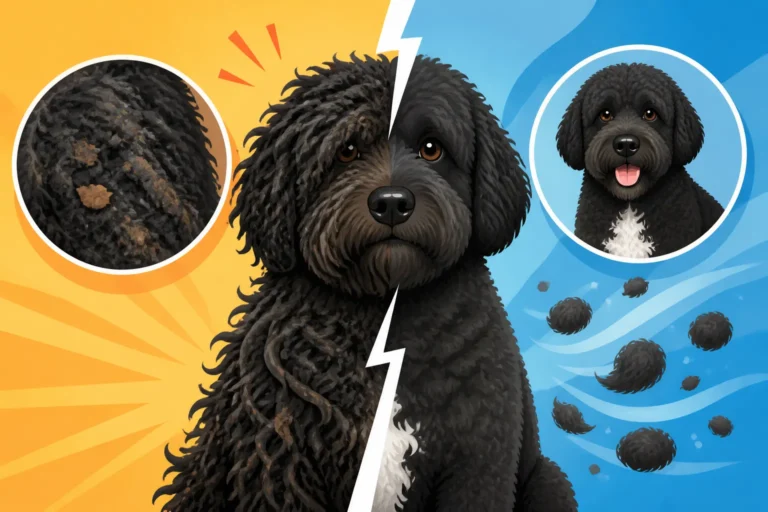
Imagine a tightly woven carpet where loose fibers can't escape. That's essentially what happens with a PWD's coat. As new hair grows, the old, dead hair remains, intertwining with the live hair. If this trapped hair isn't brushed out regularly, it quickly forms tangles, which then tighten into painful, dense mats. These mats aren't just unsightly; they pull on the dog's skin, restrict movement, and can hide skin infections, parasites, or other issues. For a breed meant to be active and swim, a matted coat can be incredibly uncomfortable and even detrimental to their health and natural abilities. So, while you won't be constantly vacuuming up dog hair, you'll be dedicating time to proactive grooming. For more on this, you might find Whether a Portuguese Water Dog Sheds interesting.
When the Puppy Coat Changes
One of the most challenging grooming periods for a Portuguese Water Dog owner is when their puppy coat transitions to their adult coat. This isn't a subtle change; it's a full-on coat revolution that can make even diligent owners feel like they're fighting a losing battle against mats. Typically, this transition begins around 6 to 12 months of age, but it can extend well into their second year.
During this time, the soft, fine puppy fur is gradually replaced by the coarser, denser adult coat. The two different textures essentially try to grow out at the same time, and they have a frustrating tendency to intertwine and stick to each other. It's like trying to comb out two different types of yarn that have been aggressively mixed together. What was once a relatively easy, quick brush-through suddenly becomes an hour-long ordeal of detangling. Areas like the armpits, behind the ears, and the "pantaloons" on the hind legs become mat magnets. This phase is absolutely critical for establishing a consistent, thorough brushing routine. Skipping even a day or two can lead to significant matting that requires professional intervention. Many owners mistakenly think their puppy is just being stubborn during brushing, when in reality, their coat is undergoing a dramatic transformation that makes it inherently more prone to tangles. Understanding When a Portuguese Water Dog's Puppy Coat Changes can help you prepare.
The Core Brushing Schedule: What's the Minimum?
Okay, now that we've grasped the intricacies of that gorgeous Portuguese Water Dog coat, let's get down to the brass tacks: how often do you really need to brush them? The answer, like with many things in dog ownership, isn't a simple one-size-fits-all, but there are clear guidelines for what constitutes a healthy minimum.
Daily Brushing for Optimal Health
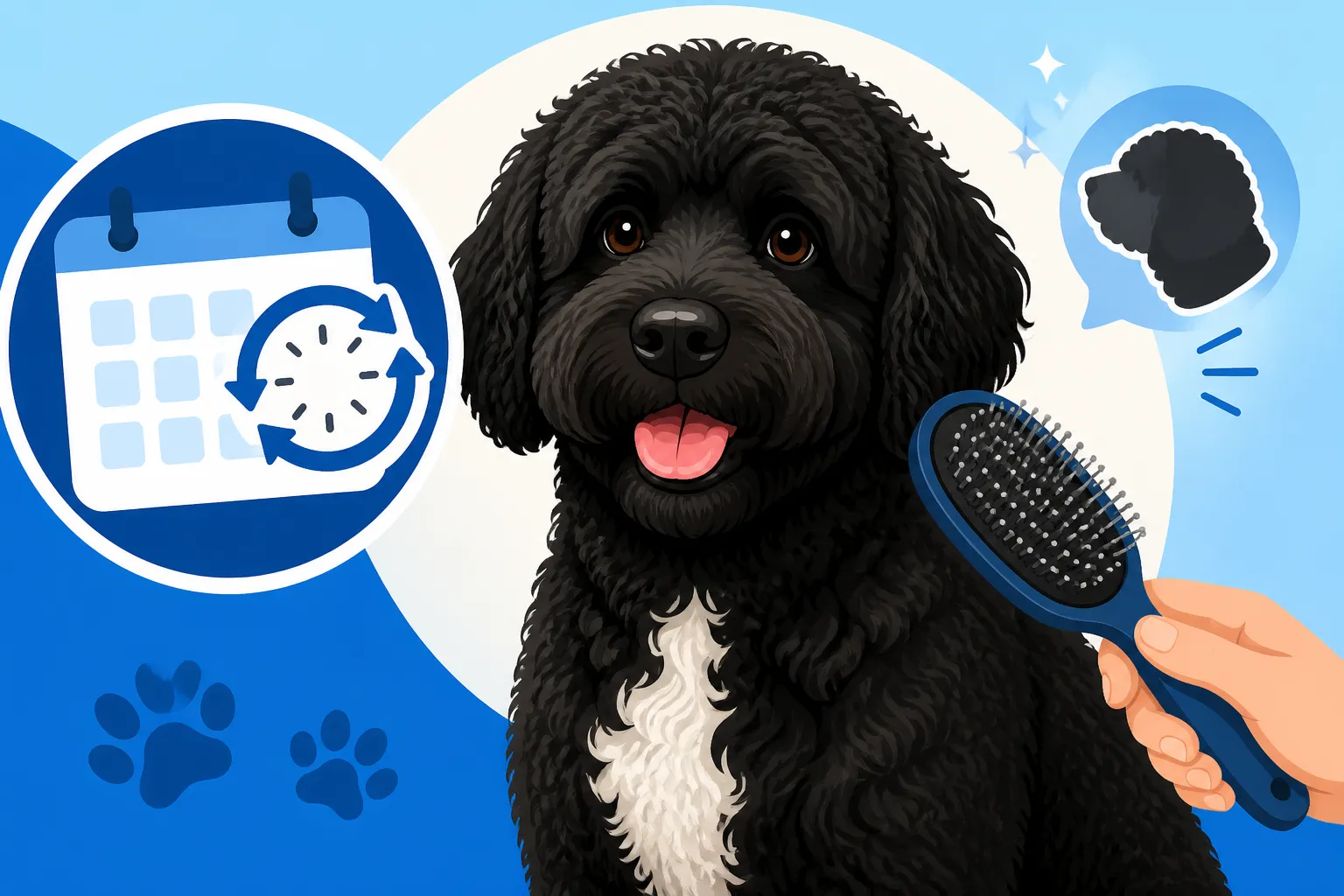
If you ask any seasoned Portuguese Water Dog owner or professional groomer, they'll likely tell you that daily brushing is the gold standard for optimal coat health and owner sanity. This isn't an exaggeration, especially if your PWD has a longer coat (anything beyond a very short clip) or is highly active. Daily brushing allows you to catch small tangles before they escalate into massive, painful mats. It's much easier to spend 10-15 minutes a day line-brushing than to dedicate an entire afternoon to detangling a felted mess.
Think of it as preventive maintenance. Each day, you're not just removing dead hair; you're also distributing natural skin oils, which keeps the coat healthy and shiny, and you're getting hands-on with your dog, allowing you to check for any lumps, bumps, skin irritations, or external parasites that might otherwise go unnoticed under the dense fur. For many PWDs, especially those in a traditional retriever or show clip, daily brushing is non-negotiable to maintain that beautiful, flowing coat without resorting to painful dematting sessions or a full shave-down. It becomes a routine, a moment of connection, and a vital part of their overall well-being.
The Realistic Minimum: Every Other Day
While daily brushing is the ideal, we live in the real world, and sometimes life gets in the way. For some Portuguese Water Dogs, particularly those with a very short clip (like a short utility clip) or those who are more sedentary, you might be able to stretch your brushing routine to every other day without significant issues. However, this is truly the absolute minimum you should aim for. Pushing it to every third day or less frequently is almost guaranteed to lead to matting, especially in those notorious friction areas.
The challenge with "every other day" is that a lot can happen in 48 hours. A quick roll in the grass, a splash in a puddle, a vigorous play session, or even just sleeping in a particular position can create small tangles that quickly become bigger problems. If you opt for an every-other-day schedule, you need to be extremely thorough on those brushing days, ensuring you get right down to the skin and cover every inch of their body. You also need to be prepared for the possibility of finding more significant tangles than you would with daily maintenance. It's a risk-reward scenario: you save a little time each day but risk more intensive work (or a trip to the groomer) if a mat takes hold. For a more direct answer to the central question, consult How Often a Portuguese Water Dog Needs Brushing, but be warned, "often" is the key!
Increased Frequency for Active or Wet Dogs
If your Portuguese Water Dog is living up to its name and spending a lot of time in the water, or is otherwise highly active outdoors, your brushing frequency needs to increase significantly. Water, especially, is a mat-maker's best friend and a PWD owner's worst nightmare. When the coat gets wet, the curls or waves tighten and compress. As the coat dries, these compressed strands can bind together, forming incredibly tight, dense mats. This is particularly true if the dog is allowed to air dry without a thorough toweling and brushing session.
Consider a PWD who loves dock diving or swimming in the lake daily. After every swim, they should ideally be rinsed thoroughly (especially after salt water or chlorinated pools), towel-dried, and then lightly brushed through to ensure the coat doesn't dry matted. Sand, mud, burrs, and other debris picked up during outdoor adventures also get trapped in the coat, forming tangles that quickly turn into mats if not removed promptly. A dog that is constantly running through brush or playing rough will also develop mats faster due to friction. So, for the active PWD, "how often" might translate to "every time they get wet or dirty," in addition to their regular schedule. Skipping post-swim brushing is one of the fastest routes to a matted Portuguese Water Dog. You can learn more about this specific challenge in Whether a Portuguese Water Dog Mats After Swimming.
The Right Tools and Techniques for Effective Brushing
Having the right tools is half the battle when it comes to grooming a Portuguese Water Dog. You can have the best intentions, but trying to brush that dense coat with a flimsy, ineffective brush will quickly lead to frustration for both you and your dog. Beyond the tools, knowing how to use them effectively is paramount.
Essential Brushing Tools
For a Portuguese Water Dog, a collection of basic, yet high-quality, tools is indispensable. Forget those fancy rakes or cheap plastic brushes; you need specific items designed for their unique coat.
First and foremost, you need a good quality slicker brush. This isn't just any slicker; it should have strong, angled pins that can penetrate the dense coat without scratching the skin. The pins work to separate the individual strands of hair and pull out dead undercoat. I personally prefer a slicker brush with a comfortable handle, as you'll be using it a lot! Brands like Chris Christensen or an equally sturdy option you might find on Amazon or Chewy are often recommended for their durability and effectiveness. You'll use this brush to gently work through the coat, section by section.
Secondly, a metal greyhound comb with both coarse and fine teeth is absolutely crucial. The slicker brush does the initial work, but the comb is your "mat detector." After you've brushed an area with the slicker, you must follow up with the comb to ensure you've removed all tangles and brushed right down to the skin. If the comb glides smoothly through the coat from root to tip, you've done a good job. If it snags, you need to go back with your slicker and work that spot again. The fine teeth are excellent for delicate areas like behind the ears or on the face, while the coarse teeth handle the body. Having a sturdy, professional-grade comb will save you immense frustration. Without these two tools, you're essentially fighting a losing battle against mats. For a deeper dive into tools, check out Which Brush a Portuguese Water Dog Needs.
Mastering the Line Brushing Technique
Simply running a brush over the top of your Portuguese Water Dog's coat is what we call "surface brushing," and it's the number one reason owners think they're brushing enough but still find mats. To truly prevent mats, you need to master the line brushing technique. This method ensures you reach all the way down to the skin, where mats actually start forming.
Here’s how you do it: Start with your dog lying down or standing comfortably on a grooming table (which is a lifesaver for your back!). Pick a small section of your dog's coat – think a stripe about an inch or two wide. Hold the hair above this section up and out of the way with one hand. With your other hand, take your slicker brush and brush the small section you've isolated, working from the skin outwards, in small, gentle strokes. Once that section is tangle-free, let a little more hair down from above, and repeat the process, working your way across and down the dog's body. It's painstaking, but it's the only way to ensure you're systematically clearing the coat of all dead hair and tangles. After you've brushed a section with the slicker, always follow up with your metal comb to confirm there are no snags. If the comb glides through, you're good to move on. If not, go back with the slicker. This method ensures no mat gets left behind, literally.
Dealing with Mats and Tangled Spots
Even with the most diligent brushing, you might occasionally find a mat, especially if your PWD has been particularly active, or if you missed a spot. The key is to address them promptly and gently. Never pull or yank at a mat, as this will cause significant pain to your dog and make them dread future grooming sessions.
For small tangles or starting mats, a detangling spray can be your best friend. Lightly mist the mat with a detangling product (many good options are available at pet stores or online retailers like Chewy), and then use the coarse teeth of your metal comb or the corner of your slicker brush to gently tease apart the outer edges of the mat. Work slowly, strand by strand, from the outside of the mat towards the skin. If the mat is too tight or large, trying to brush it out can be incredibly painful. In such cases, it’s often kinder and safer to carefully cut the mat out. Exercise extreme caution if you’re using scissors. Always place a comb between the mat and the dog's skin before cutting to prevent accidental nicks. Better yet, if you encounter a severe, tight mat, it's always best to consult a professional groomer. They have specialized tools and expertise to remove mats safely and with minimal discomfort to your dog, even if it means shaving down a section of the coat. Knowing when to call in the pros is a sign of a responsible owner. For guidance on when a mat becomes a cutting problem, refer to When a Mat Should Be Cut Out of a Portuguese Water Dog.
Factors That Influence Brushing Frequency
While a general "every other day to daily" rule applies, several factors can significantly alter how often your specific Portuguese Water Dog needs attention with a brush. Recognizing these variables will help you tailor a grooming schedule that truly suits your individual dog.
Coat Length and Clip Style
The length of your Portuguese Water Dog's coat is perhaps the most significant determinant of brushing frequency. A longer coat, naturally, has more hair to tangle and mat than a shorter one. If your PWD sports a long "retriever" clip, where the coat is kept at a moderate length all over the body, you are signing up for more intensive and frequent brushing. This style truly showcases the beauty of the PWD coat, but it demands consistent daily attention to prevent matting, especially on the body, legs, and tail. The longer strands can easily intertwine, pick up debris, and tighten with moisture. This clip, while popular, means you're almost certainly on a daily brushing schedule. Find out more about this popular style in The Retriever Clip Is the Coat Most Portuguese Water Dogs Wear.
Conversely, if your PWD is kept in a very short utility clip (often shaved down to a quarter or half-inch, sometimes seen in dogs that swim frequently or for easier maintenance), the brushing requirements will be significantly reduced. With less hair, there's simply less to tangle. You might still need to brush every few days to remove dead hair and check the skin, but the risk of severe matting is much lower. The traditional Lion Clip, where the hindquarters are shaved and the forequarters and head are left longer, presents its own unique challenges. The transition points between the shaved and long hair are mat magnets, and the longer portions still require diligent brushing. While the lion clip looks like less hair, it still comes with its own specific maintenance demands, as detailed in The Lion Clip Costs a Portuguese Water Dog Owner Daily Brushing. Understanding your dog's specific clip and coat length is paramount to setting realistic brushing expectations.
Lifestyle and Environment
Your Portuguese Water Dog's lifestyle and the environment they live in play a huge role in how quickly their coat can tangle and mat. A PWD who spends most of their time indoors on soft carpets will likely have different grooming needs than one who's constantly adventuring outdoors.
Consider a dog that regularly swims in lakes, oceans, or even chlorinated pools. Each swim, as mentioned, compacts the coat and increases the likelihood of matting as it dries. Saltwater and chlorine can also dry out the coat, making it more prone to tangles if not rinsed and brushed afterwards. A quick dip isn't just fun; it's a grooming event waiting to happen. Likewise, dogs that hike, run through fields, or play in grassy areas will inevitably pick up burrs, twigs, seeds, and dirt. These foreign objects act like tiny anchors, initiating tangles and drawing the coat into tight knots. A romping session in a burr patch can turn a perfectly groomed dog into a matted mess in minutes. Even just rolling in the dirt or wrestling with another dog can create friction points that lead to mats. If your PWD is an avid outdoors enthusiast, you'll need to brush them more frequently, often immediately after outdoor activities, to prevent small issues from becoming big ones. This is especially true after a swim; you can find more detail in Whether a Portuguese Water Dog Mats After Swimming.
Health and Age Considerations
A Portuguese Water Dog's overall health and age can profoundly impact their coat quality and, consequently, their brushing needs. As dogs age, their coat can change. It might become finer, coarser, or simply more prone to matting due to changes in skin elasticity or oil production. An aging Portuguese Water Dog might also have less patience for long grooming sessions or develop arthritis, making certain positions uncomfortable. This means you might need to adjust your approach, using softer brushes, taking more breaks, or opting for shorter, more frequent sessions. You can learn more about how age affects their coat in What Changes in an Aging Portuguese Water Dog's Coat.
Furthermore, underlying health issues can manifest in the coat. Conditions like hypothyroidism can lead to a dry, brittle, or thinning coat that mats more easily. Skin allergies or infections can cause irritation, itching, and subsequent matting as the dog scratches or rubs. Medications can sometimes affect coat texture too. If you notice a sudden change in your PWD's coat quality or an increase in matting despite your regular routine, it's always a good idea to consult your veterinarian to rule out any health problems. A healthy coat often reflects a healthy dog, and any deviation should be investigated. In these cases, your brushing might become part of a larger treatment plan, requiring extra gentleness and diligence.
The Broader Benefits of Regular Brushing
Beyond just preventing mats, regular brushing offers a wealth of benefits that contribute to your Portuguese Water Dog's overall health, comfort, and even your bond with them. It's more than just a chore; it's an essential act of care.
Preventing Skin Issues and Discomfort
A well-brushed coat is a healthy coat, and a healthy coat contributes directly to healthy skin. When you line-brush your Portuguese Water Dog, you're not just removing dead hair; you're also ensuring proper air circulation to the skin. Matted coats trap moisture, create a breeding ground for bacteria and fungi, and prevent the skin from "breathing." This can lead to hot spots, skin infections, and various dermatological problems that can be painful and expensive to treat.
Furthermore, mats pull on the skin, causing constant discomfort and even pain, especially around the ears, armpits, and groin. Imagine having your hair constantly tugged. It's no fun. Regular brushing alleviates this pressure, keeping your dog much more comfortable and mobile. It also gives you the opportunity to visually inspect your dog's skin for any rashes, redness, parasites (like fleas or ticks), or unusual lumps and bumps that might indicate a more serious issue. Catching these problems early can make a significant difference in treatment outcomes and your dog's well-being. Brushing isn't just about aesthetics; it's a vital component of preventative healthcare for your Portuguese Water Dog.
Building Bonds and Behavioral Benefits
While some dogs might initially resist brushing, consistent, gentle grooming sessions can actually become a wonderful opportunity to build and strengthen the bond between you and your Portuguese Water Dog. Turning brushing into a positive, calm routine teaches your dog to tolerate and even enjoy being handled. Start with short sessions, use lots of praise and high-value treats (like those yummy Ollie dog treats), and gradually increase the duration.
For many PWDs, who thrive on attention and interaction, these dedicated one-on-one moments can be incredibly valuable. It establishes trust and reinforces your role as a benevolent leader. A dog that is comfortable with grooming is also easier for veterinarians and professional groomers to handle, reducing stress for everyone involved during necessary appointments. The ritual of brushing can also have a calming effect on both dog and owner. It's a quiet time, a moment to connect, and a chance for gentle physical affection. Over time, your PWD may even come to solicit brushing, nudging the brush or leaning into your hand as a sign of enjoyment. How long do these sessions actually take? You might be surprised to read How Long Brushing a Portuguese Water Dog Takes.
Maintaining Cleanliness and Reducing Odor
Let's be honest, a clean dog is a happier household! Regular brushing plays a crucial role in maintaining your Portuguese Water Dog's overall cleanliness and can significantly reduce "doggy" odors. A matted coat acts like a sponge, trapping dirt, dust, dander, and moisture close to the skin. This accumulation not only looks unkempt but also contributes to that distinct "wet dog" smell, even when they haven't just been for a swim.
By brushing frequently, you are actively removing these trapped particles and dead hair. This helps keep the coat cleaner between baths, as there's less material for dirt and debris to cling to. It also helps the coat dry faster after swims or baths, which is vital for preventing skin issues and the associated musty smells. A well-maintained coat, free of mats and excessive trapped debris, allows for better air circulation and reduces the likelihood of odors developing. While brushing won't eliminate the need for occasional baths, it will certainly extend the time between them and ensure your PWD smells fresher and feels cleaner, making them an even more delightful companion around the house.
Keeping a Portuguese Water Dog's coat in excellent condition is a significant commitment, but it's a non-negotiable part of responsible ownership. That beautiful, robust coat, so perfectly designed for water work, demands consistent attention to prevent painful mats and ensure your dog's comfort and health. Whether you aim for daily sessions or a very diligent every-other-day routine, understanding their unique coat, using the right tools, and mastering proper techniques will make all the difference. Embrace the brushing, not as a chore, but as an essential act of love and care for your wonderful companion.
Disclaimer
This article is for general informational purposes only and does not constitute professional advice. Laws, prices and regulations vary by location and change over time. Consult a qualified professional for guidance on your specific situation.