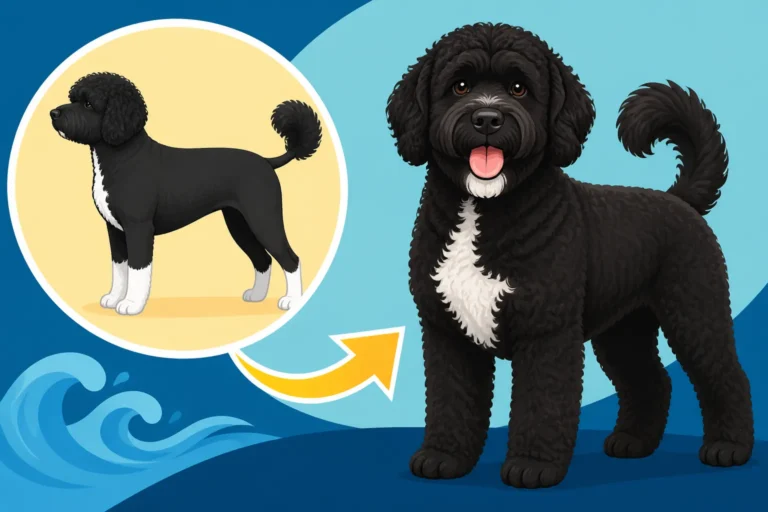
The Age a Portuguese Water Dog Reaches Full Weight
One of the most exciting, and sometimes anxious, parts of bringing home a Portuguese Water Dog puppy is watching them grow. You see them transforming before your eyes, a gangly, energetic bundle of fluff one day, and a slightly less gangly, still energetic bundle the next! But it’s natural to wonder, "When will my PWD stop growing? When do they truly reach their full, magnificent adult weight?" This guide will walk you through the developmental stages, helping you understand the timeline and factors that influence when your beloved Portuguese Water Dog finally settles into their full adult stature.
The Portuguese Water Dog Growth Journey: From Wobbly Puppy to Solid Adult
Watching a Portuguese Water Dog puppy grow is like witnessing a marvel of nature. They go from tiny, helpless fluffballs to confident, agile athletes in what feels like the blink of an eye. However, the journey to their full adult weight isn't a straight, linear path; it's a series of phases, each with its own characteristics and milestones. Understanding these stages can help you manage your expectations and ensure your PWD gets the right care at the right time.
Rapid Early Development: The Puppy Explosion (0-6 months)
This initial phase is where you see the most dramatic changes. Your Portuguese Water Dog puppy seems to grow inches overnight, gaining weight at an astonishing rate. Their bones are lengthening rapidly, and their bodies are changing almost daily. It's a period of explosive growth, laying the foundation for their adult size. During these months, their energy levels are sky-high, and they're learning about the world at an incredible pace. It’s also when their signature coat starts to thicken and truly emerge. You’ll be constantly amazed at how much dog you have from one week to the next.
However, this rapid growth also means their skeletal system is incredibly vulnerable. Their growth plates, the soft areas at the ends of their long bones, are still open and easily damaged. This is why controlled exercise is so crucial during these early months. Avoid high-impact activities like excessive jumping, long runs on hard surfaces, or repetitive stair climbing. Gentle play, short walks, and supervised swimming are far better for their developing joints. Remember, their enthusiasm might suggest they can do anything, but their bodies aren't ready for everything just yet. For a general idea, you might want to look at What a Portuguese Water Dog Puppy Should Weigh by Month to get a sense of their early trajectory.
Adolescent Growth Spurts and Filling Out (6-18 months)
Just like human teenagers, Portuguese Water Dogs enter an adolescent phase where growth continues, but it tends to be more about "filling out" and gaining muscle mass rather than just getting taller. While much of their height might be achieved by 8-12 months, their chest will deepen, their frame will broaden, and they'll start to look less like an awkward teenager and more like a junior adult. This period can be characterized by growth spurts, where they suddenly seem to gain weight and muscle in a short burst, followed by periods of more gradual change.
Behaviorally, adolescence can be a challenging time, too. They might "forget" some of their training, test boundaries, and generally act like rebellious teens. Physically, they're developing strength and coordination, which is a great time to introduce more structured exercise like longer walks or even beginning some basic water work. Their confidence in the water is often burgeoning, and it's a joy to watch them explore their natural instincts. This is also when you'll truly start seeing their individual personality solidify alongside their physical maturity.
The Slow Maturation to Full Weight (18-24+ months)
While your PWD might look like an adult by 18 months, reaching their full weight—meaning optimal muscle development and complete skeletal maturity—often takes a bit longer. Many Portuguese Water Dogs won't truly be considered fully grown and filled out until they are closer to two years old, and some larger individuals might even continue to subtly mature until 2.5 or even 3 years of age. This final phase of growth is less about getting bigger and more about solidifying their adult physique. Their muscles will continue to develop and tone, and their body condition will become more refined.
This is the point where you'll notice their energy levels might start to stabilize, though they will still be an active and vibrant breed! Their bone density increases, and their overall structure becomes robust. It's important during this time to continue providing a high-quality diet and consistent, appropriate exercise to support this final stage of development. You can certainly measure What an Adult Portuguese Water Dog Should Weigh as a benchmark, but remember that individual variation is key. Each PWD is unique, and while there are breed standards, your dog's personal journey to full maturity will be their own.
Understanding the Factors That Influence Your PWD's Final Weight
While you can predict a general timeline for your Portuguese Water Dog's growth, several factors play a significant role in determining their ultimate size and weight. It's not just about age; genetics, nutrition, and exercise all contribute to how your PWD develops and when they hit their "full" adult stage. Being aware of these influences helps you make informed decisions for their well-being.
Genetics and Lineage: The Blueprint from Their Ancestors
Without a doubt, genetics are the primary determinant of your Portuguese Water Dog's potential adult size and weight. Just like humans, puppies inherit their physical traits from their parents and their ancestral lines. If your puppy's parents were on the larger side of the breed standard, there's a good chance your PWD will follow suit. Conversely, if their lineage tends towards smaller, more compact dogs, your puppy will likely mature into that same general build. Responsible breeders can usually give you a good estimate of a puppy's likely adult size based on the parents and previous litters.
The breed standard itself provides a range for both height and weight, and your PWD will typically fall within these parameters. Remember that male Portuguese Water Dogs tend to be larger and heavier than females. It's not uncommon to see variations even within the same litter, reflecting the complex interplay of inherited genes. When you're curious about their ultimate form, it's always helpful to discuss it with your breeder and look at What a Portuguese Water Dog Weighs and How Tall It Stands to understand the typical range for the breed. Don't stress too much about hitting a precise number; focus on a healthy, proportionate dog.
The Crucial Role of Nutrition: Fueling Healthy Development
Nutrition plays a pivotal role, especially during the rapid growth phases of puppyhood. Feeding a high-quality, balanced diet formulated for large breed puppies is crucial. These diets are specifically designed to support steady, controlled growth, which is vital for proper bone and joint development. Overfeeding a puppy, or feeding a diet too high in calories and calcium, can actually cause them to grow too fast, leading to orthopedic issues like hip or elbow dysplasia down the line. It's a common misconception that more food equals bigger, stronger dogs; often, it just leads to problems.
As your PWD transitions from puppy to adult, their nutritional needs will change. The goal shifts from supporting rapid growth to maintaining an ideal body condition and energy levels. Many owners choose to transition their PWDs to adult formulas around 12-18 months, depending on their individual growth rate and veterinary advice. Brands like Ollie offer tailored meal plans, and resources from retailers like Chewy provide a vast selection of high-quality kibble and wet food options, making it easier to find a diet that perfectly suits your dog's stage of life and activity level. Always follow the feeding guidelines on the food packaging and adjust based on your dog's individual metabolism and activity. Learning about When a Portuguese Water Dog Moves to Adult Food is an important step in their care.
Exercise and Physical Development: Building a Strong Foundation
Appropriate exercise is another key factor in a Portuguese Water Dog reaching their full, healthy weight and musculature. During puppyhood, as mentioned earlier, controlled and low-impact exercise is essential to protect those vulnerable growth plates. Swimming is an excellent, low-impact activity that is perfect for developing muscle without stressing joints. As they mature into adolescence and adulthood, their exercise needs will increase significantly. These are working dogs, after all, and they thrive on activity.
Consistent, varied exercise helps build strong muscles, maintains a healthy weight, and contributes to overall skeletal integrity. A well-conditioned PWD will have a lean, athletic build rather than being overly heavy or bulky. Regular activities like hiking, retrieving games, and especially swimming, contribute to their muscular development. Think about their natural inclination for water work; activities like dock diving or water trials are not only mentally stimulating but also physically excellent for them. These activities sculpt their physique and ensure they're robust. In fact, Why Swimming Protects a Portuguese Water Dog's Joints is a topic many PWD owners explore to ensure longevity.
Recognizing When Your Portuguese Water Dog Has Reached Their Prime
It’s often hard to tell precisely when your Portuguese Water Dog has stopped growing. It’s not like they ring a bell! Instead, it’s a more gradual process, involving a combination of physical observations and, sometimes, a subtle shift in their demeanor. As an owner, you become attuned to these changes, but it's helpful to know what to look for to confirm your PWD has truly reached their adult peak.
Beyond the Scale: Observing Body Condition
While the number on the scale is a factor, it’s not the sole indicator of your PWD reaching full weight. A more accurate assessment involves observing their body condition. A fully grown, healthy Portuguese Water Dog should have a lean, athletic build. You should be able to easily feel their ribs when you run your hands along their sides, but not see them protruding. They should have a defined waist when viewed from above and a slight tuck-up in their abdomen when viewed from the side. Their muscles should feel firm and well-developed.
Comparing your dog's current condition to photos from earlier stages can be incredibly insightful. You'll notice that their chest will have broadened and deepened, their topline will be level, and their legs will appear sturdy and proportionate to their body. If you're ever unsure, your veterinarian can provide an objective assessment of your dog's body condition score. This visual and tactile evaluation is much more telling than simply looking at a number, especially with a breed whose dense coat can sometimes obscure their true shape. Regularly checking their condition, even through their thick coat, is a vital part of Caring for a Portuguese Water Dog Past Nine years old too, as their needs change.
Skeletal Maturity vs. Muscular Maturity: Understanding the Difference
It’s important to distinguish between skeletal maturity and muscular maturity. Most Portuguese Water Dogs will reach their full height by around 12 to 18 months, especially the females. This means their long bones have stopped growing, and their growth plates have closed. However, achieving their full weight often means developing their adult muscle mass, which takes longer. Think of it this way: a teenage boy might reach his adult height by 16, but he'll continue to fill out, gaining muscle and broadening his frame, well into his early twenties. Dogs are similar.
For PWDs, especially the males, it's common for them to continue adding muscle and filling out their chest and overall frame until they are 24 months old, sometimes even a bit beyond. This "filling out" contributes significantly to their final adult weight and robust appearance. A veterinarian can confirm when growth plates have closed, usually around 12-18 months for most breeds, but even then, their body still has some maturing to do in terms of muscle and density. Knowing When a Portuguese Water Dog's Growth Plates Close helps you understand when the most vulnerable period for their joints has passed.
Behavioral Indicators of Adulthood: More Than Just Physical
While the physical changes are the most obvious, behavioral shifts also signal a transition into adulthood. A fully mature Portuguese Water Dog often exhibits a more settled, confident, and less impulsive demeanor than their adolescent selves. While they will always retain their playful and energetic spirit, the frantic, often clumsy, energy of puppyhood gives way to a more focused and intentional approach to life. Their problem-solving skills might become more refined, and their attention spans longer.
This isn't to say they'll suddenly become couch potatoes; a PWD will always need significant mental and physical stimulation. However, the chaos of puppy brain often subsides, replaced by a more predictable and calm companion. They tend to respond better to training cues, and their personalities truly shine through in their steady, intelligent nature. This behavioral maturation often aligns with their physical completion, marking the point where you truly have a fully grown, well-rounded adult PWD in every sense of the word. For more on this, you might be interested in When a Portuguese Water Dog Finally Matures.
| Age (Approximate) | Physical Milestones | Weight/Height Growth | Key Considerations |
|---|---|---|---|
| 0-6 Months | Rapid bone lengthening, puppy fluff | Explosive growth, significant weekly weight gain | Protect growth plates, controlled exercise |
| 6-12 Months | Reaching most of adult height, "teenage" phase | Steady growth, gaining lean muscle | Continue joint protection, introduce structured activity |
| 12-18 Months | Approaching full height, body filling out | Gradual weight gain, muscle development intensifies | Transition to adult food, monitor body condition |
| 18-24+ Months | Full skeletal maturity, muscle mass completion | Reaching final adult weight, body condition stabilizes | Maintain ideal weight, consistent adult exercise |
Note: These are general guidelines. Individual growth rates can vary significantly based on genetics, nutrition, and environmental factors.
Supporting Your Fully Grown PWD's Health and Wellness
Once your Portuguese Water Dog has reached their full adult weight, the journey of care doesn't stop. In fact, it enters a new phase focused on maintaining their health, energy, and overall well-being throughout their adult life. This means adjusting their diet, ensuring they continue to get appropriate exercise, and keeping up with regular veterinary check-ups to catch any issues early.
Adjusting Nutrition for Adult Needs: Maintaining Optimal Weight
With growth complete, your PWD's caloric needs will change. They no longer require the intense energy for rapid bone and tissue development. Continuing to feed a puppy formula or simply overfeeding can quickly lead to unwanted weight gain, which puts unnecessary stress on their joints and overall health. Transitioning to a high-quality adult dog food designed for active, medium-to-large breeds is crucial. Look for formulas that support lean muscle mass and joint health.
The key here is moderation and consistency. Monitor their body condition regularly and adjust their food intake as needed. An active Portuguese Water Dog still burns a lot of calories, but it's a balance. Consider nutrient-dense options available from specialized pet food services or look for high-quality kibbles on platforms like Amazon if you prefer convenient home delivery. Treats should be given in moderation and factored into their daily calorie count. It can be tricky, as How a Portuguese Water Dog's Coat Hides Weight Loss (and gain!) means you have to be vigilant. Always refer to your vet's recommendations and the feeding guides on your chosen food, making slight adjustments for your dog's unique metabolism and activity level.
Ongoing Exercise Requirements: Keeping That Working Drive Alive
A fully grown Portuguese Water Dog is not a dog that can simply be left to its own devices with a quick walk around the block. Their working heritage means they have a deep-seated need for both physical and mental stimulation. Even after reaching full maturity, they require substantial daily exercise to remain happy, healthy, and well-behaved. This isn't just about preventing boredom; it's about honoring their breed's purpose.
Continue to engage them in activities that challenge both their body and mind. Swimming, as always, remains an excellent option. Long walks, hikes, retrieving games, and dog sports like agility, obedience, or scent work are all fantastic ways to keep them active. A bored or under-exercised PWD can quickly become destructive or develop unwanted behaviors. Think of it as a daily commitment to their happiness and your peaceful coexistence. Consistency is key here. Understanding What a Portuguese Water Dog Needs Every Day will help you structure their routine.
Regular Health Checks: Proactive Care for a Long Life
Even after your Portuguese Water Dog has reached their full weight and is thriving, regular veterinary check-ups remain paramount. Annual wellness exams allow your vet to monitor their overall health, including their weight, joint health, dental condition, and any subtle changes that might indicate an underlying issue. These check-ups are also an opportunity to discuss any concerns you might have about their diet, exercise, or behavior.
As your PWD ages, these regular checks become even more important, helping to catch age-related conditions early. Your vet can advise on preventive care, appropriate vaccinations, parasite control, and any necessary supplements to support their continued health. A strong partnership with your veterinarian is the best way to ensure your Portuguese Water Dog enjoys a long, vibrant life, well past their growth years. For comprehensive information, you can always refer to How Often a Portuguese Water Dog Needs a Wellness Exam.
Disclaimer
This article is for general informational purposes only and does not constitute professional advice. Laws, prices and regulations vary by location and change over time. Consult a qualified professional for guidance on your specific situation.