The Portuguese Water Dog Against the Standard Poodle
Deciding between a Portuguese Water Dog and a Standard Poodle can feel like navigating a maze, especially when you're looking for a furry family member that fits your unique lifestyle. Both breeds are incredibly intelligent, active, and sport those distinctive curly coats, leading many prospective owners to wonder about the real differences beyond appearances. This comprehensive guide will deep dive into their histories, temperaments, grooming needs, and more, helping you discern which of these magnificent water dogs might be the perfect match for your home and heart.
Historical Roots and Working Background
To truly understand a dog, you have to look back at what they were bred to do. Their original purpose shapes so much of their instinct, their drive, and even their physical build. For both the Portuguese Water Dog and the Standard Poodle, their heritage is deeply intertwined with water, but the nature of their work differed significantly.
The Portuguese Water Dog's Maritime Heritage
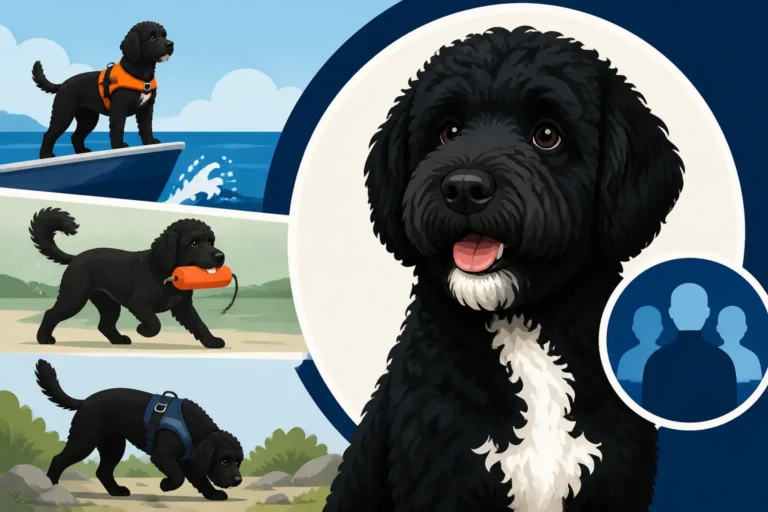
The Portuguese Water Dog, or Cão de Água Português as they're known in their homeland, hails from the sun-drenched coasts of Portugal's Algarve region. These weren't just pets; they were integral members of the fishing crews, working dogs through and through. Imagine a bustling fishing village, boats heading out to sea, and alongside the fishermen, a sturdy, agile dog, ready for action. Their job was incredibly varied and demanding.
These dogs were responsible for retrieving lost fishing gear, like nets that had drifted away or ropes that had gone overboard. They would even "herd" fish into nets, driving them toward the boats, a truly remarkable feat of instinct and cooperation. The Portuguese Water Dog Worked the Algarve Fishing Fleet describes the dynamic life they led. They carried messages between boats and from boat to shore, acting as the ultimate maritime assistants. This meant they needed not only incredible swimming prowess but also keen intelligence to understand complex commands and an independent spirit to execute tasks without constant human direction. Their very existence depended on their ability to perform these vital tasks, and this ingrained work ethic is still a strong characteristic in the breed today. They thrive on having a "job" and a sense of purpose, even if that job is now retrieving a tennis ball from the swimming pool instead of a broken net from the Atlantic.
The Standard Poodle's Waterfowl Hunting Lineage
Many people are surprised to learn that the elegant Standard Poodle, often associated with sophisticated show rings and elaborate clips, also has a rich history as a working water retriever. Originating in Germany (the word "Poodle" comes from the German "Pudel" or "Pudeln," meaning "to splash in water"), these dogs were developed to retrieve waterfowl for hunters. Their dense, curly coats, much like the PWD's, provided excellent insulation against cold water, protecting them from the elements during long retrieves.
Unlike the PWD's broader maritime utility, the Poodle's focus was primarily on hunting and retrieving downed birds. This required a different set of skills: a strong drive to fetch, exceptional swimming ability, and a highly biddable nature to work closely with a hunter, taking direction and staying focused amidst distractions. The traditional "poodle clip," with its shaved hindquarters and joint tufts, wasn't just for aesthetics; it served a practical purpose. Shaving the hair reduced drag in the water, making them more efficient swimmers, while leaving hair on joints and vital organs protected them from the cold. While many Standard Poodles today live pampered lives, that strong retrieval instinct and desire to please their handler remain deeply rooted in their DNA. They are still highly capable working dogs when given the opportunity.
Physical Appearance and Breed Standards
When you first see a Portuguese Water Dog and a Standard Poodle side-by-side, their curly coats might make them seem similar. However, a closer look reveals distinct differences in their build, coat texture, and unique features, each reflecting their historical working roles.
Size and Build: Power vs. Elegance
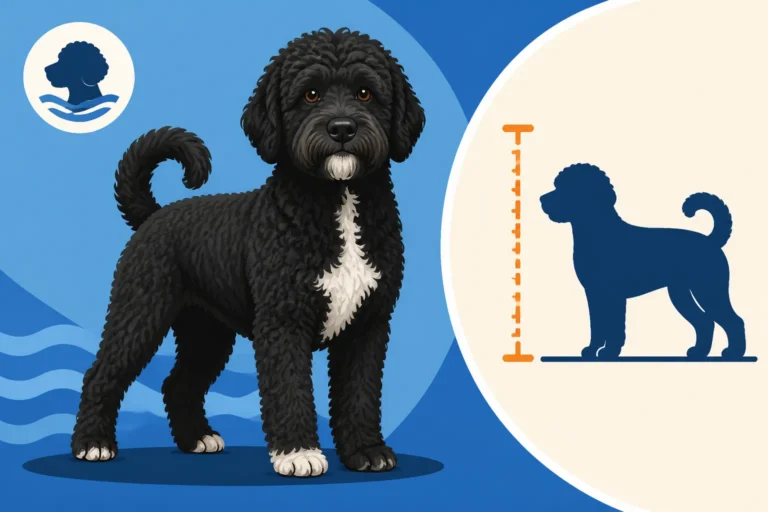
The Portuguese Water Dog is built for durability and athleticism. They are medium-sized dogs with a robust, muscular build, designed for long hours of strenuous work in and out of the water. Their frame is sturdy, conveying a sense of strength and power. Males typically stand a bit taller and weigh more than females, generally ranging from around 20 to 27 inches at the shoulder and weighing between 42 to 60 pounds. Their broad chest and well-sprung ribs provide ample lung capacity for swimming, and their overall appearance is one of substance and readiness for action. Think of a capable, hardworking athlete, not overly refined but perfectly suited for a demanding physical job.
In contrast, the Standard Poodle, while also athletic, presents a picture of elegance and refined strength. They are generally taller than Portuguese Water Dogs, with males often standing over 22 inches at the shoulder and females slightly less. Their weight can vary, but they often fall in the 40 to 70-pound range, sometimes even more for larger males. Their build is more squarely proportioned and graceful, with a proud carriage and long, aristocratic neck. While they possess powerful hindquarters for propulsion in water, their overall silhouette is one of lean muscle and graceful lines, characteristic of a hunter built for speed and agility on both land and water. The emphasis is on balanced proportions and an air of dignified athleticism.
Coat Types and Colors: The Signature Looks
Both breeds are known for their non-shedding, hypoallergenic-friendly coats, but the texture and appearance differ. The Portuguese Water Dog sports two distinct coat types: curly and wavy. Curly or Wavy: the Two Portuguese Water Dog Coats delves into the nuances. The curly coat is typically dense, compact curls that are cylindrical and often lack an undercoat, giving it a somewhat matte or "rough" feel. The wavy coat is softer, with looser waves and a slight sheen, often described as having a more flowing appearance. Both coats are single-layered, meaning they don't have a separate shedding undercoat, which is why they are often better tolerated by people with allergies. These coats come in a variety of solid colors including black, white, and various shades of brown, as well as parti-colors (white with patches of another color).
The Standard Poodle's coat is distinctly dense and harsh in texture, characterized by profuse, naturally curly hair that forms tight, crisp ringlets. It's often described as a single coat, but it's incredibly dense and requires consistent grooming to prevent matting. This coat, like the PWD's, is considered non-shedding, with loose hair tending to get caught within the curls rather than falling out onto furniture. Poodles come in an even wider array of solid colors than PWDs, including black, white, cream, apricot, red, brown, blue, gray, and silver, along with parti-colors, though solid colors are preferred in show rings. The density and texture of the Poodle's coat are part of what make it so versatile for elaborate clips, as it holds its shape beautifully.
Distinctive Features: Webbed Feet and Tail Carriages
Certain physical traits offer clues to each breed's specialized past. The Portuguese Water Dog's most famous feature is undoubtedly their webbed feet, perfectly designed for maximum propulsion in water. Why a Portuguese Water Dog Has Webbed Feet explains this adaptation. These aren't just slightly webbed; they are notably pronounced, almost like duck feet, allowing them to paddle with exceptional efficiency and power. Their tail is another important characteristic, thick at the base and tapering to a point, often carried in a distinctive ring or half-ring over their back when alert or excited. This tail acts like a rudder, aiding in steering and balance while swimming, a direct reflection of their aquatic working heritage.
The Standard Poodle also possesses webbed feet, though often less pronounced than the PWD's. They are still strong swimmers, and their webbing certainly contributes to their aquatic prowess, but it's not as extreme a feature as in the Portuguese Water Dog. The Poodle's tail is generally set high and carried proudly erect, often docked in countries where the practice is permitted (though many countries now ban cosmetic tail docking). Its carriage contributes to the Poodle's elegant silhouette, but it doesn't serve the same "rudder" function as the PWD's tail. Their long, often expressive muzzles and dark, intelligent eyes are also hallmark features, conveying their keen intellect and attentiveness.
Temperament, Intelligence, and Trainability
Both Portuguese Water Dogs and Standard Poodles are renowned for their high intelligence and energetic dispositions. However, their personalities and approaches to training, largely influenced by their historical roles, present interesting distinctions.
Energy Levels and Drive: Always On the Go?
When you bring either of these breeds into your home, prepare for an active companion. Both are high-energy dogs, but their expressions of that energy can vary. The Portuguese Water Dog is often described as a "four-on-the-floor" kind of dog, meaning they are always ready for action. Their energy is robust, tireless, and physically demanding. They have an incredible drive to do things, and if left without an outlet, that energy can quickly turn into destructive behaviors like chewing, digging, or excessive barking. They need vigorous daily exercise, often including swimming, and mental stimulation to keep their active minds engaged. A simple walk around the block is often not enough; they crave adventure and a challenge. The Portuguese Water Dog That Has Not Had Enough Exercise is a must-read for anyone considering the breed.
Standard Poodles, while also requiring significant exercise, tend to have a slightly different cadence to their energy. They are equally capable of intense activity and can excel in various dog sports. However, they also possess an "off switch" that some PWDs might seem to lack. A well-exercised Standard Poodle can often settle down calmly indoors, enjoying quiet time with their family. They need long walks, runs, or play sessions, but their drive might manifest more in focused training or problem-solving tasks rather than constant physical exertion. They are athletes, but also enjoy being elegant companions. Without proper exercise and mental engagement, Poodles can become bored and develop nuisance behaviors, but their energy might be easier to manage for some owners simply due to that capacity for quiet relaxation.
Trainability and Problem-Solving Aptitude
Both breeds are highly intelligent, placing them among the top ranks of canine intellect. This intelligence makes them capable of learning a vast number of commands and performing complex tasks. However, their approach to training can differ significantly. Standard Poodles are often described as exceptionally biddable and eager to please. They thrive on positive reinforcement and love to work cooperatively with their handlers. Their intelligence, combined with their desire to earn praise, makes them quick studies in obedience, agility, and other dog sports. They pick up new commands with ease and are generally very responsive to direction, making them a joy to train for experienced and novice owners alike.
The Portuguese Water Dog is also highly intelligent, but their intelligence comes with a strong streak of independence. Remember their history of working independently on boats? This means they were bred to think for themselves, sometimes offering their own solutions to problems rather than simply following commands. Training a Portuguese Water Dog That Was Bred to Think for Itself highlights this unique trait. They can be very bright and learn quickly, but they might question a command or try to find a more "efficient" way of doing things in their minds. This can be charming but also challenging for an owner who expects absolute obedience. Training a PWD requires patience, consistency, and a sense of humor. They respond best to positive, engaging methods and can get bored or stubborn with repetitive drills. They need an owner who can be creative and make training a fun, ongoing mental game. How Trainable a Portuguese Water Dog Is further explores their learning style.
Socialization and Family Dynamics
Both PWDs and Standard Poodles are generally good-natured and can make wonderful family pets, but their social tendencies can have subtle differences. Portuguese Water Dogs are typically boisterous, affectionate, and loyal to their families. They often form strong bonds with all family members and enjoy being at the center of attention. They can be very playful with children, though their enthusiastic nature means supervision is always wise, especially with very young kids who might be accidentally knocked over during a burst of zoomies. They are generally sociable with other dogs if properly socialized from a young age. With strangers, they can be reserved at first, often taking a moment to assess new people before offering their characteristic boisterous greeting. This can make them good watchdogs, alert to new arrivals.
Standard Poodles are also very devoted to their families and tend to be quite sensitive and empathetic. They are often described as being "people dogs" who thrive on human companionship and can be quite affectionate. With children, they are usually gentle and patient, though their large size also necessitates supervision. Like PWDs, early and ongoing socialization is key for Poodles to ensure they are comfortable and well-mannered around new people and other dogs. They tend to be more welcoming to strangers than some PWDs, often greeting new acquaintances with a polite curiosity. Their keen intelligence means they are highly attuned to the family's moods and dynamics, making them wonderfully perceptive companions.
Grooming Requirements and Maintenance
Ah, the curly coat! It's one of the most attractive features of both breeds, often touted as "hypoallergenic," but it comes with a significant grooming commitment. If you're not prepared for regular brushing, clipping, and bathing, then neither of these breeds is for you.
Brushing and Preventing Mats: Daily Commitment
The non-shedding nature of both the Portuguese Water Dog and the Standard Poodle's coat means that any loose hair gets trapped within the existing curls. If this trapped hair isn't regularly brushed out, it quickly forms painful, dense mats. This isn't just a cosmetic issue; mats pull on the skin, can cause skin infections, and are incredibly uncomfortable for the dog.
For a Portuguese Water Dog, daily or every-other-day brushing is often essential, especially during coat change periods (when they transition from puppy to adult coat, or if they're spayed/neutered and their coat changes texture). The wavy coat might appear easier, but it can mat just as quickly, often in large sheets. The curly coat forms tighter, cord-like mats if neglected. You'll need a good quality slicker brush and a sturdy metal comb to ensure you're getting down to the skin. Pay particular attention to "hot spots" for matting: behind the ears, under the legs, around the collar, and anywhere friction occurs. The Lion Clip Costs a Portuguese Water Dog Owner Daily Brushing gives you a sense of the commitment. You can find excellent grooming tools, from brushes to combs, on Chewy to keep their coats pristine.
Standard Poodles require an equally rigorous brushing routine, sometimes even more so due to the density and tightness of their curls. Daily brushing is often recommended, especially if their coat is kept long. A Poodle's coat can mat incredibly quickly, turning into a felted mess in just a few days if neglected. Like PWDs, you'll need a slicker brush and a metal comb to work through the coat layer by layer, ensuring no hidden mats. Regular brushing not only prevents matting but also distributes natural oils, keeping the coat healthy and shiny. The commitment to brushing cannot be overstated for either breed – it's a foundational aspect of their care.
Clipping Styles: Function vs. Fashion
Regular clipping is another non-negotiable aspect of grooming for both breeds. Left untrimmed, their coats will simply grow indefinitely, becoming unmanageable, heavy, and prone to severe matting.
Portuguese Water Dogs traditionally wear two primary clips: the Retriever clip and the Lion clip. The Retriever clip, which leaves the coat a uniform length (typically 1 inch or longer) all over the body, is the most common for pet PWDs and showcases their natural rugged appearance. The Retriever Clip Is the Coat Most Portuguese Water Dogs Wear describes this practical style. The Lion clip, while less common for pets, has historical significance. In this clip, the muzzle, hindquarters, and base of the tail are shaved down to the skin, while the rest of the coat is left longer, with a puff of hair at the end of the tail. This clip was functional for working dogs, allowing for greater freedom of movement in the water while protecting vital organs from the cold. Pet owners might opt for shorter, low-maintenance clips as well, but generally, PWDs are clipped every 6-8 weeks.
Standard Poodles are famous for their vast array of clipping styles, ranging from functional pet clips to elaborate show cuts. For pet owners, many opt for a simple, all-over "kennel clip" or "lamb clip," where the hair is kept a uniform, short length all over. More traditional styles like the "Continental clip" (often seen in show rings, with shaved hindquarters, bracelets, and a pompom on the tail) or the "English Saddle clip" are more high-maintenance and require specialized grooming. Regardless of the style, Poodles typically need professional grooming or a dedicated home grooming routine every 4-6 weeks to maintain their coat and prevent matting. The versatility of the Poodle's coat allows for a wide range of aesthetic choices, making them a favorite for creative groomers.
Water-Related Coat Care: Drying After a Dip
Given their aquatic heritage, both breeds love water. However, a damp coat, especially one as dense and curly as theirs, is a breeding ground for skin issues and mats. Proper drying after every swim or bath is absolutely critical.
For a Portuguese Water Dog, a thorough rinse after swimming (especially in salt water or chlorinated pools) is essential to remove irritants and prevent matting. Drying a Portuguese Water Dog After Every Swim offers practical advice. After rinsing, they must be dried completely. Air drying is often insufficient and can lead to hot spots or skin infections because the dense coat traps moisture against the skin. Many owners use high-velocity force dryers to quickly and efficiently dry the coat down to the skin. This not only prevents skin problems but also significantly reduces the time it takes for the dog to be dry. This equipment can be an investment, but it's crucial for their health and comfort.
Standard Poodles, with their even denser coats, also require meticulous drying. The same principles apply: rinse thoroughly if they've been swimming, then use towels and ideally a force dryer to ensure the coat is bone-dry. Failing to dry a Poodle completely can lead to the same skin issues and matting that PWDs experience. The tight curls can hold a surprising amount of moisture, making thorough drying a time-consuming but necessary task. Whether you're bathing them at home or picking up a new shampoo and conditioner from Chewy, remember that the drying process is arguably the most important step for maintaining a healthy coat.
| Feature | Portuguese Water Dog | Standard Poodle |
|---|---|---|
| Origin | Portugal, fishing boats | Germany/France, waterfowl hunting |
| Primary Work | Retrieving gear, herding fish, carrying messages | Retrieving downed birds from water |
| Build | Robust, muscular, sturdy, powerful | Elegant, refined, squarely built, athletic |
| Typical Size | 42-60 lbs, 20-27 inches (medium) | 40-70+ lbs, 22+ inches (large) |
| Coat Type | Curly or Wavy, single coat, dense | Dense, harsh, tight curls, single coat |
| Webbed Feet | Very pronounced, a key feature | Present, but often less pronounced than PWD |
| Tail Carriage | Often carried in a ring/half-ring over back, rudder-like | Set high, carried proudly erect |
| Temperament | Independent, boisterous, loyal, needs a "job" | Eager-to-please, sensitive, intelligent, biddable |
| Trainability | Intelligent, can be stubborn, needs variety | Highly intelligent, very responsive, excels in obedience |
| Energy Level | High, tireless, needs vigorous physical & mental output | High, but often has an "off switch" indoors after exercise |
| Grooming | Daily brushing, clipping every 6-8 weeks (Retriever/Lion clips) | Daily brushing, clipping every 4-6 weeks (many styles) |
| Common Health Issues | JDCM, GM1, PRA, Addison's, Hips, Elbows | Addison's, Bloat, Hip Dysplasia, Sebaceous Adenitis, PRA |
Exercise Needs and Activity Preferences
Both Portuguese Water Dogs and Standard Poodles are athletes at heart, bred for active lives where they put their physical and mental prowess to good use. If you're looking for a couch potato, neither of these breeds will fit the bill. They demand significant daily activity and thrive when given a purpose.
Daily Exercise and Mental Stimulation
For a Portuguese Water Dog, daily exercise isn't just a suggestion; it's a necessity for their well-being. They need a minimum of 60-90 minutes of vigorous activity every single day, and for many, even more than that. This isn't just a leisurely stroll; it needs to be engaging and challenging. Running, hiking, vigorous games of fetch, or, ideally, swimming are all excellent choices. Without sufficient physical and mental outlets, a PWD can quickly become bored, destructive, and even difficult to live with. Their intelligent minds also require stimulating activities beyond just physical exertion. Puzzle toys, training sessions, and interactive games are crucial to prevent them from becoming restless. A Portuguese Water Dog Was Bred to Work a Boat, Not a Yard is a potent reminder that their natural instincts drive them to be busy.
Standard Poodles also require substantial daily exercise, typically an hour or more of focused activity. Like PWDs, they thrive on variety. Long walks, runs, fetching games, and mental challenges like obedience training or puzzle toys keep them happy and balanced. While they might be able to settle indoors more readily than some PWDs after their exercise, neglecting their activity needs will quickly lead to an unruly and unhappy Poodle. Their elegance in the show ring often belies their incredible athleticism and stamina. Many Standard Poodles excel in dog sports like agility, obedience, and rally, demonstrating their need for both physical and mental engagement.
Water Work and Athletic Pursuits
This is where both breeds truly shine and where their historical roots converge and diverge. Both are exceptional swimmers, but their enthusiasm and innate drive for water activities might feel different.
The Portuguese Water Dog is, as their name suggests, an absolute natural in the water. They are often born swimmers, taking to the water with an almost unparalleled joy and vigor. Swimming isn't just exercise for them; it's an ingrained part of who they are. They excel in water-based activities like dock diving, where they leap off a dock to retrieve a toy, and formal water trials, which simulate their historical working tasks. Teaching a Portuguese Water Dog to Swim on Cue can be an easy process for these dogs. Many PWDs will seek out any body of water, be it a lake, ocean, or even a mud puddle, with unbridled enthusiasm. For a PWD, access to water and opportunities to swim are often considered essential for their happiness and fulfillment.
Standard Poodles are also excellent swimmers and generally enjoy water thoroughly. They possess the athleticism and waterproof coat to handle extended periods in the water, just as their ancestors did retrieving waterfowl. Many Poodles will happily join their families for a swim in the lake or a dip in the pool. They can certainly participate and excel in water sports like dock diving. However, their drive for water might not always be as singularly intense or instinctive as that of a Portuguese Water Dog. While a PWD might live for the splash, a Poodle might enjoy it as one of many favorite activities, and some individuals may need a bit more encouragement to get started than their Portuguese counterparts. Both breeds benefit immensely from aquatic exercise, which is low-impact on their joints and incredibly tiring.
Apartment Living vs. Spacious Homes
The question of whether these breeds can thrive in an apartment or a smaller home is complex. Both are large, high-energy dogs, and simply having a large yard isn't enough; they need interaction and purposeful activity.
A Portuguese Water Dog can adapt to apartment living, but it requires an incredibly dedicated owner. The size of the living space matters far less than the commitment to providing ample exercise and mental stimulation outside the home. If an owner is willing to take their PWD for long runs, hikes, regular swims, and dog park visits, and commit to daily training, an apartment could work. However, any lapse in this routine will quickly lead to a restless, potentially destructive, and unhappy dog. They often struggle with being left alone for long periods without adequate exercise, and their vocal tendencies can be an issue in close quarters. The Household a Portuguese Water Dog Was Built For really emphasizes their need for engagement.
Standard Poodles are generally more adaptable to various living situations, including apartments, provided their exercise needs are consistently met. Their ability to have a good "off switch" once adequately exercised makes them slightly more suitable for apartment living than some PWDs. They still need those long daily walks, runs, and mental challenges, but once they've had their fill, they are often content to relax quietly indoors with their family. However, this adaptability does not mean they are low-maintenance. An unexercised Poodle will be just as prone to boredom and destructive behavior as any other high-energy breed. For both breeds, if you're considering a smaller living space, be honest with yourself about your ability to commit to their significant exercise requirements every single day.
Health and Lifespan Considerations
Choosing any dog breed involves understanding their potential health predispositions. Both Portuguese Water Dogs and Standard Poodles are generally robust breeds, but like all purebreds, they have certain genetic conditions that responsible breeders work to minimize through health testing.
Common Genetic Health Concerns
Portuguese Water Dogs are a fairly healthy breed, but there are several genetic conditions that reputable breeders screen for. Among the most serious is Juvenile Dilated Cardiomyopathy (JDCM), a heartbreaking condition that causes sudden heart failure in puppies, usually before six months of age. There's also GM1 Gangliosidosis, a fatal neurological storage disease. Fortunately, DNA tests are available for both, allowing breeders to avoid producing affected puppies. Other important health concerns include Progressive Retinal Atrophy (PRA), which can lead to blindness, and Addison's Disease, an autoimmune disorder affecting the adrenal glands, which is common in Portuguese Water Dogs. Addisons Disease Is Common in Portuguese Water Dogs provides more detail. What a Portuguese Water Dog Breeder Should Have Tested lists all the essential screenings. Like many active breeds, they can also be prone to hip and elbow dysplasia. Hips and Joints in a Portuguese Water Dog is a good resource for understanding these orthopedic issues.
Standard Poodles also have their share of genetic predispositions. Addison's Disease is notably prevalent in the breed, much like in PWDs. They are also prone to Bloat (Gastric Dilatation-Volvulus), a life-threatening condition where the stomach twists. Hip dysplasia is another orthopedic concern. Eye conditions like Progressive Retinal Atrophy (PRA) and cataracts are also seen. Sebaceous Adenitis (SA), a skin condition, is more common in Poodles. Given their deep chests, Poodles are particularly susceptible to bloat, making it a critical concern for owners.
| Condition | Portuguese Water Dog | Standard Poodle | Description |
|---|---|---|---|
| Juvenile Dilated Cardiomyopathy (JDCM) | High | Low | Rapidly fatal heart condition in puppies. (DNA test available) |
| GM1 Gangliosidosis | Low | Low | Fatal neurological storage disease. (DNA test available) |
| Progressive Retinal Atrophy (PRA) | High | High | Degenerative eye disease leading to blindness. (DNA tests available for types) |
| Addison's Disease | High | High | Autoimmune disorder affecting adrenal glands. |
| Hip Dysplasia | High | High | Malformation of the hip joint, leading to arthritis. |
| Elbow Dysplasia | High | Low | Malformation of the elbow joint, leading to arthritis. |
| Bloat (Gastric Dilatation-Volvulus) | Low | High | Life-threatening stomach twisting. |
| Sebaceous Adenitis (SA) | Low | High | Inflammatory skin disease affecting sebaceous glands. |
| Thyroid Issues | Moderate | Moderate | Hypothyroidism is seen in both breeds. |
Longevity and Senior Care
Both breeds generally enjoy a long lifespan for dogs of their size. The average lifespan for a Portuguese Water Dog is typically 12 to 15 years. The Twelve to Fifteen Years a Portuguese Water Dog Gets is a good indicator. As they age, PWDs may experience joint stiffness, changes in coat texture, and a gradual slowdown in their activity levels. Maintaining a healthy weight, providing appropriate senior dog food, and regular veterinary check-ups are crucial for supporting their golden years. Many PWDs retain their playful, outgoing personalities well into old age, though their enthusiasm for strenuous activity might wane.
Standard Poodles also boast an impressive average lifespan, often living between 12 to 15 years, with many individuals exceeding this. Like PWDs, aging Poodles may face challenges such as arthritis, cognitive decline, and increased susceptibility to certain diseases. Senior Poodle care focuses on maintaining mobility, ensuring comfortable bedding, adapting exercise routines to their capabilities, and keeping a close eye on any changes in appetite or behavior. Their intelligence means they continue to enjoy mental stimulation, even if physical activities need to be gentler. Regular grooming is still essential for senior dogs of both breeds, as mats can be even more painful on older, more fragile skin.
Finding a Reputable Breeder and Health Testing
For both Portuguese Water Dogs and Standard Poodles, choosing a reputable breeder is paramount to increasing the likelihood of bringing home a healthy puppy. A responsible breeder will be transparent about their health testing protocols and willing to share results for both parents of a litter. This isn't just a suggestion; it's a fundamental responsibility.
For PWDs, this means screening for JDCM, GM1, PRA, and having OFA or PennHIP certifications for hips and elbows, as well as regular eye exams by a board-certified veterinary ophthalmologist. Some breeders also screen for Addison's disease, although there isn't a definitive DNA test for it yet.
For Standard Poodles, breeders should screen for Addison's disease, hip dysplasia, PRA, sebaceous adenitis, and thyroid disease. They should also perform regular eye exams. A truly dedicated breeder will not breed any dog without knowing its genetic health status and will be able to explain the risks and benefits of their breeding choices. They will also be a valuable resource for owners throughout the dog's life, offering guidance and support. Always ask for proof of health testing and don't be afraid to walk away if a breeder is evasive or seems uninterested in discussing health. The initial savings on a cheaper puppy from an untested litter can quickly be dwarfed by vet bills down the line.
Who is the Right Owner?
Ultimately, deciding between a Portuguese Water Dog and a Standard Poodle comes down to finding the best fit for your lifestyle, personality, and expectations. Both are fantastic dogs, but they thrive in slightly different environments and with different levels of owner engagement.
First-Time Owners and Ease of Management
For first-time dog owners, or those looking for a relatively "easier" dog to manage, the Standard Poodle might have a slight edge. Their eagerness to please and high biddability can make them more straightforward to train, as they are generally more inclined to follow directions without the independent streak of the PWD. They excel in structured environments and respond well to consistent positive reinforcement. This doesn't mean they are effortless, but their natural desire to work with their owner can simplify the learning curve for a novice.
The Portuguese Water Dog, while incredibly intelligent, can be more challenging for a first-time owner due to their independent nature and boundless energy. Their tendency to think for themselves can be frustrating if you're expecting instant obedience, and their need for a "job" means an owner must be creative and committed to providing consistent mental and physical challenges. They thrive with experienced owners who understand working breeds and can channel their drive appropriately. Whether a Portuguese Water Dog Suits a First Time Owner would likely lean towards "no" without significant dedication. They are loyal and loving, but they require a strong, consistent leader who can guide their strong personality.
Active Lifestyles and Outdoor Enthusiasts
If your life revolves around outdoor activities, and you're seeking a tireless companion to join you, both breeds could be excellent choices, but again, their preferences might differ.
The Portuguese Water Dog is an ideal partner for the truly outdoorsy, water-loving adventurer. If you're into kayaking, paddleboarding, swimming, dock diving, hiking, or even just long, adventurous walks on varying terrain, a PWD will be thrilled to be by your side. They are rugged, athletic, and built for endurance, especially in and around water. They handle diverse weather conditions well, though care is needed in extreme heat. They are often less bothered by dirt and rough play, embodying a "let's go!" attitude for any expedition.
The Standard Poodle is also a fantastic companion for active individuals. They excel in dog sports like agility, flyball, and advanced obedience, and they are capable hiking and running partners. Many Poodles love to swim and retrieve. Their endurance is excellent, and they possess both speed and grace. While they can keep up with any outdoor adventure, some Poodle owners might find themselves more mindful of their coat in extremely muddy or prickly environments, opting for shorter clips to ease maintenance. They are versatile athletes, perhaps equally happy with a structured agility course as with a vigorous hike.
Allergy Sufferers and "Hypoallergenic" Claims
Both the Portuguese Water Dog and the Standard Poodle are frequently cited as "hypoallergenic" breeds, which is a major draw for allergy sufferers. However, it's crucial to understand what "hypoallergenic" truly means in the context of dogs. No dog is 100% hypoallergenic; the term simply means they are less likely to trigger allergic reactions because they shed minimal dander (the skin flakes that carry allergens) and their hair traps any dander that does occur.
For many people with dog allergies, both breeds can be a viable option. Their single coats and minimal shedding reduce the spread of allergens in the home. However, individual reactions vary greatly. Some people with severe allergies may still react to these breeds, as they still produce dander, saliva, and urine, all of which contain allergens. It's always recommended for allergy sufferers to spend time with adult dogs of the specific breed they are considering before committing, to test their reaction. Visiting a breeder or a rescue organization and spending an hour or two with the dogs in their environment can provide a much clearer picture of potential allergic responses than simply relying on the "hypoallergenic" label. Also, remember that even a "hypoallergenic" dog still requires diligent grooming to keep their coat healthy and minimize dander. From specialized shampoos to grooming tools, you can find everything you need on Chewy to manage their coats effectively and potentially reduce allergens.
In summary, if you're an experienced dog owner with an extremely active, water-centric lifestyle, ready for an independent, clever, and endlessly enthusiastic companion, the Portuguese Water Dog might be your perfect match. If you're looking for an equally intelligent and active dog, but one that might be a bit more biddable, elegant, and able to transition between high-energy play and calm indoor companionship, the Standard Poodle could be an excellent choice. Both breeds offer immense joy and companionship to the right families, provided their significant needs for exercise, mental stimulation, and grooming are consistently met.
Disclaimer
This article is for general informational purposes only and does not constitute professional advice. Laws, prices and regulations vary by location and change over time. Consult a qualified professional for guidance on your specific situation.