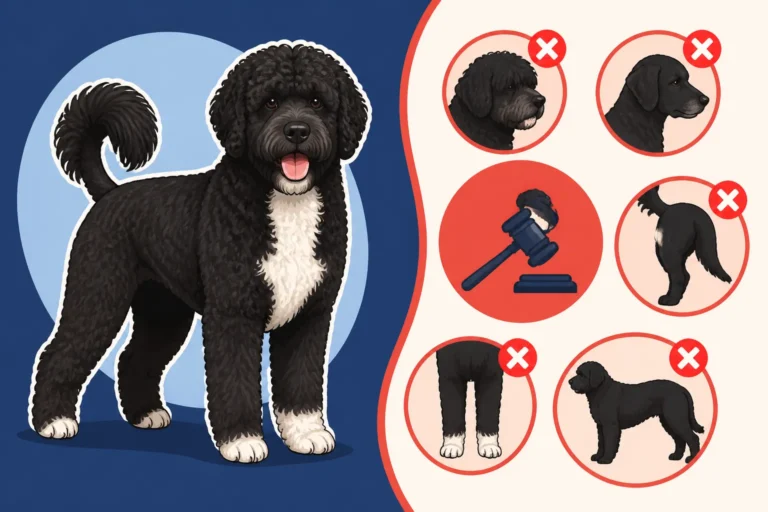
Whether Both Portuguese Water Dog Clips Are Allowed in the Ring
A Portuguese Water Dog can enter a conformation ring in either the traditional Lion Clip or the Retriever Clip, provided the trim is neat and appropriate to the breed. That can be reassuring if you have heard conflicting advice from groomers or other exhibitors. This guide explains what the two clips look like, what judges are evaluating, and what to check before show day.
Are both Portuguese Water Dog clips allowed in the show ring
The Lion Clip and Retriever Clip are both recognized
In Portuguese Water Dog conformation showing, both the Lion Clip and the Retriever Clip are accepted ways to present the breed. You do not have to choose the Lion Clip simply because it is the more dramatic or historically familiar style. A correctly groomed dog in a Retriever Clip can also be shown.
The Lion Clip leaves the coat longer over the front half of the body while clipping the hindquarters, muzzle, and part of the tail short. A tuft, or plume, remains at the end of the tail. The Retriever Clip presents the coat in a more even, shorter trim across the body, including the muzzle and tail. Details of the finish can vary, but the overall effect is more uniform than the Lion Clip.
The important distinction is that these are recognized breed trims, not two separate varieties of Portuguese Water Dog. Choosing one does not change your dog’s breed type, coat texture, or eligibility for conformation. For a closer look at the visual differences, see What the Lion Clip Leaves and What It Takes and What the Retriever Clip Leaves and What It Takes.
Allowed does not mean every trim is equally suitable
A show clip still needs to look intentional and well maintained. A Lion Clip with uneven transitions, patchy shaving, or a poorly shaped tail plume may distract from the dog’s outline. A Retriever Clip that is choppy, overgrown, or uneven can have the same problem. The fact that both styles are allowed does not mean that an unfinished or improvised trim will make the best impression.
The trim should let the judge assess the dog’s proportions and movement without making the coat the main event. Think of grooming as presentation: it can make a dog look tidy and balanced, but it cannot improve the dog’s structure. If the coat is matted or the outline is obscured, that can also make it harder for the judge to examine the dog properly.
If you are deciding between the styles for a first show, ask an experienced Portuguese Water Dog exhibitor or a groomer who has prepared the breed for the ring. The best clip is often the one your dog is comfortable maintaining and that your handler can keep neat between grooming appointments. The guide Which Clip a Show Portuguese Water Dog Wears offers more context on show presentation.
Check the rules for your specific event
Conformation rules and breed standards can differ between countries and show organizations. The two traditional clips are widely associated with the breed, but you should not assume that every grooming detail is treated identically at every event. Read the current rules for the organization running your show, and ask the show superintendent or breed club if a particular trim detail is unclear.
It also helps to distinguish conformation from performance events. A dog entered in a water trial, obedience competition, or another activity is subject to that event’s rules and practical needs, not necessarily the same presentation expectations as a conformation ring. If your dog is entered in multiple activities around the same time, plan the coat and schedule with both in mind.
What the judge evaluates beyond the clip
Breed type and overall outline matter more than drama
In a conformation ring, the judge is assessing the dog against the breed standard, not awarding points for choosing the most eye-catching haircut. The dog’s balance, movement, proportions, coat characteristics, and other breed traits all contribute to the evaluation. A dramatic Lion Clip may draw attention, but it does not replace sound structure or correct movement.
The coat can affect how clearly the dog’s outline is seen. With a Lion Clip, the contrast between the longer front coat and clipped rear can emphasize the dog’s silhouette. With a Retriever Clip, the more even length may make the dog’s overall shape easier to see. Neither effect is automatically better; the finish needs to suit the individual dog and be done cleanly.
This is one reason it is useful to look at the breed as a whole rather than fixating on a single hairstyle. The article Curly or Wavy, Black or Brown: What a Portuguese Water Dog Looks Like explains the breed’s appearance, while The Portuguese Water Dog Against the Standard Poodle can help clarify which features belong to this breed rather than being general “water dog” styling.
Coat condition and tidy finishing still count
A show-ready coat needs regular care, whether it is curly or wavy and whether it is clipped in Lion or Retriever style. Mats can form in friction areas such as behind the ears, under a collar or harness, and around the legs. A dog may look brushed on the surface while tangles remain closer to the skin, so combing through the coat carefully is often as important as a quick brush.
Before the show, check the face, feet, tail, and transitions between clipped and longer areas. A clean, even finish is easier to maintain than a last-minute overhaul. Avoid making a major change immediately before an important show if you have not seen how the dog’s coat grows back or how the new shape looks in motion.
If you are assembling grooming basics, a suitable comb, brush, coat-care products, and clippers may be available from pet retailers such as Chewy. Choose tools based on your dog’s coat and your groomer’s guidance rather than assuming one setup suits every Portuguese Water Dog. For routine brushing advice, see How Often a Portuguese Water Dog Needs Brushing.
A clip cannot hide handling or training gaps
Even a beautifully groomed dog needs to be comfortable being examined and moved around the ring. Judges may need to look at the dog’s bite, body, and movement, so practice standing calmly, accepting gentle handling, and walking on lead without pulling toward distractions. A dog that is worried about being touched can find the ring stressful, regardless of how polished the coat looks.
Practice in short, positive sessions well before show day. Settle your dog on a non-slip surface, reward calm standing, and gradually get them used to someone examining different parts of the body. Keep sessions brief enough that your dog stays engaged instead of becoming tired or frustrated. Teaching a Portuguese Water Dog to Stand for Grooming has useful groundwork that also supports calm ring preparation.
| Show question | Lion Clip | Retriever Clip |
|---|---|---|
| Can it be used in conformation showing | Yes, where accepted under the event’s rules | Yes, where accepted under the event’s rules |
| Overall appearance | Longer coat over the front, clipped rear and muzzle, tail plume retained | More even, shorter coat across the body |
| Main grooming challenge | Keeping the clipped areas and transitions neat while managing longer coat | Maintaining an even finish and preventing the coat from becoming shaggy |
| Best preparation | Use a groomer familiar with the traditional outline and allow time for finishing | Agree on an even length and schedule maintenance before the coat grows out |
| What to verify | Event rules and the groomer’s experience with the breed | Event rules and the groomer’s experience with the breed |
Choosing and maintaining a show clip
Choose for your dog, your schedule, and your handler
A useful way to decide is to consider your dog’s coat, comfort, and the amount of time you can realistically devote to upkeep. The Lion Clip makes a strong visual statement, but it involves maintaining distinct clipped and longer sections. The Retriever Clip can look simpler, yet it still needs consistent brushing and periodic clipping to stay even and tidy.
Consider what happens between shows, too. A coat that looks freshly finished on show day may need attention after swimming, muddy walks, or vigorous play. If your dog swims regularly, rinsing and drying the coat properly can help prevent tangles and discomfort. For practical after-swim care, see Drying a Portuguese Water Dog After Every Swim.
You do not have to make the decision based on fashion or another exhibitor’s preference. If your dog is anxious during long grooming sessions, discuss a manageable schedule with your groomer. If you are showing with a handler, talk through the trim well ahead of time so the clip, maintenance, and show calendar fit together.
Plan grooming well before the ring
Avoid leaving the first full show trim until the day before a competition. A groomer needs time to shape the coat, and you need time to see whether you like the result and whether it is practical to maintain. If your dog is new to clipping, introduce the sounds and sensations gradually. Keep the first sessions calm and rewarding rather than insisting on a complete finish in one go.
For regular upkeep, a written grooming plan can make the workload feel less overwhelming. Note when the coat was clipped, which areas need more frequent combing, and how the dog responds to the dryer and clippers. A retailer such as Chewy may be one place to look for basic grooming supplies, but ask your groomer which tools are appropriate before buying equipment you may not need.
The interval between full clips depends on coat growth, preferred length, and how polished you want the dog to look. Some owners do maintenance at home between professional appointments; others prefer to have a groomer handle the entire trim. How Often a Portuguese Water Dog Needs Clipping explains the factors that affect the schedule.
Make the final trim fit the show date
A last-minute clip can be stressful for both dog and owner, especially if the dog is not accustomed to being handled for a long time. Work backward from the show date and leave room for a tidy-up, coat washing, and drying. If you are unsure how far in advance to book, ask the groomer who knows your dog and the style you have chosen.
Bring clear instructions to your appointment. You can describe the clip by name, show a reference photo, and specify which details matter most to you, such as the overall length, tail finish, or shape around the face. A photo is a communication aid, not a substitute for discussing what will work with your dog’s actual coat and the applicable show standard.
For supplies used between appointments, Chewy is one retailer owners may check for combs, brushes, and coat-care items. Keep the focus on tools that make routine care easier and safer, rather than buying a large collection of equipment before you know what you will use. If you plan to do clipping at home, ask a qualified groomer to show you safe handling and technique first.
Common show-day questions
Will one clip be judged more favorably than the other
The choice of recognized clip alone should not be treated as a shortcut to a better result. A judge is evaluating the dog, and grooming should present the dog clearly and neatly. A well-executed Retriever Clip is a legitimate choice; a well-executed Lion Clip is too. The dog’s quality and how well it is prepared matter more than choosing the style you think looks most “showy.”
It is natural to compare your dog with those already in the ring, especially at your first show. Try not to change the trim based on one person’s preference or a single dog’s presentation. Ask a knowledgeable breed mentor to explain what is appropriate under the standard and what parts of the trim are simply individual grooming choices.
Can you change clips between shows
Owners may choose to change the presentation over time, but the coat does not transform instantly. A major change can take planning, and the growing coat may look uneven for a while. If you are considering switching from a Lion Clip to a Retriever Clip, or the other way around, discuss the timing with your groomer and handler before scheduling the change.
The dog’s comfort should remain part of the decision. If a longer coat is difficult to keep free of mats or the dog dislikes extended grooming, a different routine may be more practical. For a pet that is also shown, you may want to consider everyday maintenance alongside ring presentation. Which Clip Suits a Pet Portuguese Water Dog explores that balance.
What should you confirm before entering
Before show day, check the event’s current rules, the accepted breed presentation for that organization, and any entry requirements that affect your dog. Confirm the grooming appointment well in advance, and make sure your dog is comfortable with standing, walking, and being examined. Bring the tools you normally use for touch-ups, but do not attempt a major coat correction ringside.
If a grooming detail is uncertain, ask the event organizer or a breed-experienced mentor rather than relying on a rumor. That small step can spare you a great deal of last-minute worry. For most owners, the practical answer is straightforward: both the Lion Clip and Retriever Clip can be used in the conformation ring, and the right choice is the one that is permitted for your event and finished neatly on your dog.
Disclaimer
This article is for general informational purposes only and does not constitute professional advice. Laws, prices and regulations vary by location and change over time. Consult a qualified professional for guidance on your specific situation.