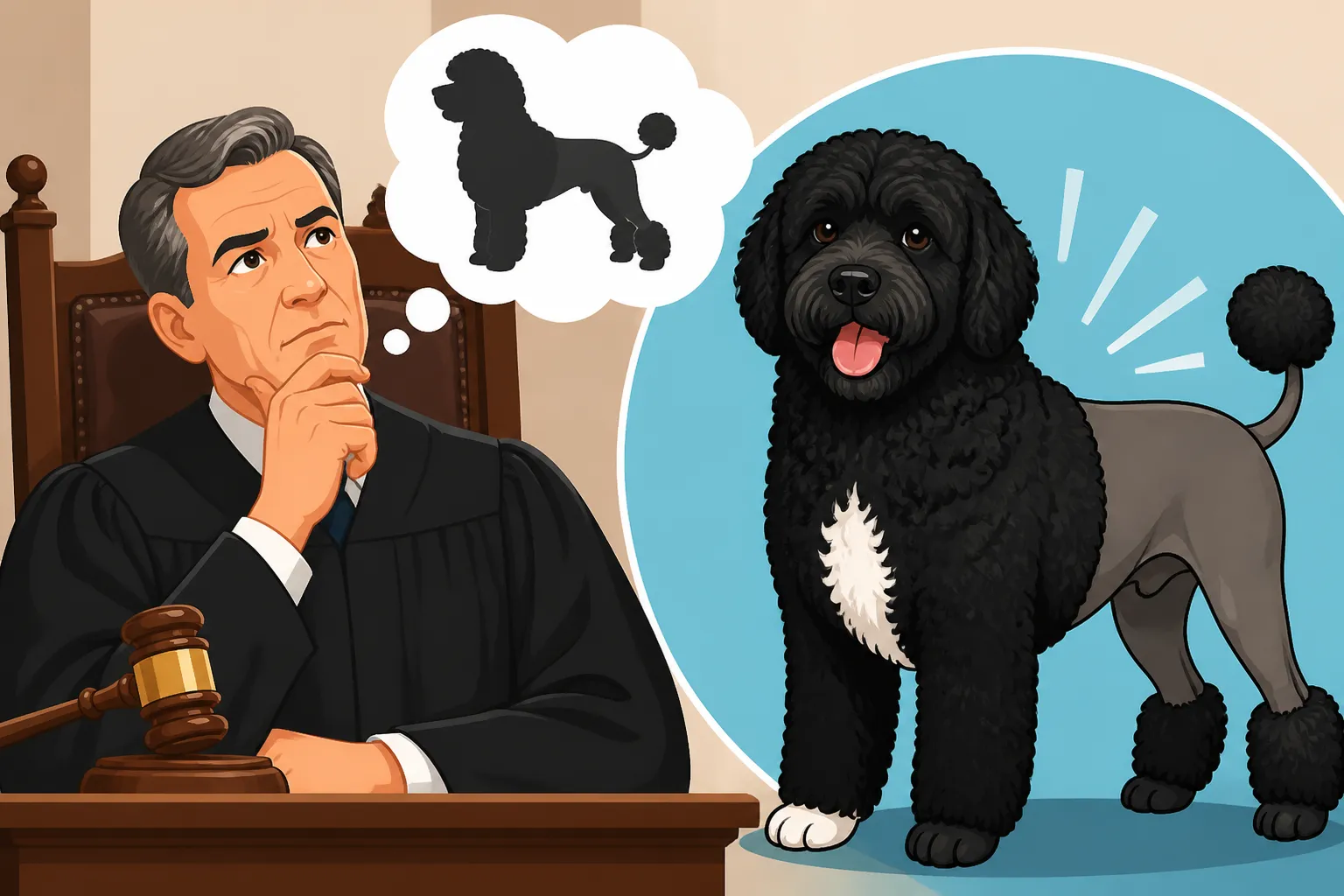
Whether a Judge Prefers a Portuguese Water Dog in Lion Clip
A Portuguese Water Dog in the show ring may be presented in either of two recognized trims, so it is natural to wonder whether judges quietly favor the traditional Lion Clip. The practical answer is that the clip itself should not decide the result. This guide explains what judges assess, how each trim can affect presentation, and what to discuss with a groomer before a show.
Do judges prefer the Lion Clip on a Portuguese Water Dog
The breed standard allows two clips
In American conformation shows, both the Lion Clip and the Retriever Clip are accepted for the Portuguese Water Dog. A judge should assess the dog against the breed standard, not reward one clip simply because it is more traditional or dramatic. The trim is part of presentation, but it is not a substitute for sound structure, correct movement, or the other qualities the standard calls for.
The Lion Clip has a long association with the breed’s working history. The hindquarters and muzzle are clipped, while the coat is left longer over the front of the body and a plume remains at the end of the tail. The Retriever Clip is more uniform: the coat is trimmed or scissored to a shorter, even length, with the tail tip left full. For details on the differences, see What the Lion Clip Leaves and What It Takes and What the Retriever Clip Leaves and What It Takes.
That history can make the Lion Clip especially recognizable to spectators, but recognition is not the same as a judging advantage. A judge looking at a dog in a Retriever Clip should be able to assess it by the same breed priorities as a dog in a Lion Clip. The important question is whether the trim is an acceptable presentation and whether the dog beneath it is a good example of the breed.
Presentation matters, but the trim is not the dog
A clip can influence how clearly a dog’s outline is seen. A neat trim can help the judge evaluate balance, proportions, and the overall silhouette. A poor trim can distract from those qualities, whether it is a Lion Clip or Retriever Clip. That does not mean the judge prefers a particular style; it means grooming should support the dog’s presentation rather than compete with it.
Think of two dogs with equally sound movement and similar quality. One has a tidy, balanced Lion Clip; the other has a well-executed Retriever Clip. Neither should be considered the better dog because of the trim alone. If one coat has uneven transitions, visible clipper tracks, or a shape that makes the dog look unbalanced, the presentation may be less polished—but the issue is execution, not the name of the clip.
A show exhibitor can also avoid overreading a judge’s reaction. A judge may spend time looking at a dog’s outline, coat texture, or movement without signaling a preference for its trim. The best way to prepare is to understand the standard used by the show and present the dog cleanly in one of the accepted styles. For a broader look at the show presentation, see Which Clip a Show Portuguese Water Dog Wears and Whether Both Portuguese Water Dog Clips Are Allowed in the Ring.
Check which rules apply at the show
Breed standards and show rules can vary by country and registry. The two recognized clips are familiar in American conformation, but exhibitors should check the governing organization’s current standard and grooming rules before entering elsewhere. If you are traveling to a show or preparing for a specialty event, ask the show secretary or your breed club which standard applies.
This is especially useful for first-time exhibitors. A dog may be beautifully groomed according to a style commonly seen at home, yet the handler may still need to confirm that the trim meets the requirements of that particular ring. Clarifying the rules early is less stressful than discovering a concern on show day.
What judges assess beyond the clip
Structure and overall outline
A judge evaluates the dog as a whole. That includes whether its proportions and outline fit the breed, along with the qualities described in the applicable standard. A trim can reveal the silhouette more clearly, but it cannot make an unsound dog sound or turn incorrect proportions into correct ones.
This is one reason it helps not to choose a clip based only on photographs of winning dogs. A particular trim may look striking on one dog and less flattering on another because coat texture, body shape, and the groomer’s skill all affect the result. The goal is not to make every dog look identical. It is to present each dog neatly without disguising its natural qualities. For more on the breed’s outline, see What a Correct Portuguese Water Dog's Outline Looks Like.
Movement and condition
Movement is assessed separately from the choice of clip. The judge needs to see the dog move and evaluate how it carries itself in the ring. A trim should not interfere with comfortable movement, handling, or the judge’s ability to see the dog’s shape. Keeping the coat clean and free of tangles also makes the dog more comfortable during the show process.
Overall condition matters too. Grooming is only one part of preparation: the dog should be accustomed to standing, being handled, and moving with its handler. A dog that is unsettled by the ring, uncomfortable with grooming, or unpracticed on the lead may find the experience difficult regardless of how polished its coat looks. Training the dog to stand for grooming can help; Teaching a Portuguese Water Dog to Stand for Grooming covers that process.
Coat quality and trim execution
The Portuguese Water Dog’s coat may be curly or wavy, and coat texture affects how a trim sits. One clip is not automatically easier to execute well on every dog. A clean result depends on regular coat care, suitable tools, patient handling, and a groomer who understands the breed’s accepted styles.
| Show consideration | What a polished presentation supports | What it does not do |
|---|---|---|
| Accepted clip | Shows the dog in a recognized trim | Guarantee a win or create a judging preference |
| Even, tidy grooming | Helps the dog look prepared and balanced | Replace correct structure or movement |
| Healthy, managed coat | Makes handling and presentation more comfortable | Change the dog’s natural coat type |
| Ring training | Helps the dog stand and move calmly | Make grooming quality irrelevant |
Choosing a clip for a show dog
Choose for the dog, not a rumored judge preference
If you are deciding between the Lion Clip and Retriever Clip, start with the dog’s coat, your grooming routine, and your comfort with maintenance. The Lion Clip has a more distinctive shape and can require careful upkeep to keep the clipped and longer sections looking intentional. The Retriever Clip has an even, practical appearance, but it still needs regular brushing and trimming to prevent mats and keep the coat neat.
Ask your breeder, mentor, or an experienced Portuguese Water Dog groomer to look at your individual dog. They can help you think through how its coat grows, how frequently you can maintain it, and what the chosen trim will look like as the coat grows between appointments. If you want a side-by-side explanation for everyday grooming decisions, Which Clip Suits a Pet Portuguese Water Dog is a useful companion topic.
A show clip should also suit the dog’s comfort. If a dog is new to grooming, introduce brushing, bathing, drying, and handling gradually rather than expecting it to tolerate a long session all at once. The right trim is not worth creating a stressful grooming experience. Calm practice and a predictable routine usually make show preparation easier for both dog and handler.
Work with a groomer who knows the breed
Not every groomer regularly works with Portuguese Water Dogs, and breed-specific details can matter. Before booking, describe the clip you want and ask whether the groomer has experience with the breed or can follow a clear reference. Bring photos of the desired trim from more than one angle, and discuss how much coat to leave and how the transitions should look.
Schedule the appointment with enough time before the show to see how the dog’s coat settles and to address any small adjustments. A last-minute change can be stressful, especially if the dog has not experienced that style of grooming before. If you are preparing for your first show, an experienced exhibitor can often help you find a groomer and explain what judges in your local circuit expect in terms of a neat, standard-appropriate presentation.
For routine coat care, make sure the tools suit the dog’s coat and are comfortable for you to use. When comparing grooming supplies, a retailer such as Chewy may be one place to look for brushes, combs, or coat-care products; choose tools based on the dog’s needs and your groomer’s advice rather than assuming one product works for every coat. The broader guides Which Portuguese Water Dog Coat Types a Portuguese Water Dog Comes In and How a Curly Coat Differs From a Wavy Coat can help explain why coat texture affects maintenance.
Keep coat type in perspective
A judge is not supposed to prefer a curly coat over a wavy coat simply because of texture. The coat should be considered within the breed standard, and the dog should be presented in an appropriate, well-kept manner. Curly and wavy coats can look quite different, so avoid judging your dog’s grooming against a photograph of a dog with a different coat type. See Whether a Curly Portuguese Water Dog Is Preferred for more on that distinction.
At home, regular brushing and combing help you spot tangles before they become tight mats. Pay particular attention to places where friction and moisture can cause trouble, such as behind the ears, under a collar or harness, and around the legs. If you are buying basic grooming supplies, Chewy is one possible place to compare options, but check that a brush or comb is suitable for your dog’s coat and that you can use it gently.
Common show-ring worries and practical answers
“Will the judge mark us down for the Retriever Clip?”
The Retriever Clip is an accepted option in the American breed standard, so a dog should not be penalized simply for wearing it. What matters is compliance with the rules that apply to the show and the quality of the dog’s presentation. If you are unsure whether a local event follows a different standard, confirm with the organizer before grooming.
Some owners worry because they see more Lion Clips in photos or at particular events. That may reflect tradition, personal preference, or the choices made by exhibitors in that group; it does not establish a rule that one clip is better. Look at the written standard first, then ask an experienced mentor how the local ring handles presentation.
“Could the wrong clip hide my dog’s strengths?”
A clip can affect what the eye notices, which is why a competent groomer aims to present the dog cleanly and appropriately. But the goal should not be to use grooming to disguise a structural concern. A trim that looks exaggerated or uneven can draw attention away from the dog’s natural outline rather than helping it.
If you have questions about how a specific trim will look on your dog, ask a breed mentor or knowledgeable groomer to assess the dog in person. Photos can help explain your goals, but they do not always show the dog’s proportions or movement clearly. For general questions about accepted appearance and coloring, Curly or Wavy, Black or Brown: What a Portuguese Water Dog Looks Like offers more context.
“What should I do before show day?”
Plan the grooming and practice routine ahead of time. Confirm the show’s governing standard, settle on an accepted clip, and give your dog enough opportunities to become comfortable with brushing, bathing, drying, standing, and handling. Keep a simple checklist of the coat-care steps your groomer recommends, and avoid making a dramatic trim change immediately before entering the ring.
If you maintain the coat at home between professional appointments, use products and tools that suit your dog rather than choosing them solely because they are popular. Chewy may be a convenient place to compare grooming items, but your groomer can help you determine what is actually appropriate. A steady routine, a well-prepared dog, and a trim that follows the applicable standard are more useful goals than trying to guess which clip a judge personally likes.
Disclaimer
This article is for general informational purposes only and does not constitute professional advice. Laws, prices and regulations vary by location and change over time. Consult a qualified professional for guidance on your specific situation.