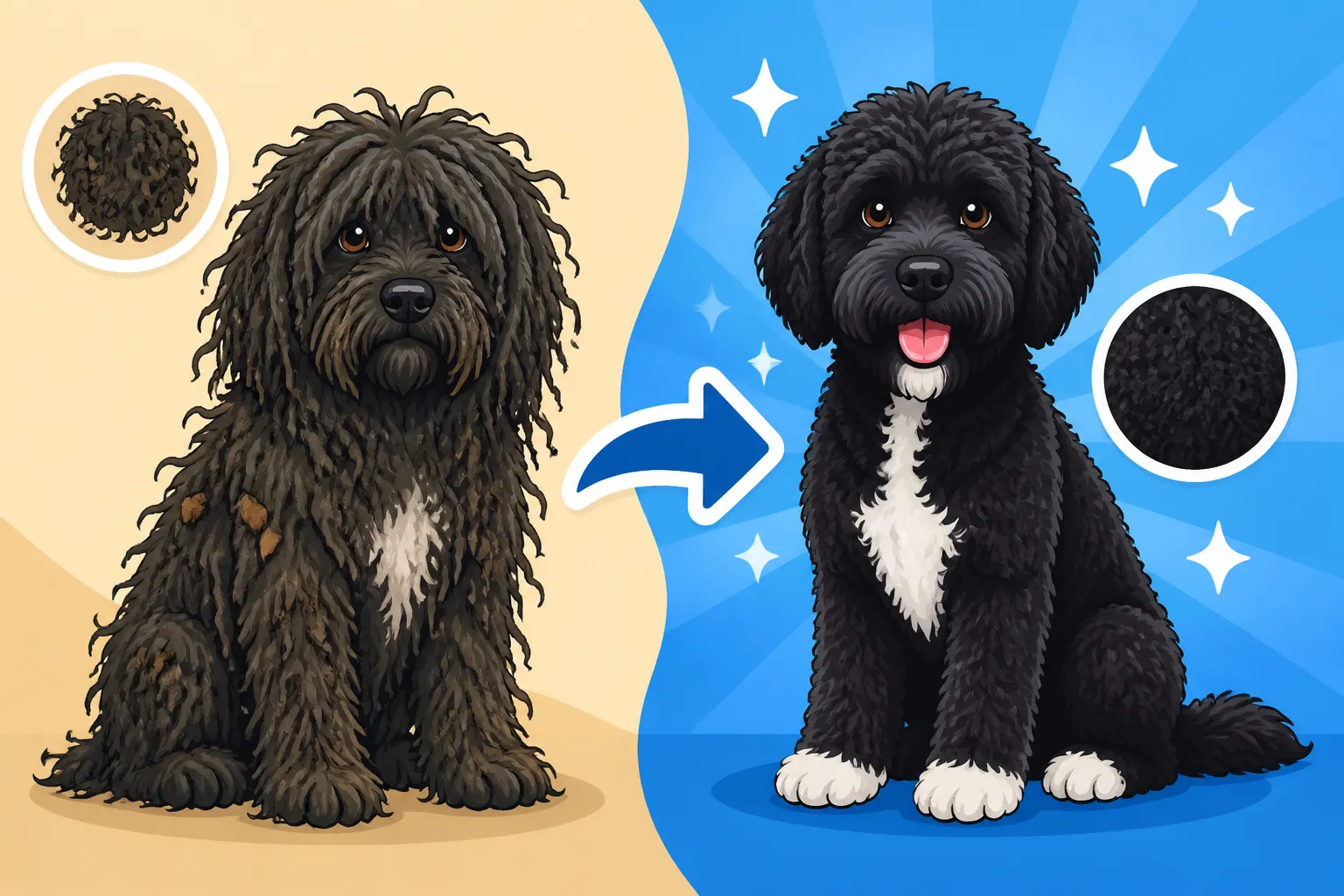
Whether a Rescue Portuguese Water Dog Arrives Matted
Bringing a rescue Portuguese Water Dog into your home is an incredibly rewarding experience, full of love and the joy of giving a deserving dog a second chance. However, it's also true that many rescue dogs, especially breeds with high-maintenance coats like our beloved PWDs, don't arrive in pristine condition. One of the most common, and often disheartening, issues adopters encounter is a severely matted coat. This guide will walk you through why this happens, what it means for your new companion, and how you can lovingly restore their comfort and confidence.
The Reality of Rescue Coats: Why Matting Happens
It’s easy to picture a rescue dog with a clean, if a little scruffy, coat, eagerly wagging their tail. The reality, however, can be quite different, especially with a breed like the Portuguese Water Dog whose coat is designed to be dense and water-repellent. When neglected, this beautiful, functional coat can quickly become a nightmare of knots and mats.
The Unique Nature of the Portuguese Water Dog Coat
Our PWDs possess a magnificent single coat, which can be either curly or wavy. This coat is famous for being "hypoallergenic" because it sheds minimally, but that doesn't mean it's low maintenance. Far from it! Instead of shedding hair onto your furniture, those loose hairs get trapped within the existing coat. If these trapped hairs aren't brushed out regularly, they intertwine with live hair, creating tangles that quickly tighten into solid mats. This is the fundamental reason why What a Portuguese Water Dog's Coat Is Made Of makes them so prone to matting without consistent care.
Imagine a wool sweater that's never been washed or brushed – it would felt into a dense, unyielding mass. A PWD's coat acts much the same way. The texture, whether tight curls or soft waves, contributes to this. The curly coat, often described as tight ringlets, can mat more subtly, creating a dense "pelt" against the skin. The wavy coat, while appearing shaggier, can also tangle into broad, flat mats if not properly maintained. Both types require diligent attention, which unfortunately, isn't always available in previous homes or during the transition period of a rescue.
Prioritizing Survival Over Grooming
When a Portuguese Water Dog finds itself in a rescue situation, the focus of the organization, and indeed the dog itself, is survival and basic well-being. Grooming, while important, often takes a backseat to addressing immediate health concerns, providing adequate food, and offering a safe, stable environment. Many rescue dogs come from situations where they were neglected, abandoned, or living in conditions that made regular grooming impossible.
Think about a dog found as a stray, perhaps having lived outdoors for weeks or months. Their coat would have been exposed to dirt, burrs, mud, and rain, all of which accelerate matting. Even dogs surrendered by their owners might have arrived due to circumstances where the owner could no longer cope with their care, including grooming. The rescue facility itself, while doing its absolute best, may have limited resources, staff, and time to dedicate to the intensive grooming a severely matted PWD requires immediately. This means that a dog might be admitted with significant matting, and while basic necessities are met, the full grooming often awaits a calmer environment or the adopter's care.
The Silent Suffering of a Matted Dog
Matting isn't just an aesthetic issue; it's a significant welfare concern that causes immense discomfort and can lead to serious health problems. These tight knots pull at the skin, creating constant irritation, and can even restrict movement, making a dog reluctant to walk, run, or even lie down comfortably. It’s a silent suffering that many rescue PWDs endure.
Consider how we feel when a single knot pulls at our hair – now multiply that by hundreds or thousands across an entire body. Mats create a suffocating blanket on the skin, preventing air circulation and trapping moisture, which becomes a breeding ground for bacteria and parasites. This can lead to painful skin infections, hot spots, and even maggot infestations in extreme cases. The longer the matting persists, the worse these issues become, impacting not just the dog's physical health but their entire demeanor. Understanding this helps us approach a matted rescue with the empathy and patience they truly deserve.
Unpacking the Severity: What Matting Means for a Rescue PWD
When you encounter a Portuguese Water Dog with a matted coat, it's more than just a bad hair day for them. The severity of the matting directly correlates with the potential health and emotional challenges your new companion might be facing. It's crucial to understand these implications to provide the best possible care.
Skin Issues and Infections Hiding Beneath
The dense, tightly curled or wavy coat of a Portuguese Water Dog, when matted, creates a perfect storm for skin problems. Think of it as a thick, unventilated blanket glued to their body. Air cannot circulate, and moisture from swimming, rain, or even just humidity gets trapped against the skin. This damp, warm environment is exactly what bacteria and yeast thrive in.
Over time, this can lead to severe skin irritation, redness, and inflammation. You might find raw, weeping hot spots hidden deep within the mats, which are incredibly painful. Parasites like fleas and ticks also find excellent refuge in matted fur, where they are protected and harder to detect and remove. These infestations can further exacerbate skin conditions, causing intense itching and leading to more self-trauma as the dog scratches and bites at their skin. Even simple tasks like applying topical flea treatments become nearly impossible. Signs a Portuguese Water Dog's Ear Is Infected can also be easily missed when matting around the ears is severe, as the problem goes unseen until it's very advanced and painful.
Pain, Discomfort, and Restricted Movement
Perhaps the most immediate impact of severe matting on a Portuguese Water Dog is the constant pain and discomfort. Mats pull on the skin with every movement, creating a sensation akin to constantly having your hair tugged. This is not just a mild annoyance; it can be excruciating. Mats can form anywhere on the body, but are particularly troublesome in sensitive areas like behind the ears, in the armpits, on the insides of the legs, and around the groin and tail.
When mats become extensive, they can restrict a dog's natural range of motion. A dog might struggle to walk, run, or even stretch properly because the matted fur acts like a straitjacket. This can lead to an unnatural gait, muscle soreness, and even joint issues over time as they compensate for the restricted movement. Imagine trying to exercise vigorously while your clothing is pulling and binding at every joint – it's both painful and exhausting. Whether Mats Hurt a Portuguese Water Dog is a question with a resounding "yes," and it affects their quality of life profoundly. A dog experiencing this level of physical discomfort will likely be subdued, less playful, and generally unhappy, which can sometimes be mistaken for a temperament issue rather than a physical one.
The Emotional Toll on a Rescue Dog
Beyond the physical pain, severe matting takes a heavy emotional toll on a rescue Portuguese Water Dog. Dogs are incredibly resilient, but prolonged discomfort and pain can lead to anxiety, fear, and a reluctance to be handled. For a dog that might already be wary or shy due to their past, the added stress of a painful coat can make it even harder for them to trust new people and settle into a new home.
A matted dog might flinch when approached, especially if previous attempts at grooming have been painful or poorly handled. They may associate touch with pain, making bonding with their new family more challenging. The relief they experience after a professional groom can be immense, often transforming their personality almost overnight as they discover the joy of movement and touch without pain. It's a testament to their enduring spirit that they can recover from such neglect, but it highlights the importance of patient, compassionate care in their rehabilitation. How a Rescue Portuguese Water Dog Settles will depend heavily on addressing these underlying physical discomforts first.
The Rescue's Role: What to Expect When Adopting a Matted PWD
Rescue organizations are truly unsung heroes, often working with limited resources to provide care for dogs who have been through so much. When a Portuguese Water Dog arrives severely matted, the rescue faces a delicate balance of providing immediate relief and ensuring the dog's overall well-being. Knowing what to expect can help you prepare for the journey ahead.
Initial Assessment and Care Protocols
When a matted Portuguese Water Dog first enters a reputable rescue, their priority is a thorough veterinary assessment. This isn't just about checking for general health; it's also about evaluating the severity of the matting and its impact on the skin underneath. Sometimes, the matting is so extreme that sedation or anesthesia is required for safe and humane removal. This is because cutting or shaving through dense mats, especially those tight against the skin, is incredibly uncomfortable and carries a high risk of cutting the dog.
Many rescues will perform an initial "comfort shave" if necessary, removing the worst of the matting to alleviate immediate pain and allow the skin to breathe. They'll also treat any underlying skin infections or parasitic infestations. This might mean your rescue PWD arrives with a very short haircut, or even partially shaved. Don't be surprised or disheartened by this! It's a sign that the rescue prioritized the dog's comfort and health, and that beautiful Portuguese Water Dog coat will grow back. They might even have run some basic health screens, and if you’re lucky, Whether a Rescue Portuguese Water Dog Has Been DNA Tested might be a question you can ask, though it's not always a priority for every rescue with every dog.
Preparing for a Grooming Challenge
As an adopter, you might be taking on the responsibility of continuing the grooming journey. If your new Portuguese Water Dog still has significant matting, or if they've been shaved down due to extreme matting, you'll need to be prepared. This isn't just a simple bath and brush. It requires patience, the right tools, and often, professional help.
The first step is often to schedule an appointment with a professional groomer who has experience with Portuguese Water Dogs and understands how to work with a matted or recovering coat. They can safely remove any remaining mats, provide a hygienic clip, and offer advice on ongoing maintenance. You'll also need to invest in quality grooming tools, such as a sturdy slicker brush that can reach the skin, a good steel comb, and perhaps a specialized detangling spray. Don't underestimate the time commitment either; regular grooming sessions will be essential. This initial investment in grooming, along with What a Rescue Portuguese Water Dog Costs to Take On generally, should be factored into your budget. Places like Chewy offer a wide range of grooming tools and specialty shampoos that can be a lifesaver during this stage.
Long-Term Coat Rehabilitation
Restoring a matted Portuguese Water Dog's coat and confidence is a marathon, not a sprint. It takes time for the hair to regrow, for the skin to heal, and for the dog to become comfortable with regular grooming. Your role is to be consistent, gentle, and positive throughout the process.
This means establishing a regular grooming routine right from the start. For a Portuguese Water Dog, this often involves daily brushing sessions, especially when the coat is growing back and prone to tangling. Think of it as a bonding opportunity rather than a chore. Use positive reinforcement, treats, and praise to make grooming a pleasant experience. Over time, your dog will associate grooming with positive attention and comfort, rather than pain. You might even find that a good quality food, like those offered by Ollie, helps support healthy skin and coat growth, providing the building blocks for a lush, vibrant coat.
Moving Forward: Restoring a Rescue PWD's Coat and Confidence
Bringing a rescue Portuguese Water Dog home, especially one with a history of neglect including matting, requires a special kind of dedication. Your goal isn't just to make them look good, but to ensure they feel good, both physically and emotionally. Restoring their coat is a huge part of restoring their confidence and overall well-being.
The First Groom: A Gentle Approach
Approaching the first groom for a matted rescue PWD is a delicate dance between necessity and compassion. If the mats are severe and tight against the skin, professional help is almost always the best and most humane option. A professional groomer has the specialized tools and expertise to safely and efficiently remove extensive matting, often using clippers to shave beneath the mats rather than attempting to brush them out, which would be incredibly painful.
When taking your PWD to the groomer, make sure to communicate their rescue status and any sensitivities you've observed. A skilled groomer will understand the need for a gentle approach, taking breaks, and prioritizing the dog's comfort. This might mean a "shave-down" rather than a fancy clip, and that's perfectly okay. The priority is to remove the source of discomfort. After a comprehensive shave, their skin will finally be able to breathe, and any hidden skin issues can be properly addressed by your veterinarian. Remember, How Often a Portuguese Water Dog Needs Clipping is a crucial part of preventing future matting.
Establishing a Regular Grooming Routine
Once the initial matting is dealt with, establishing a consistent grooming routine at home is paramount for a Portuguese Water Dog. Without it, their unique single coat will quickly revert to its matted state. This isn't just about preventing future problems; it's about building a positive association with handling and care for your rescue dog.
Aim for daily or every-other-day brushing sessions, even if short. Use a good quality slicker brush and a metal comb. The slicker brush will work through the outer layers, while the comb is essential for ensuring you're reaching down to the skin, especially in areas prone to matting like behind the ears, in the armpits, and around the tail. Always check for tangles there. You might find great tools from Chewy, like various brushes and combs, that will make this task easier. Make these sessions positive with treats and praise, gradually increasing the duration as your dog becomes more comfortable. Learning Which Brush a Portuguese Water Dog Needs will be invaluable here. Regular baths with appropriate shampoo, followed by thorough drying with a force dryer, are also critical to prevent new mats from forming, especially if your PWD loves the water.
Nutritional Support for Coat Health
While grooming physically addresses the coat, good nutrition provides the internal foundation for healthy skin and a strong, resilient coat. A rescue Portuguese Water Dog who has experienced neglect may also have suffered from nutritional deficiencies, which can manifest in a dull, brittle, or easily matted coat.
Feeding a high-quality, balanced diet rich in essential fatty acids, vitamins, and minerals can make a significant difference in the health and appearance of their coat. Look for foods that list quality animal protein as the first ingredient and contain sources of Omega-3 and Omega-6 fatty acids, such as fish oil. Brands like Ollie, which focus on fresh, human-grade ingredients, can be excellent for promoting overall health, including vibrant skin and coat. Discussing nutritional supplements with your vet, especially if your PWD has persistent skin issues, can also be beneficial. A healthy coat is less prone to matting and will be easier to maintain. Remember, a healthy coat also makes it easier to spot issues like How a Portuguese Water Dog's Coat Hides Weight Loss by making changes more visible. And of course, having a good pet insurance plan, like those offered by Healthy Paws, can provide peace of mind for any unexpected vet visits related to skin issues or other health concerns that might arise during their recovery.
Disclaimer
This article is for general informational purposes only and does not constitute professional advice. Laws, prices and regulations vary by location and change over time. Consult a qualified professional for guidance on your specific situation.