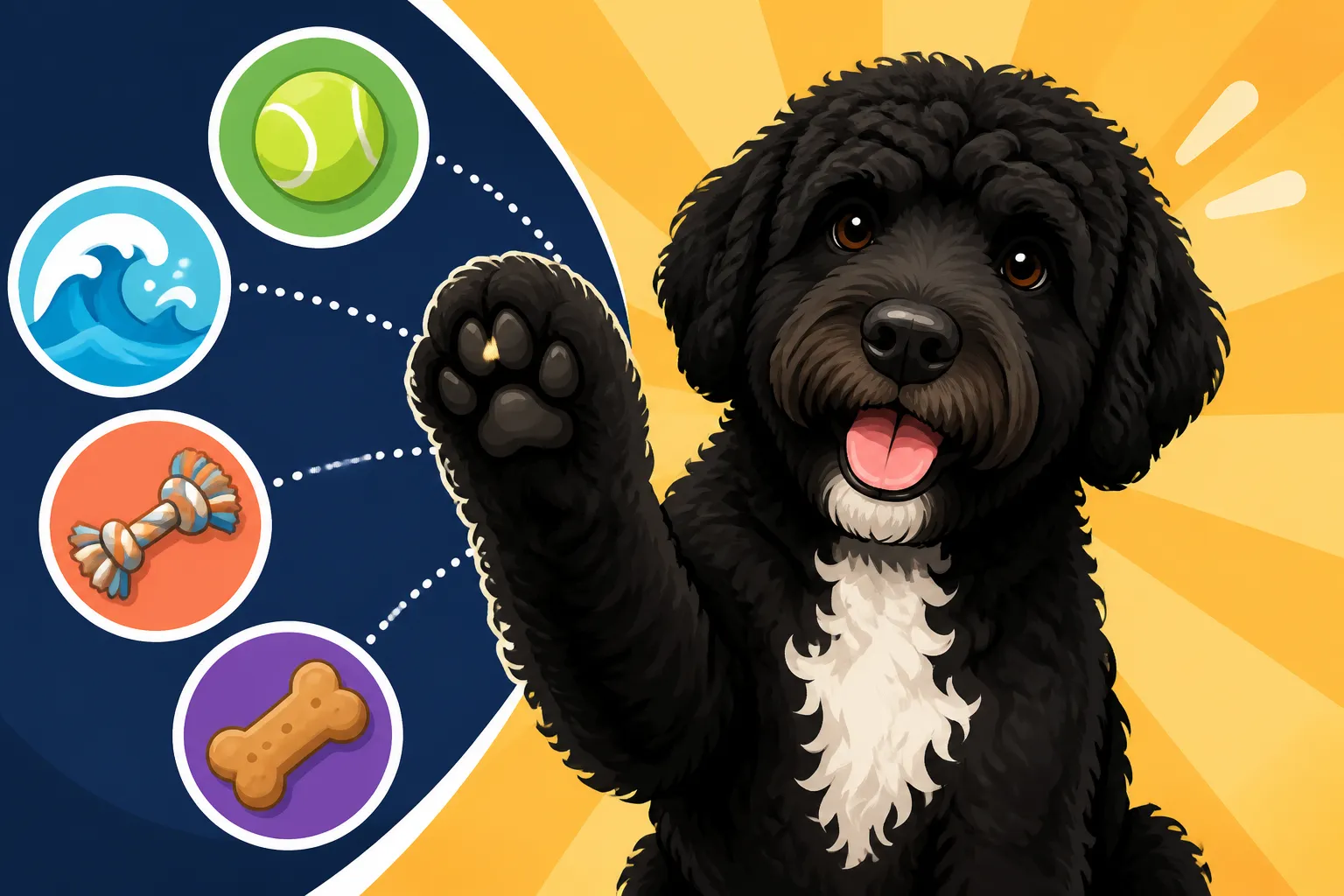
What Motivates a Portuguese Water Dog
Oh, the magnificent Portuguese Water Dog! If you've ever had the pleasure of sharing your life with one of these intelligent, vivacious creatures, you know they're not your average "sit-and-stay-for-a-cookie" kind of dog. Their independent spirit and deep thinking can sometimes make you feel like you're speaking a different language when it comes to motivation, leading to frustration for both you and your furry companion. This comprehensive guide is here to unravel the unique tapestry of a Portuguese Water Dog's motivations, helping you understand what truly makes them tick so you can build a stronger bond and achieve remarkable training success.
Understanding the Portuguese Water Dog's Intrinsic Drives
Let's face it, your Portuguese Water Dog isn't just a pet; they're a working breed with centuries of history woven into their very DNA. Understanding these fundamental drives is the first step in figuring out what truly lights a fire in their belly and gets them enthusiastic about training and daily life. You can't motivate a PWD the same way you might a breed solely developed for companionship; they have layers.
Their Working History and Independent Spirit
The Portuguese Water Dog originated along the coast of Portugal, serving as invaluable partners to fishermen. They were responsible for herding fish into nets, retrieving lost tackle, and even carrying messages between boats. Think about that for a moment: these dogs weren't just following orders; they were problem-solvers, often working far from their handler and making independent decisions in challenging environments. This ingrained history means your PWD isn't necessarily looking for a master to simply obey, but rather a partner to collaborate with. They thrive on having a job, a purpose, and often, a puzzle to solve. If you just ask them to do something rote over and over, you might find them looking at you with a quizzical stare, wondering why they should bother.
This independent streak can manifest as what some might perceive as stubbornness. It's not usually outright defiance; it's more often a PWD asking, "Is this the best way? Is there a more efficient path? And what exactly is my incentive here?" They were bred to think on their paws, not just react to commands. This is why conventional, drill-based training methods can sometimes fall flat with them. They need to understand the 'why' behind the 'what' and feel like they're contributing, not just performing.
Embracing this heritage means shifting your perspective from "how do I make my dog do this?" to "how can I make my dog want to do this?" Their desire to work alongside you, a deep-seated instinct, can be a powerful motivator once you tap into it. They want to be part of the action, to be involved, and to use their considerable intellect and physical prowess. Ignoring this fundamental aspect of their being means missing a huge opportunity to connect and motivate them effectively.
High Intelligence and the Need for Engagement
Portuguese Water Dogs are incredibly intelligent. This is a double-edged sword, my friends. While it means they can learn quickly and excel at complex tasks, it also means they get bored very easily. A bored PWD is not just an unmotivated PWD; it's often a destructive PWD. If their minds aren't engaged in constructive ways, they'll find their own entertainment, and trust me, that usually involves things you'd rather they didn't do, like counter-surfing, reorganizing your shoe collection, or barking at dust bunnies.
Their intelligence demands constant mental stimulation. They're not content to just sit around; their brains are always processing, observing, and seeking. This means that motivation for a PWD often comes from the challenge itself. Learning new tricks, mastering a complex obedience routine, or figuring out a puzzle isn't just about the treat at the end; it's about the satisfaction of using their clever minds. They enjoy the process of learning and the mental workout.
To keep them truly motivated, you need to be creative and keep things fresh. Repetitive drills will quickly lose their appeal. Think about training sessions as mental games rather than strict lessons. Rotate toys, introduce new environments, and constantly challenge them with increasingly complex tasks. This satisfies their innate need for engagement and prevents their brilliant minds from turning towards mischief. It's about making sure that every interaction, especially training, feels like an exciting opportunity for them to show off their smarts.
The "What's in it for me?" Mentality
Given their independent, problem-solving history and high intelligence, it's no surprise that Portuguese Water Dogs often operate with a distinct "what's in it for me?" mindset. This isn't selfishness; it's a practical approach rooted in their working heritage. When a fisherman needed his dog to retrieve a vital piece of gear from icy water, the dog's motivation wasn't solely about pleasing the human; it was about the immediate reward, the intrinsic satisfaction of the job, and the bond with its partner.
For your PWD, this translates to a strong preference for clear, immediate, and high-value rewards. They need to understand the payoff. If the reward isn't compelling enough, or if it's delayed, their motivation will quickly wane. This is especially true when you're asking them to do something they don't naturally find exciting or something that requires sustained effort. You'll see their eyes glaze over, or they'll offer an alternative behavior, effectively saying, "I'm not feeling it for that meager reward."
This mindset isn't a flaw; it's a characteristic you can leverage. By ensuring your rewards are truly valuable to your specific PWD, you can dramatically increase their willingness to engage. This might mean using different types of treats, incorporating their favorite toy, or even offering a quick dip in the water as a reward for a well-executed command. Understanding this core motivational driver allows you to tailor your approach and make sure your PWD always sees the benefit in working with you. It’s all about making the transaction worthwhile for them.
Food: The Universal Language, But With a PWD Twist
Ah, food! The classic motivator. For many dogs, a basic kibble piece or a run-of-the-mill biscuit is enough to get their tails wagging and their brains engaged. But with a Portuguese Water Dog, you might find that while food is a powerful motivator, it often needs a little extra flair, a higher value, and a more strategic approach to truly capture and maintain their attention. They're not easily fooled by cheap tricks when it comes to their palate.
High-Value Treats are Key
When it comes to food motivation for a Portuguese Water Dog, forget the dry, boring biscuits for anything beyond the most basic, well-known commands. For new behaviors, for distractions, or for really pushing their intellectual limits, you need to pull out the big guns. Think high-value, super-tasty treats that are genuinely exciting to them. We're talking about small pieces of cooked chicken, cheese, hot dogs, or commercially available soft, smelly training treats. These aren't just snacks; they're concentrated bursts of deliciousness that make your PWD think, "Okay, that was worth it!"
The value of the treat directly correlates with the difficulty or novelty of the task. If you're asking your PWD to perform a complex chain of behaviors or to focus intensely in a distracting environment, a low-value treat simply won't cut it. They’ll likely sniff at it and then turn their attention elsewhere. It's like asking a human to do complex accounting for a single penny; the incentive just isn't there. Experiment to find what your individual PWD considers the ultimate culinary prize. Some go crazy for liver snaps, others for a tiny bit of peanut butter.
Keep these special treats reserved for training or truly exceptional behavior. If your PWD gets them all the time for nothing, they'll lose their high-value status. The idea is to create an association where these amazing rewards only appear when they've really put in the effort. This makes them a more powerful tool in your motivational arsenal and keeps your PWD eager to earn them. A good resource for training treats can be found on Amazon, where you can explore a wide variety of options from different brands.
Using Food in Training Sessions
Beyond just what treats you use, how you use them in a training session makes a huge difference with a PWD. These dogs are smart enough to predict patterns, so simply holding a treat in front of their nose to lure them might work initially, but they'll quickly figure out the game and potentially rely too heavily on the lure rather than understanding the command itself. The goal is to fade the lure and use food as a reward after the desired behavior, not just as a bribe beforehand.
Timing is everything. Deliver the high-value treat within 1-2 seconds of the desired behavior. This immediate reinforcement helps your PWD connect their action directly with the reward. If you're too slow, they might get confused about what they're actually being rewarded for. Break down complex behaviors into smaller, achievable steps, rewarding each successful approximation with that irresistible treat. This builds momentum and keeps their motivation high, as they constantly feel like they're "winning."
Vary your delivery, too. Sometimes place the treat directly in their mouth, sometimes toss it a short distance to add a little chase, or even use a food-dispensing toy for a slightly delayed but still rewarding experience. This keeps them guessing and engaged, rather than just mechanically going through the motions. Remember, the PWD brain is always looking for novelty, even in the smallest details of a training session. For more structured guidance, online training programs like those from BAXTER & Bella often emphasize precise timing and fading lures, which can be invaluable for smart breeds.
Avoiding Food Lulls and Pickiness
Portuguese Water Dogs can sometimes be notoriously picky eaters, especially if their food bowl is always full or if they're constantly getting table scraps. This pickiness can translate directly into a lack of motivation during training if they don't find the food offerings particularly exciting. To combat this, it's crucial to manage their diet and meal times effectively. Avoid free-feeding, and stick to a consistent schedule for meals. This helps them understand that food is a finite resource and makes treats in training much more appealing.
If your PWD seems to lose interest in their regular kibble as a reward, try using small portions of their actual meal for training sessions. This way, they're working for something they need to eat anyway, and it can reduce the overall caloric intake from extra treats. Sometimes a change in the type of protein or the addition of a tempting topper to their regular food can reignite their interest. Don't be afraid to experiment, but introduce new foods slowly to avoid upsetting their stomach.
Another common pitfall is over-reliance on food. While powerful, food shouldn't be your only motivator. If a PWD only works for food, you've created a mercenary, not a partner. You want them to be engaged even when food isn't immediately present. Slowly start to introduce other rewards – praise, play, a quick game of tug – alongside food, and then gradually transition to fading out the food for known behaviors. This helps build a more robust and reliable motivational system, especially as they get older and have a stronger understanding of commands.
Play and Toys: Tapping into Their Inner Retriever
Beyond the allure of a tasty treat, the Portuguese Water Dog's historical role as a working companion means they possess an incredibly strong prey drive and a natural inclination to retrieve. This makes play, especially with toys, an incredibly powerful and often underestimated motivator. Tapping into this instinctual joy can unlock boundless energy and enthusiasm in your PWD.
The Drive to Retrieve and Chase
Imagine a Portuguese Water Dog working on a fishing boat, eagerly waiting for the command to plunge into the ocean to retrieve a stray net or a dropped piece of equipment. That deep-seated drive to fetch, chase, and bring things back to their handler is still very much alive in your modern PWD. This isn't just about fun; it's a direct connection to their purpose-driven history, and it provides immense satisfaction for them. Many PWDs would rather chase a tennis ball than eat a gourmet meal, especially when they're excited.
This natural retrieving instinct makes toys a fantastic motivational tool. A well-timed throw of a favorite ball or a quick game of tug can be a more potent reward than any treat, particularly during high-energy training or when building focus in a busy environment. The chase, the capture, and the return all tap into primal desires that are deeply fulfilling for your dog. It's not just about the object; it's about the interaction, the pursuit, and the shared activity with you.
To maximize this drive, make retrieving a part of your daily routine. Play fetch in the yard, at the park, or even indoors with soft toys. Teach them a solid "drop it" and "leave it" to ensure control and make the game more structured. The more they enjoy these activities, the more valuable a quick game of fetch becomes as a reward in other training contexts. Remember, a tired PWD is often a well-behaved PWD, and these games are fantastic exercise. Which retrieving games tire a Portuguese Water Dog is a great resource if you're looking for new ideas.
Interactive Play as a Reward
Beyond just tossing a ball, interactive play with toys can be an incredible motivator and a bonding experience. Tug-of-war, for instance, when played correctly with rules, can build immense focus and drive. It allows your PWD to use their strength and prey drive in a controlled, rewarding way. The key is to establish boundaries: you initiate play, you end play, and your PWD must "drop it" on command. This teaches them impulse control while still allowing them to indulge in a highly stimulating activity.
Using a toy as a reward during a training session means that once they perform the desired behavior, instead of a treat, you engage them in a quick, enthusiastic burst of play. This could be a short game of tug, a quick chase after a thrown toy, or a brief wrestling match with a squeaky toy. The sudden change of pace and the burst of physical and mental stimulation can be incredibly reinforcing, especially for behaviors that require a lot of energy or focus. This type of reward also helps them burn off some steam, which is essential for a high-energy breed.
The excitement of the play should be tied directly to their success. If they perform a perfect recall, a mad dash for a floating fetch toy in the water can be an absolute ecstatic reward. If they hold a long "stay," a joyous game of tug afterwards reinforces that endurance. This kind of dynamic, interactive reward system keeps your PWD guessing and makes training much more akin to a fun game than a chore. Just be mindful not to let the toy become the focus over your command, which requires careful timing and control.
Toy Selection for Maximum Motivation
Not all toys are created equal in the eyes of a Portuguese Water Dog. What one PWD considers the greatest toy ever, another might completely ignore. Part of effective motivation with toys is understanding your individual dog's preferences and rotating their toy collection to maintain novelty. Plush toys for gentle chewing, durable rubber toys for intense gnawing, squeaky toys for auditory stimulation, and specific fetch toys are all on the menu.
For water-loving PWDs, floating toys are an absolute must. Whether it's a buoyant bumper, a brightly colored frisbee, or a specialty retrieving dummy, having toys that perform well in water can elevate their motivation to an entirely new level. They combine the joy of retrieval with their innate love for swimming. Teaching a Portuguese Water Dog to Swim on Cue can even integrate specific toys as cues or rewards for water entry.
Consider puzzle toys as well. These aren't just for entertainment; they're excellent for mental stimulation, challenging your PWD to figure out how to get treats or kibble out. Brands like KONG offer a range of interactive toys that require problem-solving, which, as we discussed, is a huge motivator for intelligent breeds. Regularly introducing new types of toys and rotating their availability can prevent boredom and keep their interest piqued. A toy that's been put away for a few weeks often feels brand new and exciting when it reappears!
Affection and Praise: The Bond That Builds Bridges
While food and play are undeniably powerful motivators, never underestimate the profound impact of affection and praise on a Portuguese Water Dog. These are dogs that thrive on connection, forming deep bonds with their human companions. For them, a kind word, a gentle scratch, or an enthusiastic cheer isn't just a pleasantry; it's a vital affirmation of their partnership with you.
The Importance of Connection
Portuguese Water Dogs were bred to work closely with humans, often in confined spaces like boats, for extended periods. This history fostered a strong desire for connection and partnership. Your PWD isn't just interested in what you can give them in terms of treats or toys; they genuinely want to work with you and for your approval. This means that a strong, trusting bond between you and your dog is, in itself, a powerful motivational force. When they feel truly connected to you, they are more willing to try, more resilient in the face of challenges, and more eager to please.
This connection is built through consistent, positive interactions far beyond just training sessions. Daily cuddles, quiet moments together, shared adventures, and simply acknowledging their presence all contribute to this bond. When a PWD feels loved and understood, they are intrinsically motivated to maintain that positive relationship. They learn that pleasing you leads to that wonderful feeling of connection and approval, which is a reward in itself.
Conversely, if the connection is weak, or if interactions are primarily negative or punitive, their motivation to work with you will plummet. A PWD who feels disconnected or misunderstood will often shut down, become 'stubborn,' or seek their own entertainment. Nurturing this bond is foundational to all other motivational strategies; without it, even the best treats or toys will lose their effectiveness over time. They want to be your co-pilot, not just an employee.
Verbal Praise and Physical Touch
Once that strong bond is established, verbal praise and physical touch become incredibly potent motivators. An enthusiastic "Good dog!" or "Yes!" delivered with genuine excitement can make your PWD's tail wag uncontrollably. The tone of your voice conveys so much to them. A happy, high-pitched voice tells them they've done something right and that you're pleased, which is deeply rewarding for a dog that values your partnership.
Pair verbal praise with gentle, appropriate physical touch. Many PWDs love a good ear scratch, a rub on their chest, or a vigorous pat on their side (if they enjoy it!). This physical affirmation deepens the connection and reinforces the positive behavior. Think about the types of touch your dog enjoys most and incorporate them into your praise routine. Some dogs might prefer a quick, energetic pet, while others might lean into a long, calming stroke. Tailor it to your individual PWD.
It's crucial to use praise and touch immediately after the desired behavior, just like with food rewards. The immediacy helps them link their action to your positive reaction. Over time, for well-known commands, verbal praise and physical affection can begin to replace food rewards, leading to a dog who performs eagerly for your approval alone. This is particularly valuable in situations where food or toys might not be practical to use as a reward, such as in public settings. For advice on positive reinforcement, you might find valuable resources in How a Portuguese Water Dog Responds to Correction.
Balancing Praise with Other Rewards
While affection and praise are incredibly important, it's rare for them to be the sole motivator for a Portuguese Water Dog, especially for complex or high-distraction tasks. The most effective approach is often a balanced one, where praise and physical affection are always present, but they are frequently paired with higher-value rewards like food or play, especially during the learning phase of a new behavior.
Think of praise as the consistent, foundational layer of your motivational strategy. It's the "thank you" that accompanies every successful effort. But for really challenging behaviors, or when you need to maintain focus in a stimulating environment, you'll want to layer in a jackpot of treats or a quick game with a favorite toy. This combination ensures your PWD feels both loved and appropriately compensated for their efforts.
As your PWD masters a behavior, you can gradually reduce the frequency of tangible rewards (food/toys) while keeping the praise and affection constant. This helps them generalize the behavior and perform it reliably even when a treat isn't guaranteed. However, never completely eliminate tangible rewards, especially for behaviors you want to keep strong or for those moments when your PWD performs exceptionally well. A surprise high-value treat or an unexpected burst of play can rekindle motivation and keep them eager to engage with you.
The Power of Water: Their Natural Element
If there's one thing that unites almost every Portuguese Water Dog, it's an undeniable, profound love for water. This isn't just a preference; it's an intrinsic part of their being, etched into their breed history and physical design. For a PWD, water isn't just a place to cool off; it's a playground, a workplace, and often, the ultimate reward. Leveraging this natural affinity can be one of your most powerful motivational tools.
Water as the Ultimate Reward
For many Portuguese Water Dogs, the sight, sound, or even just the mention of water can ignite an unparalleled level of excitement and focus. Think about it: they were bred to spend hours in the ocean, diving and retrieving. This deep-seated instinct means that access to water, or a retrieve from it, can be the highest-value reward imaginable for your PWD. It often trumps any treat or toy in their estimation.
If your PWD is truly water-obsessed, consider using a quick splash, a retrieve from a shallow pool, or even a dip in a lake as a reward for particularly challenging or well-executed behaviors. Imagine asking for a perfect "stay" amidst distractions, and the reward is a joyous leap into the water after their favorite floating toy. That's a powerful incentive that taps directly into their core identity as a water dog. How Naturally a Portuguese Water Dog Swims explains more about this innate ability.
Of course, this requires having safe, accessible water nearby, whether it's a backyard kiddie pool, a local pond, or a dog-friendly beach. The excitement generated by this reward can be unparalleled, reinforcing the desired behavior with a burst of pure canine joy. Just be sure to manage their coat after swims; Drying a Portuguese Water Dog After Every Swim is a must-read for any PWD owner utilizing water for recreation or reward.
Integrating Water into Training
Beyond using water as an occasional jackpot reward, you can seamlessly integrate it into your training regimen. For instance, if you're working on recalls, practicing near a body of water can add a whole new dimension of motivation. Ask for a recall, and if they respond perfectly, toss their favorite floating toy into the water for them to retrieve. This makes the recall not just about coming back to you, but about earning access to their happy place.
For puppies, gentle introductions to water can begin early, making it a positive and rewarding experience from the start. The Age a Portuguese Water Dog Can Start Swimming is a great resource for timing these introductions. Even if you don't have a vast ocean, a simple sprinkler or a shallow dog pool can provide enough water interaction to act as a motivator. Asking your PWD to perform a series of commands before they get to play in the water teaches them that cooperation leads to their favorite activity.
You can also use water-based exercises to build endurance and focus. Water retrieves, whether from a dock or the shore, require intense focus and physical exertion. Incorporating these into your training week fulfills their physical needs, engages their working drive, and utilizes their natural talents. Think of it as a fun, motivating way to cross-train their minds and bodies.
Safe and Fun Water Activities
When utilizing water as a motivator, safety is paramount. Always ensure the water source is safe, clean, and free of strong currents, hazards, or harmful algae. If you're going to a new body of water, scout it out first. Consider a dog-specific life vest, especially for puppies or in open, deep water, regardless of how naturally they swim. Even the best swimmers can get tired or disoriented.
Beyond simple fetching, explore organized water sports that cater to the Portuguese Water Dog's talents. Dock diving, where dogs jump for distance or height into a pool, is a fantastic outlet for their retrieving drive and love of water. Water trials, which simulate the PWD's historical working tasks, offer a structured and challenging way to engage their instincts. Dock Diving and Water Trials With a Portuguese Water Dog provides more insight into these activities.
These types of activities provide not only immense physical exercise but also critical mental stimulation, which prevents boredom and channels their energy productively. The sheer joy a Portuguese Water Dog exhibits when they are truly "working" the water is incredible, and leveraging this natural passion will pay dividends in their overall happiness and your training success. It’s important to make these experiences fun and pressure-free to maintain their high motivational value.
Novelty, Challenge, and Problem-Solving: Engaging the PWD Brain
For a breed as intelligent and independent as the Portuguese Water Dog, rote repetition quickly leads to boredom. They aren't satisfied with simply performing the same old tricks day in and day out. What truly ignites their minds and maintains their motivation is novelty, challenge, and opportunities for problem-solving. These activities tap into their deep cognitive abilities and their historical role as adaptable working dogs.
Preventing Boredom with Variety
A bored Portuguese Water Dog is a prime candidate for developing undesirable behaviors. Their clever minds are constantly seeking stimulation, and if you don't provide it, they'll create their own, which often involves things you'd rather not clean up or replace. Preventing boredom is a critical motivational strategy in itself; a dog that's always intrigued and engaged is a dog that's eager to participate.
The key here is variety. Don't stick to the same walking routes every day. Explore new parks, trails, or even different neighborhoods. Introduce new toys regularly, or at least rotate their current collection so old favorites feel fresh. Vary your training routines, too. Instead of always practicing "sit" and "stay" in the living room, take it to the backyard, then to a quiet park, then to a more stimulating outdoor market. This generalization of skills keeps their minds active and teaches them to perform in various environments.
Think of yourself as their "experience coordinator." Your PWD thrives on new sights, sounds, smells, and challenges. Even simple things like letting them sniff a new bush for an extra few minutes on a walk, or hiding a treat for them to find, can break up the monotony and keep their mental gears turning. A Portuguese Water Dog that's exposed to a rich and varied environment is a happier, more motivated dog. You can learn more about their daily needs in What a Portuguese Water Dog Needs Every Day.
Puzzle Toys and Scent Work
For a dog that was bred to think for itself, puzzle toys and scent work are pure gold for motivation. These activities directly engage their problem-solving abilities and their incredible sense of smell, providing mental stimulation that can be as tiring as physical exercise. A good puzzle toy requires them to manipulate objects, strategize, and work for a reward, which is incredibly satisfying for a PWD.
Start with simpler puzzle toys, where the treats are easily accessible, and gradually move to more complex ones as your PWD masters the concept. Brands like KONG, Outward Hound, and Nina Ottosson offer a fantastic range of puzzle feeders that can keep your dog engaged for extended periods. These toys aren't just diversions; they build confidence and provide a positive outlet for their intelligence. They learn that their efforts lead to rewards, which boosts overall motivation.
Scent work, or nose work, is another phenomenal way to motivate and engage a PWD. Their noses are incredibly powerful, and giving them a "job" to do with their sense of smell can be immensely fulfilling. You can start simply by hiding treats around the house and encouraging them to find them. As they get more adept, you can introduce specific scents, turning it into a structured sport. This taps into their natural hunting and retrieving instincts in a calm, focused way, providing an unparalleled mental workout.
Agility and Other Performance Sports
Given their athleticism, intelligence, and desire to work, performance sports like agility, obedience, and rally are ideal for motivating a Portuguese Water Dog. These activities combine physical exercise with intense mental engagement, requiring them to learn complex sequences, respond to cues, and navigate obstacles with precision and speed. For a PWD, it's like a highly rewarding, collaborative game.
Agility, with its jumps, tunnels, weaves, and contact obstacles, is particularly well-suited for a PWD. It allows them to use their natural athleticism and quick thinking. The challenge of learning the course, combined with the excitement of running it, is incredibly motivating. They love the feeling of flying over jumps and weaving through poles, all while working in sync with you. How a Portuguese Water Dog Can Do Agility dives deeper into this exciting sport.
Other sports like advanced obedience and rally also provide excellent mental and physical outlets. They demand attention to detail, sustained focus, and a willingness to work collaboratively. These activities are not just about winning ribbons; they're about building an incredible partnership with your dog, strengthening your communication, and providing them with a fulfilling purpose. For a Portuguese Water Dog, these challenges are often the purest form of motivation, combining their love of action with their brilliant minds and their deep desire to work alongside their most cherished companion: you.
| Motivational Tool | When to Use It | PWD Engagement Level | Notes |
|---|---|---|---|
| High-Value Treats | Learning new commands, high-distraction environments, proofing behaviors. | High | Reserve for special occasions to maintain "value." |
| Favorite Toys | As a reward for physical tasks (recall, fetching), during play breaks. | High | Especially floating toys for water lovers. Must have good "drop it." |
| Verbal Praise & Affection | Always, for any positive interaction, building foundational bond, maintaining morale. | Moderate to High (with strong bond) | Constant, immediate reinforcement. |
| Access to Water | Ultimate jackpot reward for major accomplishments, after long sessions. | Extremely High | Ensure safe access and proper drying afterwards. |
| Puzzle Toys / Scent Work | Mental stimulation, preventing boredom, independent engagement. | Moderate to High | Good for rainy days or when direct interaction isn't possible. |
| Agility / Performance Sports | Long-term engagement, physical & mental challenge, strengthening partnership. | High | Requires time commitment, but immensely rewarding. |
| Novelty / Variety | Daily routine, walks, training locations, toy rotation. | Consistent Low to Moderate | Prevents boredom, keeps PWD curious and engaged. |
Disclaimer
This article is for general informational purposes only and does not constitute professional advice. Laws, prices and regulations vary by location and change over time. Consult a qualified professional for guidance on your specific situation.