Whether a Portuguese Water Dog Chases Cats
Bringing a Portuguese Water Dog into a home that already has a feline resident, or even considering adding a cat later, often raises a big question: will this energetic, intelligent dog chase my cat? It's a completely valid concern, rooted in the PWD's strong working drive and lively nature. This comprehensive guide will delve into the nuances of Portuguese Water Dogs and their interactions with cats, offering realistic expectations and actionable strategies for fostering a harmonious multi-species household.
Understanding the Portuguese Water Dog's Natural Instincts
The Portuguese Water Dog is a remarkable breed, brimming with character, intelligence, and a zest for life. But to truly understand how they might interact with a cat, we need to look back at what they were originally bred to do. Their instincts are powerful drivers of behavior, and recognizing them is the first step toward managing them in a domestic setting.
The PWD's Working Heritage and Its Implications
Imagine a PWD working alongside fishermen off the coast of Portugal. Their job wasn't just to look pretty; it was a physically and mentally demanding role. They retrieved lost tackle, carried messages between boats, and even drove fish into nets. This history imbues them with a keen sense of purpose, a high energy level, and a significant prey drive. While they weren't chasing rabbits on land, their job involved active pursuit and retrieval. This inherent drive to "work" and engage with moving objects can sometimes translate into an urge to chase a scurrying cat. It’s not necessarily malice; it's often an instinctual response to movement and a desire to interact or "herd," even if that interaction isn't welcomed by the cat. Understanding What a Portuguese Water Dog Was Bred to Do on a Boat helps contextualize these powerful drives.
What this means for a cat living with a PWD is that your dog isn't just a fluffy companion; they come with generations of programming for activity and pursuit. A fast-moving cat, especially one that startles easily and bolts, can trigger this chase instinct instantly. It's a natural reaction for many dogs, but with a breed like the PWD, that reaction is amplified by their history as active working dogs. They are intelligent and quick, meaning they can be very effective at initiating a chase, making it a potentially stressful situation for an unprepared cat.
Energy Levels and the Need for Mental and Physical Stimulation
Portuguese Water Dogs are not content to be couch potatoes. They require a substantial amount of physical exercise and mental engagement every single day. We're talking about more than just a quick walk around the block. Without adequate outlets for their energy and intelligence, PWDs can become bored, frustrated, and channel that pent-up energy into undesirable behaviors – and chasing the cat can absolutely be one of them. A cat that zips past is a ready-made, self-moving toy for an under-stimulated PWD.
Think of it this way: a bored PWD puppy or adult dog will find a job for itself. If that job isn't directed by you (like fetch, swimming, or puzzle toys), it might become "cat-herder" or "cat-chaser." This is why understanding How Much Exercise a Portuguese Water Dog Needs is so crucial, especially in a multi-pet household. A well-exercised, mentally stimulated PWD is far less likely to be looking for trouble with the resident feline. Their brain is tired, their body is tired, and they're more inclined to settle down rather than get riled up by a cat's movement.
Factors Influencing PWD-Cat Relationships
It's never a one-size-fits-all answer when it comes to dogs and cats coexisting. Several key factors play a massive role in shaping whether your Portuguese Water Dog and cat will be best buddies, tolerate each other, or become a source of constant tension.
Early Socialization and Exposure for Your PWD
The foundation of a good dog-cat relationship often starts in puppyhood. Exposing your Portuguese Water Dog puppy to cats in a controlled, positive, and supervised manner from a young age can make all the difference. This isn't just about letting them sniff each other; it's about teaching the puppy that cats are part of the family landscape, not prey or toys. A reputable breeder will have already started this process, exposing puppies to various sights, sounds, and potentially other animals.
However, even if your puppy hasn't had cat exposure, it's not too late. The key is to make every interaction a positive one, always with supervision and the ability to intervene immediately. This means short, calm sessions where the cat feels secure and the puppy learns to be gentle and respectful. For new puppy owners, a comprehensive program like those offered by BAXTER & Bella can be invaluable for guidance on early socialization, which extends to all family members, furry or otherwise. The goal is to instill the understanding that cats are not for chasing or rough play, but are to be treated with a calm demeanor.
The Cat's Personality and Experience with Dogs
While we focus a lot on the dog, the cat's individual personality and past experiences are equally important. A confident, dog-savvy cat who stands its ground or simply ignores the dog is often in a much better position than a timid cat prone to bolting at the slightest disturbance. A cat that has lived with dogs before might be more accustomed to canine antics and less likely to react in a way that triggers a chase response.
On the other hand, a shy cat, one that's been traumatized by dogs, or an older, less agile cat, is much more vulnerable. Their natural flight response, while understandable, can inadvertently fuel the PWD's chase instinct. It’s crucial to assess your cat's disposition honestly and prioritize their safety and comfort. This might mean adjusting your approach or even deciding that a PWD isn't the right fit for that particular cat. You need to ensure the cat has safe havens and doesn't feel constantly threatened, which can lead to stress-related health issues for your feline friend.
Owner Management, Training, and Setting Boundaries
Ultimately, you are the conductor of this multi-species orchestra. Your consistent management and training are paramount. A Portuguese Water Dog, while intelligent, needs clear, consistent boundaries and expectations set by you. They need to learn impulse control and understand that "leave it" applies to the cat as much as it does to a dropped snack. This means actively teaching your PWD what is acceptable behavior around the cat and what is not.
This isn't a passive process; it requires active engagement. Every time your PWD looks at the cat with too much intensity, or makes a move to follow, you need to be ready to redirect their attention to an appropriate activity or toy. Think of it as a continuous training session. Ignoring unwanted behaviors or hoping they'll "grow out of it" simply won't work with a PWD. Their intelligence means they will quickly learn what they can get away with. Effective Training a Portuguese Water Dog That Was Bred to Think for Itself will be key to establishing respectful interspecies dynamics.
Common Scenarios and Why PWDs Might Chase
It’s easy to simply say "my dog chases my cat," but understanding why that chase happens can unlock more effective solutions. Often, it's a mix of natural instincts, learned behaviors, and environmental factors.
The Play Drive vs. Prey Drive Distinction
This is a crucial distinction. Sometimes, a PWD might "chase" a cat out of pure playfulness. They might see the cat as another dog, a bouncy playmate, and want to initiate a game. This looks like chasing, but it's usually accompanied by loose, exaggerated body language, play bows, and often an invitation for the cat to engage. The dog might not be trying to harm the cat, but simply wanting to play. However, a cat rarely interprets this as play, and even well-intentioned canine play can be overwhelming or dangerous for a smaller, more fragile feline.
True prey drive, on the other hand, is a much more intense, focused pursuit with the intent to capture or corner. The dog's body language is usually tense, focused, and purposeful. While PWDs aren't typically considered high-prey drive breeds in the same way some terriers or sighthounds are, their retrieving and herding background can manifest as a strong instinct to pursue and mouth. Why a Portuguese Water Dog Puts Everything in Its Mouth is a great example of how their natural tendencies can translate into interactions with household items and, unfortunately, sometimes with smaller pets. If you see signs of true prey drive, immediate intervention and professional guidance are critical.
Boredom and Lack of Exercise Leading to Undesirable Behaviors
As we discussed, a bored Portuguese Water Dog is a problem-solving PWD, and their "solutions" might not align with your peaceful household vision. If they aren't getting enough physical exercise, like long walks, swims, or games of fetch, they have an excess of energy. If they aren't getting enough mental stimulation from puzzle toys, training sessions, or scent games, their clever brains will seek out engagement. A cat, especially one that runs, becomes a dynamic, engaging target for that pent-up energy.
Imagine coming home from a long day to find your PWD herding your terrified cat under the sofa. It's frustrating, but often, the root cause is a deficiency in the dog's daily routine. The issue isn't always that the dog "hates" the cat; it's that the dog is bored and has too much energy. Addressing The Portuguese Water Dog That Has Not Had Enough Exercise is often the quickest way to reduce unwanted behaviors like cat chasing. Ensure your PWD has a varied routine that includes both physical exertion and brain games.
Lack of Clear Boundaries and Consistency
Dogs thrive on routine and clear expectations. If your Portuguese Water Dog hasn't been consistently taught that the cat is off-limits for chasing or rough play, they simply won't know. Every time they get away with a little chase, even if it's just for a few seconds, that behavior is being reinforced. They learn that chasing the cat is a fun, self-rewarding activity.
This is where consistency from every member of the household becomes vital. Everyone needs to be on the same page about how the PWD interacts with the cat. If one person allows a little playful chase, and another corrects it, the dog receives mixed signals, making it harder for them to understand the rule. Establishing clear rules, using consistent commands, and always supervising interactions are non-negotiable steps to prevent a PWD from chasing the cat.
Strategies for Harmonious Multi-Pet Households
Creating a peaceful home where a Portuguese Water Dog and a cat can coexist isn't always easy, but it is absolutely achievable with patience, planning, and consistent effort.
Controlled Introductions and Constant Supervision
If you're introducing a new PWD puppy to an existing cat, or vice versa, the process needs to be gradual and highly controlled. Rushing introductions can be disastrous and create lasting negative associations. Start with scent swapping: allow them to smell each other's bedding. Then, move to visual introductions through a barrier, like a baby gate or a crate. Ensure both animals are calm and positive reinforcement (treats, praise) is used.
Once you move to direct interactions, always, always supervise. This means you are actively present, not just in the same room. Have your PWD on a leash, or ensure you have a way to easily separate them if necessary. Keep initial sessions short and positive, ending before either animal shows signs of stress or over-excitement. For ideas on managing this transitional period, consider reading How a Portuguese Water Dog Adjusts to a New Home. Gradually increase the time they spend together as they become more comfortable, but never leave them unsupervised until you are absolutely certain they are safe together. Even then, exercise caution.
Creating Safe Spaces and Escape Routes for Cats
This is probably one of the most critical steps to ensuring your cat's well-being and confidence. Cats need to know they have an escape route and a sanctuary where the dog cannot reach them. This empowers the cat, reducing their stress and making them less likely to feel trapped and therefore less likely to panic and bolt, which can trigger the dog's chase instinct.
Consider these options:
- Cat Trees and High Perches: Cats naturally love elevated spaces. Invest in tall cat trees or wall-mounted shelves where your cat can survey their domain from a safe distance. Placing these strategically allows your cat to escape vertically. Amazon offers a vast selection of cat trees, from simple scratching posts to elaborate multi-level structures, ensuring your cat can find their perfect refuge.
- Dog Gates with Cat Doors: Use baby gates to section off parts of your home, but install a small cat door within the gate or position the gate high enough for your cat to slip underneath, while preventing your PWD from following. This creates dog-free zones for your feline friend.
- Dedicated Cat Room: If possible, dedicate an entire room to your cat where they can eat, sleep, and use their litter box in peace. Install a cat flap in the door that only your cat can use (some even work with microchips!).
- Vertical Space: Remember, cats often prefer to escape up rather than out. Maximize vertical space with shelves, window sills, and even the tops of bookcases (secured, of course!).
| Safety Measure | Description | Benefit for Cat | Benefit for Dog |
|---|---|---|---|
| Cat Trees/Perches | Tall structures or wall shelves. | Escape vertical, observe from safety, feel secure. | Less opportunity for chase, learns boundaries. |
| Dog Gates (w/ cat) | Barriers with a small opening or elevated for cat passage. | Dog-free zones for food, litter, rest. | Teaches dog to respect boundaries. |
| Dedicated Cat Room | Room only accessible by cat (e.g., cat flap, high gate). | Ultimate safe haven, reduces stress, promotes confidence. | Dog learns cat has private space, reduces obsession. |
| Consistent Training | "Leave it," "Stay," "Place" commands for dog. | Predictability, dog respects cat's space. | Builds obedience, impulse control. |
| Supervision | Active monitoring during dog-cat interactions. | Immediate intervention, prevents negative experiences. | Dog learns appropriate behavior with guidance. |
Consistent Training and Positive Reinforcement
This cannot be stressed enough: a well-trained Portuguese Water Dog is a happier, safer dog, and a better housemate. Focus on foundational obedience commands like "sit," "stay," "down," "come," and especially "leave it." The "leave it" command is invaluable when your PWD shows too much interest in the cat. Practice it with progressively more distracting items until they can reliably ignore the cat on command.
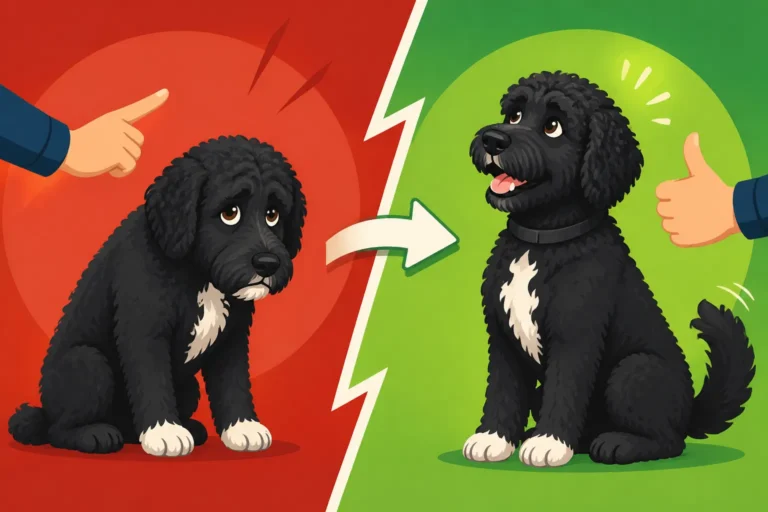
Use positive reinforcement methods. Reward your PWD with high-value treats and praise when they exhibit calm, appropriate behavior around the cat. For example, if your dog is lying calmly while the cat walks by, reward that calm behavior. Never punish your PWD for chasing the cat; this can create a negative association with the cat and potentially escalate the behavior when you're not around. Instead, prevent the chase from happening, redirect their attention, and reward the desired behavior. Resources from training programs, like those offered by BAXTER & Bella, often emphasize positive reinforcement techniques that are highly effective for intelligent breeds like PWDs. You might also want to look into How Trainable a Portuguese Water Dog Is to understand their learning style better.
Managing Exercise and Mental Stimulation
As established, a tired PWD is a good PWD. Ensuring your dog receives ample physical exercise and mental stimulation daily is crucial for preventing them from chasing your cat out of boredom or pent-up energy.
- Physical Exercise: Aim for at least 60-90 minutes of vigorous activity each day. This can include brisk walks, jogging, off-leash play in a secure area, fetch, and especially swimming. Portuguese Water Dogs love water, and swimming is an excellent, low-impact way to burn energy. Consider daily trips to a dog-friendly beach or lake, or invest in a sturdy kiddie pool in your yard if no natural water sources are available.
- Mental Stimulation: Don't underestimate the power of brain games. Puzzle toys, scent work, obedience training sessions, and even learning new tricks can be just as tiring as physical exercise. Rotate toys regularly to keep them interesting. Many durable puzzle toys can be found on Amazon that dispense treats and challenge your PWD's problem-solving skills, keeping them engaged and less likely to fixate on the cat. Engaging in Which Retrieving Games Tire a Portuguese Water Dog can also provide both physical and mental benefits.
- Structured Play with You: Dedicate time each day to play with your PWD. This strengthens your bond and directs their energy positively. Fetch, tug-of-war (with rules), and interactive games can satisfy their working instincts.
When Professional Help Might Be Needed
Sometimes, despite your best efforts, the dynamic between your Portuguese Water Dog and cat just isn't working, or worse, it's becoming dangerous. Knowing when to call in the cavalry is essential for the safety and well-being of both your pets.
Recognizing Red Flags and Escalating Behavior
It's vital to differentiate between an annoying but ultimately harmless chase and something more serious. A playful chase, while unwelcome by the cat, might not involve intent to harm. However, certain behaviors are clear red flags that indicate a more significant problem:
- Intense Fixation: If your PWD stares intently at the cat, crouches, or stalks them with rigid body language, this is a concern.
- Ignoring Commands: If your PWD completely ignores "leave it" or "come" when focused on the cat, it shows a dangerous lack of impulse control.
- Growling or Snapping: Any growling, snapping, or attempts to bite the cat, even if they don't make contact, are serious indicators of aggression or a dangerously high prey drive.
- Catching or Injuring the Cat: If your PWD actually catches the cat, pins them down, or causes any physical injury, this is an immediate emergency.
- Cat's Extreme Stress: If your cat is constantly hiding, refusing to eat, losing fur, or exhibiting other signs of extreme stress, their quality of life is severely compromised.
If you observe any of these escalating behaviors, especially the more aggressive ones, it's time to seek professional intervention immediately. Don't wait for a serious injury to occur.
Consulting a Certified Professional Dog Trainer or Behaviorist
If you're struggling to manage your PWD's behavior around your cat, or if you're seeing any red flags, don't hesitate to reach out to a certified professional dog trainer or a veterinary behaviorist. These experts have the knowledge and experience to assess the specific dynamics in your home, identify the root cause of the chasing behavior, and develop a tailored plan to address it.
Look for trainers who use positive reinforcement methods and have experience with multi-pet households and breeds with strong working drives. A good trainer can teach you advanced techniques for impulse control, redirection, and creating a structured environment that promotes peace. A veterinary behaviorist, especially, can rule out any underlying medical conditions that might be contributing to the behavior and can prescribe medication if anxiety or aggression is a significant factor. They can help you implement strategies that truly work, giving both your Portuguese Water Dog and your cat the best chance at a safe and harmonious life together.
Disclaimer
This article is for general informational purposes only and does not constitute professional advice. Laws, prices and regulations vary by location and change over time. Consult a qualified professional for guidance on your specific situation.