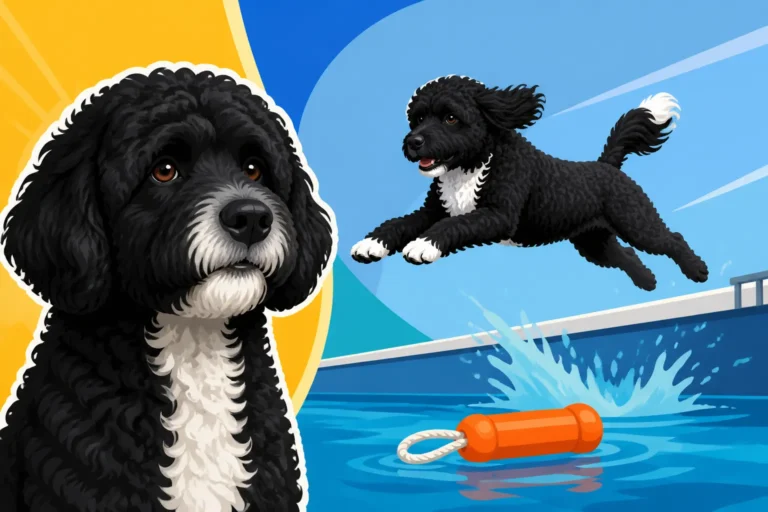
Whether a Portuguese Water Dog Would Rather Swim Than Run
As a Portuguese Water Dog owner, you've likely seen firsthand their undeniable connection to water. It’s almost as if they transform once they hit the lake, river, or ocean. But does this deep-seated love for all things aquatic mean they truly prefer swimming over a good, long run on dry land? It's a question many PWD parents ponder, trying to figure out the best way to satisfy their energetic companions. This guide will dive deep into the heart of the Portuguese Water Dog's exercise preferences, helping you understand their natural inclinations and how to best meet their needs.
The Ancestral Call of the Water
To truly understand a Portuguese Water Dog's preferences, we have to look back at their history. These aren't just dogs who like water; they were created for it. Their very existence is intertwined with the fishing boats and coastal waters of Portugal.
A History Built on Water
Imagine the rugged coast of the Algarve, the wind whipping, and the sea churning. For centuries, the Portuguese Water Dog was an indispensable member of the fishing crew. They weren't just passengers; they were active, working dogs with a specific, vital role. Their job description included retrieving lost tackle that fell overboard, herding fish into nets, and even carrying messages between boats. This wasn't leisure swimming; it was their livelihood. They spent countless hours in and around the water, day in and day out, demonstrating incredible stamina and a keen intelligence for the tasks at hand.
This constant aquatic activity meant that generation after generation, the dogs best suited for water work thrived and passed on their traits. It built into their very DNA a strong, almost instinctual drive to be in the water. For them, the water wasn't just fun; it was purposeful, engaging, and deeply fulfilling. You can learn more about their historical roles, like How a Portuguese Water Dog Drove Fish Into a Net or Whether a Portuguese Water Dog Retrieved Lost Tackle. This historical context is crucial because it highlights that their affinity for water isn't just a quirk; it's a fundamental part of their breed identity and genetic makeup. They were literally bred to be partners in a marine environment, and that legacy lives on in every splash they make today.
The Physical Adaptations for Aquatic Life
Beyond their history, the Portuguese Water Dog possesses several unique physical characteristics that make them exceptionally well-suited for water activities. These aren't just cosmetic traits; they are functional adaptations that enhance their swimming prowess.
First and foremost are their distinctive webbed feet. These aren't just slightly joined toes; a PWD's feet are truly webbed, acting like natural paddles in the water. This webbing provides extra surface area, allowing them to push more water with each stroke, making their swimming incredibly efficient and powerful. It’s like having built-in flippers! Then there's their powerful, rudder-like tail. Unlike many breeds that might use their tail for balance on land, the PWD's tail is thick at the base and tapers, acting as a crucial steering mechanism in the water. This allows for quick, agile turns and precise maneuvering, essential for their working heritage. Find out more about Why a Portuguese Water Dog Has Webbed Feet and Why a Portuguese Water Dog's Tail Works as a Rudder.
And of course, there's their incredible coat. Whether curly or wavy, the PWD's single coat is dense and waterproof. It acts as insulation against cold water, keeping them warm even during prolonged swims. This coat also retains water efficiently, making them less buoyant and helping them dive and retrieve objects from below the surface. These are not just happy accidents; they are the result of centuries of natural and selective breeding for a specific aquatic purpose. When you see a PWD effortlessly glide through the water, these adaptations are silently at work, turning them into sleek, powerful swimming machines.
The Joy of the Open Water vs. the Call of the Trail
Given their history and physical traits, it's perhaps not surprising that many Portuguese Water Dogs exhibit a strong preference for water-based activities. However, running still plays a vital role in their overall well-being.
Why Swimming is Often Their First Love
For many PWDs, swimming isn't just exercise; it's an immersive, full-body experience that engages both their physical and mental faculties in a way that dry-land activities often can't. The moment they hit the water, you'll often see a visible shift in their demeanor – an intensity and focus that speaks to their core being.
One of the biggest advantages of swimming is that it's a low-impact exercise. This is fantastic for their joints, especially as they age. Unlike the repetitive pounding of running on hard surfaces, swimming provides incredible cardiovascular conditioning without the strain. It's a natural form of physical therapy, building strong muscles and improving endurance gently. For a PWD, chasing a tennis ball in a lake isn't just a game; it's a primal satisfaction, fulfilling a deep-seated instinct. Dock diving, in particular, taps into their natural retrieving and jumping abilities, turning exercise into an exciting sport where they can truly shine. This activity offers intense bursts of energy expenditure, problem-solving (lining up the jump, judging the retrieve), and a grand finale splash. The feeling of cool water, the weightlessness, and the challenge of navigating an ever-changing aquatic environment provide unparalleled mental stimulation. It’s an exercise that truly satisfies their body, mind, and spirit. Many owners find that even a short, vigorous swim session tires their PWD more completely than a much longer walk or run on land, because it engages so many more muscles and senses. You might find that How Often a Portuguese Water Dog Should Swim is a frequent question for owners.
The Allure and Limitations of Running
While swimming is undeniably their forte, running and other land-based exercises are still important for a well-rounded Portuguese Water Dog. They are, after all, still dogs that need to move. A good run can certainly help burn off some of that boundless PWD energy, especially on days when water access isn't available. They are athletic and enjoy a good sprint in a safe, open space, or a jog alongside their human companions. Running can be excellent for building explosive speed and stamina in different muscle groups than swimming. It also allows for engagement in scent work and exploring new terrains, which offers a different kind of mental enrichment. A long hike through the woods, with all its sights, sounds, and smells, can be just as tiring and rewarding as a swim, albeit in a different way.
However, running alone often falls short of fully satisfying a PWD's inherent drive. While they can run for miles, as explored in How Many Miles a Portuguese Water Dog Needs on a Dry Day, it lacks the specific purpose and challenge that water work provides. Prolonged running, especially on hot days, also carries risks like overheating due to their dense coat, and it puts more stress on their joints over time. It's often observed that an hour of running might make them physically tired, but a half-hour swim leaves them both physically and mentally content. The mental engagement of retrieving, diving, or even just treading water with a toy often provides a deeper sense of accomplishment than simply putting one paw in front of the other on a trail. If they're not getting enough mental and physical engagement, you might see signs of What an Under Exercised Portuguese Water Dog Does. Therefore, while running is a valuable component of their exercise regimen, it rarely trumps swimming in terms of their overall preference and fulfillment.
Tailoring Exercise to Your Individual PWD
Every dog is an individual, even within a breed known for its strong traits. While most PWDs adore water, there can be variations in preference.
Observing Your Dog's Preferences
The best way to know if your Portuguese Water Dog prefers swimming to running is to simply observe them closely. How do they react when you approach water? Do their ears perk up, their tail wag furiously, and their body tense with excitement? Do they dive in headfirst without a second thought, or do they tentatively wade? Compare this to their reaction when you grab a leash for a walk or run. While they'll likely be excited for any outing, you might notice a distinct level of euphoria when water is involved.
Pay attention to their stamina and recovery in each activity. A PWD might be able to run for a good distance, but how do they look afterward? Are they still keen for more, or do they seem depleted? After a vigorous swim, many PWDs will be thoroughly exhausted but also appear incredibly happy and calm. Their eyes might gleam with satisfaction. Some PWDs, especially those not extensively introduced to water work as puppies, might initially only tolerate swimming or simply paddle. But with consistent, positive exposure, their innate instincts often kick in, revealing a genuine passion. Watch for that spark, that unbridled joy, which often manifests most vividly in the water. If you're struggling with getting your PWD engaged, resources like BAXTER & Bella can offer guidance on positive reinforcement and engagement techniques for various activities, helping you discover their true passions.
The Importance of Variety and Balance
While swimming often reigns supreme, a holistic exercise program for a Portuguese Water Dog should always include a variety of activities. Relying solely on one type of exercise, even their favorite, can lead to boredom, overuse injuries, or underdeveloped muscle groups. Think of it like a human athlete: a runner wouldn't only run; they'd cross-train with swimming, cycling, and strength work.
A balanced approach prevents physical plateaus and keeps their intelligent minds stimulated. Incorporate different types of land walks – brisk neighborhood strolls, challenging hikes on varied terrain, or off-leash romps in a secure area. Mix in brain games, puzzle toys, and obedience training sessions. Many PWDs excel in other dog sports like agility, rally, or scent work, which offer fantastic physical and mental outlets. Exploring Which Other Sports Suit a Portuguese Water Dog can give you a wealth of ideas. Agility, for example, combines running, jumping, and intricate problem-solving, which can be incredibly fulfilling. Scent work taps into their natural tracking abilities and provides intense mental exercise. By offering a diverse "menu" of activities, you ensure that your PWD remains physically fit, mentally sharp, and truly happy, regardless of their primary preference. You can find all sorts of gear for these varied activities, from durable training toys to long lines, on sites like Amazon.
Practical Considerations for Water vs. Land Exercise
Choosing between water and land activities isn't just about preference; it also involves practical considerations for safety and care.
Safety First in Both Environments
Whether your Portuguese Water Dog is splashing in a lake or bounding through a field, safety should always be your top priority. In water, even the most confident swimmer can face unexpected dangers. Strong currents, hidden underwater hazards, or exhaustion can quickly turn fun into peril. Always supervise your PWD closely when they are in or near water, especially in open bodies where conditions can change rapidly. A doggy life vest, like those readily available on Amazon, is an excellent investment, particularly for colder water, rougher conditions, or for young puppies just learning their limits. Knowing When a Portuguese Water Dog Needs a Life Jacket is crucial for their well-being. Additionally, ensure your dog has a reliable recall, especially when swimming in areas with other people, boats, or wildlife.
On land, different safety measures apply. Always be aware of the ground temperature on hot days to protect their paw pads from burns. Leash laws are there for a reason, and even the most well-behaved PWD can be distracted by wildlife or other dogs. Watch out for sharp objects, toxic plants, or potentially harmful insects on trails. If you're hiking, consider bringing a small first aid kit for both you and your dog, along with plenty of water. No matter the environment, knowing your dog's limits and respecting them is key to preventing injuries and ensuring a positive experience.
Post-Activity Care
The care required after a swimming session is notably different from that after a run. After a swim, particularly in lakes, ponds, or the ocean, a thorough rinse is essential to remove chlorine, salt, sand, or any potential contaminants from their dense coat. Neglecting this can lead to skin irritation or matting. Following the rinse, a PWD needs to be dried completely, especially if they are prone to skin issues or if the weather is cool. Their thick, single coat can hold a surprising amount of water, and air-drying can take hours, potentially leading to hot spots or other skin problems. A force dryer is an invaluable tool for PWD owners to ensure their dog is dry down to the skin. You can read more about Drying a Portuguese Water Dog After Every Swim and how important it is.
After a run or hike on land, the focus shifts to their paws. Check their paw pads for cuts, thorns, or any foreign objects that might have become lodged between their toes. In extreme weather, paw balm can protect their pads from heat or cold, and even dog booties might be necessary for rough terrain or icy conditions. Regular nail trims are also important for optimal paw health and comfort in all activities. By understanding and consistently implementing appropriate post-activity care, you can prevent common issues and keep your PWD healthy and ready for their next adventure, whether wet or dry.
Gear Up for Success
Having the right gear can make all the difference in maximizing your Portuguese Water Dog's enjoyment and safety during their exercise routines. For water activities, beyond the aforementioned life vest, consider buoyant retrieve toys. These are designed to float high in the water, making them easy for your PWD to spot and grab, enhancing their retrieving drive. Long lines (15-30 feet) can also be incredibly useful for practicing recall around water sources in a safe, controlled manner before you trust them completely off-leash.
For land-based exercises, a well-fitting harness can provide better control and reduce strain on their neck compared to a collar alone, especially if your PWD is a strong puller. Durable, weather-appropriate leashes are a must. If you're exploring trails, consider a hands-free leash that clips around your waist, allowing you to move more freely. Portable water bowls and collapsible water bottles are crucial for keeping your PWD hydrated during longer runs or hikes. For those interested in home grooming after swims, or just general care, durable grooming tables and powerful force dryers can be found on Amazon. Investing in good quality equipment, whether for aquatic or terrestrial adventures, contributes significantly to your dog's comfort, safety, and your peace of mind.
| Activity Type | Benefits for PWD | Considerations | Recommended Gear |
|---|---|---|---|
| Swimming | Low-impact, full-body workout; high mental stimulation; natural instinct fulfillment; excellent for cooling in heat. | Requires access to safe water; constant supervision; thorough post-swim drying to prevent mats/skin issues. | Life vest, buoyant retrieve toys, long line, force dryer, specific PWD shampoo. |
| Running/Hiking | Excellent cardiovascular exercise; builds leg muscle; engages scent work; explores new environments. | Higher impact on joints; risk of overheating in dense coat; paw pad protection needed; requires consistent leash training. | Durable harness/collar, sturdy leash, portable water bowl, paw balm, dog booties (optional). |
Conclusion
So, does a Portuguese Water Dog prefer to swim rather than run? For the vast majority, the answer leans heavily towards swimming. Their history, their physical adaptations, and their sheer enthusiasm for water make it clear that aquatic activities often provide a deeper level of fulfillment and satisfaction for this unique breed. Swimming is not just an exercise; it's a way for them to connect with their ancestral purpose and unleash their true selves.
However, this doesn't mean you should neglect land-based exercise. A healthy, well-adjusted Portuguese Water Dog thrives on a balanced routine that incorporates both the exhilarating splash of water and the invigorating pace of a good run or hike. Variety keeps their intelligent minds stimulated, strengthens different muscle groups, and prevents boredom. By understanding their powerful instincts and providing opportunities for both their aquatic passions and their need for dry-land adventure, you'll ensure your Portuguese Water Dog is a happy, healthy, and perfectly balanced companion, ready for whatever life throws their way – wet or dry.
Disclaimer
This article is for general informational purposes only and does not constitute professional advice. Laws, prices and regulations vary by location and change over time. Consult a qualified professional for guidance on your specific situation.