How Much a Portuguese Water Dog’s Webbing Adds to Its Speed
It's a common misconception that a dog's webbed feet are just a cute little quirk, especially for a breed like the Portuguese Water Dog. But when you see these incredible dogs move through the water, you quickly realize their paws are far more than just a genetic identifier – they're a vital part of what makes them such powerful, efficient, and yes, fast swimmers. This guide will dive deep into how those unique webbed feet contribute to their remarkable aquatic speed and overall prowess in the water.
The Portuguese Water Dog: A Canine Built for the Water
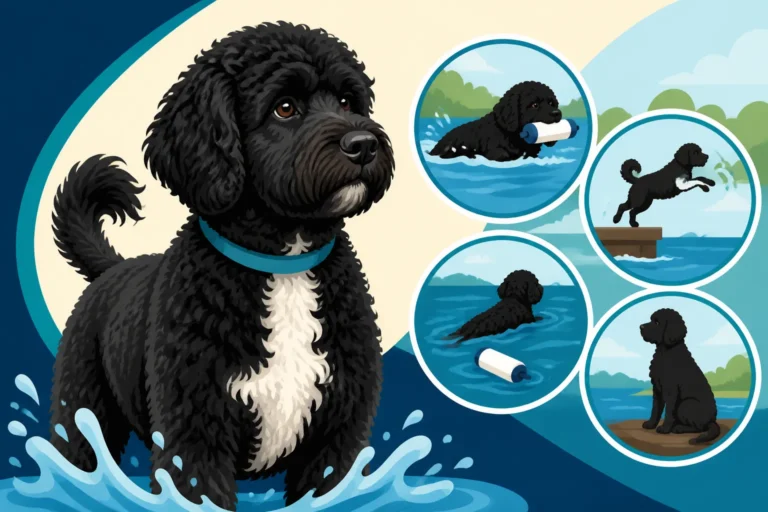
If you've ever watched a Portuguese Water Dog confidently plunge into the ocean, chase a thrown buoy, or effortlessly retrieve something from deep water, you know you're observing a true athlete. These dogs weren't just "bred near water"; their entire physical structure and innate drive are deeply intertwined with a life spent working on the open sea alongside fishermen. Everything from their coat to their tail, and especially their feet, is designed for optimal performance in an aquatic environment.
When we talk about "speed" in the water for a dog, it's not always about pure, momentary acceleration like a sprinter on land. For a breed like the PWD, it's often more about sustained, efficient movement that allows them to cover distances, navigate currents, and work for extended periods without tiring. Their webbed feet are a crucial component in achieving this kind of practical, working speed, turning their paws into natural, highly effective paddles.
Historical Role of Webbed Feet in Their Work
Imagine the rugged coastlines of Portugal, where fishermen relied on their canine companions for vital tasks. These dogs weren't just passengers; they were integral crew members. Their job might involve herding fish into nets, retrieving lost tackle that had fallen overboard, or even carrying messages between boats. What a Portuguese Water Dog Was Bred to Do on a Boat gives a great overview of these historical roles. For these tasks, simply splashing around wasn't enough. They needed to move with purpose, agility, and speed, even in challenging conditions.
The development of their webbed feet wasn't an accident; it was a result of generations of natural and selective breeding for function. Dogs with more effective webbed feet would be better at their jobs, more valued by the fishermen, and thus more likely to pass on their traits. This strong functional selection cemented the webbed paw as a hallmark of the breed, a design perfectly suited to propel them through water.
Why a Portuguese Water Dog's Anatomy Shouts "Swimmer"
Beyond the feet, the Portuguese Water Dog's entire body screams "swimmer." Their robust, muscular build, deep chest, and powerful hindquarters provide the engine for strong propulsion. Their unique single coat, whether curly or wavy, is water-resistant and provides insulation, allowing them to stay in cold water for longer without getting chilled. Even their tail, often described as a rudder, plays a significant role in steering and balance, especially during quick turns or against strong currents. How a Portuguese Water Dog's Tail Works as a Rudder perfectly illustrates this.
The combination of all these traits creates an animal that isn't just capable of swimming but is truly designed for it. The webbed feet are the foundation of this design, turning their natural swimming instinct into a highly refined and effective aquatic capability. It's a testament to how specialized breeds can become when their purpose is so clearly defined.
The Mechanics of Webbed Feet: More Than Just Paddles
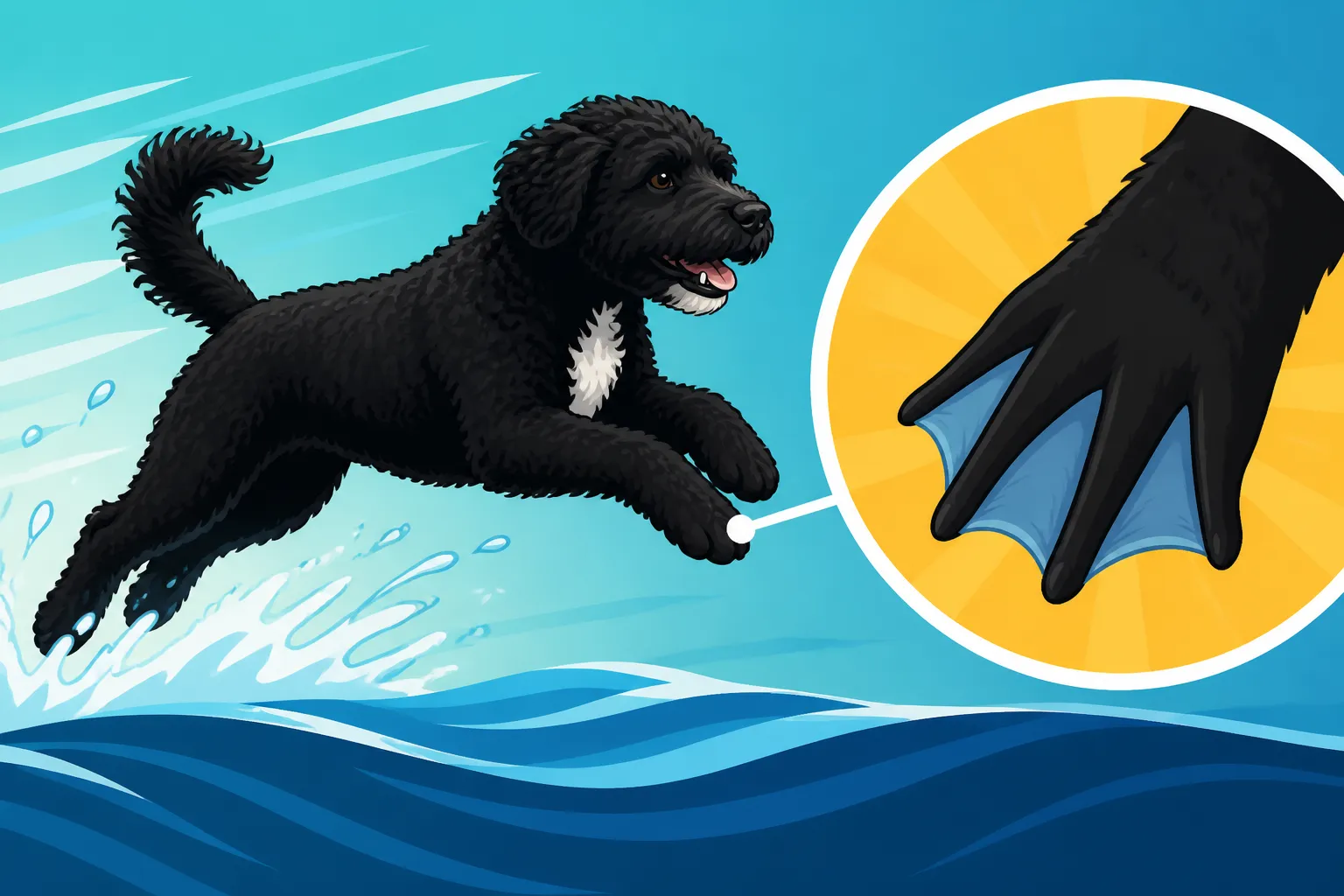
When you examine a Portuguese Water Dog's paw, you'll immediately notice the prominent webbing between their toes. This isn't just a thin flap of skin; it's robust and extends significantly further than in most other dog breeds. This anatomical feature is the primary reason Why a Portuguese Water Dog Has Webbed Feet in the first place, and it's what transforms their ordinary paws into powerful aquatic tools.
Most dogs can swim, of course, but for many, it's more of a frantic doggy-paddle, using their paws as inefficient scoops. A PWD, however, uses its webbed feet to much greater effect, creating a larger surface area to push against the water, leading to more efficient propulsion and, consequently, more speed and endurance.
How Webbing Increases Propulsion
Think about how a human swims with fins or flippers. The larger surface area allows them to push significantly more water with each kick, generating greater thrust and moving them forward with less effort than bare feet. The webbed feet of a Portuguese Water Dog work on the same principle. When their toes spread in the water, the webbing creates a larger paddle-like surface. This expanded surface area effectively increases the amount of water they can displace with each powerful stroke.
Consider a dog without webbing: as its paw pushes back, water can easily slip through the gaps between the toes, diminishing the force of the stroke. For a PWD, the webbing acts as a barrier, minimizing this "slippage" and ensuring that more of the energy from their leg muscles is converted directly into forward motion. This efficiency translates directly into speed because they can generate more momentum with each stroke, and they don't have to work as hard to maintain that momentum. It's about getting more "bang for your buck" with every push.
Reducing Drag and Increasing Efficiency
Beyond just propulsion, webbed feet also play a role in reducing drag. While it might seem counterintuitive that a larger surface area wouldn't create more drag, the design is highly evolved. When the paw is moving forward through the water to prepare for the next stroke, the toes are often held closer together, minimizing the surface area presented to the oncoming water. Then, on the power stroke backward, the toes splay out, maximizing the surface area for propulsion. This dynamic action is crucial.
This sophisticated biomechanical action allows the dog to cut through the water more cleanly on the recovery stroke and then push with maximum force on the power stroke. It's a highly efficient system that conserves energy. This energy conservation is what allows a PWD to maintain speed and work in the water for extended periods, retrieving multiple items, swimming against currents, or covering long distances without quickly becoming exhausted. Their inherent aquatic ability is truly remarkable, as detailed in How Naturally a Portuguese Water Dog Swims.
Webbing and Water Speed: Efficiency, Endurance, and Agility
When we talk about a Portuguese Water Dog's "speed" in the water, it's a multifaceted concept. It's not simply about how fast they can sprint across a pool, though they can certainly do that with impressive velocity. It's equally about their ability to sustain that speed, to maneuver deftly, and to tirelessly perform tasks in an environment that would quickly exhaust other breeds. Their webbed feet are at the heart of all these aspects.
Without those specialized paws, a PWD would still be a swimmer, but a far less effective one. The webbing contributes to bursts of speed, allows them to maintain a strong pace over distances, and even enhances their ability to change direction underwater, making them incredibly agile.
Bursts of Acceleration for Retrieval
Imagine a Portuguese Water Dog at the edge of a dock, eyes fixed on a favorite toy tossed far into the lake. When the "go" command is given, they explode into the water. This initial burst of acceleration is where the webbed feet really shine. The immediate, powerful push against the water, maximized by the broad surface area of their splayed toes, gives them an instant advantage. They can quickly get up to speed to intercept a fast-moving object or reach a distant target.
This rapid acceleration is critical for their traditional retrieving tasks. Whether it's a piece of fishing gear or a dummy in a dock diving competition, reaching the object quickly and efficiently saves energy and time. In sports like dock diving, where every fraction of a second and every inch counts, What Dock Diving Asks of a Portuguese Water Dog makes it clear how crucial these physical attributes are, and the webbed feet are a huge part of achieving those impressive jumps and splashes.
Sustained Speed for Long-Distance Work
It's one thing to sprint, another to maintain a strong pace. For a working dog, endurance is often more important than short-burst speed. The webbed feet allow the Portuguese Water Dog to swim longer and farther with less effort. Because each stroke is more efficient and powerful, their muscles don't fatigue as quickly. This means they can maintain a good speed for extended periods, swimming across large bodies of water, against a current, or during lengthy training sessions.
This sustained speed and endurance are vital for their historical roles and for modern water sports. A dog that tires easily isn't much help on a fishing boat or in a competitive trial. The webbed feet allow them to continue pushing water effectively, turning energy into forward motion rather than wasted effort. This is why How Long a Portuguese Water Dog Can Stay in Cold Water is often impressive; their efficient swimming reduces the energy expenditure that might otherwise lead to rapid chilling.
Agility and Maneuverability Underwater
Speed isn't just a straight line; it also encompasses the ability to change direction quickly and gracefully. A Portuguese Water Dog's webbed feet contribute to their agility in the water by providing a strong platform for propulsion from any angle. Whether they're banking a turn to retrieve a missed item or adjusting their trajectory to avoid an obstacle, the power and control offered by their specialized paws are invaluable.
They can use their forepaws for steering and their hindpaws for propulsion, creating a balanced and highly responsive swimming style. This allows them to dart, weave, and turn with remarkable fluidity, making them incredibly effective in dynamic aquatic environments. This agility, combined with their speed, makes them true masters of the water, a joy to watch as they navigate their watery world.
Beyond Webbed Feet: Other Factors in a PWD's Water Prowess
While their webbed feet are undoubtedly a superstar feature, it's important to remember that a Portuguese Water Dog's aquatic speed and overall mastery of the water stem from a holistic package of physical attributes, temperament, and training. It's the synergy of all these elements that creates the truly exceptional water dog we know and love.
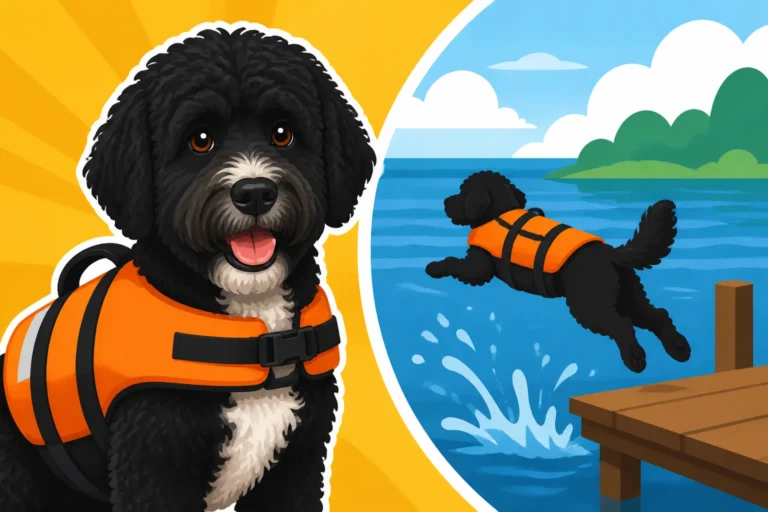
To truly understand their speed, we must look at the whole picture. For instance, you can buy all the best gear from Amazon for water training, like retrieving bumpers or a doggy life jacket, but without the inherent drive and appropriate training, a dog won't reach its full potential.
The Powerhouse Physique
As we touched on earlier, the PWD's entire build is designed for strength and endurance. Their well-muscled body, particularly the powerful hindquarters and broad chest, provides the raw power needed to drive through water. A deep chest allows for larger lung capacity, which means better oxygen uptake and stamina during strenuous swimming. Their strong, straight legs provide efficient movement, working in tandem with the webbed feet to push maximum water.
This robust framework ensures that the force generated by the webbed feet has a powerful engine behind it. Without a strong body to back them up, even the most perfectly webbed feet would struggle to create significant speed or sustain effort. It's like having a high-performance tire without a powerful engine in the car – you won't get far.
The Role of Their Unique Coat
The Portuguese Water Dog's coat is another critical adaptation for water work, indirectly supporting their speed and endurance. Their single coat, whether curly or wavy, is dense and water-resistant. This means water beads off, and the dog doesn't become waterlogged and heavy, which would drastically increase drag and reduce speed. The coat also provides excellent insulation, allowing them to stay warm in cold water.
If a dog gets cold quickly, its body will expend more energy trying to regulate its temperature, leading to faster fatigue and a decrease in performance and speed. The PWD's coat minimizes this energy drain, allowing them to focus their efforts on swimming efficiently and powerfully. This is why their coat is so meticulously maintained; a matted coat can lose its insulating properties and become heavy.
Drive, Instinct, and Trainability
Beyond physical attributes, the Portuguese Water Dog possesses an unwavering drive and instinct for water. They love to swim, retrieve, and work. This innate enthusiasm means they are naturally motivated to enter the water and perform, which translates into more powerful and sustained effort. Their intelligence and eagerness to please also make them highly trainable. With positive reinforcement and engaging methods, like those offered by BAXTER & Bella's online puppy program, owners can channel this natural drive into impressive water skills. Teaching a Portuguese Water Dog to Swim on Cue highlights the importance of training this natural ability.
A dog with a strong work ethic and a deep love for what it does will always perform with more vigor and, ultimately, more speed than one that needs constant coaxing. The PWD's genetic predisposition to water work means they are often willing to push themselves further, making the most of their physical adaptations. This blend of nature and nurture is what truly elevates their aquatic performance.
Environmental Factors and Training Impact
While genetics lay the foundation, environmental factors and training significantly impact how a PWD utilizes its webbed feet for speed. Regular exposure to water, starting at an appropriate age—The Age a Portuguese Water Dog Can Start Swimming is a great reference here—builds confidence and skill. Consistent training, focusing on strong retrieves, endurance building, and agility drills, hones their natural abilities.
A PWD that swims regularly will naturally have stronger muscles, better coordination, and a deeper understanding of how to use its body, including those wonderful webbed feet, to move most effectively through water. Proper conditioning means they can maximize the thrust from their paws without quickly tiring.
Here's a quick comparison of how various factors contribute to a Portuguese Water Dog's water performance:
| Factor | Contribution to Water Speed & Efficiency | Example Benefit |
|---|---|---|
| Webbed Feet | Maximize propulsion per stroke, reduce water slippage | Quicker acceleration, sustained speed over distance |
| Powerful Physique | Strong musculature (hindquarters, chest) for overall power and stamina | Ability to handle strong currents, long work sessions |
| Water-Resistant Coat | Prevents waterlogging, maintains buoyancy, insulates in cold water | Reduced drag, prolonged comfort in cold environments |
| Tail (Rudder) | Acts as a rudder for steering and balance | Agile turns, precise navigation, stability in rough water |
| High Drive & Instinct | Innate love for water work, strong retrieve drive | Willingness to work tirelessly, intrinsic motivation to perform |
| Training & Conditioning | Refines natural abilities, builds stamina, teaches commands | Efficient retrieves, focused performance in competitions |
In conclusion, the webbed feet of a Portuguese Water Dog are not just a fascinating physical trait; they are a perfectly evolved adaptation that significantly enhances their speed, endurance, and agility in the water. They allow these incredible dogs to move through water with a grace and power that truly sets them apart, making them the ultimate canine aquatic athletes.
Disclaimer
This article is for general informational purposes only and does not constitute professional advice. Laws, prices and regulations vary by location and change over time. Consult a qualified professional for guidance on your specific situation.