Whether Puppy Class Prepares a Portuguese Water Dog for Water Work
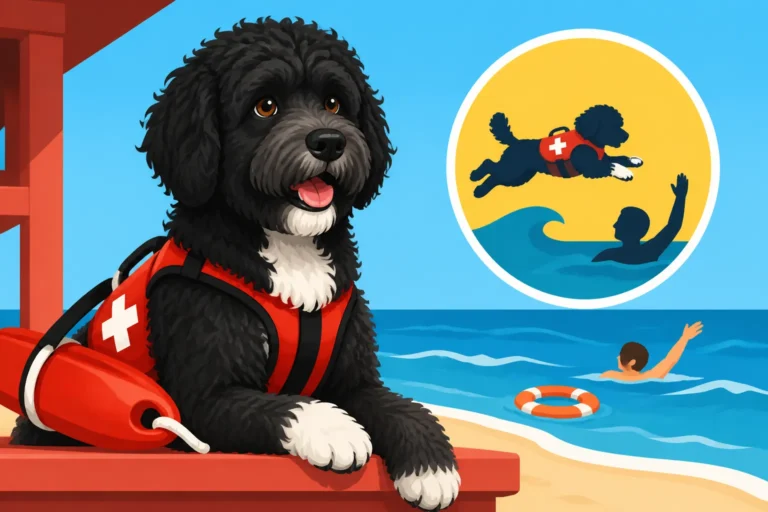
It’s a common thought for new Portuguese Water Dog guardians: "My puppy loves water, but will a regular puppy class actually get them ready for real water work?" You’ve heard about their instincts, their rich history as working dogs on fishing boats, and you want to nurture that. But traditional puppy classes often feel very land-focused, leaving you wondering if those 'sit' and 'stay' commands will translate to a splashing, retrieving dog in a lake or ocean. This guide will delve into how much a standard puppy class does prepare your PWD, where its limitations lie, and what additional steps you can take to foster their incredible aquatic abilities.
The Solid Foundations of Puppy Class Obedience
Even for a breed as specialized as the Portuguese Water Dog, the core lessons learned in a good puppy class are absolutely invaluable. Think of it as building the strongest possible base for whatever magnificent structure you plan to erect on top. Without these fundamental skills, any advanced training, especially something as dynamic and stimulating as water work, becomes much harder.
Basic Commands as Building Blocks
A typical puppy class focuses heavily on crucial foundational commands like "sit," "stay," "come," and "down." These aren't just parlor tricks; they are the bedrock of communication and safety between you and your dog. When your Portuguese Water Dog is out in the water, excited and focused on a retrieve, a solid "come" command isn't just convenient, it could be a life-saver. A reliable "stay" keeps them from bolting into dangerous currents or towards unfamiliar boats. The consistency and positive reinforcement techniques taught in these classes help cement these commands in your puppy's mind, regardless of the environment. Imagine trying to teach your PWD to retrieve a buoy from the choppy ocean if they haven't even mastered bringing a toy back to you in your living room. The concepts are the same – focus, retrieve, return – just the environment changes. Building that initial understanding on dry land makes the transition to more complex scenarios much smoother.
Moreover, a well-trained Portuguese Water Dog is a joy to be around, and that starts with understanding basic manners. A dog that is constantly jumping or not responding to their name can quickly become a handful, especially when their energy and intelligence are directed towards inappropriate behaviors. Puppy classes help instill the discipline needed for a happy coexistence, setting the stage for more adventurous pursuits. For those looking for supplementary materials or online resources to reinforce these basics at home, many owners find platforms like BAXTER & Bella incredibly helpful, offering structured guidance that complements in-person classes.
Early Socialization Benefits
Beyond the commands, perhaps one of the most significant benefits of a puppy class for a Portuguese Water Dog, or any breed for that matter, is socialization. These classes provide a controlled environment where puppies can interact with other dogs of various breeds, sizes, and temperaments, as well as new people and novel sights and sounds. For a breed like the PWD, which can be quite sensitive and has a strong personality, positive early experiences are crucial for developing a confident, well-adjusted adult. A dog that is comfortable and calm around other dogs and people is less likely to be distracted or reactive when encountering them during water activities at a busy beach or a dock diving event.
Think about it: water work often happens in public spaces. If your PWD is barking at every passing dog or person on the dock, it's not just disruptive; it detracts from their focus and your enjoyment. A puppy who learns to ignore distractions and calmly engage with their environment because they've had positive exposure to many different stimuli will be far more successful and safe. Socialization also helps prevent fear-based aggression or anxiety, which can hinder any training efforts, let alone the specialized demands of water sports. A truly confident PWD is one that trusts its surroundings and its handler, which is paramount when they are navigating unfamiliar waters or competing in a new environment. If you want to know more about their early development, check out The First Year With a Portuguese Water Dog Puppy.
Bridging the Gap: From Dry Land to Wet Work
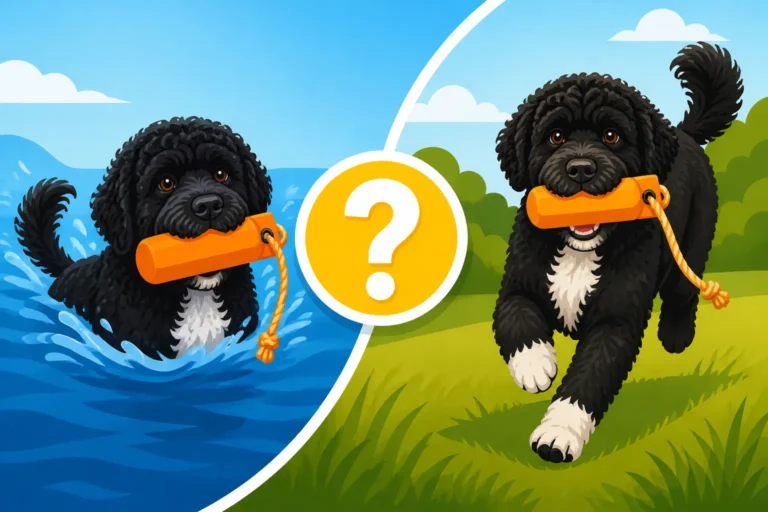
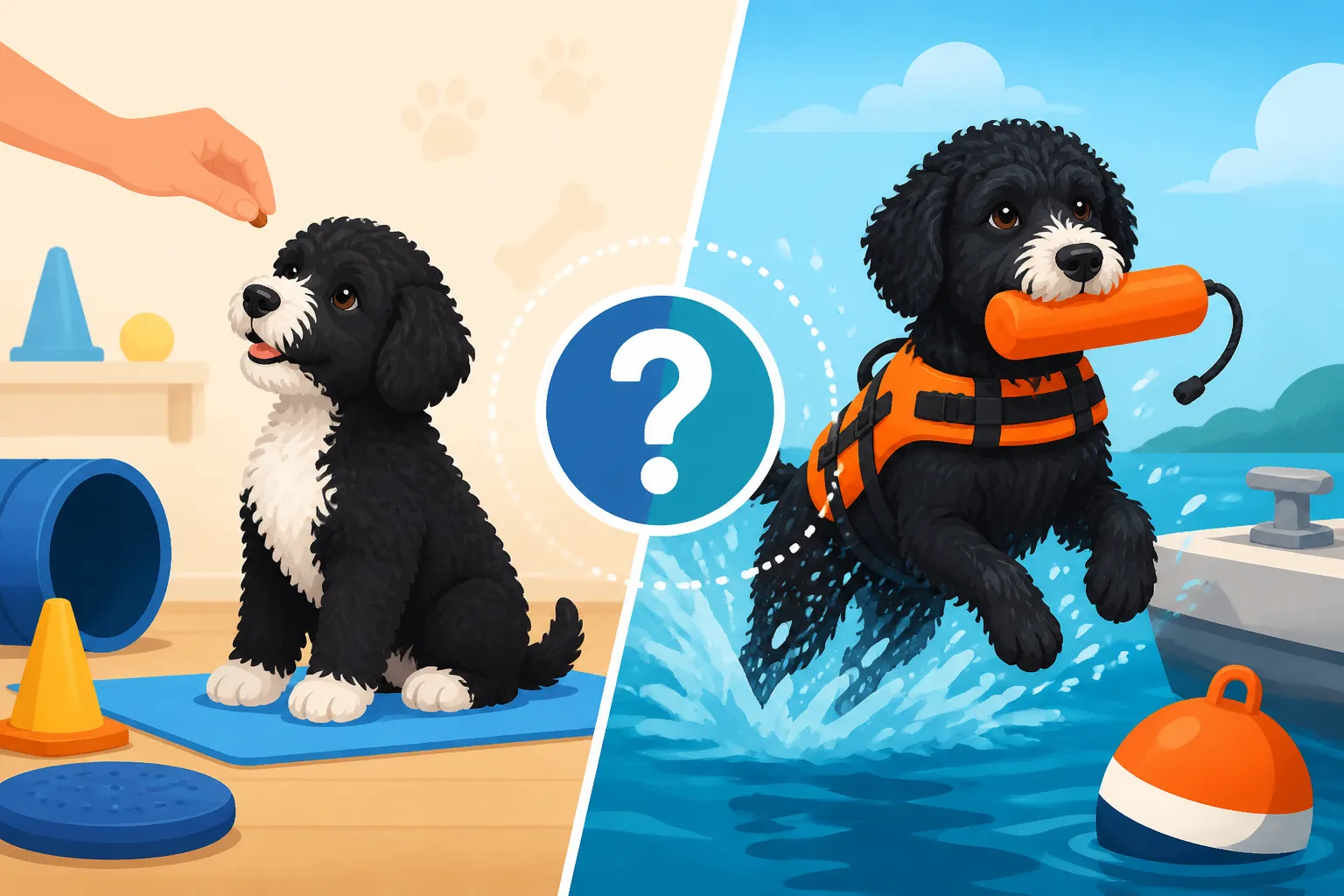
While puppy class provides an excellent foundation, it's crucial to understand that simply mastering "sit" on your kitchen floor won't automatically translate to expertly retrieving a bumper from a choppy lake. There's a significant leap between land-based obedience and the unique demands of water work.
Understanding the Unique Water Element
The water itself presents an entirely different set of sensory inputs and physical challenges than dry land. The sensation of buoyancy, the resistance of the water, the sounds of splashing, the unpredictable currents, and the altered visibility underwater all add layers of complexity that a puppy class simply can't replicate. A Portuguese Water Dog might be born with a natural affinity for water – it's practically in their DNA! – but that doesn't mean they instinctively understand how to execute a precise retrieve in challenging aquatic conditions. They need to learn how to navigate these elements while still adhering to your commands.
For example, when a PWD is swimming, its body mechanics change. It relies heavily on its powerful tail as a rudder and its webbed feet for propulsion. Commands given on land might sound different or be harder to hear over the sound of the water. Their focus can easily be diverted by a duck, a ripple, or another dog playing nearby. A critical aspect is teaching them to listen and respond to you even when their primal instincts are shouting for them to chase that fish or play with the waves. This requires specific training that gradually introduces them to the aquatic environment while reinforcing obedience, not just letting them splash unsupervised. This is a critical point that many owners overlook, thinking a water-loving breed will just "figure it out."
Adapting Commands for the Aquatic Environment
The commands themselves might need slight adaptations or clearer execution once you introduce water. A hand signal that works perfectly in a quiet park might be entirely lost in a bright, open water setting with sun glare. Your voice might need to be louder or more distinct. You'll need to teach your PWD to associate familiar commands with the new context of water. For instance, a "come" on land is one thing, but a "come" when they are halfway across a pond, thrilled by a floating toy, is another challenge entirely.
Consider the equipment too. A regular leash is impractical in water, so you might move to a long line that allows freedom but maintains control, or a floating retrieve toy that's easy to spot. Many owners find a good quality, easily visible floating retrieve toy on Amazon to be an essential purchase. Practice is key here: start in shallow, calm water, repeating basic commands, and slowly increasing the challenge. Reward heavily for success. This gradual conditioning helps your dog build confidence and understand that the rules of obedience still apply, no matter how much fun they're having in the water. Remember, consistency in your expectations, regardless of the environment, is what helps a PWD become a truly reliable partner both on land and in the water.
Addressing the Portuguese Water Dog's Instinctual Drive
The Portuguese Water Dog was purpose-bred for water work, a heritage that bestows them with powerful instincts. This is both their greatest asset and, at times, their greatest challenge in training. Understanding how to channel these natural drives is paramount.
Harnessing Natural Talents
A Portuguese Water Dog doesn't just like water; they often have an innate drive to work in it. They were bred to herd fish, retrieve broken nets, and carry messages between boats. This means they often possess a powerful retrieve drive, strong swimming abilities, and an eager-to-please nature when engaged in a task they understand. A good puppy class can tap into this by using toys for fetch on land, which is a precursor to water retrieves. They learn to bring objects back to you, drop them, and await the next command. This basic retrieve concept is directly transferable.
However, harnessing these talents for formal water work goes beyond simple play. It means channeling that energetic enthusiasm into a structured exercise. For example, instead of just letting them splash aimlessly, you might start teaching them to Teaching a Portuguese Water Dog to Swim on Cue, or to retrieve a specific object, like a bumper, rather than just any stick floating by. They need to understand the purpose of the retrieve, and that it's a team effort with you. This involves teaching them to wait patiently, to take direction on where to go, and to bring the object back to hand, not just drop it anywhere. Their eagerness is a fantastic starting point, but it requires careful shaping to meet the specific requirements of formal water trials or dock diving.
Overcoming Water-Specific Distractions
While a puppy class helps with general distractions, water environments introduce their own unique set of allurements. Think of the excitement of ducks paddling by, the scent of fish, the sound of other dogs playing, or even just the endless expanse of the water itself. For a PWD, these aren't just minor distractions; they tap into deeply ingrained instincts. A solid "come" in a quiet room is one thing; getting your PWD to turn away from a flock of geese in a busy pond is quite another.
This is where specialized, gradual training is essential. You start in very low-distraction water environments, reinforcing commands, and slowly introduce more stimulating elements. Positive reinforcement for choosing to focus on you over the exciting distraction is key. Using high-value treats and enthusiastic praise can help counteract the pull of the environment. You might also want to introduce specific toys or bumpers that are only used for water work, creating a special association. Think of it as a mental game: helping your PWD understand that while the ducks are interesting, you are the source of the most rewarding and fun activities in the water. Building this strong bond and consistent communication will give you the control you need to enjoy water activities safely and effectively with your intelligent and driven companion.
Here’s a look at how puppy class skills often relate to water work:
| Puppy Class Skill | Description | Relevance to Water Work |
|---|---|---|
| Sit/Stay | Basic control, waiting for permission | Waiting patiently on the bank/dock, holding position in a boat |
| Come/Recall | Returning to handler on command | Crucial for safety in open water, returning with retrieves, avoiding hazards |
| Leash Manners | Walking politely on a leash | Getting to/from water areas safely, navigating crowded docks or beaches |
| Socialization | Positive interactions with dogs/people | Ignoring distractions from other dogs/people at swimming spots or trials |
| Leave It/Drop It | Disengaging from objects, releasing items | Not chasing wildlife, releasing retrieved items to handler |
| Basic Fetch | Retrieving a toy and bringing it back | Foundation for all water retrieves, understanding the "bring back" concept |
| Confidence Building | Exposure to new sounds, surfaces, experiences | Adapting to dynamic water environments, unfamiliar boats, water sounds |
Beyond the Basics: Specialized Water Work Training
While puppy class lays the groundwork, for your Portuguese Water Dog to truly excel and fulfill their potential in the water, you'll need to move into more specialized training. This is where their unique breed characteristics can really shine.
Advanced Aquatic Skills
Once your PWD has a solid understanding of basic obedience on land and has been confidently introduced to water, you can start building on those skills with specific aquatic tasks. This might include teaching them how to execute complex retrieves, such as retrieving multiple articles, or "blind" retrieves where they don't see the object being thrown but rely on your direction. They can learn to work from a boat, jumping in on command and returning to the boat. This often involves developing specific hand signals that are more effective over distance and water noise. Learning to differentiate between objects, like retrieving a specific buoy out of several, also falls into this advanced category.
This type of training isn't just about fun; it's about channeling their historical purpose into modern activities. Dock Diving and Water Trials With a Portuguese Water Dog are excellent avenues for this, providing structured environments where these skills are put to the test. These activities require not just a love of water, but a deep understanding of commands, incredible focus, and a strong partnership with their handler. The progressive nature of these sports allows you to continually challenge your PWD, keeping their intelligent minds and active bodies engaged. Whether you're aiming for competitive titles or simply want a highly skilled water companion, these advanced skills are the natural progression.
Finding the Right Water Work Mentor
Given the specialized nature of Portuguese Water Dog water work, a general obedience instructor might not have the specific knowledge or experience to guide you through advanced aquatic training. This is where seeking out a mentor or trainer who specializes in water breeds or specific dog sports like dock diving or Portuguese Water Dog water trials becomes invaluable. These experts understand the nuances of the breed's temperament, their physical capabilities, and the specific demands of working in water. They can teach you how to properly introduce your dog to different water environments, how to read their body language, and how to troubleshoot common challenges unique to water work.
Finding a good mentor can make all the difference in unlocking your PWD's full potential. They can guide you on everything from choosing the right floating retrieves (many great options are available on Amazon) to refining your handling techniques. They'll know the subtle cues that signal an issue or a breakthrough. They often have access to specialized training grounds or equipment, and can help you connect with a community of like-minded PWD owners. This community aspect is huge, as you'll find support, shared experiences, and sometimes even training partners. Remember, training a PWD for water work is a journey, and having the right guidance ensures it's a rewarding and safe one for both of you. You might also want to look into What a Portuguese Water Dog Costs Over Its Lifetime to budget for such specialized training.
Disclaimer
This article is for general informational purposes only and does not constitute professional advice. Laws, prices and regulations vary by location and change over time. Consult a qualified professional for guidance on your specific situation.