What a Water Trial Asks of a Portuguese Water Dog
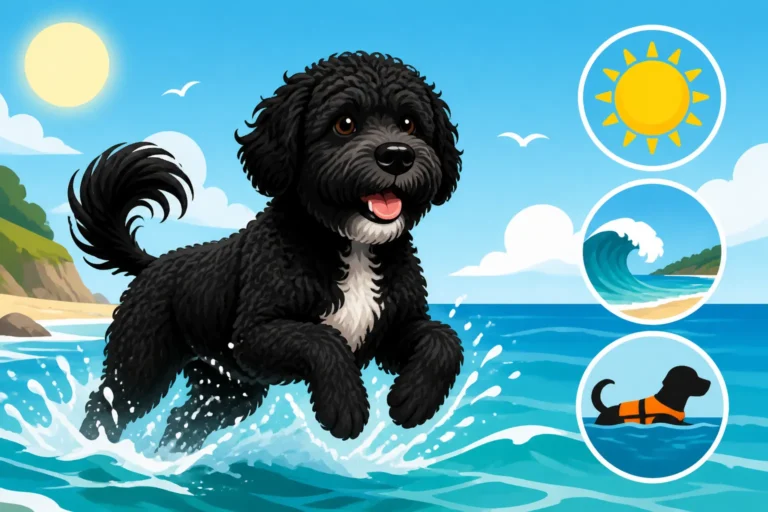
Bringing a Portuguese Water Dog into your life often means embracing their incredible love for water. Many owners quickly discover that their PWD isn't just a casual swimmer but a natural athlete with a deep, historical connection to aquatic work. While letting them splash in the lake is wonderful, formal water trials demand a whole different level of skill, focus, and partnership, testing both your dog's inherited abilities and your dedication as a trainer. This guide will walk you through precisely what a water trial asks of a Portuguese Water Dog, detailing the various levels, specific exercises, and the commitment required to excel in this exciting sport.
The Historical Context of Portuguese Water Dog Water Work
To truly understand what a water trial asks of a Portuguese Water Dog, you first have to appreciate their origins. These aren't just dogs that like water; they were bred for it. Their entire physical and mental makeup is a testament to centuries of working alongside fishermen on the coasts of Portugal. This deep-seated heritage explains why they often take to water work with such enthusiasm and natural talent, but it also highlights that the sophisticated tasks in modern water trials are an evolution of their original "job."
From Fishing Boats to Formal Trials
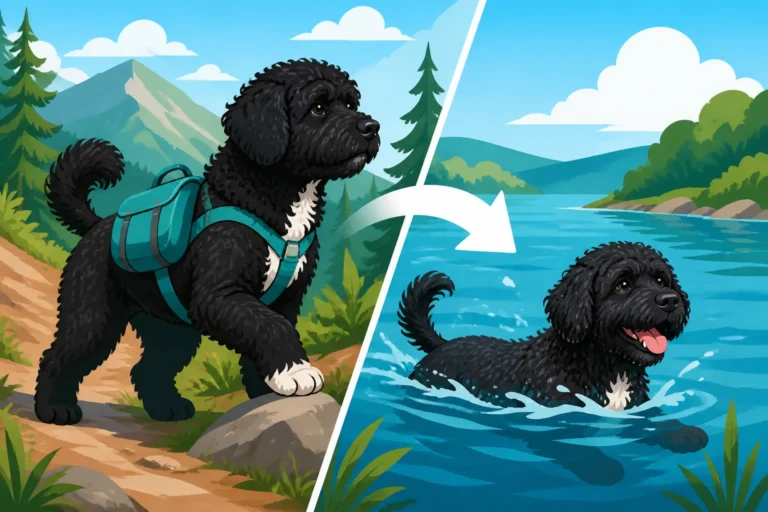
Imagine the rugged coastlines of the Algarve, where Portuguese fishermen relied on their loyal, intelligent dogs for various tasks. These dogs were the ultimate deckhands, diving into icy waters to retrieve lost tackle, herding fish into nets, or carrying messages between boats. They were not simply pets; they were essential members of the crew, navigating rough seas and challenging conditions. Their curly, waterproof coats, powerful webbed feet, and strong rudder-like tails were perfectly adapted for their demanding aquatic duties. This history is crucial because it informs the very essence of modern water trials. The trials aren't just arbitrary exercises; they are designed to simulate and celebrate these historical working abilities, albeit in a structured, competitive format. Understanding this lineage helps owners appreciate the depth of their dog's instinct and genetic programming, giving context to why a PWD often takes to these challenges so readily. You can learn more about this in What a Portuguese Water Dog Was Bred to Do on a Boat.
The transition from a working dog on a fishing boat to a competitor in a formal water trial involved preserving these skills while adapting them to a controlled environment. Early fanciers of the breed recognized the importance of maintaining these core attributes, knowing that the breed's intelligence, athleticism, and willingness to work were intrinsically tied to its aquatic heritage. Thus, water trials were developed not just as a sport but as a way to honor and perpetuate the breed's historical purpose, ensuring that future generations of Portuguese Water Dogs retained the same incredible abilities and drive.
The Instinctive Drive for Water Retrieval
One of the most striking aspects of the Portuguese Water Dog is their innate drive to retrieve from water. It's not something you typically have to teach; it's often hardwired into their DNA. They see something floating, and their instinct kicks in – they want to get it, bring it back, and present it to their person. This drive is a huge advantage in water trials, as retrieving objects is a cornerstone of many exercises. However, simply wanting to retrieve isn't enough for trial success. The trials ask for precision, speed, and obedience, even when the dog's natural exuberance might tell them to just go for it.
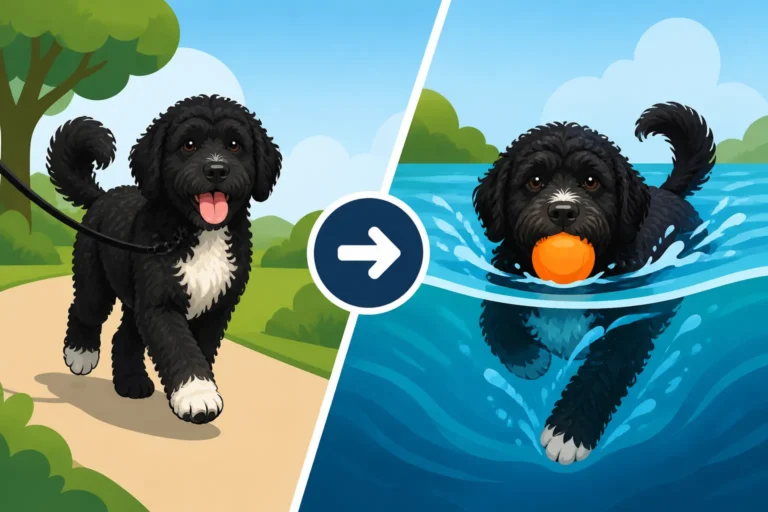
Think about it: a Portuguese Water Dog's joy in retrieving is palpable. They might race into the water, grab the bumper, and swim back, tail wagging furiously. But in a trial, that retrieval needs to be executed cleanly, with the dog entering the water on command, swimming a specific course, making a quick and confident grab, and returning directly to the handler with a proper delivery. The instinctive drive is the engine, but training provides the steering wheel and brakes. It channels that raw enthusiasm into a polished performance, transforming a joyful splash into a demonstration of disciplined aquatic prowess. This is why How Naturally a Portuguese Water Dog Swims is often just the beginning of their journey to water trial competence.
Understanding the Structure of Portuguese Water Dog Water Trials
Water trials are not a free-for-all swim party; they are highly structured events designed to evaluate specific skills and the dog's partnership with its handler. These trials are typically sanctioned by the Portuguese Water Dog Club of America (PWDCA) and follow a progressive system of levels, each building upon the last with increasing complexity and expectation. For a new handler, understanding this structure is the first step toward embarking on this rewarding journey with their PWD.
Different Levels and Titles
Water trials are divided into several progressive levels, each with its own set of exercises and requirements. A dog must successfully pass each level to earn a title before moving on to the next. This tiered system ensures a solid foundation of skills and prevents dogs and handlers from being overwhelmed.
| Title Level | Description of Focus | Key Skills Required |
|---|---|---|
| Water Dog (WD) | Introduction to water work, basic retrieves, and swimming with the handler. | Controlled entry, single retrieve, recall to shore, handler interaction. |
| Water Dog Excellent (WDX) | More complex retrieves, longer distances, and independent work. | Multiple retrieves, directed retrieves, boat work introduction, sustained swimming. |
| Master Water Dog (MWD) | Advanced challenges, intricate scenarios, and problem-solving in and around water. | Blind retrieves, scent discrimination, advanced boat work, multi-dog scenarios. |
| Champion Water Dog (CWD) | Achieved by demonstrating mastery across multiple MWD trials. | Consistent high-level performance under various conditions. |
Each level pushes the team further, asking for more independence from the dog, more precise handling from the human, and a deeper understanding of the commands and objectives. For instance, the Novice level focuses on direct retrieves and handler control, while the Master level might involve retrieving an object the dog has not seen (a blind retrieve) or working from a moving boat, requiring immense trust and clear communication. The commitment to these progressive titles underscores the dedication required from both dog and handler. It's a journey, not a sprint, and many handlers find the incremental progress incredibly satisfying.
The Role of the Portuguese Water Dog Club of America (PWDCA)
The PWDCA plays a pivotal role in establishing, overseeing, and promoting water trials for the breed. They are the guardians of the breed standard, not just in appearance but also in working ability. The club sets the rules, defines the exercises for each level, certifies judges, and maintains records of titles earned. This ensures consistency and fairness across all trials and upholds the integrity of the sport. Without the PWDCA's guidance, these trials would lack standardization and the recognition that makes them so valuable.
Beyond setting the rules, the PWDCA also serves as a fantastic resource for owners interested in water work. They provide educational materials, lists of upcoming trials, and often connect new handlers with experienced mentors. This community aspect is incredibly important, as navigating the world of water trials can be complex. Local PWD clubs, often affiliated with the national organization, also host training workshops and informal practice sessions, which are invaluable for learning the ropes. For anyone serious about pursuing water trials, becoming familiar with the PWDCA's resources and local club activities is an absolute must. They are the central hub for all things related to Portuguese Water Dog water work, from entry-level advice to discussions on how How Many Water Trial Titles a Portuguese Water Dog Can Earn are achieved.
Core Skills Required for Water Trial Success
Succeeding in a water trial means much more than simply having a dog that loves to swim. It requires a carefully cultivated set of skills, encompassing both fundamental obedience and specialized water behaviors. It’s a true test of partnership, where the handler’s communication and the dog’s understanding blend seamlessly in a dynamic aquatic environment.
Foundational Obedience and Control
Before a Portuguese Water Dog can even think about retrieving from a boat or performing complex water tasks, it needs a rock-solid foundation in basic obedience, performed flawlessly on land and around distractions. Imagine a scenario where your dog is supposed to stay put while you walk to the water's edge to throw a bumper, and instead, they launch themselves in with wild abandon. That's a fail. Commands like "sit," "stay," "come," and "heel" are non-negotiable. These commands must hold true even with the irresistible temptation of water just feet away, or with other dogs splashing nearby.
A water trial environment is full of stimuli: other dogs, people, new scents, and the sheer excitement of being at a beautiful body of water. Your dog needs to be able to focus on you, ignore distractions, and execute commands reliably. This level of control isn't built overnight; it comes from consistent, patient training, often starting when the dog is a puppy. Many owners find structured online programs, like those offered by BAXTER & Bella, to be incredibly helpful for building this foundational obedience. They help create a strong communication bond and teach reliable cues that will serve as the backbone for more advanced water training. Without this basic control, advanced water exercises become frustrating and potentially unsafe.
Advanced Water-Specific Behaviors
Once the basic obedience is cemented, the training shifts to water-specific behaviors. This goes beyond just swimming and fetching. A Portuguese Water Dog needs to learn specific cues for entering the water, staying focused on an object, navigating to it, and making a clean retrieve. For instance, in many exercises, the dog needs to wait patiently on the shore, often with a "stay" command, while the handler walks out, throws a bumper, and then gives a specific release cue. The entry into the water should be controlled and purposeful, not a chaotic splash.
Crucially, the dog must learn to deliver the retrieved object directly to the handler's hand, often while standing or sitting politely on the shore or in a boat. This isn't always instinctive; many dogs prefer to drop the item a few feet away or play keep-away. This "delivery to hand" is a skill that requires repetition and positive reinforcement. Furthermore, the dog needs to understand directional commands, learning to go left or right to find an object, or to retrieve a specific item from a group. These nuanced behaviors are what transform a naturally water-loving dog into a precision water worker. You'll often find yourself thinking about Teaching a Portuguese Water Dog to Swim on Cue and how important precision becomes.
Handling and Communication
The handler's role in a water trial is just as critical as the dog's. Effective handling involves clear, consistent communication, both verbal and non-verbal. Your dog needs to understand your cues, whether it’s a spoken command, a hand signal, or even subtle body language. This means you need to be precise with your commands and avoid sending mixed signals. During a trial, you might be giving commands from a distance, or from a boat, so your dog needs to be attuned to you, regardless of the environment.
Beyond giving commands, handling also involves strategic thinking and problem-solving. You might need to adjust your approach based on wind, currents, or the dog's momentary confusion. It's about being a team, reading your dog, and guiding them through the exercise. This strong partnership is built on trust and mutual understanding, developed through countless hours of training and bonding. Many find that Training a Portuguese Water Dog That Was Bred to Think for Itself requires a lot of patience and creativity from the handler, as these dogs are known for their independent intelligence. The relationship formed during this specialized training is often one of the most rewarding aspects of participating in water trials.
Deconstructing the Water Trial Exercises
Water trials are composed of a series of individual exercises, each designed to test specific aspects of a Portuguese Water Dog's natural abilities and trained skills. As handlers and dogs progress through the levels, these exercises become increasingly complex, demanding greater precision, independence, and a deeper bond between dog and owner. Understanding these exercises is key to knowing what you and your PWD will be working towards.
Novice Level Challenges
The Novice Water Dog (WD) level is the entry point, designed to introduce both dog and handler to the formal structure of water trials. It focuses on demonstrating basic retrieve skills, control, and willingness to work in and around water. These exercises are foundational and often involve direct, clear tasks.
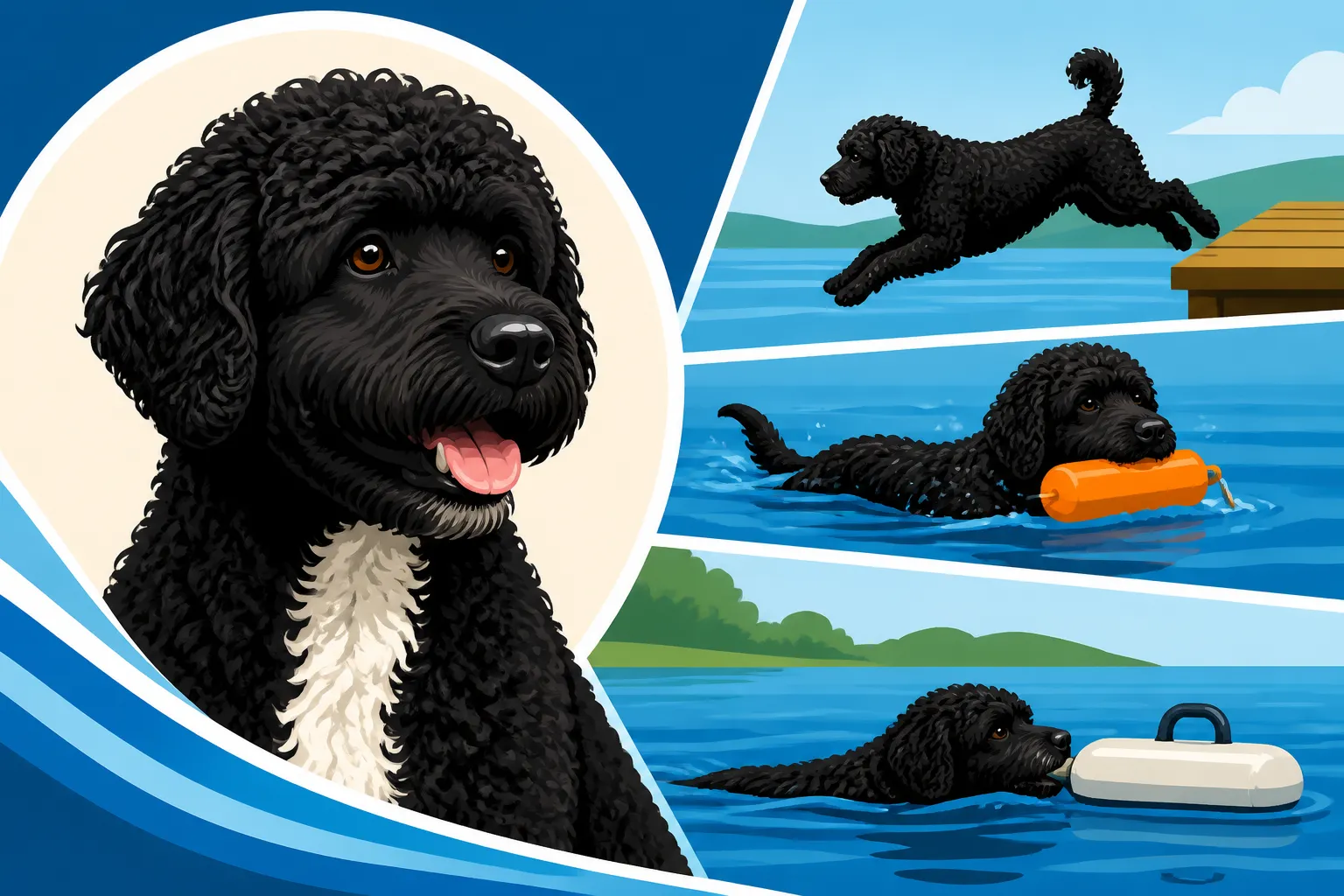
One common Novice exercise is the "Single Retrieve." Here, the dog is typically held on a leash or sits by the handler on the shore. A buoyant retrieve object (often a training bumper, easily found on Amazon) is thrown a moderate distance into the water, and on command, the dog is released to retrieve it. The key here isn't just getting the object, but doing so with enthusiasm and returning directly to the handler, delivering the object to hand. Another important Novice exercise involves the "Controlled Entry and Exit." The dog must wait calmly on the shore, be given a command to enter the water, swim to the handler (who might be in the water or a short distance away), and then, on command, exit the water. This demonstrates that the dog can be controlled even with the excitement of the water. The emphasis is on cooperation and a positive attitude towards water work, building confidence for both dog and handler. It's truly about demonstrating that the dog is comfortable and happy performing basic tasks in the water, without major distractions or complexities.
Junior Level Demands
Once a Portuguese Water Dog has earned its Water Dog (WD) title, it can progress to the Water Dog Excellent (WDX) level. This is where things start to get more interesting, introducing more demanding scenarios and requiring a higher degree of independence and skill. The exercises here build upon the foundation of the Novice level, adding distance, duration, and slight variations.
A typical Junior level exercise might be a "Double Retrieve." Instead of just one object, two are thrown into the water, often in different directions. The dog must then be directed to retrieve them one at a time, or sometimes even retrieve both, demonstrating memory and directional control. This tests the dog's ability to focus and follow commands when multiple appealing objects are present. Another common exercise is "Working from a Boat," where the dog might be asked to sit calmly in a boat as it's rowed a short distance, and then retrieve an object thrown from the boat. This requires the dog to be comfortable with the motion of a boat and to perform a retrieve from an elevated, unstable platform. This step is crucial for embracing the breed's historical role. These tasks demand more sustained focus and a higher level of precision, pushing the team to communicate effectively over longer distances and in more varied situations. How Far a Portuguese Water Dog Can Swim becomes a more relevant factor at this stage.
Senior and Master Level Expectations
The Senior (Master Water Dog – MWD) and Master (Champion Water Dog – CWD) levels represent the pinnacle of water trial achievement. These exercises are complex, multi-faceted, and often simulate real-world working scenarios that demand exceptional skill, problem-solving, and a deep, intuitive partnership between dog and handler. The stakes are higher, and the challenges are designed to truly test the dog's capabilities.
At the Senior level, you might encounter "Blind Retrieves" or "Directed Retrieves" to unseen objects. This means an object is placed in the water or on a hidden bank, and the dog has no visual cue of its location. The handler must then guide the dog using hand signals, whistles, or verbal commands to the correct location for the retrieve. This is a tremendous test of trust, communication, and the dog's ability to take and follow directions at a distance. Another advanced exercise often involves "Scent Discrimination" retrieves, where multiple objects are thrown, but only one carries a specific scent that the dog must identify and retrieve. This mimics a real-world scenario where a fisherman might have lost a specific piece of gear. Master level trials often combine several of these complex elements into a single, flowing routine, requiring sustained mental and physical effort. What a Water Trial Asks of a Portuguese Water Dog at these advanced levels is nothing short of incredible, showcasing the breed's intelligence, athleticism, and the extraordinary bond forged through dedicated training.
Preparing Your Portuguese Water Dog for Competition
Embarking on the journey of water trials with your Portuguese Water Dog is an incredibly rewarding experience, but it requires significant preparation. It's not just about showing up at the event; it's about a consistent, long-term commitment to training, safety, and understanding your dog.
Building a Strong Foundation Through Training
The importance of foundational training cannot be overstated. Before your PWD ever sets foot (or paw) in a trial, they need excellent basic obedience. This includes a reliable recall, a solid "stay" command, and attentive heeling, all performed in various environments and with distractions. These are the building blocks. You'll want to practice these commands not just in your backyard, but also at local parks, by bodies of water, and around other dogs. The more proofing you do, the more confident your dog will be in a busy trial setting. Resources like online training programs, such as BAXTER & Bella, can provide structured lessons that systematically build these critical skills.
Once basic obedience is strong, you can gradually introduce water-specific training. Start with simple retrieves in calm, shallow water, making it a fun and positive experience. Gradually increase distance and add complexity, moving to deeper water, introducing different retrieve objects, and eventually working on more complex scenarios. It's crucial to break down each trial exercise into smaller, manageable steps. For example, if an exercise involves a boat retrieve, first get your dog comfortable getting in and out of a boat on land, then in calm water, then practice the retrieve without the added complexity of movement. Consistency is key here; short, frequent training sessions are far more effective than infrequent, long ones. Remember, The Age a Portuguese Water Dog Can Start Swimming is often quite young, but formal training takes time and maturity.
Essential Equipment and Safety Considerations
Just like any sport, water trials require specific equipment to ensure both effectiveness and safety. For training, you'll want high-quality, buoyant retrieve dummies. These are often made of rubber or canvas and are designed to float well and be easy for your dog to spot and grab. Investing in a variety of these, which you can easily find on Amazon, can keep your training fresh. A good long line or training leash is also essential for practicing recalls and ensuring control in open water, especially when your dog is still learning. A life jacket for your dog is also a wise investment, particularly when training in deeper or more turbulent waters, or when working from a boat. Even the strongest swimmers can tire, and a life jacket provides an extra layer of safety.
Safety extends beyond just equipment. Always choose safe training locations: calm waters free of strong currents, heavy boat traffic, or dangerous debris. Be mindful of water quality and temperature; cold water can quickly lead to hypothermia, and stagnant water can harbor harmful bacteria. Always rinse your dog thoroughly after swimming in chlorine or saltwater, and pay special attention to their ears to prevent infections, as discussed in How Often a Swimming Portuguese Water Dog Needs Ear Cleaning. Hydration is also crucial; bring plenty of fresh water for your dog, as they can still get dehydrated even while swimming. Finally, always have a first-aid kit readily available, both for yourself and your dog.
The Importance of Consistency and Practice
Success in water trials is a marathon, not a sprint. It demands consistent effort and regular practice from both handler and dog. You can't just train sporadically and expect to perform well. Water work requires muscle memory, stamina, and mental focus, all of which are built through consistent repetition. This means dedicating specific time each week to training sessions, even if they are short. Regular practice helps solidify commands, builds confidence in the water, and strengthens the bond between you and your PWD.
Beyond formal training sessions, incorporate elements of water work into your dog's daily life. Play retrieve games in a kiddie pool, practice "stays" near a water source, or take regular swims that involve directed retrieves. This makes learning fun and reinforces the skills in a low-pressure environment. It also helps your dog stay physically fit and mentally engaged, both crucial for trial success. Remember, water trials are about demonstrating a partnership, and that partnership is continually refined through shared experiences and consistent effort. Many PWD owners will attest that Why a Portuguese Water Dog Needs a Job is perfectly fulfilled through the dedication to water work.
The Rewards of Competing in Water Trials
Participating in Portuguese Water Dog water trials is more than just about earning titles; it's a profoundly enriching experience that offers a myriad of benefits to both dog and handler. The journey itself, filled with challenges and triumphs, fosters a unique bond and celebrates the very essence of this magnificent breed.
Strengthening the Dog-Handler Bond
There's something truly magical about working in sync with your Portuguese Water Dog, especially in an environment as dynamic as water. Water trials demand absolute trust, clear communication, and a deep understanding of each other's cues. Every successful retrieve, every perfectly executed command from a distance, reinforces that incredible connection. You learn to read your dog's subtle signals – their excitement, their confusion, their determination – and they, in turn, learn to rely implicitly on your guidance. This shared experience of overcoming challenges together, of celebrating small victories, forges an unbreakable bond that extends far beyond the trial grounds. It's a partnership where both members are invested, and the mutual respect and affection deepen with every splash and every successful retrieve. This deepens the relationship much like What a Portuguese Water Dog Needs Every Day for their overall well-being.
Celebrating the Breed's Heritage and Abilities
For many Portuguese Water Dog enthusiasts, water trials are a living tribute to the breed's rich history. It's a tangible way to honor the legacy of those working dogs who served alongside fishermen for centuries. Watching a PWD confidently dive into the water, expertly navigate to a retrieve, and return with purpose is a powerful reminder of their incredible genetic heritage. These trials ensure that the innate working abilities, intelligence, and physical prowess that define the breed are not only preserved but also celebrated and continuously developed. It's a way of saying, "We remember what you were bred for, and we value those traits."
Furthermore, water trials provide an excellent outlet for the PWD's abundant energy and keen intelligence. These dogs thrive on having a job, on being challenged both physically and mentally. The complex problem-solving involved in deciphering a blind retrieve or navigating a challenging current provides immense mental stimulation. The vigorous swimming and retrieving offer unparalleled physical exercise. It's a sport that allows a Portuguese Water Dog to truly be themselves, fulfilling their deepest instincts in a structured and rewarding way. It's why many owners agree with Whether the Portuguese Water Dog Is a Healthy Breed because they thrive when active.
The Community and Personal Growth
Beyond the individual achievements, water trials introduce you to a vibrant community of fellow Portuguese Water Dog owners and enthusiasts. This network provides invaluable support, shared knowledge, and camaraderie. You'll find mentors eager to offer advice, friends to celebrate with, and a collective passion for these incredible dogs. The spirit of sportsmanship is strong, and handlers often cheer each other on, sharing tips and encouragement. This sense of belonging is a huge part of the appeal of water trials.
For the handler, water trials also offer a profound journey of personal growth. You learn patience, perseverance, and adaptability. You develop your training skills, improve your communication, and become more attuned to your dog's needs and capabilities. There will be setbacks and frustrations, but overcoming them builds resilience and a deeper appreciation for the effort involved. The sense of accomplishment when you and your PWD earn a title, knowing the hard work and dedication that went into it, is truly immeasurable. It's a testament to the power of teamwork and the incredible potential that lies within every Portuguese Water Dog.
Disclaimer
This article is for general informational purposes only and does not constitute professional advice. Laws, prices and regulations vary by location and change over time. Consult a qualified professional for guidance on your specific situation.