How Narrow the Portuguese Water Dog Gene Pool Is
It's a common concern for anyone deeply invested in the health and future of their beloved Portuguese Water Dog: the whispered worry about a "narrow gene pool." This isn't just some abstract scientific concept; it directly impacts the vitality and longevity of our wonderful companions, raising real questions about genetic health and breed diversity. This comprehensive guide will meticulously explore what a narrow gene pool truly means for Portuguese Water Dogs, delve into the historical factors that shaped it, examine its practical implications on their health, and discuss the proactive steps breeders and owners are taking to safeguard the breed's future.
Unpacking the Concept of a Narrow Gene Pool in Portuguese Water Dogs
When we talk about a "narrow gene pool," it sounds a bit like a scientific jargon phrase, but it truly boils down to something quite simple and impactful for our dogs. Imagine a large library filled with countless different books – that's a broad gene pool, offering a vast array of genetic information. Now, imagine a tiny bookshelf with only a handful of titles, and many of them are copies of the same few books. That's a narrow gene pool. For Portuguese Water Dogs, this means that the genetic variations within the breed are somewhat limited, largely due to historical events that drastically reduced their numbers.
What "Narrow Gene Pool" Really Means for PWDs
A narrow gene pool essentially indicates a lack of genetic diversity. In a healthy, robust population, there's a wide variety of genes and gene combinations. This diversity acts like a natural buffer against disease; if one dog has a genetic predisposition to a certain ailment, others in the broader pool might not, ensuring the survival and health of the species as a whole. However, when the gene pool becomes narrow, there's less variation. This means that if a particular undesirable gene or mutation exists, it's more likely to be widespread throughout the population because fewer unique genetic alternatives are available to dilute its impact.
This phenomenon often leads to what geneticists call the "founder effect" or "bottlenecks." The Portuguese Water Dog breed, unfortunately, experienced both. The founder effect occurs when a new population is established by a very small number of individuals. These "founders" carry only a fraction of the genetic diversity of the original population, and whatever genes they possess – good or bad – become overrepresented in the new, smaller population. A bottleneck occurs when a population undergoes a drastic reduction in size, and then recovers. The recovered population carries only the genetic diversity that survived the bottleneck, which is often far less than before the crash. Both of these scenarios mean that the PWD population today is built upon a relatively small set of ancestral genes.
Historical Factors Leading to the PWD's Gene Pool
The story of the Portuguese Water Dog's gene pool is inextricably linked to the breed's near extinction. These incredible dogs were once indispensable partners to fishermen along the coast of Portugal, performing vital tasks like herding fish into nets, retrieving lost gear, and carrying messages between boats. They were hardy, intelligent, and perfectly adapted to life at sea. However, with the advent of modern fishing technology, particularly engine-powered boats, their traditional roles diminished significantly.
By the early 20th century, particularly in the 1930s, the breed's numbers plummeted drastically. It's estimated that there were only a handful of Portuguese Water Dogs left in their native Portugal. This critical period represents a severe genetic bottleneck. Without dedicated individuals stepping in, the breed would have vanished entirely. The survival of the Portuguese Water Dog is largely credited to Vasco Bensaude, a wealthy Portuguese shipping magnate, who took a keen interest in preserving the breed. He began to gather the remaining dogs and established the Algarbiorum kennel, which became instrumental in the breed's recovery. Along with Dr. Frederico Pinto Basto, Bensaude laid the groundwork for the modern PWD. This small group of surviving dogs, and the offspring they produced, became the foundation stock for virtually all Portuguese Water Dogs alive today. While their efforts were heroic and successful in preventing extinction, they also inherently limited the genetic diversity of the re-established breed. Every Portuguese Water Dog alive today can trace its ancestry back to this relatively small pool of surviving individuals, creating the narrow gene pool we discuss.
The Impact of a Restricted Gene Pool on Portuguese Water Dog Health
The consequences of a restricted gene pool aren't just theoretical; they manifest in the health challenges that breeders and owners sometimes face. While Portuguese Water Dogs are generally considered a robust and healthy breed, the legacy of their near-extinction means they are more susceptible to certain hereditary conditions. This isn't a fault of the dogs themselves, but a direct result of the genetic inheritance passed down through generations.
Increased Prevalence of Genetic Diseases
When a gene pool is narrow, recessive genes that might otherwise be rare and hidden become more common. This increases the likelihood that two carriers of a problematic recessive gene will be bred together, resulting in affected offspring. For Portuguese Water Dogs, several genetic diseases have become more prevalent due to this phenomenon.
Consider conditions like Juvenile Dilated Cardiomyopathy Kills a Portuguese Water Dog Puppy Fast. This devastating heart condition, thankfully rare now due to widespread testing, would cause seemingly healthy puppies to die suddenly at a young age. Similarly, GM1 Gangliosidosis and the Portuguese Water Dog Puppy That Never Reaches Six Months is a neurological storage disease that is always fatal. Both of these are autosomal recessive conditions, meaning a puppy must inherit a copy of the faulty gene from both parents to be affected. The narrow gene pool meant these genes, present in some of the original founding stock, became more widely distributed.
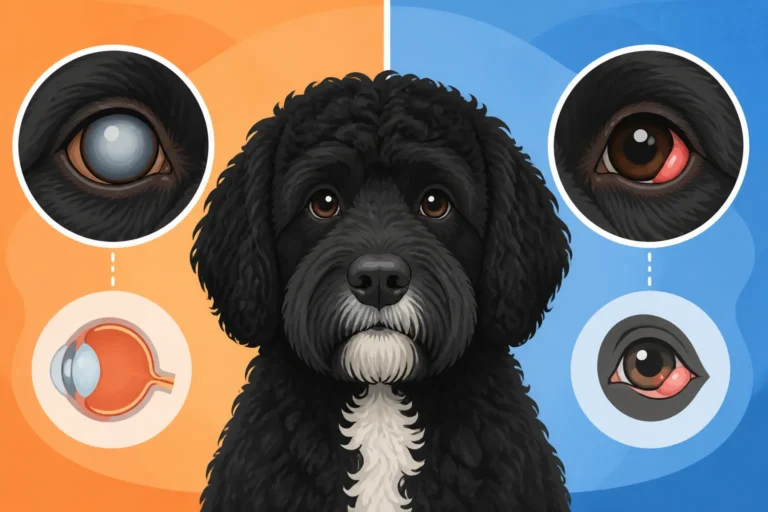
Eye diseases are another area of concern, particularly the forms of progressive retinal atrophy (PRA). We often talk about Two Kinds of Retinal Atrophy in a Portuguese Water Dog: prcd-PRA and EOPRA (Early Onset PRA). Both lead to blindness, and like JDCM and GM1, they are inherited recessively. Owners often ask whether a Portuguese Water Dog goes fully blind, and sadly, with these conditions, they do.
Addison's Disease Is Common in Portuguese Water Dogs, an autoimmune disorder affecting the adrenal glands, also appears with higher frequency in the breed. While its exact genetic mode of inheritance is still being fully researched, its prevalence suggests a genetic component exacerbated by limited diversity. These are just a few examples, but they highlight the very real health implications that arise when genetic options are limited.
Challenges for Breeders in Maintaining Health
Responsible breeders are at the forefront of the fight to mitigate the effects of a narrow gene pool. Their work is incredibly complex and requires a deep understanding of genetics, health testing, and breed lines. They face difficult decisions every day. One of the primary challenges is trying to breed out undesirable traits or diseases without further constricting the gene pool. If a breeder automatically removes every carrier of a genetic disease from the breeding program, they risk reducing genetic diversity even further, potentially leading to the emergence of new health issues down the line.
Instead, the approach generally adopted by ethical breeders is careful, selective breeding. For recessive conditions where DNA tests are available, like JDCM, GM1, and both forms of PRA, breeders can test their dogs to identify carriers. This allows them to make informed decisions, ensuring that a carrier is only bred to a clear (non-carrier) dog. This way, no affected puppies are produced, and the valuable genetic contribution of the carrier dog is not lost to the gene pool. This balanced approach is crucial for genetic preservation. For conditions like Addison's, where DNA tests are not yet available, breeders rely on pedigree analysis, shared databases, and collaboration to identify lines with a higher incidence and make breeding decisions accordingly. The goal is always to improve health outcomes while maintaining as much genetic diversity as possible.
Strategies for Widening and Managing the Portuguese Water Dog Gene Pool
Despite the historical challenges, the Portuguese Water Dog community is highly dedicated to the breed's health and future. Through scientific advancements, diligent breeding practices, and collaborative efforts, significant strides are being made to manage and, where possible, expand the genetic diversity of these wonderful dogs.
The Role of Health Testing and Responsible Breeding
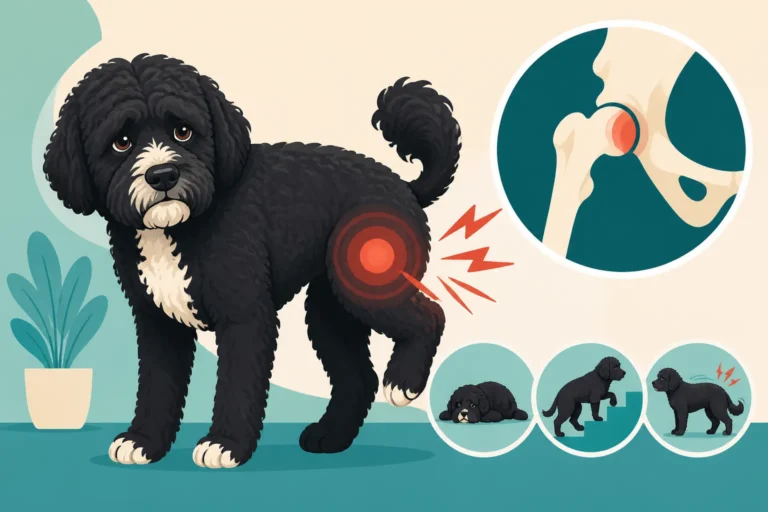
The cornerstone of managing a breed with a limited gene pool is comprehensive health testing. For Portuguese Water Dogs, this means running a panel of genetic tests to screen for the most prevalent hereditary diseases. A truly responsible breeder will ensure that all their breeding stock undergoes these tests before any mating occurs. The Four DNA Tests Every Portuguese Water Dog Breeder Runs typically include tests for JDCM, GM1, and both forms of PRA. Additionally, hip and elbow evaluations (e.g., through OFA or PennHIP) are critical to assess for Hip Dysplasia in a Portuguese Water Dog and Elbow Dysplasia in a Portuguese Water Dog, common orthopedic issues in many medium-to-large breeds. Eye examinations by a board-certified veterinary ophthalmologist (CERF exams) are also part of the routine, alongside cardiac screenings to monitor for heart health.
These tests provide invaluable information, allowing breeders to make educated pairings. By understanding the genetic makeup of their dogs, breeders can avoid producing affected puppies and can strategically use carriers in breeding programs, always pairing them with clear mates, to preserve valuable genetic lines without spreading disease. This meticulous approach helps to reduce the incidence of genetic diseases over time while slowly and carefully widening the available genetic options.
Collaborative Efforts in Breed Preservation
No single breeder can tackle the challenge of a narrow gene pool alone. It requires a concerted, collaborative effort across the entire breed community. Breed clubs, such as the Portuguese Water Dog Club of America (PWDCA), play a crucial role in promoting health testing, funding research into breed-specific diseases, and maintaining health databases. Organizations like the Canine Health Information Center (CHIC) work in partnership with parent clubs to establish a recommended set of health screenings for specific breeds. By requiring breeders to submit results for all recommended tests to a central, publicly accessible database, CHIC ensures transparency and provides a valuable resource for both breeders and prospective owners. This kind of open data sharing allows breeders to identify health trends, avoid over-reliance on popular sires that might carry undesirable genes (the "popular sire syndrome"), and make more diverse breeding choices.
International collaboration is also vital. Given the global nature of dog breeding, sharing genetic information and breeding strategies with PWD clubs in other countries helps to pool resources and diversify the overall gene pool, preventing local bottlenecks. This interconnected network of dedicated individuals and organizations is essential for the long-term health and viability of the Portuguese Water Dog.
Here's a look at some of the key hereditary conditions and how testing helps:
| Condition | Type of Test | Impact if Untested | Breeder Action |
|---|---|---|---|
| Juvenile Dilated Cardiomyopathy (JDCM) | DNA Swab (recessive) | Sudden death of seemingly healthy puppies (typically 4-6 weeks old). | Test all breeding dogs; breed carriers only to clear mates. |
| GM1 Gangliosidosis | DNA Swab (recessive) | Progressive neurological disease, fatal by 6 months of age. | Test all breeding dogs; breed carriers only to clear mates. |
| Progressive Retinal Atrophy (prcd-PRA & EOPRA) | DNA Swab (recessive) | Progressive blindness, often starting in adolescence or early adulthood. | Test all breeding dogs; breed carriers only to clear mates. |
| Addison's Disease | No DNA Test (complex inheritance) | Life-threatening adrenal insufficiency; "The Great Pretender" due to varied symptoms. | Screen pedigrees, avoid breeding affected dogs or those with strong family history. |
| Hip Dysplasia | X-rays (OFA/PennHIP) | Pain, arthritis, lameness, costly surgery. | Only breed dogs with excellent or good hip ratings. |
| Elbow Dysplasia | X-rays (OFA) | Pain, arthritis, lameness, costly surgery. | Only breed dogs with normal elbow ratings. |
| Eye Certification (CERF) | Veterinary Opthalmologist Exam | Detects various eye conditions not covered by DNA tests (e.g., cataracts, distichiasis). | Annual eye exams for breeding stock; avoid breeding affected dogs. |
The Future of the PWD Gene Pool
The efforts of dedicated breeders, scientists, and breed clubs offer a hopeful outlook for the Portuguese Water Dog's gene pool. While it will likely always remain narrower than that of breeds with larger, more diverse founding populations, ongoing responsible practices can significantly mitigate the associated risks. The continuous development of new DNA tests allows for greater precision in breeding decisions. Furthermore, open sharing of health data, often managed by registries like Orthopedic Foundation for Animals (OFA) which is where Which Registry Holds Portuguese Water Dog Health Results, fosters a community-wide commitment to health.
Prospective owners also have a vital role to play. By seeking out breeders who are transparent about their health testing, willing to discuss pedigrees, and prioritize the long-term well-being of the breed, you support the very practices that protect the PWD's genetic health. Don't be shy about asking a breeder to show you the results of Which Health Tests a Portuguese Water Dog Breeder Should Run. Understanding the genetic history of a puppy's parents provides peace of mind and empowers you to make an informed choice. Owning a Portuguese Water Dog is a commitment, and being prepared for potential health needs, perhaps by exploring pet insurance options like those offered by Healthy Paws, can provide an essential safety net for any unforeseen circumstances.
Living with a PWD and Navigating Genetic Concerns
Bringing a Portuguese Water Dog into your life is an absolute joy. They are intelligent, energetic, and incredibly loving companions. While the discussion about gene pools and genetic diseases can seem daunting, it's about being informed and proactive, not living in fear. The vast majority of PWDs live full, healthy lives.
Advocating for Your PWD's Health
As an owner, you are your dog's primary advocate. This means staying informed, maintaining regular veterinary care, and understanding your dog's individual health history. Knowing that the breed has a predisposition to certain conditions helps you be more vigilant. For example, understanding that Addisons Disease Is Common in Portuguese Water Dogs might prompt you to recognize subtle, non-specific symptoms earlier, leading to a quicker diagnosis and treatment.
Regular wellness exams with your veterinarian are crucial. Discuss your dog's pedigree and the health testing performed on its parents with your vet. This can help them tailor a preventative care plan specific to your PWD's potential risks. If you ever have concerns about your dog's health, don't hesitate to seek veterinary attention. Early diagnosis is often key to managing many conditions effectively. Having a robust pet insurance policy, such as those provided by Healthy Paws, can significantly ease the financial burden of unexpected illnesses or chronic conditions, allowing you to focus on getting your dog the best care possible without compromise.
Making Informed Choices
For those considering adding a Portuguese Water Dog to their family, making an informed choice starts with selecting a responsible breeder. A reputable breeder will not only perform extensive health testing but will also be transparent about the results, willing to discuss the health history of their lines, and happy to answer all your questions. They will also likely belong to the national breed club and adhere to its code of ethics, which often includes rigorous health testing requirements. Look for breeders who openly share information and are deeply committed to the long-term health and temperament of their dogs.
Remember, the goal isn't to find a "perfect" dog with no genetic predispositions – that's often impossible in any purebred. Instead, it's about finding a dog from a breeding program that has taken every reasonable step to minimize known risks and maximize genetic health. It's about ensuring your new family member comes from parents who have been carefully selected, thoroughly tested, and thoughtfully bred to contribute to the overall health of the breed. With diligent breeding practices and informed ownership, the Portuguese Water Dog can continue to thrive as a beloved companion for many years to come.
Disclaimer
Please remember that this article is intended for informational purposes only and does not constitute veterinary advice. Always consult with a qualified veterinarian for any health concerns or before making any decisions about your pet's health or treatment.