Osteochondritis in a Portuguese Water Dog
It can be incredibly disheartening to watch your lively, energetic Portuguese Water Dog puppy, full of boundless enthusiasm for life and the water, suddenly start showing signs of discomfort or lameness. You expect puppy antics and training challenges, but certainly not a mysterious limp that comes and goes, or a reluctance to play. This guide aims to demystify one such condition, osteochondritis dissecans (OCD), giving you the clarity and practical advice you need to understand, identify, and manage this developmental orthopedic issue in your beloved PWD.
What Exactly Is Osteochondritis Dissecans OCD in Portuguese Water Dogs?
Osteochondritis Dissecans, often shortened to OCD, sounds like a mouthful, but at its heart, it's a developmental orthopedic disease. This means it’s a condition that arises during the rapid growth phase of a puppy, rather than being an injury that occurs later in life, though an injury can certainly aggravate an existing, underlying problem. For a Portuguese Water Dog, a breed known for its athleticism and vigor, understanding this condition is key to their long-term well-being.
The Basics of This Developmental Bone Disorder
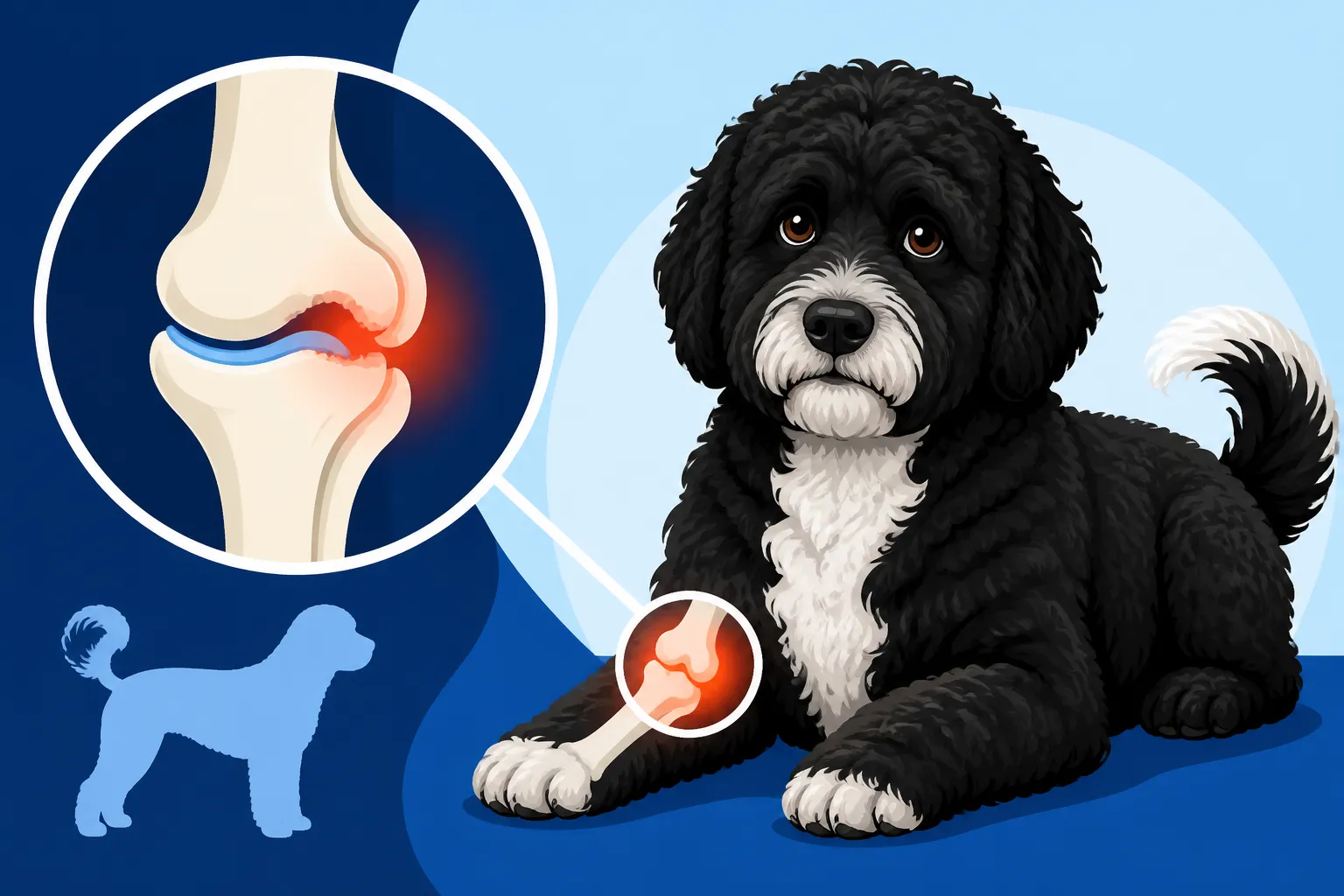
At its core, OCD is a disturbance in the normal process by which cartilage converts into bone, a process called endochondral ossification. In a healthy, growing puppy, cartilage in the joints gradually transforms into strong bone. With OCD, this process goes awry in specific areas. Instead of orderly bone formation, a thick, abnormal flap of cartilage develops. This flap isn't properly attached to the underlying bone. Imagine a piece of wallpaper that hasn't fully adhered to the wall and starts to peel away. The same sort of thing happens in the joint.
This abnormal cartilage flap can then begin to crack, fissure, or even fully detach from the bone beneath it. When it detaches, it floats freely within the joint capsule, becoming what veterinarians sometimes call a "joint mouse." This detached piece of cartilage, along with the exposed, irritated bone underneath, causes inflammation, pain, and restricted movement. It’s a truly uncomfortable situation for any dog, but especially for an active breed like the Portuguese Water Dog, who thrives on movement and activity. The pain can be constant or intermittent, and it often worsens with exercise.
Why Certain Joints Are More Susceptible
While OCD can technically occur in any joint, there are certainly preferred "hot spots" where it shows up most frequently in dogs, including our Portuguese Water Dogs. The most common site is by far the shoulder joint. If your PWD is experiencing forelimb lameness, the shoulder is usually the first place a vet will investigate for OCD. Other joints that are often affected include the elbow, the stifle (which is essentially the knee joint in dogs), and the hock (the equivalent of an ankle joint).
The reason these specific joints are more susceptible largely comes down to the mechanics of growth and weight-bearing. Joints that experience a lot of stress during rapid growth, or that have complex anatomical structures, are more prone to this cartilage development error. It's a cruel twist of fate that the very joints crucial for a Portuguese Water Dog's active lifestyle – their powerful shoulders for swimming, their strong elbows for navigating uneven terrain – are the ones most often impacted by this condition. The resulting discomfort can severely limit their ability to enjoy activities like swimming, retrieving, or dock diving, which are so central to their breed identity.
The Role of Genetics, Nutrition, and Growth
It’s never just one thing, is it? When it comes to OCD in Portuguese Water Dogs, we’re looking at a complex interplay of several factors. Genetics definitely play a significant role. While there isn't one single "OCD gene" identified in the same way we have for How JDCM Is Inherited in Portuguese Water Dogs or Which Gene Causes Improper Coat in a Portuguese Water Dog, there is a clear hereditary component. This means that certain lines or families of Portuguese Water Dogs may be predisposed to developing OCD. Responsible breeders are keenly aware of this and strive to select breeding stock with sound joint health histories, though the multifactorial nature of the disease makes it challenging to eradicate entirely.
Beyond genetics, nutrition, especially during that critical rapid growth phase, is incredibly important. Over-nutrition, particularly diets that are too high in calories or have an improper calcium-to-phosphorus ratio, can contribute to the development of OCD. When a puppy grows too fast, their bones and cartilage may not develop uniformly or strongly enough, leading to weaknesses. This is why many breeders and veterinarians advocate for feeding large-breed specific puppy foods that promote slower, more controlled growth, rather than trying to bulk up a puppy quickly. What a Portuguese Water Dog Puppy Should Grow Slowly is a concept worth understanding deeply.
Lastly, the sheer speed of growth in medium to large breeds like the Portuguese Water Dog is a contributing factor. PWDs grow from tiny, fluffy puppies into muscular, agile adults in a relatively short period. This rapid expansion of bone and cartilage creates windows of vulnerability where developmental issues like OCD can manifest. While you can't stop your puppy from growing, you can manage their diet and exercise to support healthy growth, mitigating some of the environmental triggers that can exacerbate genetic predispositions.
Spotting the Signs: How to Tell if Your PWD Has OCD
Detecting osteochondritis dissecans in your Portuguese Water Dog can be tricky because our intelligent and stoic PWDs often try to hide their discomfort. However, there are typically signs, both subtle and overt, that keen owners can pick up on. Early detection is always best for managing any health issue, so knowing what to look for is crucial.
Subtle Hints and Overt Lameness
Often, the first signs of OCD in a Portuguese Water Dog are subtle. You might notice your puppy, typically between 4 to 12 months of age, exhibiting a slight stiffness, particularly after a long nap or getting up in the morning. They might be a little hesitant to jump into the car, or perhaps they're not quite as enthusiastic about their usual vigorous games of fetch. This intermittent lameness, which might seem to come and go, is a classic presentation. One day they seem fine, the next they're limping slightly, especially after a particularly active play session. It's easy to dismiss these early signs as just "growing pains" or a minor bump, but it's essential to pay attention.
As the condition progresses, the lameness usually becomes more consistent and pronounced. If the shoulder is affected, you'll see a characteristic head-bobbing gait to shift weight off the painful limb. An elbow issue might lead to a shorter stride and outward rotation of the paw. For a breed like the PWD, which has an incredible drive to work and play, a noticeable decrease in their usual activity level is a huge red flag. They might still want to swim or retrieve, but their body just isn't cooperating. In some cases, OCD can affect both limbs (bilateral), which can make lameness harder to pinpoint, as the dog may simply look stiff or reluctant to move rather than clearly limping on one leg. This can make it feel like your dog is trying to tell you something is wrong, but you can't quite put your finger on it.
Behavioral Changes That Might Indicate Pain
Beyond the physical limp, your Portuguese Water Dog might display several behavioral changes that signal they are in pain. As mentioned, PWDs are known for their resilience and tendency to "tough it out," which means they often hide pain until it becomes quite severe. However, even the most stoic PWD will show changes if you observe closely. They might become more withdrawn or less interested in interactions with family members or other pets. A dog who usually greets you with an exuberant leap might start doing so more gently, or not at all. You might notice them favoring a certain position when lying down, or shifting their weight frequently to find comfort.
Their appetite might decrease, or they might seem unusually tired. Some dogs become more irritable or even snap if touched in a sensitive area. For a Portuguese Water Dog, who typically loves to be involved in everything, a sudden aversion to being handled or groomed could be a strong indicator of pain. Be mindful of their reactions when you touch or examine their legs and joints during your regular grooming routine. If they flinch, whine, or pull away, it's definitely time for a vet visit. Remember, a PWD's thick coat can also make it difficult to spot muscle atrophy that might occur if they're not using a limb properly, underscoring the importance of observing their behavior and movement patterns. Always be mindful that How a Portuguese Water Dog Hides Pain can be quite subtle.
Differentiating OCD from Other Joint Issues
The symptoms of OCD – lameness, stiffness, pain – aren't unique to this condition, which can make initial diagnosis challenging for owners. Other common orthopedic issues in Portuguese Water Dogs, such as Hip Dysplasia in a Portuguese Water Dog or Elbow Dysplasia in a Portuguese Water Dog, can present with very similar signs, especially in growing puppies. For example, a young PWD with hip dysplasia might also show hindlimb lameness and reluctance to jump. Elbow dysplasia, like OCD, is a developmental issue affecting the front limbs and can cause stiffness and pain.
Even less serious conditions like sprains or muscle strains from over-exertion can mimic the early signs of OCD. This is precisely why a professional veterinary diagnosis is absolutely essential. Trying to self-diagnose based on symptoms alone can lead to missed opportunities for early intervention or even incorrect treatment. Your veterinarian has the expertise and diagnostic tools to differentiate between these conditions, ensuring your PWD receives the correct and most effective care. It's not about being a hypochondriac pet parent; it's about being a diligent one.
Getting a Diagnosis and Understanding Treatment Pathways for OCD
Once you suspect your Portuguese Water Dog might be suffering from OCD, the next crucial step is getting an accurate diagnosis. This often involves a thorough physical examination followed by imaging. The good news is that once diagnosed, there are clear treatment pathways, ranging from conservative management to surgical intervention, each with its own recovery process and prognosis.
The Diagnostic Process: From Exam to X-rays
Your journey to diagnosis will start with a visit to your veterinarian. They will conduct a comprehensive physical examination, carefully observing your Portuguese Water Dog's gait and posture. They'll likely palpate (gently feel) all the major joints, checking for swelling, warmth, and pain response. They'll also assess the range of motion in each joint. For instance, if the shoulder is suspected, they might gently extend and flex the limb, looking for discomfort or clicking sounds. Your PWD’s stoicism might make this challenging, but a skilled vet can often pinpoint areas of sensitivity.
The definitive diagnostic tool for OCD is radiography, commonly known as X-rays. Your vet will take specific views of the affected joint(s), often requiring sedation to ensure the dog is still and the images are clear. These X-rays will help them visualize the cartilage flap and any bone changes underneath. Sometimes, however, the cartilage flap might not be clearly visible on standard X-rays, especially in very early stages. In such cases, or if the diagnosis remains ambiguous, more advanced imaging techniques like a CT (computed tomography) scan might be recommended. A CT scan provides much more detailed, cross-sectional images of the joint and can definitively show the extent of the cartilage lesion and any detached fragments. This is a vital step in confirming OCD and ruling out other conditions. For more on this, you might find When a Portuguese Water Dog Should Be X Rayed helpful.
Non-Surgical Management and When It's Appropriate
For some Portuguese Water Dogs with mild cases of OCD, particularly if the cartilage flap is small and not fully detached, a non-surgical approach might be considered. This conservative management focuses on reducing pain and inflammation, and allowing the joint to heal as much as possible without invasive procedures. The cornerstone of non-surgical treatment is strict rest. This means limiting all strenuous activity, no running, jumping, or excessive play, often for several weeks or even months. This can be incredibly challenging for an active breed like a PWD, so creative ways to keep them mentally stimulated without physical exertion are key.
Alongside rest, medication plays a vital role. Non-steroidal anti-inflammatory drugs (NSAIDs) will be prescribed to manage pain and reduce inflammation. Your vet might also recommend joint supplements, such as glucosamine and chondroitin, which can help support cartilage health, or even omega-3 fatty acids for their anti-inflammatory properties. Physical therapy, once the initial pain subsides, can also be beneficial, helping to maintain muscle mass and joint flexibility without putting undue stress on the healing joint. Non-surgical management is generally considered for younger, smaller lesions, or when surgery is not an option due to other health concerns or financial constraints. Pet insurance, such as through providers like Healthy Paws, can be a real lifeline here, helping to cover the costs of diagnostics, medications, and physical therapy, making these options more accessible.
Surgical Interventions for Removing Cartilage Flaps
When conservative management isn't successful, or if the OCD lesion is large, causes significant lameness, or has a fully detached cartilage flap, surgical intervention is usually the recommended course of action. The primary goal of surgery is to remove the diseased cartilage flap and debride (clean up) the underlying bone, promoting the formation of new, more stable fibrocartilage. This helps alleviate pain and improves joint function.
There are two main surgical approaches. The first, and often preferred method for certain joints like the shoulder, is arthroscopy. This is a minimally invasive technique where a small camera and specialized instruments are inserted into the joint through tiny incisions. This allows the surgeon to visualize the joint structures, remove the flap, and debride the bone with less trauma to the surrounding tissues, leading to faster recovery times and less post-operative pain. The second method is an open arthrotomy, which involves a larger incision to gain direct access to the joint. While more invasive, it's sometimes necessary for larger or more complex lesions, or in specific joint locations. After surgery, a period of strict rest, followed by controlled, gradual exercise and physical therapy, is critical for a successful outcome. The recovery can be lengthy, requiring dedication from the owner, but the long-term prognosis for many PWDs after successful surgery is quite good, allowing them to return to a full, active life.
Living with and Preventing OCD in Your Portuguese Water Dog
Bringing a Portuguese Water Dog into your life means committing to their health and well-being, especially when dealing with developmental conditions like OCD. While surgery can be a significant step, the journey doesn't end there. Long-term care and proactive prevention strategies are vital for ensuring your PWD lives their best, most comfortable life.
Post-Surgery Care and Rehabilitation
The period immediately following OCD surgery is absolutely critical for your Portuguese Water Dog's recovery. You'll be given very specific instructions by your veterinary surgeon, and adhering to them meticulously is paramount. This usually involves a strict regimen of crate rest or confined activity for several weeks to allow the surgical site to heal properly and prevent any undue stress on the joint. Imagine trying to keep a high-energy PWD quiet – it's a test of patience, but vital for success! This might mean short, leashed potty breaks only, and no running, jumping, or playing.
As healing progresses, your vet will guide you through a controlled and gradual return to activity. This often involves a structured physical rehabilitation program, which can include passive range of motion exercises, gentle massage, hydrotherapy (which PWDs often love and can be excellent for low-impact muscle building), and specific strengthening exercises. These sessions are crucial for rebuilding muscle mass that may have atrophied, improving joint flexibility, and ensuring proper gait mechanics. Medications, such as anti-inflammatories and pain relievers, will likely continue for a period, and long-term joint supplements like glucosamine and chondroitin may be recommended to support ongoing joint health. The goal is not just to recover from surgery, but to optimize joint function and prevent future issues. The costs associated with rehabilitation and long-term joint support can add up, so having a pet insurance plan like those offered by Healthy Paws in place can significantly ease the financial burden.
Nutritional and Exercise Strategies for Prevention
While genetics play a role, lifestyle choices can significantly influence whether a predisposed Portuguese Water Dog develops OCD, and to what severity. One of the most impactful preventive measures is managing your puppy's growth rate. Avoid the temptation to "fatten up" your PWD puppy. Instead, feed a high-quality, balanced diet specifically formulated for large-breed puppies. These diets are designed to promote slow, steady growth, rather than rapid weight gain, which can put excessive stress on developing joints. Always follow feeding guidelines and resist overfeeding. This concept is explored further in What a Portuguese Water Dog Puppy Should Grow Slowly.
Equally important is appropriate exercise during puppyhood. While PWDs are incredibly active and need plenty of mental and physical stimulation, high-impact activities should be limited until their growth plates have closed and their joints are fully mature. This means avoiding excessive jumping, hard stops and starts, long runs on pavement, or repetitive stair climbing when they are very young. Instead, focus on controlled, moderate exercise like swimming (which is fantastic for their joints!), leash walks, and supervised play on soft surfaces. Providing a healthy environment for their joints from the start is paramount. Furthermore, maintaining a lean body condition throughout your Portuguese Water Dog's life is crucial. Excess weight places additional strain on all joints, potentially exacerbating any underlying orthopedic issues. Regular weight checks and adjusting food intake as needed are key.
The Importance of Responsible Breeding Practices
Perhaps the most significant long-term prevention strategy for conditions like OCD lies with responsible breeding practices. While OCD is complex and not a simple recessive gene condition, it is known to have a hereditary component. This means that ethical Portuguese Water Dog breeders will prioritize the health of their breeding stock. They will not only health test for conditions with direct genetic markers, such as those covered by The Four DNA Tests Every Portuguese Water Dog Breeder Runs, but they will also carefully evaluate the orthopedic health of their breeding dogs and their ancestors.
Reputable breeders will screen their adult dogs for hip and elbow dysplasia, as these conditions are often linked to overall joint soundness and can sometimes co-occur with or predispose to other developmental orthopedic issues. They will also be transparent about the health history of their lines and provide documentation. While there isn't a single definitive test to "clear" a dog of OCD risk in the same way there is for GM1 Gangliosidosis and the Portuguese Water Dog Puppy That Never Reaches Six Months, a breeder committed to health will select for sound structure and avoid breeding dogs that have previously produced offspring with severe OCD or other debilitating joint diseases. Asking breeders about their approach to joint health, and whether they can provide OFA or PennHIP certifications for hips and elbows, is a vital step in finding a healthy puppy. Choosing a puppy from such a breeder significantly increases your chances of getting a dog with robust joint health and a long, active life.
| Feature | Osteochondritis Dissecans (OCD) | Hip Dysplasia (HD) | Elbow Dysplasia (ED) |
|---|---|---|---|
| Primary Issue | Abnormal cartilage development, flap formation | Malformation of hip joint (ball & socket) | Multiple developmental abnormalities of the elbow |
| Commonly Affected Joints | Shoulder (most common), elbow, stifle, hock | Hip joint | Elbow joint |
| Typical Onset | 4-12 months (rapid growth phase) | 4 months – maturity (can appear later) | 4-18 months (rapid growth phase) |
| Symptoms | Intermittent to constant lameness, stiffness after rest, reluctance to play/jump | Hindlimb lameness, "bunny hopping" gait, reluctance to rise/climb stairs, pain on palpation | Forelimb lameness, stiffness, reluctance to bear weight, pain on elbow flexion |
| Causes | Genetics, rapid growth, nutrition, trauma | Genetics, rapid growth, nutrition, weight | Genetics, rapid growth, nutrition, trauma |
| Diagnosis | Physical exam, X-rays, (CT scan for clarity) | Physical exam, X-rays | Physical exam, X-rays, (CT scan for clarity) |
| Treatment | Rest, NSAIDs, joint supplements, physical therapy, surgery (arthroscopy/arthrotomy) | Weight management, NSAIDs, physical therapy, joint supplements, various surgeries (e.g., FHO, THR) | Rest, NSAIDs, joint supplements, physical therapy, surgery (arthroscopy/arthrotomy, osteotomy) |
Disclaimer
This article is for general informational purposes only and does not constitute professional advice. Laws, prices and regulations vary by location and change over time. Consult a qualified professional for guidance on your specific situation.