Signs a Portuguese Water Dog’s Hips Hurt
It’s incredibly disheartening when you notice your active, spirited Portuguese Water Dog, who usually bounds with energy, suddenly hesitates or shows discomfort in their hindquarters. Hip pain can be a confusing and frustrating issue for any dog owner, especially when it affects a breed as famously athletic as the PWD. This comprehensive guide is here to walk you through the subtle, and not-so-subtle, signs that your beloved companion might be experiencing hip discomfort, helping you recognize the symptoms early and know when to seek veterinary help.
Understanding Hip Dysplasia and Its Impact on Portuguese Water Dogs
Hip dysplasia is one of those conditions that strikes fear into the hearts of dog owners, and for good reason. It's a developmental disorder where the hip joint doesn't form correctly, leading to a loose joint that can eventually degrade, causing pain and arthritis. For a breed like the Portuguese Water Dog, who thrives on movement, swimming, and an active lifestyle, compromised hips can be particularly devastating. It's not just a minor ache; it can profoundly impact their quality of life, preventing them from doing the very things they love.
The frustrating thing about hip dysplasia is its strong genetic component. Even if you've done your due diligence and chosen a reputable breeder who runs Which Health Tests a Portuguese Water Dog Breeder Should Run, sometimes nature throws a curveball. The ball and socket of the hip joint simply don't fit together snugly, causing friction and wear over time. This can range from mild laxity to severe malformation. Over months and years, this abnormal movement causes cartilage to erode, bone spurs to form, and the joint to become inflamed and painful. It's a progressive condition, meaning it tends to get worse with age, though the rate of progression varies wildly between individuals. Some dogs might show signs early in life, while others compensate well into their senior years before symptoms become obvious. For more detailed information, you can read about How Common Hip Dysplasia Is in Portuguese Water Dogs.
Early Warning Signs of Hip Pain in Your Portuguese Water Dog
Catching hip pain early is crucial for managing the condition and maintaining your PWD's comfort. These signs can be subtle at first, often dismissed as just a "lazy day" or a bit of stiffness from a vigorous play session. However, consistent observation of these behaviors should prompt a closer look and a chat with your veterinarian.
Subtle Changes in Movement and Activity
One of the first things you might notice isn't overt limping, but rather a change in how your PWD moves or approaches their usual activities. Pay close attention during walks, playtime, and even when they’re just moving around the house.
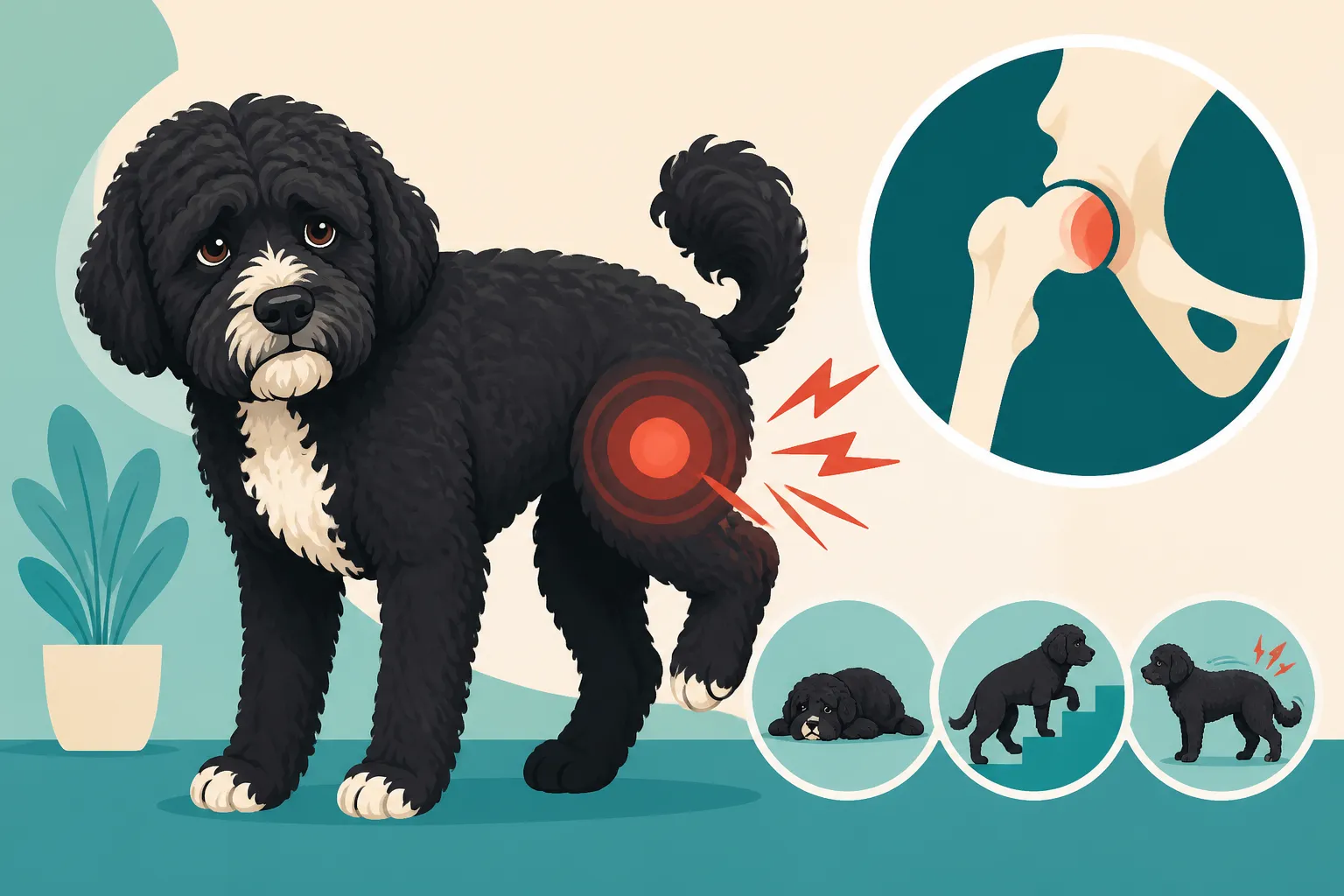
- "Bunny Hopping": This is a classic, though not exclusive, sign of hip discomfort. Instead of using their hind legs independently to push off the ground, your PWD might move both hind legs together, almost like a rabbit hopping. They do this to minimize the weight and impact on a painful hip, shifting the work to both legs simultaneously. It's an adaptive gait to reduce pain.
- Reluctance to Jump or Run: Has your PWD started hesitating before jumping into the car, onto the couch, or even just clearing a small obstacle they used to leap over without a thought? Perhaps they're slowing down on runs or cutting play sessions short. A dog that suddenly avoids these actions, or seems less enthusiastic about them, might be trying to tell you something. This can be particularly noticeable for a breed that typically loves to perform Dock Diving and Water Trials With a Portuguese Water Dog.
- A "Wobbly" or "Unsteady" Gait: Watch their hind end when they walk. Does it sway more than usual? Do they seem less stable, particularly when turning or moving quickly? This unsteadiness is often due to the pain and instability in their hips, making them hesitant to fully commit to their movements.
- Stiffness After Rest or in the Morning: Just like people with arthritis, dogs with hip pain often feel stiff after a period of rest. You might notice your PWD struggling to stand up after a long nap, or moving slowly and gingerly for the first few minutes after waking up in the morning. This stiffness often improves as they "warm up" with a bit of gentle movement, but it's a clear indicator of underlying joint discomfort. This stiffness can sometimes be mistaken for general aging, but it’s important to remember that The Age a Portuguese Water Dog Gets Arthritis can vary significantly.
Changes in Behavior and Temperament
Pain isn't just physical; it can have a profound impact on a dog's emotional state and behavior. A once happy-go-lucky PWD might become withdrawn or even a little grumpy when they're consistently hurting.
- Increased Irritability or Aggression: If your usually sweet-natured PWD starts to snap, growl, or flinch when touched around their hips, back, or hind legs, pain is a likely culprit. They might become defensive because they anticipate pain when approached or petted in certain areas. It's their way of communicating that they're hurting and want to be left alone.
- Lethargy or Reduced Playfulness: A PWD that suddenly loses interest in their favorite games, walks, or swimming sessions isn't just being lazy; they might be in pain. If they're more content to lie around than to engage in activity, it could be that movement causes discomfort. This is especially telling for such an active breed, and it’s important to understand What an Under Exercised Portuguese Water Dog Does if their activity levels are forced to drop.
- Vocalization During Movement: Listen for subtle whines, whimpers, or groans when your dog stands up, lays down, or stretches. These sounds indicate that certain movements are causing pain. Sometimes it's a soft sigh, other times a more pronounced yelp, depending on the severity of the discomfort.
- Licking, Chewing, or Biting at the Hips/Hindquarters: Dogs often groom excessively when they feel pain or discomfort in an area. If your PWD is constantly licking or chewing at their hips, outer thighs, or tail base, they might be trying to soothe an aching joint. This can sometimes lead to skin irritation or hot spots in the area.
Recognizing Advanced Symptoms and When to See Your Vet
As hip dysplasia progresses or pain intensifies, the signs become more pronounced and difficult to ignore. At this stage, immediate veterinary intervention is critical to assess the severity and formulate a treatment plan to alleviate suffering.
Obvious Physical and Locomotor Indicators
When hip pain reaches an advanced stage, it typically manifests in very clear, undeniable ways that significantly impact your dog's mobility and well-being.
- Pronounced Lameness or Limping: This is no longer a subtle hesitation. Your PWD will visibly favor one or both hind legs, limping noticeably during walks or even while just shifting weight. The limping might be constant or intermittent, worsening after activity or prolonged rest. They might avoid putting full weight on a particular leg, carrying it slightly differently to reduce pressure on the joint.
- Difficulty Standing Up or Lying Down: The graceful transition from standing to lying down, or vice-versa, becomes a struggle. Your dog might circle several times before carefully lowering themselves, or they may take multiple attempts to push themselves up, often using their front legs to hoist their body while their hindquarters lag behind. This isn't just clumsiness; it's a clear indication of significant pain and instability in the hips.
- Loss of Muscle Mass in Hindquarters: Chronic hip pain leads to decreased use of the affected leg(s). When muscles aren't used, they atrophy, meaning they waste away. You might notice that your PWD's hind legs appear thinner or less muscular compared to their front legs, or that one hind leg is noticeably smaller than the other. This muscle wasting further compromises their stability and strength, creating a vicious cycle where pain leads to disuse, which leads to weakness, and then more pain. Whether an Aging Portuguese Water Dog Loses Muscle is a common concern, but significant, uneven loss can signal specific problems.
- Altered Stance: To compensate for painful hips, your PWD might adopt an unusual stance. This often involves shifting more weight onto their front legs, causing them to appear "hunched" or with their hindquarters tucked underneath them. Their back might also appear roached or sloped, as they try to redistribute their weight to reduce pressure on the hips.
- Swelling Around the Joints: While less common to spot without close examination, severe inflammation can sometimes lead to noticeable swelling around the hip joints, though the thick coat of a PWD can make this hard to detect. However, if you feel any warmth or unusual lumps around the hip area, it's a definite red flag.
When to Seek Professional Diagnosis
If you observe any of these signs, especially the more advanced symptoms, it's absolutely vital to schedule an appointment with your veterinarian as soon as possible. Don't wait hoping it will just get better; early diagnosis and management can make a world of difference in your PWD's comfort and long-term prognosis.
- The Veterinary Examination: Your vet will conduct a thorough physical examination, assessing your dog's gait, range of motion in the hips, and palpating the joints for pain, laxity, or crepitus (a grinding sensation). They'll ask about the onset of symptoms, your dog's activity levels, and any changes you've observed.
- Diagnostic Imaging: The definitive diagnosis of hip dysplasia and assessment of its severity usually requires X-rays. Your vet might recommend sedation for these X-rays to ensure proper positioning and minimize discomfort for your dog, allowing for the clearest images of the hip joints. This is crucial for determining the extent of the joint malformation and the presence of any secondary arthritis. Understanding When a Portuguese Water Dog Should Be X Rayed can help you be prepared.
- Discussing Treatment Options: Once a diagnosis is made, your vet will discuss a range of treatment options. These can vary widely depending on the severity of the dysplasia, your dog's age, and your lifestyle. Options can include conservative management (weight control, exercise modification, pain medication, supplements) or surgical interventions (such as a total hip replacement or FHO – femoral head ostectomy). These treatments can be costly, so having pet insurance from providers like Healthy Paws can significantly ease the financial burden.
Managing Hip Pain and Supporting Your PWD's Joint Health
Once hip pain is diagnosed, the focus shifts to management and support, aiming to keep your Portuguese Water Dog as comfortable and active as possible. While there's no "cure" for hip dysplasia, a multi-faceted approach can dramatically improve their quality of life.
Conservative Management Strategies
Many dogs with hip pain, especially in the earlier stages, can be managed effectively with non-surgical methods. These strategies focus on reducing inflammation, controlling pain, and strengthening supporting structures.
- Weight Management: This is perhaps one of the most critical factors. Excess weight puts immense strain on already compromised joints, exacerbating pain and accelerating joint degeneration. Working with your vet to achieve and maintain an ideal body weight for your PWD is paramount. Even a few extra pounds can make a significant difference. A lean body condition means less stress on those sensitive hips every time your dog moves.
- Controlled and Appropriate Exercise: While it might seem counterintuitive, movement is still important to maintain muscle mass and joint flexibility. However, it needs to be the right kind of movement. High-impact activities like jumping, sprinting, or prolonged running on hard surfaces should be minimized or avoided. Instead, focus on low-impact exercises. Swimming is an absolute dream for PWDs with hip issues, as it provides excellent muscle strengthening without putting direct weight or impact on the joints. Why Swimming Protects a Portuguese Water Dog's Joints is a well-known benefit for this breed. Regular, gentle walks on soft surfaces can also be beneficial. The key is consistency and moderation, avoiding intense, sporadic bursts of activity.
- Joint Supplements: Many vets recommend joint supplements containing ingredients like glucosamine, chondroitin, and MSM. These compounds are believed to support cartilage health, reduce inflammation, and improve joint lubrication. Omega-3 fatty acids (fish oil) are also excellent natural anti-inflammatories. While not a magic bullet, these supplements can play a supportive role in overall joint health. You can learn more about When a Portuguese Water Dog Needs Joint Supplements for specific guidance.
- Pain Management Medications: For periods of acute pain or for chronic management, your veterinarian may prescribe non-steroidal anti-inflammatory drugs (NSAIDs) or other pain relievers. These medications are crucial for keeping your dog comfortable and allowing them to maintain a reasonable level of activity. It's vital to use these strictly under veterinary guidance, as long-term use requires monitoring for potential side effects.
Lifestyle and Environmental Adjustments
Beyond medical and exercise routines, small changes in your home environment can make a big difference in your PWD's daily comfort and mobility.
- Orthopedic Beds: A supportive, orthopedic dog bed can provide cushioning and support for aching joints, making rest more comfortable. Look for beds with memory foam or dense, supportive filling that doesn't flatten out under your dog's weight.
- Ramps or Steps: To help your PWD avoid painful jumps, consider installing ramps or steps for accessing furniture, the car, or even certain areas of the house. This reduces the strain on their hips and prevents further injury.
- Non-Slip Flooring: Slippery floors can be a nightmare for dogs with hip pain, as they struggle to gain traction and can easily slip, potentially causing further injury or pain. Consider placing non-slip rugs or runners in areas where your dog frequently walks, especially near food bowls, water dishes, or their favorite resting spots.
- Physical Rehabilitation and Hydrotherapy: Just like humans, dogs can benefit from physical therapy. A certified canine rehabilitation therapist can develop a tailored program of exercises, stretches, and modalities (like therapeutic ultrasound or laser therapy) to strengthen muscles, improve range of motion, and reduce pain. Hydrotherapy, performed in a controlled pool or underwater treadmill, is particularly effective for PWDs, leveraging their natural affinity for water to build strength without joint impact.
When Surgery Might Be Considered
In more severe cases of hip dysplasia, especially when conservative management isn't enough to control pain and improve quality of life, surgical options might be explored. Procedures like Total Hip Replacement (THR) can offer excellent long-term results, restoring pain-free function to the hip. Other options include Femoral Head Ostectomy (FHO) or Triple Pelvic Osteotomy (TPO), depending on the specific case. Your vet will discuss these options in detail, considering your dog's age, size, and the severity of their condition. These procedures are a significant investment, both emotionally and financially. This is where comprehensive pet insurance like Healthy Paws truly shines, as it can help cover a substantial portion of the costs associated with diagnosis, surgery, and rehabilitation, making these life-changing treatments more accessible. Understanding What Hip Surgery Costs on a Portuguese Water Dog is important for planning.
Maintaining an open dialogue with your veterinarian is crucial throughout your Portuguese Water Dog's life, especially if you notice any changes in their gait or behavior. Your vet can provide accurate diagnoses, guide you through treatment options, and help you create a management plan that ensures your PWD remains as comfortable and happy as possible for all their amazing years.
| Symptom Category | Early Signs (Subtle) | Advanced Signs (Obvious) | What to Watch For |
|---|---|---|---|
| Movement | "Bunny hopping" gait, hesitation to jump, stiffness after rest | Pronounced limping/lameness, difficulty standing/lying down, altered stance | Changes in how your PWD moves, especially after inactivity or during activity. |
| Activity Level | Reduced enthusiasm for play/walks, slower during exercise | Complete refusal to engage in favorite activities, severe lethargy | Any decrease in willingness or ability to participate in their usual active life. |
| Behavior/Temperament | Increased irritability, mild vocalization during movement, excessive licking of hips | Aggression when touched, constant whimpering/yelling, withdrawal | Uncharacteristic behavioral changes, especially defensiveness around hindquarters. |
| Physical Appearance | No immediate changes, subtle muscle loss over time | Visible muscle atrophy in hind legs, possibly swelling, abnormal posture | Any visible changes in muscle mass, joint appearance, or how they hold their body. |
Disclaimer
The information provided in this guide is for general informational purposes only and does not constitute veterinary advice. Always consult with a qualified veterinarian for any health concerns or before making any decisions about your Portuguese Water Dog's medical care.