Whether a Black Portuguese Water Dog Fades
A black Portuguese Water Dog can look charcoal, brownish, or sun-faded after a season outdoors, and that shift can be unsettling when you expected a glossy, solid-black coat. In many cases, it is ordinary hair-color change rather than a health problem. This guide explains why fading happens, what grooming can and cannot change, and when a coat change deserves a closer look.
Why a black Portuguese Water Dog’s coat can fade
Sun exposure can bleach the hair
A black coat may develop reddish-brown or bronze-looking areas after repeated exposure to strong sunlight. This is most noticeable on the parts of the dog that spend the most time outdoors, such as the back, shoulders, and top of the head. The coat may look darker underneath or in areas protected by longer hair.
Think of a dog who spends summer afternoons retrieving in an open field or riding in a sunny car. The hair exposed to ultraviolet light can gradually lose some of its rich-looking color, much as dark fabric can lighten with prolonged sun exposure. The change is usually more apparent on the hair shafts themselves than at the skin.
Sun bleaching does not mean your dog is dirty, poorly groomed, or necessarily ill. A bath will not reliably restore the original black pigment, and strong shampoos or repeated washing are not a safe way to “correct” the color. If you are choosing a shampoo or conditioner, whether from a local shop or Chewy, look for products intended for dogs and follow the label rather than trying a color-restoring treatment made for people.
Age and coat turnover affect the way black looks
A Portuguese Water Dog’s coat is made of hair that grows, gets clipped, and eventually sheds or is replaced. The black hair you see today is not necessarily the same hair your dog had as a puppy. New growth can look richer or darker than older, sun-exposed lengths, so a dog may appear to change color as the coat turns over.
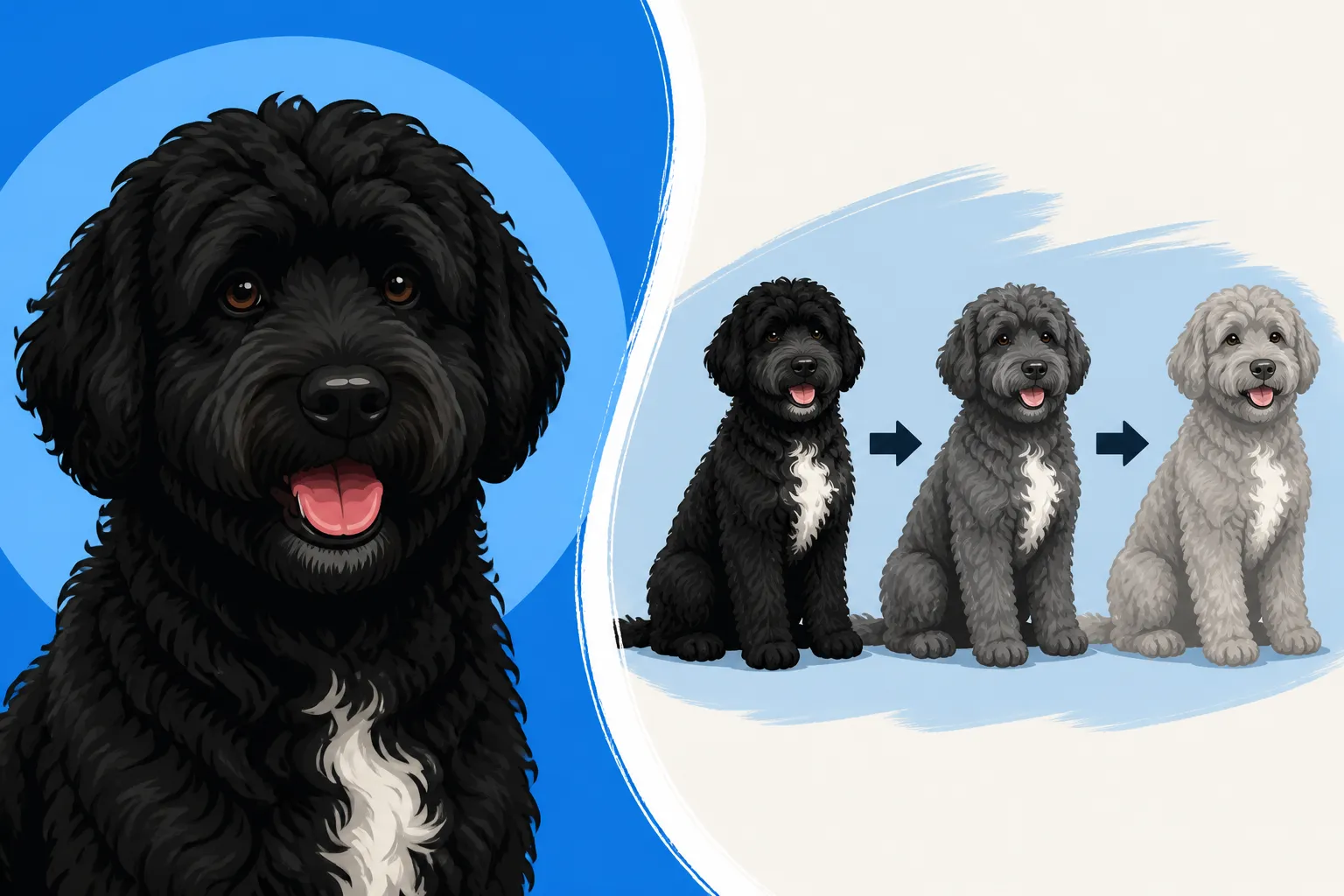
Age can also bring gray or silver hairs, especially around the muzzle and face. Some dogs develop a few scattered lighter hairs while others show more obvious graying. That is different from a broad, rusty-looking cast across sun-exposed parts of the body, though both changes can happen at the same time.
A puppy’s coat can change in color and texture as the dog matures. If your young dog’s coat is shifting, it may help to compare current photos with older ones taken in similar lighting. For more on that transition, see When a Portuguese Water Dog's Puppy Coat Changes and Whether a Portuguese Water Dog's Coat Changes Texture With Age. The breed’s accepted colors and markings also provide useful context: Which Colors a Portuguese Water Dog Comes In.
Coat color is not the same as coat health
A gradual, fairly even shift toward a softer black or brownish tone is often cosmetic. Coat problems are more concerning when the color change comes with other signs: thinning hair, bald patches, broken hairs, scabs, persistent itching, an unpleasant odor, or irritated skin.
A coat that seems dull can also be affected by tangles, residue, dryness, or how it is dried and brushed. Those issues do not necessarily change the dog’s underlying pigment, but they can make the coat look less glossy and more uneven. If the coat is thinning or changing alongside changes in energy, appetite, or skin condition, talk with your veterinarian rather than assuming sunlight is the only explanation. Whether a Portuguese Water Dog's Coat Thins With Illness explores that distinction.
What grooming can change and what it cannot
Clipping may make the color look different
A haircut can change your impression of the coat without changing the dog’s genetic color. Clipping removes the older hair on the outside, which may be more sun-bleached, and leaves shorter hair that can look darker or more uniform. In other cases, a close clip can make a faded area more obvious because there is less length and texture to soften the contrast.
The result depends on the dog’s coat, how much hair is removed, lighting, and how recently the coat was clipped. A black Portuguese Water Dog that looks brownish and shaggy before grooming may appear darker after a trim simply because the sun-bleached ends are gone. That is not a guarantee that clipping will “bring back” black; fresh hair may also be exposed to sun over time.
Avoid shaving or clipping solely to chase a particular shade. Coat length is a practical grooming choice, and the dog’s comfort and coat condition matter more than making the color look a certain way. To compare the common styles and their trade-offs, see The Retriever Clip Is the Coat Most Portuguese Water Dogs Wear and The Lion Clip Costs a Portuguese Water Dog Owner Daily Brushing.
Brushing and bathing improve appearance, not pigment
Regular brushing helps remove loose hair and surface debris, and it lets you notice mats or skin changes early. It can make a black coat look neater and reflect light more evenly, but brushing cannot reverse sun bleaching. A bath can remove dirt or residue that dulls the coat; it cannot safely dye the hair back to its original color.
For many owners, the frustrating part is that a dog can swim, roll in grass, and come home with a coat that looks different from the one they admired after grooming. Rinsing after swimming can help remove salt, chlorine, or grime, while thorough drying and brushing help prevent tangles. The right routine depends on how often your dog swims and the coat’s length. See How Often a Portuguese Water Dog Should Be Bathed for more on keeping bathing practical.
When shopping for basic grooming supplies, you may compare labels at a local pet store or on Chewy. Choose dog-specific products suited to your dog’s coat and skin, and avoid products that promise to permanently restore coat color. If a new product causes redness, itching, or a sudden change in coat feel, stop using it and check with your veterinarian or groomer.
Sun protection is mostly about sensible exposure
You do not need to keep a Portuguese Water Dog indoors to prevent every hint of fading. Outdoor activity is important, and a dog who loves swimming or playing outside should not lose those experiences just to preserve a perfectly black appearance. Instead, consider shade breaks during intense sun, especially on long outings, and make sure your dog has access to fresh water.
A very short clip can leave skin more exposed than a longer coat, so ask your groomer or veterinarian about sun protection if your dog is clipped close or has areas of lightly pigmented skin. Use only products specifically intended for dogs when sunscreen is appropriate; human sunscreen ingredients can be unsafe if licked. Whether a Clipped Portuguese Water Dog Sunburns covers the practical risks of a short coat in strong sun.
How to tell ordinary fading from a coat problem
Look at the pattern and pace of the change
Ordinary sun fading tends to appear gradually and is often strongest on the parts of the coat exposed to daylight. It may be more noticeable after summer, after long days outdoors, or when the coat grows long between trims. The skin underneath usually looks normal, and the dog otherwise acts like themselves.
A sudden, patchy change is different. If one area becomes pale quickly, hair starts falling out, or the skin looks inflamed, it is worth taking a closer look. Take clear photos in consistent lighting and note when you first noticed the change. This makes it easier to describe the pattern to your veterinarian or groomer.
Lighting can fool even attentive owners. A black dog may look brown in warm indoor light, gray under cloudy skies, or glossy black in direct light. Before worrying, compare photos taken in similar conditions and check the coat in natural daylight. If the color change remains visible and is accompanied by skin or behavior changes, book a veterinary appointment.
Check the skin and the dog, not just the color
Part the coat gently in several places and look at the skin. Healthy-looking skin without redness, sores, heavy flakes, or unusual odor is reassuring, though it does not diagnose the cause. Notice whether your dog is scratching, licking, or rubbing more than usual. Also pay attention to energy, appetite, and any other changes that seem to have appeared around the same time.
A groomer can often help you distinguish old, sun-bleached ends from tangles or coat damage, but a veterinarian is the right person to assess skin disease or broader health concerns. Avoid using human hair dye, bleach, color-enhancing products, or home remedies. These can irritate skin, and a dog may swallow residue while grooming.
| What you notice | A possible explanation | A sensible next step |
|---|---|---|
| Gradual brownish cast on the back or head | Sun exposure or older hair | Track it over time and maintain a gentle grooming routine |
| Coat looks darker after clipping | Sun-bleached ends were removed | Keep the trim for practical reasons, not as a permanent color fix |
| A few gray hairs around the muzzle | Age-related graying | Monitor unless other changes appear |
| Sudden bald or pale patches | Skin or coat problem may be present | Contact your veterinarian |
| Fading with itching, redness, odor, or sores | Irritation or another medical issue may be involved | Arrange a veterinary assessment |
Keep a simple coat record
A short monthly check can help you notice whether the coat is changing gradually or quickly. Take a photo of the back, sides, face, and any area that looks different. Use similar lighting and avoid judging the color immediately after a bath, when wet hair can appear much darker.
You can also note the date of each grooming appointment, how short the coat was clipped, and whether your dog had a stretch of frequent outdoor swimming or sun exposure. These details are useful if you later ask a groomer or veterinarian about the change. A coat record is not a substitute for an examination, but it can make the conversation more specific.
For dogs whose coats mat easily, regular brushing and timely trimming also make it easier to inspect the skin. If you are building a basic grooming kit, Chewy is one place owners may compare dog brushes and coat-care supplies, alongside local retailers and recommendations from their groomer. The most useful choice is the tool that fits your dog’s coat and that you can use comfortably and consistently.
A practical routine for a black Portuguese Water Dog
Adjust care to your dog’s life
There is no need to treat every shift in shade as a problem. If your dog swims often, rinse away pool or salt water when appropriate, then dry the coat thoroughly and check the ears and skin. If they spend long periods outdoors, offer shade and breaks. A dog who mostly walks in a shaded neighborhood may show little noticeable sun fading, while a frequent beach companion may develop a warmer tone on exposed hair.
Brush often enough to prevent mats, especially around friction points such as behind the ears, under a harness, and where the legs meet the body. The best schedule depends on coat length and texture. A longer coat may require more frequent attention than a shorter, regularly maintained trim. For practical guidance, see How Often a Portuguese Water Dog Needs Brushing.
If the coat has become difficult to manage, ask a groomer about a length that suits your dog’s routine. Someone who swims several times a week may be happier with a manageable trim than with a long coat that stays wet and tangles. Your decision does not need to be based on whether the black appears perfectly uniform.
Keep expectations realistic
Some black Portuguese Water Dogs stay deep black-looking for years; others develop a brownish cast in exposed areas or gray as they age. Coat length, sun exposure, hair turnover, and lighting all affect how the color appears. Even two dogs in the same household can look different if one spends more time outdoors or has a different coat texture.
If your dog is healthy and the color change is gradual, you can usually focus on comfort and coat care rather than trying to preserve a showroom shade. A gentle, consistent grooming routine will help the coat look its best, but no shampoo or haircut can guarantee that black hair will remain the same color throughout a dog’s life. Use Chewy or another retailer as a place to compare ordinary grooming supplies if helpful, but choose products for cleanliness, coat condition, and your dog’s tolerance—not because they promise a permanent color change.
The most reassuring sign is a dog who feels well, has healthy-looking skin, and shows only a slow, predictable shift in coat appearance. If the change is abrupt, patchy, uncomfortable, or paired with other symptoms, ask your veterinarian to assess it. That is a much safer path than experimenting with dyes or intensive products.
Disclaimer
This article is for general informational purposes only and does not constitute professional advice. Laws, prices and regulations vary by location and change over time. Consult a qualified professional for guidance on your specific situation.