Whether a Portuguese Water Dog’s Collar Should Come Off to Swim
It’s a question every Portuguese Water Dog owner eventually grapples with: should you leave your dog’s collar on when they’re heading for a dip? While it might seem convenient to keep it on for identification, the water, and your PWD's enthusiastic nature, introduce some unique risks that are absolutely worth understanding. This guide will walk you through the potential dangers, safer alternatives, and best practices to ensure your water-loving companion stays safe and sound during their aquatic adventures.
The Hidden Dangers of Collars in the Water
It's natural to think a collar is a helpful tool for keeping tabs on your adventurous PWD, especially one that loves water as much as ours do. You might feel a sense of security knowing their ID tags are right there on their neck. But the very environment our Portuguese Water Dogs thrive in – lakes, oceans, rivers, and even backyard pools – turns an everyday item like a collar into a potential hazard. These risks aren't always immediately obvious, but they can be serious, and it's something every PWD owner needs to be aware of before their dog splashes in.
Entanglement Hazards Lurking Beneath the Surface
Imagine your Portuguese Water Dog, with their powerful webbed feet, diving headfirst into a lake, chasing a ball with all the joyful intensity they possess. It’s a beautiful sight, but beneath that shimmering surface, there could be submerged branches, fishing lines, or discarded debris. A standard collar, particularly if it's loose or has D-rings and tags, can easily snag on these unseen obstacles.
The problem is, PWDs are such determined and strong swimmers that they might not immediately realize they're caught. Their instinct is to pull and fight against whatever is holding them back. This struggle can tighten the collar, making it even harder to escape, or worse, cause them to panic and potentially drown. Even in shallower water, a snagged collar can cause serious injury to the neck or throat as they try to free themselves. Think about a strong current in a river; if they get caught on something, the water itself can pull them under. This isn’t just a theoretical concern; it’s a real and terrifying scenario that has happened to countless water dogs over the years. We want our dogs to be safe, especially when they’re engaging in the activities they love the most.
Skin Irritation and Pesky Matting Under a Wet Collar
Beyond the immediate danger of entanglement, there's a more insidious, long-term problem with leaving a collar on a wet Portuguese Water Dog: skin irritation and matting. Our PWDs have those glorious, dense, water-repellent coats, whether curly or wavy, that are designed to protect them in the water. But this same coat, when constantly wet under a collar, creates a perfect breeding ground for trouble.
When a collar stays wet against the skin for an extended period, it can cause chafing and rubbing, leading to redness, sores, and even uncomfortable hot spots. These aren't just superficial; they can quickly become infected, requiring veterinary attention. Furthermore, the constant dampness and friction are a matting nightmare for a PWD's coat. The hair under the collar, especially if it's already a thick area, will felt and tangle at an accelerated rate, forming tight, painful mats that pull on the skin. You might not even notice it until you take the collar off to dry them or groom, and by then, the mat could be significant and painful to remove. Where a Portuguese Water Dog Mats Behind the Ears Regular brushing is crucial for a PWD, and neglecting the area under a collar, even for a day of swimming, can lead to significant discomfort for your dog.
Smarter Choices: When a Collar Might Be Okay (and What Kind)
Now, I know some of you might be thinking, "But my dog just splashes in the kiddie pool for a minute!" or "What about those special collars?" And you're right to ask. There are certainly nuances to this discussion, and not every water exposure is created equal. Understanding the different scenarios and the types of collars available can help you make more informed decisions for your PWD's safety.
Short, Supervised Dips in Controlled Settings
Let's be realistic: if your Portuguese Water Dog is taking a quick, supervised dip in a perfectly controlled environment, like a shallow, clean backyard pool with no underwater hazards, the risk of entanglement is significantly reduced. Perhaps they're just cooling off for a few minutes, and you're right there, eyes on them the whole time. In such specific instances, some owners might choose to leave a well-fitting, lightweight collar on, especially if it’s merely for a very brief period and immediate identification if they somehow manage to bolt.
However, even in these seemingly safe scenarios, the potential for skin irritation remains. The dense coat of a PWD can trap moisture, and if the collar is left on after the swim without thorough drying, issues can arise. It's really about risk assessment and vigilance. If you choose this route, ensure the collar isn't too tight, check the skin immediately after, and be prepared to take it off and dry the area completely once the fun is over. For anything more adventurous than a five-minute splash, I'd strongly lean towards removing it.
The Promise and Pitfalls of Breakaway Collars
Breakaway collars offer a potential compromise for those who want their dog to wear some form of identification. These collars are designed with a buckle that will release or "break away" if a certain amount of pressure is applied, such as if the collar gets snagged on something. This mechanism is a fantastic safety feature, as it allows your dog to free themselves from a potentially life-threatening situation. Many cat owners use them for this very reason. You can find a wide variety of breakaway options on pet supply sites like Chewy or even Amazon, often marketed for active dogs or those who play rough.
However, breakaway collars come with their own set of considerations. First, they are generally not suitable for attaching a leash. If your dog pulls even moderately on the leash, the collar could unclip, sending your PWD off on an unexpected solo adventure. This means you'd still need a traditional collar or a harness for walks. Second, the "breakaway" threshold varies between brands and designs. Some might come off with very little pressure, meaning your dog could lose their ID tags unexpectedly during vigorous play or even by rubbing against a bush. While they offer a layer of safety against entanglement, they don't solve the problem of a wet collar potentially causing skin irritation or matting if left on for prolonged periods after swimming. It's a trade-off: increased safety from snags, but a greater chance of losing the collar and its attached ID.
Best Practices for Water Adventures with Your PWD
When it comes to our beloved Portuguese Water Dogs and their innate love for water, safety should always be the top priority. There are simple, effective practices you can adopt that mitigate the risks associated with collars and enhance their overall well-being during and after their swims. It’s about being prepared and understanding how to keep them secure without compromising their health.
The Safest Bet: Removing the Collar Entirely
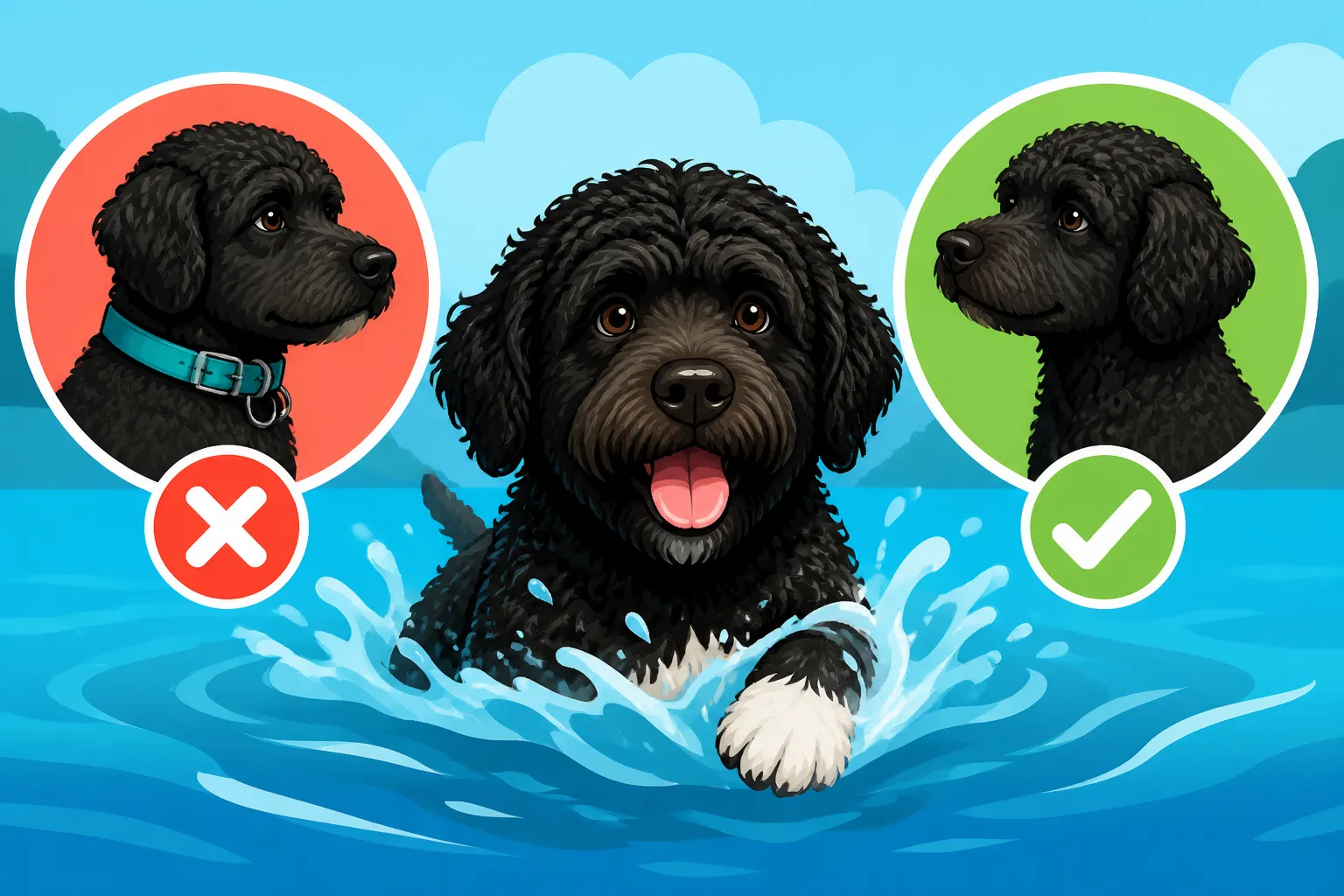
This is the recommendation you'll hear from most experienced PWD owners and water dog enthusiasts: take the collar off. Period. Before your dog plunges into the water, simply unclip their collar and set it aside. This completely eliminates the risk of entanglement and drastically reduces the chances of skin irritation or matting in that area.
"But what about identification?" you might ask, and it's a valid concern. This is where proper preparation comes in. Ensure your Portuguese Water Dog is microchipped and that your contact information is always up to date with the microchip registry. This is the most reliable form of permanent identification. For visible ID, consider temporary options. Many owners attach their dog's ID tags to their life vest if they're wearing one (more on that in a moment) or keep the collar and tags handy on the shore, ready to be put back on as soon as the swim is over. Ultimately, relying on solid recall training is paramount for any dog off-leash, especially near water. Whether a Portuguese Water Dog Recalls Out of Water A strong recall is your best safety net, far more effective than a collar snagged on a log.
Embrace the Buoyancy and Safety of a Life Vest
For any serious water activity – whether it's swimming in open water, boating, dock diving, or even just long play sessions in a lake – a well-fitting dog life vest is an absolute game-changer. Think of it as a piece of essential safety gear, much like you wouldn't send a child swimming without one. A life vest provides crucial buoyancy, helping your PWD conserve energy, especially in strong currents or when they might get tired from extended swimming. This is particularly important for activities like How Far a Portuguese Water Dog Can Swim or What Dock Diving Asks of a Portuguese Water Dog.
Beyond buoyancy, most dog life vests come in bright, highly visible colors, making it much easier to spot your PWD in the water, especially at a distance or in choppy conditions. They also typically feature a sturdy handle on the back, which is invaluable for helping your dog back into a boat, lifting them out of the water, or simply guiding them when needed. While a life vest doesn't replace identification, you can often attach ID tags directly to a D-ring on the vest itself, providing visible ID that is less likely to snag than a traditional collar. Brands like Kurgo, Outward Hound, and Ruffwear offer excellent options that you can find easily on sites like Amazon or Chewy, designed with durability and safety in mind. Using a life vest transforms their water adventures from potentially risky to safely exhilarating.
Post-Swim Care: Protecting Skin and Coat
The fun doesn't end when your Portuguese Water Dog emerges from the water. In fact, what you do immediately after their swim is just as important as what you do before. Proper post-swim care, especially concerning their collar area, is vital to prevent those uncomfortable skin irritations and stubborn mats that can crop up in a PWD's unique coat.
Thorough Drying and Cleaning for Health
One of the biggest mistakes an owner can make after a swim is to simply let their PWD air dry, especially with a collar still on, or even draped around their neck. The dense, curly or wavy coat of a Portuguese Water Dog, while fantastic for insulation in water, also excels at trapping moisture against the skin. This dampness, combined with the friction of a collar, creates an ideal environment for skin problems.
As soon as your PWD is out of the water, it's time for a thorough drying session. Remove their collar (if you didn't already) and pat them down with absorbent towels. Pay particular attention to the neck area, under the ears, and around the throat where the collar usually sits. Using a high-velocity force dryer, if you have one, is incredibly effective for getting the undercoat completely dry and preventing issues like hot spots. Drying a Portuguese Water Dog After Every Swim If a force dryer isn't an option, ensure you rub the coat vigorously with towels until it's as dry as possible, especially in the collar zone. Don't forget to clean the collar itself. A wet, dirty collar can harbor bacteria and grime, which will then transfer back to your dog's clean skin. Give it a quick rinse and let it dry completely before putting it back on your dog.
Inspecting for Irritation and Battling Mats
After your PWD is dry, take a moment to carefully inspect the skin around their neck and throat. Look for any signs of redness, tenderness, bumps, or excessive flakiness. These can all be indicators of irritation from a wet or ill-fitting collar. If you spot anything concerning, a gentle cleansing with a mild, dog-safe antiseptic wipe might help, but persistent issues should always warrant a call to your vet.
This is also the prime time to tackle any potential mats. The Portuguese Water Dog's coat is prone to matting, and the repeated wetting and drying, combined with collar friction, can accelerate this process. Use a slicker brush and a metal comb to thoroughly brush through the hair in the collar area, ensuring you reach all the way down to the skin. Which Brush a Portuguese Water Dog Needs Gently work out any tangles, being careful not to pull too hard. If you find a mat that’s too tight to comb out, it’s safer to carefully cut it out with blunt-nosed scissors or consult a professional groomer rather than causing your dog pain. Consistent grooming after every water outing will save you and your PWD a lot of discomfort in the long run.
Here's a quick comparison of different approaches to collars and swimming:
| Option | Pros | Cons | Best Use Case |
|---|---|---|---|
| No Collar | Eliminates entanglement risk; Prevents skin irritation/mats. | No visible ID on the dog; Requires strong recall. | All water activities, especially open water. |
| Standard Collar | Always visible ID; Convenient for quick transitions. | High risk of entanglement; Promotes skin irritation/matting. | Dry land only; Never in water. |
| Breakaway Collar | Reduces entanglement risk (releases under pressure). | Can detach unexpectedly; Not for leash attachment; Still causes mats. | Brief, highly supervised dips in controlled areas. |
| Life Vest | Provides buoyancy & visibility; Often has a handle; ID tags can attach. | Not a permanent ID solution; Can be bulky; Needs to be removed post-swim. | All serious water activities, boating, open water swimming. |
Disclaimer
This article is for general informational purposes only and does not constitute professional advice. Laws, prices and regulations vary by location and change over time. Consult a qualified professional for guidance on your specific situation.