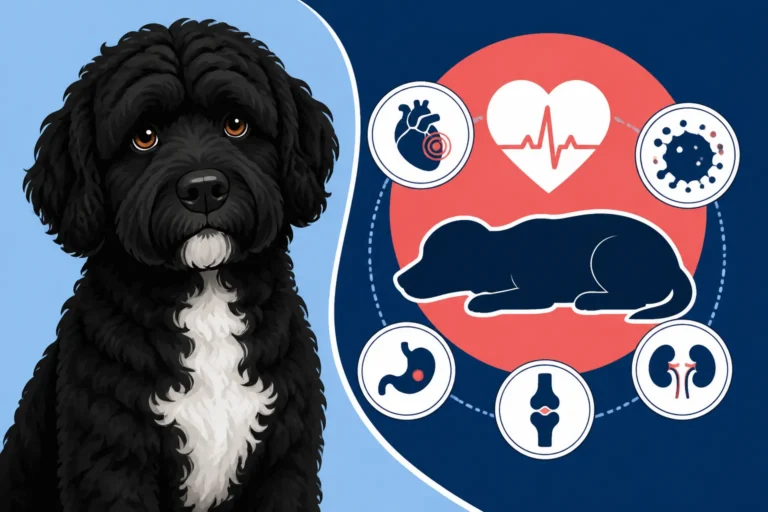
Whether Every Portuguese Water Dog Litter Is JDCM Tested
It’s an unfortunate reality that when you’re looking for a Portuguese Water Dog puppy, navigating the world of health testing can feel like wading through murky waters. You want to ensure you're bringing home a healthy companion, but the sheer volume of information, and sometimes the lack of transparency, can be overwhelming. This guide is here to shed light on one of the most critical health concerns for the breed, Juvenile Dilated Cardiomyopathy (JDCM), and address whether every Portuguese Water Dog litter is truly tested for this devastating condition, empowering you with the knowledge to make informed decisions.
The Critical Importance of JDCM Testing for Portuguese Water Dogs
Juvenile Dilated Cardiomyopathy, or JDCM, is a heartbreaking reality for some Portuguese Water Dog families. It’s not just a minor health issue; it's a rapidly progressing, fatal heart condition that primarily affects young puppies. Imagine bringing home a vibrant, playful puppy, only for it to suddenly and tragically succumb to heart failure, often before it even reaches six months of age. This devastating scenario is exactly what JDCM testing aims to prevent.
What JDCM Is and Its Devastating Impact
JDCM is a genetic disease that causes the heart muscle to become thin and weak, making it unable to pump blood effectively. Puppies affected by JDCM might appear completely normal and healthy for the first few weeks or months of their lives, full of energy and mischief, just as any puppy should be. There are often no outward Signs a Portuguese Water Dog Puppy Has JDCM until the disease has progressed significantly, leading to a sudden and acute onset of symptoms, typically between six weeks and seven months old. This silent progression is what makes the condition so terrifying for new owners.
The impact is truly devastating. When a puppy develops JDCM, its heart can no longer keep up with the demands of its growing body. This leads to a rapid decline, often marked by lethargy, difficulty breathing, and a tragic collapse, leaving owners with little to no time to react or seek treatment. It's a cruel illness that rips puppies away from their families far too soon, and it’s why responsible breeding practices are absolutely non-negotiable when it comes to this specific condition. Understanding the severity helps underscore why testing is so paramount.
How JDCM Is Inherited and the Urgency of Prevention
JDCM is an autosomal recessive inherited disorder, which sounds complicated but essentially means a puppy must inherit two copies of the defective gene – one from each parent – to be affected by the disease. A dog that inherits only one copy of the gene is considered a "carrier" and will not develop the disease itself, but can pass the gene on to its offspring. This mode of inheritance is critical because it means seemingly healthy parents can produce affected puppies. If two carriers are bred together, there's a 25% chance with each puppy that it will be affected, a 50% chance it will be a carrier, and a 25% chance it will be clear. This is precisely why genetic testing of the parents is so vital.
The urgency of prevention cannot be overstated. Unlike some conditions that can be managed with medication or surgery, JDCM is progressive and, currently, there is no effective treatment. The prognosis for an affected puppy is dire; they typically do not survive past their first year, and many pass away much sooner. This makes the prevention of JDCM through careful breeding selection based on DNA testing the only real solution, saving puppies and families from unimaginable heartache. It's a stark reminder that while The Twelve to Fifteen Years a Portuguese Water Dog Gets is often a joyous journey, it can be tragically cut short by preventable genetic conditions if breeders are not diligent.
The Truth About JDCM Testing in Portuguese Water Dog Litters
So, let's get down to the core question: Is every Portuguese Water Dog litter JDCM tested? The short, honest answer is no, not every litter is tested. While it is standard practice and an absolute ethical imperative for reputable breeders, unfortunately, not all breeders adhere to these crucial guidelines. This discrepancy is a significant concern for prospective puppy owners and highlights the importance of due diligence.
Why Not Every Litter Is Tested (And Why That's Problematic)
There are several reasons why a litter might not be JDCM tested, and almost all of them are problematic. Sometimes, it's a lack of knowledge or education on the breeder's part, particularly with less experienced or "backyard" breeders who may not be fully aware of the breed's specific genetic health concerns. They might not understand the full scope of The Four DNA Tests Every Portuguese Water Dog Breeder Runs or why they are so critical. Other times, it can be an attempt to cut costs. While What the Portuguese Water Dog JDCM Swab Costs is a relatively minor expense in the grand scheme of breeding and raising a litter, some might try to circumvent it.
Even more concerning is when a breeder knowingly foregoes testing, perhaps because they suspect one or both parent dogs are carriers and they're hoping to avoid the difficult decisions that come with that knowledge, like the ethical implications of Whether Two JDCM Carriers Should Be Bred. This can lead to affected puppies being born, perpetuating the disease in the breed and causing immense suffering. When a breeder skips this crucial step, they are taking a gamble with the lives of their puppies and the emotional well-being of their future families. It's a red flag that should prompt immediate caution and further investigation.
What Responsible Breeders Always Do
A responsible Portuguese Water Dog breeder, one who truly cares about the health and future of the breed, will always DNA test their breeding stock for JDCM before they even consider a pairing. They understand that preventing genetic diseases is a cornerstone of ethical breeding. This means both the sire (father) and dam (mother) of a litter will have their DNA tested, and these results will dictate breeding decisions. If one parent is a carrier, the other parent must be clear to ensure no affected puppies are produced. While such a breeding would still produce carriers, it prevents the tragic outcome of an affected puppy.
These breeders are transparent with their health testing results and will gladly provide documentation, usually from a reputable genetic testing laboratory like Paw Print Genetics or OptiGen, to any prospective buyer. They'll show you not just the JDCM results, but a full panel of relevant tests, aligning with What a Portuguese Water Dog Breeder Should Have Tested. This isn't just about avoiding an affected puppy; it's about making informed choices to improve the overall health of the breed with each generation. They view health testing as an investment, not an expense, and will likely mention the costs as part of the total What a Portuguese Water Dog Costs to Buy in 2026.
The Difference Between Parent Testing and Individual Puppy Testing
It's important to understand the distinction between testing the parent dogs and testing individual puppies in a litter. For autosomal recessive conditions like JDCM, testing the parents is the most critical and proactive step. If both parents are "clear" of the JDCM gene, then by definition, all of their puppies will also be clear, and no individual puppy testing is necessary for JDCM. The litter is effectively "clear by parentage." This is the ideal scenario and what every responsible breeder strives for.
However, if one parent is a "carrier" and the other is "clear" (an acceptable breeding combination to avoid affected puppies, though it will produce carriers), or if the parentage is unknown, then individual puppies could be tested to determine their status as clear or carrier. Some breeders choose to test all puppies in such a litter to provide complete transparency to buyers. While parentage testing is paramount, individual puppy testing offers specific knowledge about each dog, which can be useful for future breeding decisions if the puppy is destined for a breeding program, or simply for peace of mind for the pet owner.
| JDCM Parent Status | Expected Puppy Outcome | Puppy Testing Needed |
|---|---|---|
| Clear x Clear | 100% Clear | No |
| Clear x Carrier | 50% Clear, 50% Carrier | No (or optional for individual status) |
| Carrier x Carrier | 25% Affected, 50% Carrier, 25% Clear | Yes (critical for all puppies) |
| Clear x Affected | 100% Carrier | No (or optional for individual status) |
| Carrier x Affected | 50% Affected, 50% Carrier | Yes (critical for all puppies) |
| Affected x Affected | 100% Affected | Yes (critical for all puppies) |
Note: Breeding Affected dogs is highly unethical and should be avoided entirely.
Your Role in Verifying JDCM Test Results for a Puppy
As a prospective Portuguese Water Dog owner, you are the first line of defense for your future puppy's health. You have a crucial role to play in ensuring you bring home a healthy dog by diligently verifying JDCM test results. Don't be shy about asking questions and demanding transparency – it's your right and responsibility.
Asking the Right Questions and Demanding Proof
When you communicate with a breeder, make sure "JDCM testing" is high on your list of questions. Don't just ask if they test; ask who they test (the parents, the puppies, or both), which lab they use, and most importantly, ask to see the actual documentation. A reputable breeder will have no problem providing copies of official laboratory results for both the sire and dam of the litter. These documents should clearly state the names of the parent dogs, their registration numbers, the test performed, and the results (Clear, Carrier, or Affected). Be wary of any breeder who is vague, evasive, or claims they "know their lines are clear" without documented proof.
It's also a good idea to inquire about the breeder's history with JDCM in their lines. Have they ever produced an affected puppy? What steps did they take? Their answers will give you insight into their knowledge, integrity, and commitment to the breed's health. Remember, a cheap puppy often comes with hidden health costs down the line, so don't let price alone dictate your choice. You might find a higher initial cost for a well-tested puppy is a smart investment in the long run, potentially saving you thousands in vet bills and emotional distress.
Understanding Genetic Results: Clear, Carrier, Affected
When you receive genetic test results, it’s important to know what the terms "Clear," "Carrier," and "Affected" mean in the context of JDCM:
- Clear (or Normal): This dog does not have the defective gene and cannot pass it on to its offspring. This is the safest status for breeding partners.
- Carrier: This dog has one copy of the defective gene but will not develop JDCM itself. However, it can pass the gene on to approximately 50% of its offspring. A carrier can be safely bred, but only to a "Clear" mate, ensuring no affected puppies are born.
- Affected: This dog has two copies of the defective gene and will develop JDCM. These dogs should never be bred and, sadly, will likely succumb to the disease at a young age.
A responsible breeder will only breed a "Clear" dog to another "Clear" dog, or a "Clear" dog to a "Carrier" dog. Breeding two "Carriers" together, or breeding an "Affected" dog at all, is considered highly unethical due to the high probability of producing affected puppies. This understanding helps you interpret the results shared by the breeder and ensures they are adhering to responsible breeding practices.
Ethical Considerations and Breeder Contracts
The ethical choice when considering a breeding pair involving a JDCM carrier is to ensure the other parent is "Clear." While a litter from a Clear x Carrier pairing won't produce affected puppies, it will produce carrier puppies. This means that if you acquire a puppy from such a breeding, you should be aware that your dog might be a carrier. If you ever consider breeding your dog, you would then be responsible for testing its mate to prevent affected offspring. This is a critical point that Whether Two JDCM Carriers Should Be Bred addresses in detail – the answer is a resounding no, due to the risk of producing affected puppies.
A thorough breeder contract should clearly outline the health guarantees provided, often including a guarantee against genetic diseases like JDCM. This contract is a legal agreement that protects both you and the breeder. It should specify what happens if a puppy is found to have a genetic disease, such as a refund or replacement puppy. Always read the What a Portuguese Water Dog Breeder Contract Requires carefully before signing, and don't hesitate to ask for clarification on any points you don't understand. A good contract is a hallmark of a responsible breeder and provides peace of mind.
Beyond JDCM: A Holistic Approach to Portuguese Water Dog Health
While JDCM testing is paramount, it’s crucial to remember that it's just one piece of the larger puzzle when it comes to the overall health of your Portuguese Water Dog. A truly comprehensive approach to health encompasses multiple genetic tests, orthopedic evaluations, and a lifetime of preventative care.
JDCM Is One Piece of the Puzzle
The Portuguese Water Dog is a robust and generally healthy breed, but like all breeds, it is predisposed to certain genetic conditions. JDCM is undoubtedly one of the most severe, but it’s not the only one that responsible breeders screen for. When a breeder presents their health testing results, you should expect to see a panel of tests that goes beyond just the heart.
This includes other critical DNA tests that address conditions such as GM1 Gangliosidosis and the Portuguese Water Dog Puppy That Never Reaches Six Months and Two Kinds of Retinal Atrophy in a Portuguese Water Dog. GM1 is another storage disease that causes severe neurological symptoms and is ultimately fatal in puppies, while PRA leads to progressive blindness. These are all conditions that can be devastating, and thankfully, DNA tests exist to help breeders avoid them. A good breeder will talk to you about The Four DNA Tests Every Portuguese Water Dog Breeder Runs as standard practice.
Other Crucial Genetic Tests and Orthopedic Considerations
Beyond the DNA tests, structural health is also incredibly important for an active breed like the Portuguese Water Dog. Hips and Joints in a Portuguese Water Dog are a significant consideration. Hip and elbow dysplasia are common orthopedic conditions across many breeds, including PWDs, which can lead to pain, arthritis, and costly surgeries later in life. Responsible breeders will have their breeding dogs evaluated by the Orthopedic Foundation for Animals (OFA) for hip and elbow soundness. These evaluations are usually performed when the dogs are two years of age or older.
Eye health also requires more than just PRA testing. Many breeders will also have their dogs’ eyes examined annually by a board-certified veterinary ophthalmologist through the Companion Animal Eye Registry (CAER), looking for conditions like cataracts or other inherited eye abnormalities. These certifications provide a snapshot of the dog's ocular health and help ensure healthy vision is passed down through generations.
Long-Term Commitment and the Role of Pet Insurance
Bringing a Portuguese Water Dog into your life is a long-term commitment, not just in terms of time and affection, but also financially. Even with the most responsible breeding and thorough health testing, no dog is guaranteed to be entirely free from health issues throughout its life. Accidents happen, and dogs can develop conditions that aren't genetically screened for or that appear later in life.
This is where planning for long-term health, including considering pet insurance, becomes invaluable. Companies like Healthy Paws offer comprehensive pet insurance plans that can help cover unexpected veterinary costs, from emergency surgeries to chronic illnesses. Having a policy from a reputable provider like Healthy Paws can provide immense peace of mind, ensuring you can always make healthcare decisions based on what’s best for your dog, rather than worrying about the financial strain. While JDCM testing is crucial for preventing early life tragedies, good pet insurance from Healthy Paws supports your dog's health journey for their entire life.
Disclaimer
The information provided in this article is for general educational purposes only and should not be considered a substitute for professional veterinary advice. Always consult with a qualified veterinarian or veterinary specialist for any health concerns or before making any decisions related to your pet's health and treatment.