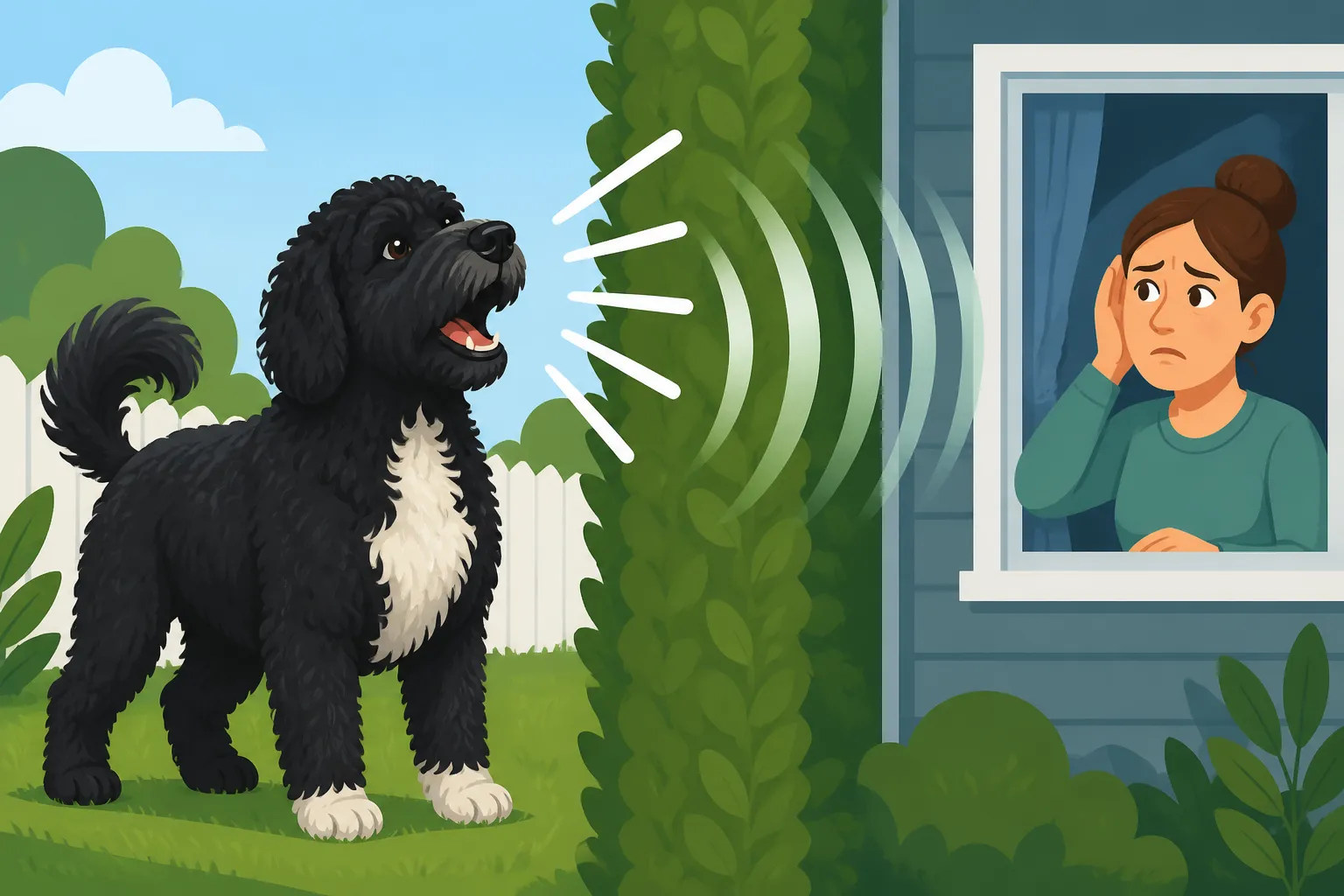
Whether Neighbors Hear a Portuguese Water Dog
One of the most common worries for any dog owner, especially those with an intelligent and vocal breed, is whether their beloved companion's barks and woofs will become a source of contention with the folks next door. It’s a completely valid concern, and with a Portuguese Water Dog, whose heritage includes being an alert and active companion, it's wise to understand their natural tendencies. This guide will help you unpack the vocalizations of a Portuguese Water Dog, explore why they might be heard by your neighbors, and offer practical, empathetic strategies to manage their delightful (but sometimes loud) conversations with the world.
Understanding the Portuguese Water Dog's Vocal Nature
Let's be real, every dog barks. It's how they communicate, express joy, concern, or even just say "hello." But with a Portuguese Water Dog, their barks can sometimes carry a bit more conviction, making you wonder just how much your neighbors are privy to their daily discussions. It’s not that they are inherently "barkers" more than other breeds, but their intelligence and working drive mean they use their voice with purpose.
Barking as a Form of Communication and Alert
Think about the original job of a Portuguese Water Dog. They weren't just fetching fish; they were partners on fishing boats, keenly aware of their surroundings. They needed to be able to alert fishermen to changes in the weather, approaching boats, or even lost gear. This keen sense of awareness and their natural inclination to communicate translate directly into their modern-day lives.
In your home, this historical role often manifests as a strong alert instinct. They might bark to let you know the mail carrier is at the door, that a squirrel has dared to cross the yard, or even that a leaf just blew past the window in an unusual fashion. It's not necessarily aggression; it's often their way of saying, "Hey, something's happening! You should know!" They can have a whole repertoire of sounds, from a sharp, sudden bark to a more drawn-out "woof-woof-woooooof" or even a grumble that sounds like they're having a private conversation. It's truly fascinating to observe once you learn to decipher their language, but for your neighbors, it might just sound like "dog noise." Understanding What a Portuguese Water Dog Was Bred to Do on a Boat gives you a lot of insight into why they are so attentive and vocal.
Factors Influencing Barking Volume and Frequency
Several things can turn an occasional bark into a full-blown concert that your neighbors definitely hear. Like people, dogs have personalities, and some PWDs are simply more vocal than others. But beyond individual temperament, environmental factors, training, and how well their needs are met play a huge role.
A Portuguese Water Dog that isn't getting enough mental or physical exercise is far more likely to resort to excessive barking. They are a smart breed, bred to be working partners, and a bored PWD is a creative PWD—and often a loud PWD. If they don't have enough to do, they'll invent a job, and that job often involves announcing everything that moves outside the window. This isn't just frustrating for you; it's a sign that your dog isn't living their best life. Similarly, a Portuguese Water Dog with separation anxiety might bark constantly when left alone, a distressing sound for both the dog and anyone within earshot. Early socialization and consistent training can certainly help shape their vocal habits, teaching them when it's appropriate to bark and when it's time to be quiet.
Here's a quick guide to some common PWD vocalizations and what they often mean:
| Vocalization Type | Likely Meaning | Neighbor Impact |
|---|---|---|
| Alert Bark | "Someone's here!" / "Intruder!" (mail carrier, squirrel, passerby) | Often sharp, repetitive; can be startling or annoying to neighbors. |
| Excitement Bark | "Play with me!" / "You're home!" / "Let's go!" | Enthusiastic, higher-pitched; usually short-lived but can be loud during peak excitement. |
| Boredom Bark | "I'm lonely!" / "I need a job!" / "Entertain me!" | Repetitive, often sustained for long periods if unaddressed; highly disruptive. |
| Demand Bark | "Give me attention!" / "I want that toy!" / "Let me out!" | Sharp, insistent; can quickly become a nuisance if rewarded. |
| Warning Growl | "Stay away from my person/space!" (less common as a general nuisance, more situation-specific) | Lower rumble, can escalate to barking if ignored; concerning if directed at neighbors. |
| Happy Grumbles | "I'm content" / "You're scratching the right spot" (often soft, internal) | Usually not heard by neighbors; part of their charming communication with you. |
Common Scenarios That Lead to Neighbor-Noticeable Barking
It's one thing for your Portuguese Water Dog to bark when someone's at your door, but it's another for them to be a constant source of noise for the whole block. Understanding the typical triggers can help you manage and even prevent those neighbor-impacting vocal outbursts.
The "Window Watcher" and Outdoor Stimuli
This is arguably the most common scenario for neighbor complaints. Many Portuguese Water Dogs absolutely love to "supervise" the world from a window or a fence line. Their innate alertness means they notice everything: the child riding a scooter down the street, the neighbor walking their poodle, a plastic bag blowing in the wind, or even a sudden shift in sunlight. Each of these can be an excuse for a bark, or a series of barks, because they feel it's their duty to inform you (and everyone else) about the event.
Imagine your Portuguese Water Dog, curled up on the couch, suddenly springs to life with a volley of barks because the garbage truck is rumbling down the street. To them, it’s a giant, noisy monster invading their territory. To your neighbors, it’s just Tuesday, and your dog is making a racket. If your dog has free access to windows throughout the day, these little "alerts" can add up, becoming a consistent, high-frequency noise that easily carries over property lines. This is a behavior that requires a good dose of training and management to reduce its frequency and intensity.
Boredom, Loneliness, and Attention-Seeking Barks
A Portuguese Water Dog is not a breed that thrives on being a couch potato all day, every day. These are intelligent, active dogs with a strong drive to work and interact. If they're not getting enough mental stimulation, physical exercise, or quality time with their humans, they're going to get bored. And a bored dog often turns into a vocal dog. This is where What an Under Exercised Portuguese Water Dog Does truly comes into play.
A Portuguese Water Dog that's left alone for long stretches without adequate enrichment might start barking out of sheer boredom, frustration, or even loneliness. These barks tend to be persistent and monotonous, which can be incredibly irritating for neighbors trying to enjoy their own yards or quiet homes. Sometimes, they learn that barking gets your attention – whether it's for food, a walk, or just a pat. If you inadvertently reinforce this behavior by responding to their barks, you're teaching them that being loud is an effective way to get what they want. This can escalate into a truly challenging situation that impacts not only your neighbors but your own peace of mind. For a comprehensive look at their needs, check out What a Portuguese Water Dog Needs Every Day.
Excitement and Playtime Vocalizations
Not all barking is a problem. Sometimes, a Portuguese Water Dog just gets really excited. Think about coming home after a long day – your PWD might greet you with a joyous chorus of barks, a happy dance, and a wagging tail. Or during a spirited game of fetch, they might "talk" to the ball, barking with anticipation or triumph as they retrieve it. These are natural, joyful expressions, and part of their lively personality.
These barks are usually short-lived and tied to specific happy moments. However, if your yard borders another, or you have close neighbors, even happy barks during playtime can still be heard. For instance, if your Portuguese Water Dog loves playing in the water and barks exuberantly as they splash around, those joyful sounds can carry. It's not usually the type of barking that leads to neighbor complaints about nuisance, but it's good to be aware that even positive vocalizations contribute to the overall noise level around your home.
Strategies to Manage and Minimize Nuisance Barking
If you're noticing your Portuguese Water Dog's barks are becoming a bit too prominent for the neighborhood, there are many effective strategies you can employ. It's all about understanding their needs and consistently guiding their behavior.
Ensuring Adequate Exercise and Mental Stimulation
This is perhaps the most crucial step for a high-energy, intelligent breed like the Portuguese Water Dog. A tired dog is often a quiet dog. These dogs were bred to work long hours alongside fishermen, retrieving, carrying messages, and herding fish. They thrive on having a "job." If they don't get sufficient physical exertion and mental challenges, they'll invent their own, and that often involves excessive barking.
Aim for at least an hour or two of vigorous exercise daily, which could include long walks, running, hiking, or, ideally, swimming. Many Portuguese Water Dogs absolutely adore water, and swimming is an excellent way to burn off energy without putting stress on their joints. Beyond physical exercise, engage their minds with puzzle toys, scent work (they're often fantastic at How a Portuguese Water Dog Can Do Scent Work), or training sessions. Even short, consistent training bursts throughout the day can make a huge difference. Consider robust retrieving games too, as Which Retrieving Games Tire a Portuguese Water Dog can give them a real workout. A mentally and physically satisfied Portuguese Water Dog is far less likely to bark out of boredom or frustration, meaning fewer complaints from your neighbors. Regularly reviewing How Many Hours a Week a Portuguese Water Dog Really Takes can help you assess if you're meeting their needs.
Training and Desensitization Techniques
Training is absolutely essential for managing barking. It’s not about stopping them from ever barking (that’s unrealistic and unfair), but teaching them when to bark and when to be quiet. A solid "quiet" command is invaluable. Start by identifying what triggers their barking. When they bark at a trigger, let them bark once or twice, then calmly say "Quiet!" and distract them with a treat or a toy. As soon as they stop barking, even for a second, reward them. Repeat this consistently.
For window watchers, you can manage access to windows with curtains, blinds, or even frosted window film during times when outdoor activity is high. Desensitizing them to sounds that trigger barking can also help. Play recordings of common triggers (like doorbells, kids playing, or traffic) at a very low volume, rewarding your dog for remaining calm. Gradually increase the volume over time. For more structured help, resources like BAXTER & Bella offer online training programs that can guide you through these techniques step-by-step, helping you to address specific barking issues with positive reinforcement. Remember, consistency is key, and every family member needs to be on board with the training plan.
Environmental Management and Sound Barriers
Sometimes, even with the best training, you need to manage the environment to reduce audible barking. If your dog barks at everything they see outside a window, consider closing curtains or blinds, especially when you're not home or supervising. If they bark at sounds, a white noise machine or a fan can help muffle outdoor noises. Some owners find calming dog-specific music played softly can also help reduce stress and thus barking.
For outdoor spaces, a solid privacy fence can be a game-changer if your Portuguese Water Dog is a fence-barker. If they can't see the triggers, they're less likely to bark at them. If a solid fence isn't an option, consider planting dense shrubs or using privacy screens. For indoor situations, moving your dog's crate or bed to a quieter part of the house when you're out can reduce their exposure to stimuli. You can find a variety of sound-dampening panels or acoustic solutions on Amazon that might help absorb sound within your home, preventing it from traveling as easily to your neighbors. These physical interventions work best in conjunction with consistent training and enrichment.
The Impact of Portuguese Water Dog Barking on Neighborly Relations
No one wants to be "that neighbor" whose dog is constantly disrupting the peace. Being proactive and considerate can make a world of difference in maintaining good relationships with the people living next to you, even if your Portuguese Water Dog is particularly vocal.
Proactive Communication with Neighbors
One of the best things you can do is to talk to your neighbors before a problem arises. If you've just brought home a Portuguese Water Dog puppy, or you know your adult dog is sometimes vocal, have an open conversation. Explain that you have an intelligent, alert breed, and while you're committed to training and managing their vocalizations, there might be times they're heard.
Provide them with your contact information and encourage them to reach out to you directly if the barking becomes genuinely excessive or persistent. Knowing that you're aware of the issue and actively working on it can diffuse a lot of potential frustration. It shows respect and a willingness to be a good neighbor, which goes a long way. You might also ask them if there are specific times their peace is most important, like during a baby's nap time or if someone works nights, so you can be extra vigilant during those hours. Remember, even though How Much a Portuguese Water Dog Barks can vary greatly, proactive communication is always beneficial.
Legal and Community Considerations
Beyond strained relationships, excessive dog barking can lead to more formal complaints. Many municipalities have noise ordinances that prohibit continuous or excessive dog barking, especially during certain hours. Homeowners' associations often have similar rules. If complaints are filed, you could face fines, or in extreme cases, be required to rehome your dog.
It’s crucial to understand your local ordinances regarding nuisance barking. Taking steps to address your Portuguese Water Dog's barking isn't just about being a good neighbor; it's about protecting your dog and your family from potential legal issues. Being a responsible pet owner means being considerate of your community. While your Portuguese Water Dog might make an excellent watchdog (as discussed in Whether a Portuguese Water Dog Makes a Watchdog), their protective instincts need to be channeled appropriately to ensure they don't become a neighborhood nuisance. If you live in an apartment, this issue becomes even more critical, so consider Whether a Portuguese Water Dog Suits an Apartment carefully before committing to the breed in that environment.
Disclaimer
This article is for general informational purposes only and does not constitute professional advice. Laws, prices and regulations vary by location and change over time. Consult a qualified professional for guidance on your specific situation.