Why a Damp Portuguese Water Dog Gets Skin Trouble
It's a truth universally acknowledged among Portuguese Water Dog owners: their beautiful, dense, water-repellent coats, which are such a gift for their aquatic adventures, can quickly become a curse if not managed properly. Many a well-meaning owner has discovered, to their dismay, that leaving their beloved PWD damp for too long can rapidly lead to frustrating, painful, and persistent skin issues, turning their water-loving companion into an itchy, irritated mess. This guide dives deep into why dampness is such a foe for the Portuguese Water Dog's skin and what you can do to prevent these common, uncomfortable problems.
The Portuguese Water Dog's Unique Coat: A Double-Edged Sword
The Portuguese Water Dog's coat is truly remarkable, designed by centuries of working alongside fishermen in the chilly waters off the coast of Portugal. It's meant to protect them from the elements, insulate them from cold, and shed water efficiently once they're out of the surf. But this very efficiency, when not properly managed, can turn against them, creating a prime environment for skin problems.
Why the PWD Coat Traps Moisture
Unlike many breeds with a double coat that provides excellent airflow, the Portuguese Water Dog has a single coat, which is either curly or wavy. This dense, non-shedding (or very low-shedding) coat is often described as being like human hair. While this makes them a fantastic choice for allergy sufferers, it also means that water gets into the coat and can stay there, rather than rolling off easily. Think of a wool sweater versus a waterproof jacket; the wool might eventually dry, but it holds onto that moisture for ages.
The tight curls or deep waves act like sponges, soaking up water and holding it close to the skin. There's no fine, soft undercoat to create a layer of air, and the texture itself means that air circulation to the skin is significantly reduced once wet. This creates a perpetually warm, moist microclimate right against your dog's skin, an absolute paradise for unwelcome microbial guests. Without diligent drying, especially in thicker areas, this dampness can persist for hours, if not an entire day, laying the groundwork for severe irritation.
The Role of Coat Density in Skin Issues
The sheer density of a Portuguese Water Dog's coat exacerbates the problem. Even if you towel-dry vigorously, the water often only gets removed from the surface layers, leaving the deeper coat and the skin underneath still thoroughly soaked. Imagine trying to dry a deep-pile rug with just a towel – it might feel dry on top, but underneath, it's still damp. This is particularly true for dogs with the curly coat, where the ringlets can lock in moisture even more effectively than the wavy variety.
This dense, water-logged environment compromises the skin's natural barrier. Healthy skin has a protective layer of oils and microorganisms that keep it supple and free from infection. When the skin is constantly damp, this barrier can weaken, becoming more permeable and less able to defend itself. Furthermore, if the coat isn't brushed regularly, it can mat easily, especially when wet, creating even denser pockets where moisture and grime become trapped, intensifying the problem. For more on preventing mats, consider reading How Long Brushing a Portuguese Water Dog Takes.
Common Skin Ailments Triggered by Constant Dampness
The consistent warmth and moisture against a Portuguese Water Dog's skin don't just feel uncomfortable; they actively invite a host of skin problems. These aren't just minor irritations; they can quickly become painful, chronic conditions that require veterinary intervention and dedicated home care.
Hot Spots: The Rapidly Spreading Nightmare
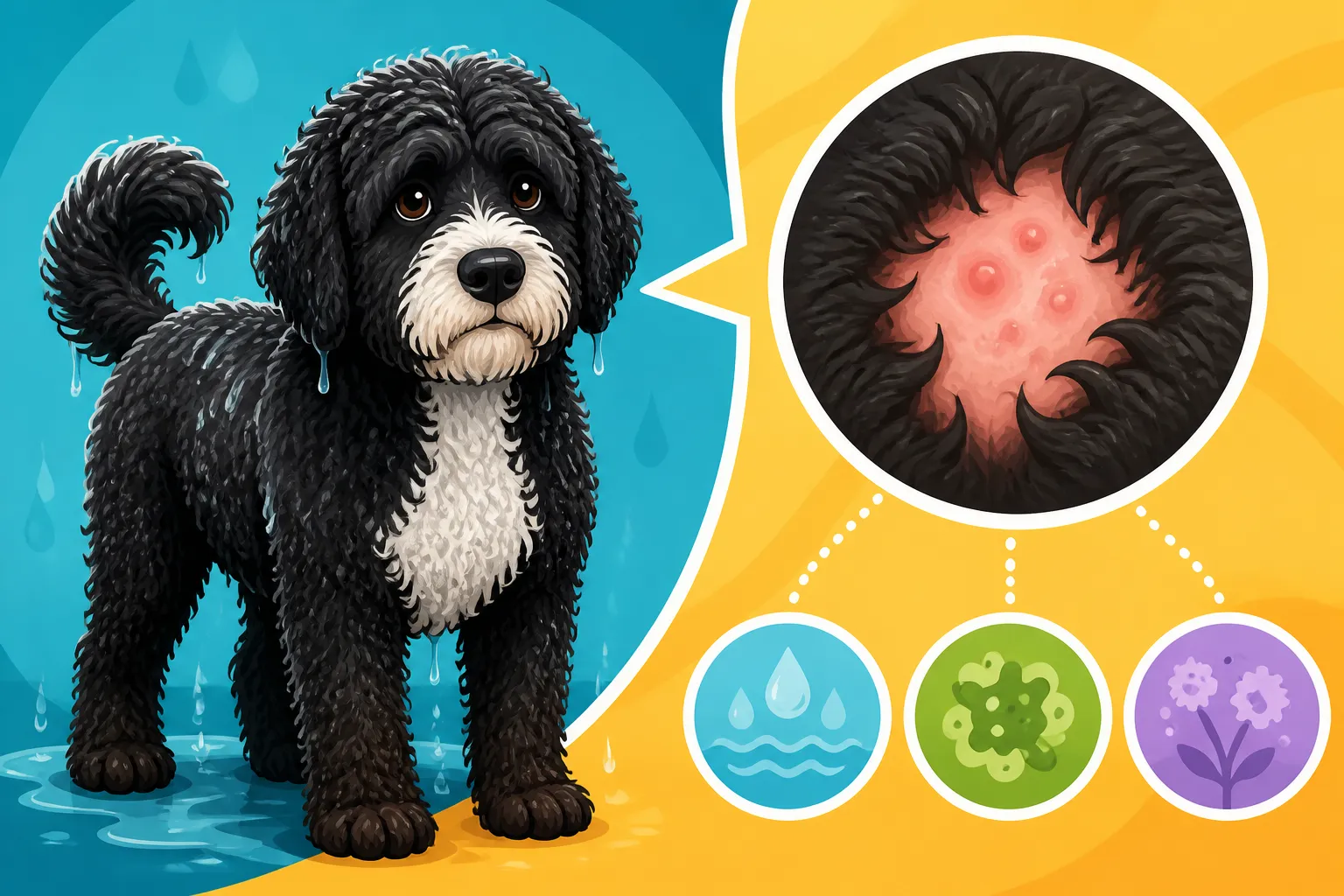
Hot spots, clinically known as acute moist dermatitis, are perhaps the most notorious skin issue for damp dogs. They appear as red, raw, oozing lesions that seem to pop up overnight and spread with alarming speed. The trigger is often something as simple as a minor itch from a flea bite, an allergy, or just general dampness. When a Portuguese Water Dog's skin is constantly wet, the superficial itch quickly turns into intense licking, chewing, and scratching. This self-trauma breaks the skin, and with the ever-present moisture, bacteria seize the opportunity to multiply rapidly.
A small hot spot can become a dinner plate-sized lesion in a matter of hours. The area will be inflamed, painful to the touch, and often have a foul odor. The surrounding hair usually becomes matted with exudate, further trapping moisture and hindering healing. Preventing hot spots is far easier than treating them, as they can cause significant distress to your dog and be quite stubborn to resolve. If you've ever dealt with a full-blown hot spot, you know the urgency of keeping your PWD dry. For a deeper dive into these vexing issues, see Whether a Portuguese Water Dog Gets Hot Spots.
Yeast Infections: The Musty Culprit
Yeast, particularly Malassezia pachydermatis, is a normal inhabitant of a dog's skin and ears. However, when the skin's environment shifts—such as becoming warm and consistently damp—this yeast can overgrow, leading to a full-blown infection. In Portuguese Water Dogs, this often manifests in areas where moisture is most easily trapped, like between the paw pads, in skin folds, or, very commonly, in the ears.
A yeast infection typically presents with a distinct, musty, often sweet-and-sour odor that many describe as smelling like corn chips or stale bread. The skin may appear red, greasy, and itchy, sometimes with a scaly or flaky texture. In chronic cases, the skin can thicken and become hyperpigmented (darker). In the ears, yeast infections lead to redness, itchiness, head shaking, and a dark, waxy discharge. Given how much Portuguese Water Dogs love water, ear infections are a particularly common concern if their ears aren't dried meticulously after every swim. Regularly checking and cleaning their ears is paramount; you might want to explore Why a Portuguese Water Dog's Ears Need Checking Every Week.
Bacterial Dermatitis: When the Skin Barrier Fails
Bacterial dermatitis, or pyoderma, occurs when bacteria colonize and infect the skin. Like yeast, certain bacteria are normally present on a dog's skin. But constant dampness weakens the skin's protective barrier, making it easier for these bacteria, or new ones, to invade and cause trouble. The moist conditions also allow bacteria to multiply unchecked.
Bacterial dermatitis can take various forms, from superficial skin infections to deep, painful ones. You might see small red bumps (papules), pus-filled lesions (pustules), crusts, or circular areas of hair loss. The skin underneath will be inflamed and itchy. It can often be confused with hot spots in its early stages, but unlike hot spots, it might not always ooze. Constant dampness creates an open invitation for bacterial overgrowth, leading to ongoing cycles of skin irritation and infection. This is especially true if a dog has underlying allergies, as the damaged skin from allergic reactions combined with moisture is a perfect storm for bacterial infections. For more on allergies, check out Whether a Portuguese Water Dog Gets Skin Allergies.
Prevention is Key: Drying and Grooming Strategies
Given the Portuguese Water Dog's unique coat and love for water, preventing skin trouble is a hands-on commitment. It's not about stopping them from enjoying water, but about having a rigorous routine in place to counteract the effects of dampness.
The Absolute Necessity of Thorough Drying
This cannot be stressed enough: thorough drying after every swim, bath, or even a rainy walk is the single most important thing you can do to prevent skin issues. Towel drying simply won't cut it for a PWD. You need to get air down to the skin.
This is where a high-velocity force dryer becomes your best friend. These aren't like human hair dryers; they blow cool or warm (not hot) air with powerful force, pushing water out of the coat rather than just evaporating it. Using a force dryer can dramatically reduce drying time and, crucially, ensure the skin is truly dry. If you're wondering about this essential tool, you can read What a Force Dryer Does for a Portuguese Water Dog. Start with low settings and gradually introduce your PWD to the dryer's sound and sensation, making it a positive experience with treats. Many owners find quality force dryers, along with specialized shampoos and conditioners, readily available on platforms like Amazon or Chewy.
After using the force dryer, follow up with a regular absorbent towel. Don't just rub; blot and squeeze the coat to wick away any remaining surface moisture. Pay special attention to areas like armpits, groin, under the tail, and, of course, the ears. The ears, in particular, need careful attention. A good quality ear cleaner, often found on Chewy, can help dry out the ear canal and prevent yeast and bacterial overgrowth after water exposure.
Strategic Grooming for Optimal Airflow
Beyond drying, your Portuguese Water Dog's grooming routine plays a critical role in preventing dampness-related skin problems. Regular brushing and clipping are non-negotiable.
Brushing: Daily or every-other-day brushing, even if your dog isn't swimming, is essential. This prevents mats from forming, which are notorious for trapping moisture and creating hotbeds for infection. Use a slicker brush that can reach the skin, followed by a metal comb to ensure no tangles are left behind. When brushing, gently lift sections of the coat, working from the skin outwards. A matted coat not only holds water but also prevents air from circulating, making drying a near-impossible task.
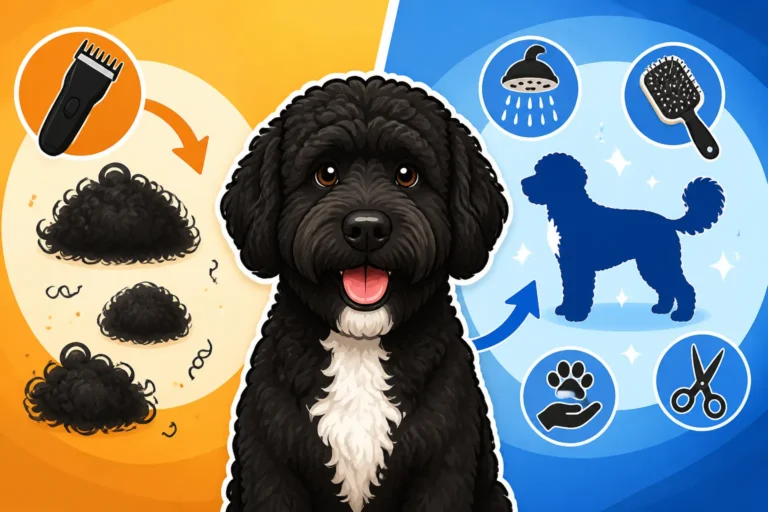
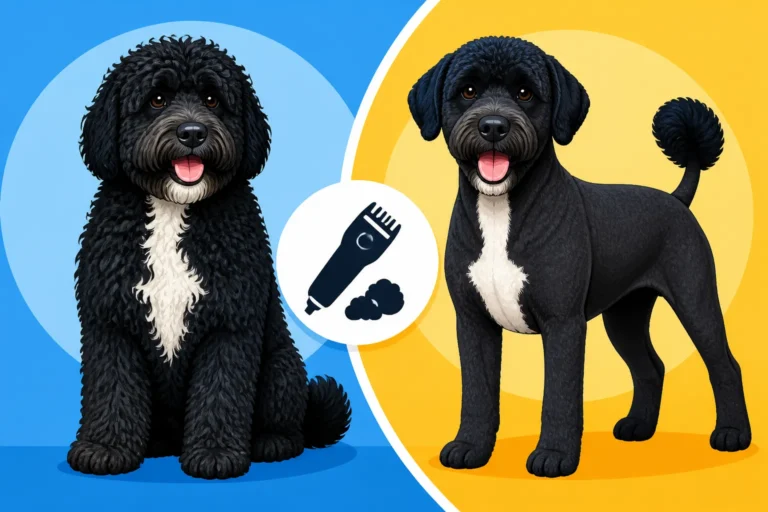
Clipping: The style and length of your dog's clip also impact how easily their coat dries. While the traditional lion clip leaves some areas shaved, many pet owners opt for a retriever clip or an even shorter utility clip, which keeps the coat at a uniform, manageable length all over. A shorter clip means less hair to hold water, making drying significantly faster and more effective. Discuss with your groomer which clip would be most practical for your lifestyle and your dog's activity level. A shorter coat is often easier for home grooming, too, especially if you get your supplies from Amazon. For details on common clips, consider The Retriever Clip Is the Coat Most Portuguese Water Dogs Wear.
Table: Grooming Practices to Combat Dampness
| Practice | Benefit | Frequency | Essential Tools |
|---|---|---|---|
| Thorough Drying | Removes moisture from skin, prevents microbial growth. | After every wet event | High-velocity force dryer, absorbent towels |
| Regular Brushing | Prevents mats, improves air circulation, checks for issues. | Daily to every other day | Slicker brush, metal comb |
| Strategic Clipping | Reduces drying time, minimizes moisture-trapping bulk. | Every 4-8 weeks, depending on length | Professional groomer or home clippers |
| Ear Cleaning | Prevents ear infections from trapped moisture. | Weekly, or after every swim | Vet-approved ear cleaner, cotton balls |
Topical Solutions and When to Consult the Vet
Sometimes, despite your best efforts, skin issues can still arise. Having a few topical solutions on hand can help manage minor irritations, but knowing when to seek professional veterinary advice is crucial.
For minor redness or itchiness, a medicated shampoo designed for sensitive skin or for preventing fungal/bacterial growth can be very helpful. Look for ingredients like chlorhexidine or miconazole. These can be purchased from your vet or pet supply stores like Chewy. Always ensure the shampoo is rinsed thoroughly, and the dog is dried completely afterward. Which Shampoo Suits a Portuguese Water Dog's Coat offers further guidance here.
For ears, a regular, non-irritating ear cleaning solution can be a lifesaver, especially if your dog is a frequent swimmer. These solutions help dry out the ear canal and prevent the buildup of wax and debris that can trap moisture and harbor infection. However, if you notice a foul odor, excessive discharge, pain, or persistent head shaking, it’s time for a vet visit. These are signs of a full-blown infection that requires prescription medication.
Don't hesitate to call your veterinarian if you suspect a hot spot, a worsening yeast infection, or any widespread skin irritation. Early intervention can prevent a minor issue from becoming a chronic, painful problem. Your vet can accurately diagnose the problem and prescribe the appropriate treatment, which may include antibiotics, antifungals, steroids, or stronger medicated shampoos.
Lifestyle Adjustments for the Water-Loving PWD
Living with a Portuguese Water Dog means embracing their love for water, but also understanding the careful balance required to keep them healthy. Integrating their aquatic passion with preventative skin care is key to a happy, healthy companion.
The Post-Swim Ritual
For a Portuguese Water Dog, every swim should be followed by a structured post-swim ritual. This isn't just about getting them "mostly dry" before they shake water all over your house; it's about safeguarding their skin.
First, a thorough rinse with clean, fresh water is essential, especially after swimming in saltwater, chlorinated pools, or murky lake water. Salt and chlorine can be irritating and drying to the skin and coat, while lake water can contain bacteria and algae. Rinsing removes these irritants and contaminants.
Immediately after rinsing, the drying process begins in earnest. Start with robust towel drying, focusing on squeezing water out of the coat. Then, move to your force dryer. Dedicate sufficient time to ensure you get all the way down to the skin, even on their thickest areas. Don't forget their ears – use an ear drying solution if recommended by your vet or if your PWD is prone to ear infections. This routine might feel like a lot, but it’s far less stressful and costly than treating recurring skin infections. You can find more detail on this specific ritual in Drying a Portuguese Water Dog After Every Swim.
Nutrition and Skin Health
While external care is paramount, internal health also plays a significant role in your Portuguese Water Dog's skin condition. A balanced, high-quality diet can support a strong immune system and a healthy skin barrier, making your dog more resilient to potential issues.
Ensure your dog's food contains adequate levels of essential fatty acids, particularly Omega-3s and Omega-6s, which are crucial for skin and coat health. These fatty acids help maintain the skin's integrity, reduce inflammation, and promote a healthy, shiny coat. Some owners find that fresh, high-quality dog food options, like those from Ollie, provide superior nutrition that visibly improves skin and coat quality. If your dog is prone to skin issues, discuss dietary supplements with your vet, such as fish oil, which can further boost skin health. Remember, a healthy dog from the inside out is better equipped to fight off environmental challenges. For more information on feeding an active dog, refer to Feeding an Athletic Portuguese Water Dog.
Recognizing Early Warning Signs
Being vigilant and recognizing the early signs of skin irritation can save you and your Portuguese Water Dog a lot of trouble. Don't wait until a small itch turns into an oozing hot spot.
Keep an eye out for:
- Increased scratching, licking, or chewing: This is often the first sign something is amiss. Pay attention to specific areas they target.
- Redness or inflammation: Lift their coat regularly and look at the skin underneath. A healthy PWD's skin should be pale and clear.
- Unusual odor: A musty, yeasty, or otherwise unpleasant smell often indicates an infection.
- Flakiness or greasiness: These can be signs of yeast or bacterial overgrowth.
- Hair loss in patches: While hot spots cause acute hair loss, other infections can also lead to thinning or bald spots.
- Sensitivity to touch: If your dog flinches or seems painful when you touch a certain area, investigate immediately.
Regularly run your hands over your dog's entire body, feeling for lumps, bumps, mats, or areas of heat. This not only allows you to bond but also helps you detect problems before they escalate. Don't forget to check their paw pads and between their toes, as these areas are prone to dampness and irritation. By being proactive and attentive, you can ensure your water-loving Portuguese Water Dog stays happy and itch-free for many years of swimming fun.
Disclaimer
This article is for general informational purposes only and does not constitute professional advice. Laws, prices and regulations vary by location and change over time. Consult a qualified professional for guidance on your specific situation.