How Many Hours a Portuguese Water Dog Takes to Air Dry
Anyone who shares their life with a Portuguese Water Dog knows one thing for certain: these dogs love water. Whether it's the ocean, a lake, a pool, or even a puddle, they're drawn to it like magnets. But what many new owners, or even seasoned ones, often underestimate is just how long it takes to get that wonderfully thick, water-resistant coat truly dry after a good swim. Leaving a PWD damp can lead to a host of problems, from skin issues to pervasive odors. This guide will dive deep into the reality of drying your Portuguese Water Dog, dispelling myths and offering practical advice to keep your companion healthy and comfortable.
The Unique Water-Resistant Coat of the Portuguese Water Dog
The Portuguese Water Dog's coat isn't just for looks; it's a marvel of natural engineering, perfectly designed for its original purpose of working alongside fishermen in the chilly waters off the coast of Portugal. Understanding its unique characteristics is the first step in appreciating why drying takes so long.
A Coat Engineered for Water
Unlike many breeds, Portuguese Water Dogs possess a single coat, meaning they lack an undercoat. This might seem counterintuitive for a water dog, but it's precisely this structure that contributes to its famed water-resistance and low-shedding qualities. The dense, non-shedding hair acts like a natural wetsuit, insulating the dog in cold water and preventing water from penetrating to the skin. When wet, this coat absorbs and holds a significant amount of water, almost clinging to it. Imagine trying to dry a thick wool blanket by simply hanging it up – that’s a bit like what you’re dealing with. This is also why many consider the breed hypoallergenic; the hair that would typically shed and release dander is instead held within the coat. This clever design, however, means that moisture gets trapped deep within the dense curls or waves, and simply shaking it off isn't enough to get truly dry. For a deeper understanding of its structure, check out Why a Portuguese Water Dog Has a Single Coat.
Curly vs. Wavy: Does it Matter for Drying?
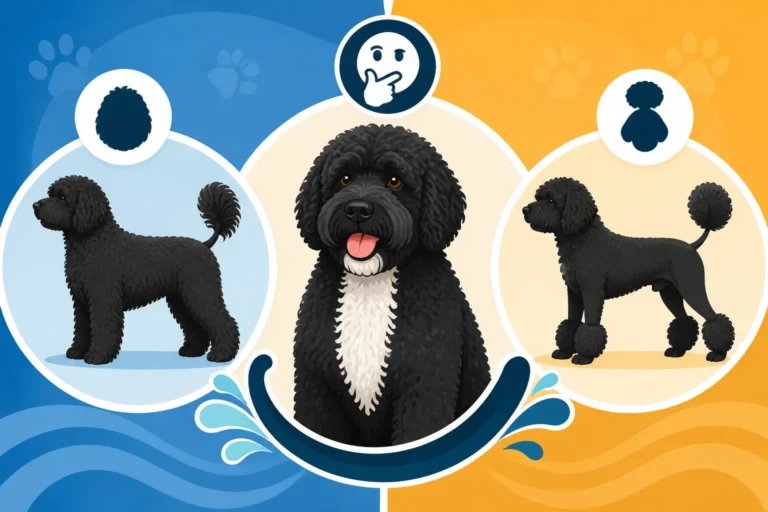
Portuguese Water Dogs come in two distinct coat types: curly and wavy. While both are equally effective for their water work and share that delightful non-shedding trait, there are subtle differences in how they handle water and, consequently, how long they take to dry. The curly coat is typically described as compact, cylindrical curls that are often a bit softer to the touch. The wavy coat, on the other hand, is generally less tightly curled, often with a slight sheen, and can appear shaggier if not trimmed regularly.
From a drying perspective, the differences can be minimal but noticeable. A tightly curled coat might trap more moisture within the individual curls, making it seem like the water is harder to wick away. A wavy coat, while potentially appearing to hold less water on the surface, can still have incredible density, meaning moisture is still nestled close to the skin. In either case, the sheer volume and density of hair mean that simply leaving your dog to air dry after a swim isn't a quick process. Both types benefit immensely from proper towel drying and, ideally, forced air drying to prevent issues. If you’re curious about the visual differences, our guide Curly or Wavy: the Two Portuguese Water Dog Coats goes into more detail.
Unpacking the Air Drying Timeline: Much Longer Than You Think
So, you've just enjoyed a fantastic romp at the beach or a splash in the lake with your Portuguese Water Dog. They're wet, happy, and you're thinking of just letting them shake it off and air dry. The reality, however, is that this can be a surprisingly lengthy process, far longer than most owners anticipate.
What "Air Dry" Really Means for a PWD
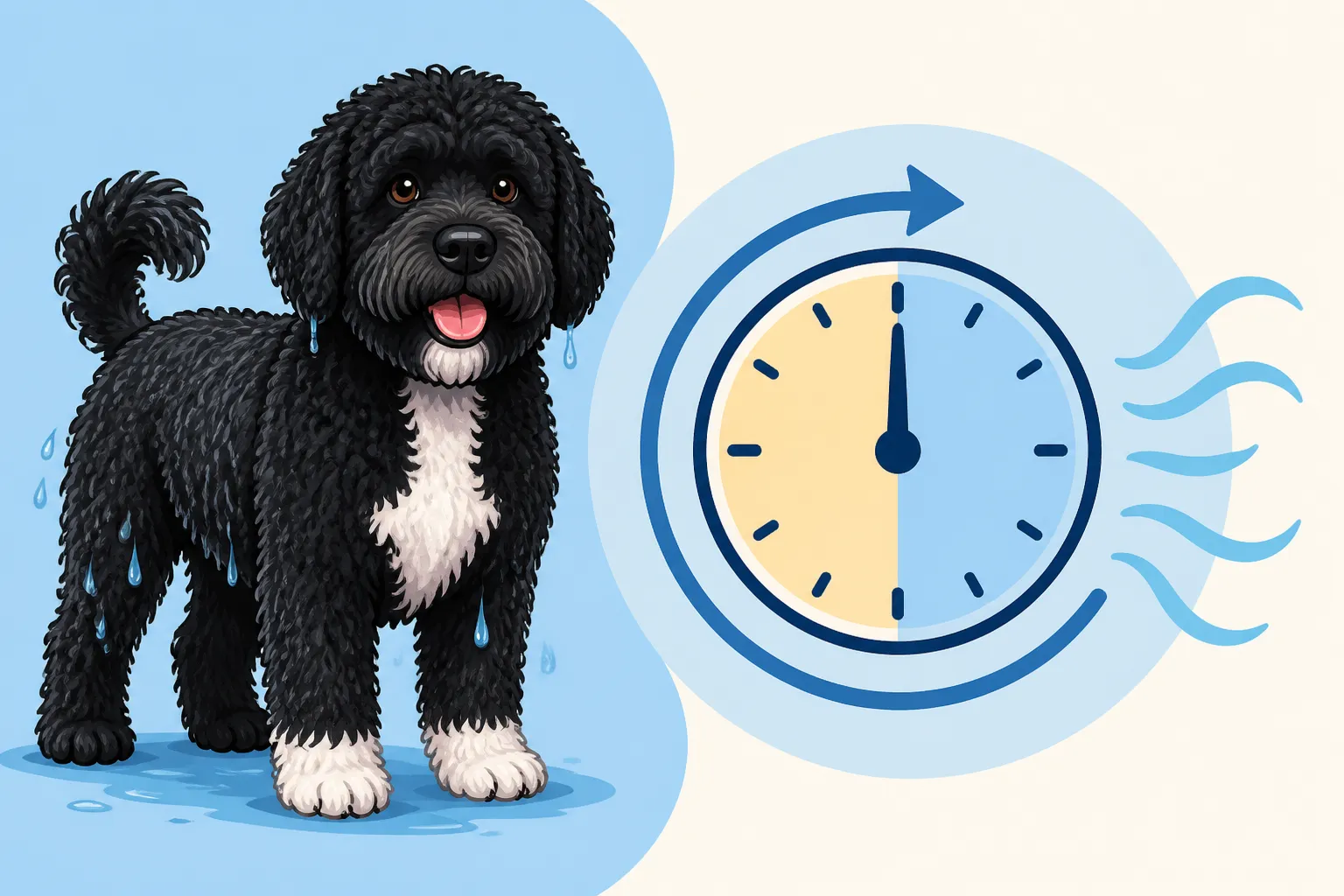
When we talk about air drying for a Portuguese Water Dog, we're not talking about a quick twenty-minute turnaround like a short-coated Labrador. For a PWD, "air dry" can mean anywhere from 4 to 8 hours, and sometimes even longer, depending on a multitude of factors. This isn't just about the surface hair feeling dry; it's about the entire coat, right down to the skin, being completely free of moisture. Many owners make the mistake of thinking their dog is dry when the outer layer feels fluffy, only to discover a damp, clammy feeling when they reach deeper into the coat. This trapped dampness, hidden beneath layers of dense hair, is where problems begin to brew. It's a fundamental aspect of their care, and ignoring it can lead to more than just a perpetually damp-smelling house. Our specific article, How Many Hours a Portuguese Water Dog Takes to Air Dry, can give you even more context on this often-overlooked aspect of PWD care.
Factors That Stretch or Shrink Drying Time
The exact air drying time for your Portuguese Water Dog isn't set in stone. Several variables play a significant role in speeding up or slowing down the process:
- Coat Length and Density: A longer, thicker coat, even if it's the wavy variety, will inherently hold more water and take longer to dry than a freshly clipped, shorter coat. Think of the difference between a thick bath sheet and a thin hand towel.
- Environmental Humidity: If you live in a humid climate, the air is already saturated with moisture, making it much harder for your dog's coat to release its water content. Dry desert air, conversely, will pull moisture out of the coat more quickly.
- Ambient Temperature: While warmer air can help evaporate moisture, a hot environment coupled with a damp coat can also create a breeding ground for bacteria if ventilation is poor. Cool, breezy conditions are often ideal for air drying, provided the dog isn't getting chilled.
- Air Circulation: A dog left in a still room with no airflow will dry far slower than one relaxing in front of a fan or in a well-ventilated space. Movement and fresh air are key.
- Amount of Initial Towel Drying: This is perhaps the most crucial factor within your control. Aggressive and thorough towel drying immediately after a swim can significantly reduce the air drying time. The more water you can physically remove, the less the air has to do.
- Activity Level: A dog that's actively moving around and shaking will help loosen moisture, but prolonged dampness will still eventually settle in. A dog lying still won't have the benefit of that movement.
Consider the following table for a quick overview of how these factors influence drying:
| Factor | Effect on Drying Time (Air Dry) | Notes |
|---|---|---|
| Longer/Denser Coat | Significantly longer (6-8+ hours) | More hair to hold water, harder for air to penetrate. |
| Shorter/Clipping | Shorter (3-5 hours, depending on length) | Less surface area and volume to hold water. |
| High Humidity | Much longer (6-10+ hours) | Air already saturated, less capacity to absorb moisture. |
| Low Humidity | Shorter (3-6 hours) | Dry air wicks moisture away more efficiently. |
| Warm/Still Air | Longer, with potential for skin issues | Evaporation is slow, can create a warm, damp environment for bacteria. |
| Cool/Breezy Air | Shorter, with good ventilation | Moving air helps carry away moisture, but avoid chilling. |
| Minimal Towel Dry | Extremely long, almost indefinite | Most water remains trapped. |
| Thorough Towel Dry | Significantly reduced (3-5 hours base) | Removes bulk water, making air drying much more effective. |
Ultimately, relying solely on air drying is often a recipe for discomfort and potential health issues for your PWD.
The Hidden Dangers of a Chronically Damp Coat
While it might seem harmless to let your Portuguese Water Dog air dry, especially if they're active, prolonged dampness can create a breeding ground for several unpleasant and even painful conditions. It's not just about a damp dog smell; it's about their overall health and well-being.
Skin Troubles: Hot Spots and Infections
One of the most common and uncomfortable consequences of a consistently damp coat is the development of skin irritations and infections, often manifesting as "hot spots." These are acutely inflamed, red, moist, and painful areas on the skin that can appear seemingly overnight. The dense, water-retaining coat of a PWD creates the perfect warm, moist environment for bacteria or yeast to thrive. When the skin remains wet for too long, its natural barrier is compromised, making it vulnerable to these opportunistic organisms. A dog might chew or scratch at an itchy spot, exacerbating the irritation and quickly turning a small itch into a full-blown hot spot that requires veterinary attention. These are incredibly painful for your dog and can spread rapidly. To learn more about this, read Why a Damp Portuguese Water Dog Gets Skin Trouble.
Ear Woes: The Swimmer's Predicament
Portuguese Water Dogs are natural swimmers, but their love for water comes with a predisposition to ear infections. Their drop ears, covered with thick hair, create a warm, dark, and often moist environment that is ideal for yeast and bacteria to proliferate. Water trapped in the ear canal after a swim is a primary culprit. If the ears aren't thoroughly dried and cleaned, that moisture becomes a perfect incubator for infection. You might notice your PWD shaking their head, scratching their ears excessively, or a foul odor coming from the ear. Addressing ear moisture is just as critical as drying the coat itself. We've got more on this topic in Why a Swimming Dog Gets Ear Infections and How Often a Portuguese Water Dog Gets an Ear Infection.
The Unseen Battle: Matting and Discomfort
While not a direct health threat in the same way infections are, matting is a major issue exacerbated by dampness. When a PWD's coat gets wet and then air dries slowly, especially without thorough brushing, the curls or waves can tighten and intertwine, forming dense, painful mats. These mats pull on the skin, causing discomfort and pain. They can also hide skin infections, parasites, or injuries, making them difficult to spot. Imagine having a knot in your hair that never dries and constantly pulls at your scalp – that’s what a mat feels like for your dog. Severe matting can even restrict movement. Beyond the physical discomfort, a damp coat can also develop a distinct, musky odor that can permeate your home. This "wet dog smell" is often due to bacteria and yeast thriving in the moist coat, rather than just the water itself. For insight into coat maintenance, see How Long Brushing a Portuguese Water Dog Takes and Whether Mats Hurt a Portuguese Water Dog. The persistent dampness, especially if the dog is inside, also contributes to that distinctive, lingering scent that many owners wish to avoid, as explored in Whether a Portuguese Water Dog Smells When Wet.
Mastering the Drying Process: Beyond Just "Letting Them Be"
Given the challenges of air drying a Portuguese Water Dog, a proactive approach to grooming is essential. You can't just let them shake it off and hope for the best. Instead, a combination of methods will ensure your PWD is truly dry, comfortable, and healthy.
The Power of the Towel: First Line of Defense
Your first line of defense against prolonged dampness is a good, old-fashioned towel. But not just any towel. For a PWD, you'll want highly absorbent towels – think microfibre pet towels or large, thick bath towels. The goal here is to remove as much bulk water as possible, right down to the skin, before any other drying method.
- Aggressive Patting and Squeezing: Don't just rub. Pat and squeeze sections of the coat firmly to wick away water. Pay special attention to the chest, belly, and behind the ears, where water tends to collect.
- Multiple Towels: Have several towels on hand. You'll likely saturate at least one or two completely.
- Start Immediately: Begin towel drying the moment your PWD gets out of the water. The sooner you start, the more effective it will be.
- Ear Care: Gently blot and dry the outer ear flap and as much of the ear canal as you can safely reach with a corner of a towel or a cotton ball. This is crucial for preventing ear infections, as discussed in Whether a Portuguese Water Dog's Ears Should Be Dried Inside.
This initial towel drying phase is non-negotiable and dramatically cuts down on the overall drying time. It's a critical step in Drying a Portuguese Water Dog After Every Swim.
Embracing the Force Dryer: A Game-Changer
For any Portuguese Water Dog owner, a high-velocity force dryer is arguably the single most important piece of grooming equipment you can own after a good set of clippers. These aren't like human hair dryers; they blow cool or warm (not hot!) air at a powerful speed, effectively "blasting" water out of the coat rather than just evaporating it.
- Speed and Efficiency: A force dryer can take a PWD from soaking wet to bone dry in a fraction of the time it would take to air dry – often 30-60 minutes, depending on coat length and density. This prevents the moisture from lingering and causing problems.
- Mat Prevention: As the force dryer blasts the coat, it also helps to separate the hairs, preventing mats from forming as the coat dries. Many owners will use a force dryer while line-brushing their dog, ensuring every hair is separated and dry.
- Health Benefits: By ensuring the coat and skin are completely dry, you drastically reduce the risk of hot spots, skin infections, and ear infections.
- Training and Acclimation: It's important to introduce your PWD to the force dryer gradually, starting at a low setting and rewarding them for calm behavior. Most PWDs, once acclimated, tolerate it well, and many even enjoy the sensation. You can find excellent force dryers on online retailers like Amazon or Chewy. For more details on this essential tool, explore What a Force Dryer Does for a Portuguese Water Dog and Whether a Portuguese Water Dog Tolerates a Dryer.
Other Drying Tools and Techniques
While force dryers are highly recommended, there are other methods and tools that can supplement your drying routine:
- Human Hair Dryers (with caution): If you must use a human hair dryer, always use it on the coolest setting and keep it moving constantly to avoid burning your dog's skin. Their skin is much more sensitive than ours, and a blast of hot air can cause burns quickly. This should be a last resort for small, quickly drying areas, not for the whole dog.
- Absorbent Robes/Coats: Specialized absorbent robes or coats, often made from microfibre, can be great for dogs who have just come out of the water and need to be contained for a short period, perhaps during the car ride home. These can wick away a significant amount of moisture.
- Regular Brushing: Even during the drying process, brushing the coat with a slicker brush and metal comb helps separate the hairs, allowing air to circulate and promoting faster drying. This is particularly important with the dense coats of Portuguese Water Dogs.
- Location, Location, Location: Choosing a well-ventilated area for drying, preferably with a fan, will always aid the process. A breezy patio (if conditions are right) or a room with open windows can make a difference.
No matter the method you choose, the ultimate goal is to ensure your Portuguese Water Dog is not just superficially dry, but completely dry down to the skin. This diligent approach is key to their comfort, health, and a happy, odor-free home.
Disclaimer
This article is for general informational purposes only and does not constitute professional advice. Laws, prices and regulations vary by location and change over time. Consult a qualified professional for guidance on your specific situation.