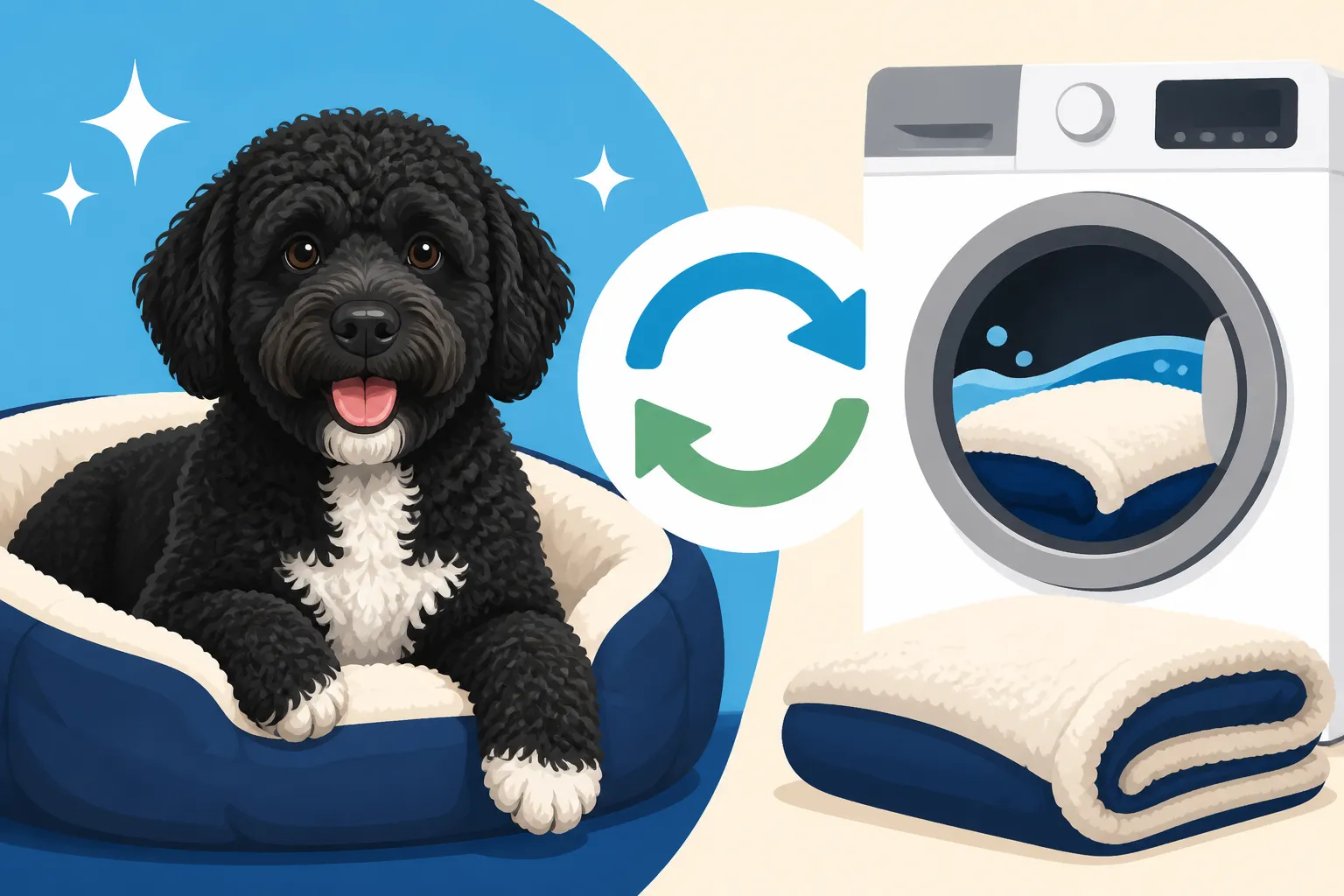
How Often a Portuguese Water Dog’s Bedding Needs Washing
One of the lesser-talked-about challenges of living with a Portuguese Water Dog is keeping their bedding fresh and clean. Let's be honest, it's not a glamorous topic, but a stinky, dirty dog bed isn't just unpleasant for your nose; it can harbor allergens, bacteria, and lead to skin issues for your beloved companion. This guide will walk you through just how often your Portuguese Water Dog's bedding really needs washing, considering their unique lifestyle and what you can do to keep things sanitary and smelling fresh.
The Unavoidable Truth: Why PWD Bedding Gets So Dirty, So Fast
If you've ever owned a Portuguese Water Dog, you know they're not exactly known for their dainty, indoor-only habits. These aren't lap dogs content with a spotless existence on the sofa. They are vibrant, active, and deeply connected to water and the outdoors. This incredible spirit, while endlessly endearing, also means their beds become repositories for all sorts of outdoor elements faster than you might think.
The Portuguese Water Dog Lifestyle: Wet, Wild, and Wonderful (for Dirt)
Think about what your Portuguese Water Dog loves to do. Swimming, right? Whether it's the ocean, a lake, a river, or even your backyard pool, they're drawn to water like magnets. And what comes with water? Usually, a whole lot of other stuff!
When your PWD emerges from a glorious swim, they're not just wet; they're often bringing a host of other elements with them. From the ocean, it's salt and sand, which can dry into irritating particles in their coat. From lakes or rivers, it's mud, algae, and various organic debris that cling to their dense, curly or wavy coat. Even a romp in the backyard after a rain shower means muddy paws and a damp belly making their way straight to their favorite sleeping spot. This constant cycle of getting wet and dirty, then drying off (or not quite drying off) on their bed, means that moisture, grit, and organic material are continually deposited. The coat itself, designed to protect them in water, can also trap these elements, making the bed a collection point for whatever adventures your PWD has had. This is why thorough drying is so important, as discussed in Drying a Portuguese Water Dog After Every Swim.
More Than Just Dirt: Odors, Allergens, and Microbes
Beyond the visible mud and sand, there’s a whole unseen world setting up shop in your Portuguese Water Dog’s bedding. The constant introduction of moisture from damp paws and coats creates the perfect humid environment for bacteria, yeast, and mold to thrive. This isn't just about things getting a bit "doggy" smelling; it's about potential health concerns.
These microbes contribute to that distinct "wet dog" odor, which, unfortunately, tends to linger long after your dog is dry. For dogs with sensitive skin or allergies, prolonged exposure to these microorganisms can exacerbate irritation, leading to scratching, hot spots, or even skin infections. Dust mites, another common allergen, also love to make their home in bedding, feeding on shed skin cells. If anyone in your household, human or canine, suffers from allergies, a dirty dog bed can be a major trigger. Regularly washing the bedding helps to remove these microscopic irritants, reducing the overall allergen load in your home and on your dog. This is especially vital when considering how their coat can hold onto things.
Tailoring the Laundry Schedule: Factors to Consider for Your PWD
There’s no single, magic number for how often to wash your Portuguese Water Dog's bedding. Just like human laundry, it depends on a variety of factors unique to your dog and your household. What might be perfectly fine for one PWD could be wholly insufficient for another. It's about finding that sweet spot between obsessive cleaning and letting things get out of hand.
Age, Health, and Activity Levels of Your Canine Companion
Consider your Portuguese Water Dog's stage of life and daily routine. A young Portuguese Water Dog puppy, still mastering house training, will inevitably have more accidents, necessitating much more frequent washing. Their bedding might need a full wash every few days, or even daily if they're particularly prone to mishaps. This phase is also a good time to invest in multiple washable bed covers, just in case.
On the other end of the spectrum, an older Portuguese Water Dog might spend more time sleeping, and while they might not track in as much mud from active play, they could face issues like incontinence or increased shedding. An aging PWD may also have more sensitive skin, making a clean sleeping environment even more critical to prevent irritation. You can find more details on Caring for an Aging Portuguese Water Dog.
An adult PWD who is an avid swimmer and adventurer – diving into ponds, running through trails, and participating in water trials – will naturally get their bed dirtier than a PWD who mostly enjoys leash walks and indoor playtime. A working dog, perhaps one involved in dock diving or other active sports, might need their bed laundered weekly, if not more frequently, especially if they're coming home damp or sandy multiple times a week. Conversely, a PWD who isn't a huge water fan and has a more sedate lifestyle might stretch to every two to three weeks. If your dog suffers from skin allergies, hot spots, or chronic ear infections, a very frequent washing schedule (weekly or even bi-weekly) is non-negotiable. Reducing allergens and microbes in their immediate environment can significantly improve their comfort and reduce flare-ups.
Your Home Environment and Family Needs
The characteristics of your home and family also play a huge role in determining how often you should be washing your PWD's bedding. For instance, if you have multiple Portuguese Water Dogs, or other pets for that matter, the collective amount of shed fur, dander, and dirt accumulating on their shared or individual beds will increase dramatically. More pets mean more frequent washes.
Consider if anyone in your household has allergies to pet dander. If so, a more rigorous washing schedule – ideally weekly – for all pet bedding can help mitigate human allergic reactions. The type of flooring in your home can also be a factor; a PWD tracking mud into a home with plush carpets might necessitate more frequent bed washes than one living in a home with easy-to-clean tile or hardwood floors.
Furthermore, the material of the bed itself can influence washing frequency. Beds with removable, machine-washable covers are a lifesaver. If your dog's bed isn't easily washable, or if you have an orthopedic bed that can't be tossed in a machine, you might consider adding a washable blanket or cover that can be laundered more often. Some pet owners find that having several interchangeable bed covers makes keeping things clean much easier. Investing in good quality, durable bedding that stands up to frequent washing is wise, and you can find excellent machine-washable beds and covers on sites like Chewy.
The Nitty-Gritty of Bedding Care: Washing and Drying Strategies
Once you've determined a reasonable washing frequency for your Portuguese Water Dog's bedding, the next step is actually tackling the laundry itself. This isn't always as straightforward as it sounds, especially with the robust, often large, beds that PWDs tend to enjoy. Getting it clean is one thing; getting it truly dry is another, equally important challenge.
Choosing the Right Products and Techniques for a Deep Clean
Before you toss everything into the machine, take a moment for some preparation. First, give the bedding a good shake outside or a thorough vacuuming to remove loose hair, dirt, and debris. This prevents your washing machine from getting clogged and helps the detergent work more effectively. If there are visible stains, pretreat them with an enzyme-based pet stain remover or a dab of laundry detergent. These cleaners are excellent at breaking down organic matter that causes odors.
When it comes to detergents, opt for a mild, unscented, and pet-safe laundry detergent. Harsh chemicals or strong perfumes can sometimes irritate your Portuguese Water Dog's skin, leading to itching or discomfort. If your PWD has known skin sensitivities or allergies, a hypoallergenic detergent is an even better choice. Avoid fabric softeners, as they can leave residues that may irritate skin or attract more dirt.
Most dog bed covers and smaller beds can be machine-washed. Check the care label on your specific bed for recommended water temperature and cycle, but generally, a warm or hot water cycle can help kill bacteria and dust mites. For particularly smelly beds, adding a cup of white vinegar to the wash cycle (along with your regular detergent) can act as a natural deodorizer. Alternatively, a half cup of baking soda can also help neutralize odors. For bigger beds, or those with non-removable covers, you might need to spot clean or take them to a commercial-sized washing machine at a laundromat. Searching for durable, water-resistant bedding options on Chewy or Amazon can save you a lot of headache in the long run, as they're designed for frequent washing.
Mastering the Art of Drying (Crucial for PWD Beds!)
This step cannot be overstated: thorough drying is absolutely critical for your Portuguese Water Dog's bedding. If bedding remains even slightly damp, especially the dense inner fillings often found in PWD beds, it creates the perfect breeding ground for mold and mildew. This leads to persistent, musty odors and can be detrimental to both your dog's and your family's health.
For most removable covers and smaller beds, machine drying on a low or medium heat setting is usually fine. Again, always check the care label first to prevent shrinkage or damage to the materials. Adding a few dryer balls can help fluff up the bedding and reduce drying time. For thicker, larger beds, or those with non-removable covers, machine drying might not be sufficient on its own. You might need to air dry them outdoors in the sun (UV rays are great natural sanitizers and deodorizers!) or hang them indoors with good air circulation. A fan directed at the bed can also speed up the process.
Be patient with drying, especially with those big, plush beds. You might think it feels dry on the outside, but the inner stuffing could still be damp. Give it an extra cycle in the dryer or allow for additional air-drying time to be absolutely certain. If in doubt, err on the side of over-drying. A completely dry bed is a healthy bed, preventing those nasty odors and potential skin irritations for your PWD. Remember that a damp bed left in a crate can also contribute to skin issues or odor, as explained in Whether a Damp Portuguese Water Dog Should Be Crated.
Beyond the Schedule: Spotting When Your PWD's Bed Needs Immediate Attention
While a regular washing schedule is a fantastic starting point, it's also crucial to be observant. Sometimes, life happens, and circumstances dictate that your Portuguese Water Dog's bedding needs a good wash now, regardless of when its last scheduled laundry day was. Think of your schedule as a baseline, but always be ready to respond to real-time cues.
Visual Cues and Olfactory Warnings
Your eyes and nose are your first line of defense against a truly dirty dog bed. It might seem obvious, but a quick visual inspection can tell you a lot. Are there visible mud prints, grass stains, or suspicious dark spots? Has your PWD been shedding heavily, leaving a thick layer of hair that the vacuum missed? If you see a buildup of dirt, hair, or any unidentifiable goo, it's time for a wash.
Then there's the smell test. Let's face it, all dog beds will eventually acquire a certain "doggy" aroma. But if you walk into the room and are immediately hit by an overwhelming, stale, or musty odor emanating from the bed, that's a red flag. A truly offensive smell isn't just unpleasant; it often indicates a buildup of bacteria, yeast, or trapped moisture. Don't wait for your scheduled wash day in this scenario; get that bedding into the laundry! A clean-smelling home is a happy home, for both you and your Portuguese Water Dog.
Health Signals from Your PWD
Sometimes, your Portuguese Water Dog themselves will tell you (indirectly, of course) that their bed isn't up to snuff. If you notice your PWD excessively scratching, licking, or chewing at their skin, especially after lying in their bed, it could be a sign that the bedding is irritating them. This irritation might be due to a buildup of allergens like dust mites, or perhaps even a fungal or bacterial growth thriving in a damp, dirty environment.
Similarly, if your dog develops new skin redness, bumps, or even hot spots, consider their immediate environment, including their bed, as a potential culprit. While these symptoms can point to a myriad of health issues, a dirty bed can certainly contribute to or exacerbate them. For instance, if your Portuguese Water Dog regularly gets ear infections, as discussed in Why a Portuguese Water Dog's Ear Canal Traps Water, then ensuring their sleeping area is pristine can contribute to their overall wellness. A clean bed, along with proper grooming (as detailed in How Long Brushing a Portuguese Water Dog Takes), contributes to a healthier coat and skin, acting as a preventative measure against discomfort and potential medical issues. Always consult your vet if you have concerns about your dog's skin or health, but in the meantime, a good, thorough wash of their bedding certainly won't hurt.
| Factor | Suggested Washing Frequency | Notes |
|---|---|---|
| New Puppy or Senior with Incontinence | Every 2-4 days | Accidents are more common; rapid response prevents odors and promotes hygiene. |
| Active Swimmer/Outdoorsy PWD | Weekly | Regular exposure to water, mud, sand, and debris means faster accumulation of dirt and moisture. |
| PWD with Skin Allergies/Sensitivities | Weekly | Reduces allergen load (dust mites, pollen, dander) and microbial growth that can irritate skin. |
| Multi-dog Household | Weekly | More dogs mean more shedding, more dirt, and more odors accumulating faster. |
| Humans with Pet Allergies | Weekly | Minimizes pet dander and other allergens in the home environment, providing relief for allergy sufferers. |
| General Pet PWD (moderate activity) | Every 1-2 weeks | A good baseline for most healthy, active adult Portuguese Water Dogs in typical home environments. |
| Less Active/Indoor-Only PWD | Every 2-3 weeks | While still needing regular cleaning, their lower exposure to outdoor elements allows for slightly longer intervals. |
| Visible Dirt/Strong Odor | Immediately | Do not wait for the schedule; these are clear signs it needs immediate attention. |
Keeping your Portuguese Water Dog's bedding clean is a small but mighty act of care that contributes significantly to their overall health and your household's comfort. By understanding their unique needs and staying vigilant, you can ensure their favorite resting spot is always a fresh, healthy haven.
Disclaimer
This article is for general informational purposes only and does not constitute professional advice. Laws, prices and regulations vary by location and change over time. Consult a qualified professional for guidance on your specific situation.