How Engines Ended the Portuguese Water Dog’s Job
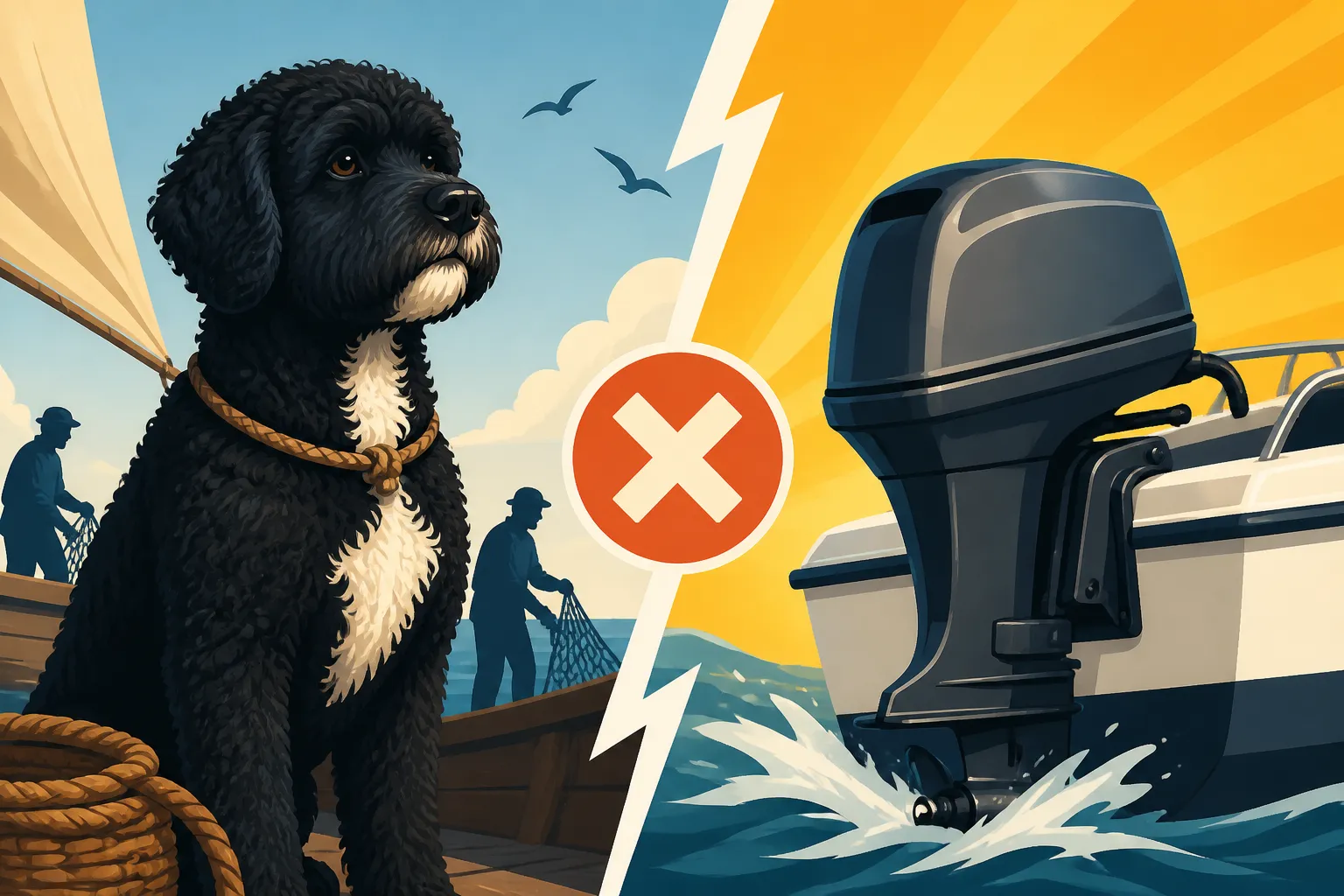
For centuries, the rugged coastline of Portugal was home to a truly remarkable canine partner: the Portuguese Water Dog. These resilient, intelligent dogs were not just pets; they were integral crew members on fishing boats, performing vital tasks that made life and livelihood possible for the hardy fishermen. However, as the world moved into the industrial age, a silent revolution began that would ultimately make their traditional seafaring role obsolete. This guide will explore the profound shift from sail and oar to engine power, and how this technological advancement fundamentally changed the Portuguese Water Dog's place in the world, pushing them from indispensable workers to cherished companions.
The Traditional Role of the Portuguese Water Dog on Fishing Boats
Imagine a time when the sea was a far more formidable foe, and human ingenuity relied heavily on the natural capabilities of animals. For the Portuguese Water Dog, or Cão de Água Português, their life was the ocean. They weren't just passengers; they were active participants in the daily grind of fishing, their unique skills making them invaluable members of the crew. They were bred for this life, with a strong, muscular build, webbed feet, and a waterproof coat that allowed them to thrive in cold, harsh waters.
A Jack-of-All-Trades at Sea
The tasks performed by these dogs were diverse and demanding. They were known to be incredibly versatile, adapting to whatever was needed. One of their primary roles was retrieving lost gear. A net gone overboard in choppy seas could mean financial ruin for a fisherman, and trying to retrieve it manually was often dangerous, if not impossible. The Portuguese Water Dog would dive fearlessly into the waves, swimming out to the drifting equipment and bringing it back to the boat. This wasn't a simple game of fetch; these were heavy, unwieldy objects, and the dogs needed immense strength and stamina.
Beyond retrieval, they were also exceptional messengers. Picture a fleet of small fishing boats spread out along the coast, perhaps communicating about a promising fishing spot or a change in weather. Instead of shouting across the water or using visual signals that could be missed, a Portuguese Water Dog would swim from one boat to another, carrying messages tied to their collars. This required not only swimming prowess but also an uncanny ability to navigate between vessels and deliver their cargo to the correct person. How a Portuguese Water Dog Carried Messages Between Boats explores this aspect in fascinating detail.
And let's not forget their role in herding fish. It sounds almost unbelievable, doesn't it? But these dogs would actually plunge into the water and, on command, help drive schools of fish into the waiting nets. Their agility and natural herding instincts, combined with their comfort in the water, made them surprisingly effective in this unique task. It truly shows how deeply ingrained their working ethic was and how cleverly the fishermen leveraged their natural talents.
The Deep Bond Between Fisherman and Dog
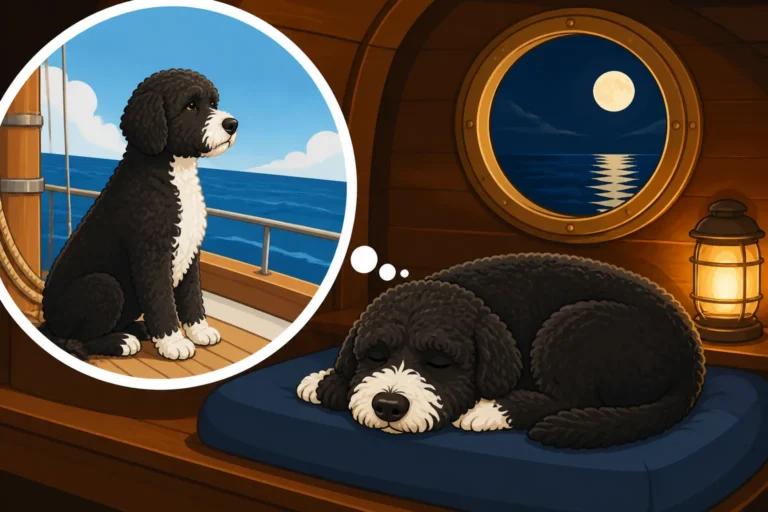
The relationship between a Portuguese Water Dog and its fisherman owner was far more than that of master and pet; it was a partnership born of necessity and mutual reliance. These dogs shared the fishermen's hard life, enduring long days at sea, often sleeping curled up on the deck or in the bottom of the boat. They faced storms, cold, and the constant dangers of the ocean together. This shared existence fostered an unbreakable bond, a level of trust and understanding that few domestic animals ever achieve with humans.
Fishermen depended on their dogs for their livelihoods, and the dogs, in turn, dedicated their lives to their human companions. There was no questioning of commands; it was an unspoken understanding forged in the crucible of survival at sea. A fisherman knew his dog would follow him into the roughest waters, and the dog knew its human would care for it. This deep connection is a testament to the breed's intelligence, loyalty, and unwavering devotion. How a Portuguese Water Dog Earned Its Place on a Boat truly captures the essence of this profound historical partnership.
The Rise of Engine Power and Its Impact
The early 20th century brought about a monumental shift in the fishing industry: the widespread adoption of internal combustion engines. This wasn't a sudden change but a gradual evolution, yet its effects were utterly transformative, rendering many traditional methods, and indeed traditional partners, obsolete.
Efficiency Over Canine Capability
Before engines, fishing boats relied on human power, sails, or at best, small rowboats. This meant slower speeds, limited range, and often a more arduous process for handling nets and gear. The Portuguese Water Dogs filled critical gaps in this system, acting as a crucial force multiplier. They could retrieve what was lost, communicate across distances, and even help gather the catch, tasks that were inefficient or impossible for humans alone in those conditions.
Then came the engines. Suddenly, boats could travel faster, further, and more reliably. They could pull heavier nets with winches, negating the need for dogs to "herd" fish. Lost gear could be retrieved more easily by maneuvering the powered boat, or with mechanical hoists, removing the dog's role as a watery scavenger. The sheer efficiency of machinery simply outstripped the capabilities of even the most dedicated canine worker. A motor didn't get tired, didn't need to be fed, and didn't require the same level of care and attention. It was a cold, hard economic reality that horsepower began to replace dog power.
Consider the logistics: retrieving a heavy trawl net manually was back-breaking work. With a diesel engine and a powered winch, that same net could be hauled in with a fraction of the human effort. A dog swimming out to retrieve a single line was impressive, but a motorboat could zip over, grab the line, and be back in moments. The dogs, though remarkable, simply couldn't compete with the raw power and speed that technology offered.
Space and Safety on Modern Vessels
The design of fishing boats also evolved dramatically with the advent of engines. Traditional boats were often open, smaller vessels, built for specific local waters and methods. They had space, however limited, for a working dog to live and operate. The dog was part of the fabric of the boat.
Modern fishing vessels, however, are far more complex and industrialized. They are often larger, designed for offshore work, with more enclosed spaces, heavy machinery, and specialized equipment. The environment became less hospitable for a dog. Think of exposed propellers, moving winches, and the sheer volume of equipment that filled the deck space. Not only was there less practical space for a dog to safely move and work, but the risks of injury from machinery increased exponentially.
Furthermore, with increased speed and power, the danger of a dog going overboard or getting caught in equipment became a greater concern. Fishermen, while still valuing their dogs, had to weigh the practical benefits against the new hazards. The romance of a dog diving into the waves gave way to the practicalities of industrial fishing. These changes meant that the "crew member" dog, once essential, became a liability in a new, more efficient, and potentially more dangerous environment.
The Gradual Decline of a Working Partnership
The transition wasn't an overnight phenomenon; it was a slow, creeping realization that the old ways were no longer the most effective or economical. As technology progressed, the specialized skills of the Portuguese Water Dog, once so crucial, slowly became redundant.
Redundant Tasks
Let's break down how specific tasks performed by the Portuguese Water Dog became unnecessary.
- Net Herding: With larger, motor-driven trawlers and more advanced net designs, fishermen no longer needed dogs to "drive" fish into their nets. The nets themselves became efficient enough, and the boats powerful enough, to simply scoop up the schools of fish. The subtle art of canine-assisted herding was replaced by industrial-scale fishing techniques.
- Gear Retrieval: As mentioned, winches and powered boats made retrieving lost lines, broken nets, or other equipment far simpler. Instead of relying on a dog to brave the waves, a captain could maneuver the boat, or crew members could use mechanical aids. The immediate, personal heroism of the dog was no longer a daily necessity.
- Messaging Between Boats: Radio communication, and later more advanced electronic systems, completely revolutionized how boats communicated at sea. Information could be transmitted instantly, accurately, and over vast distances, making a swimming messenger dog charmingly antiquated. Why wait for a dog to swim a quarter-mile when a radio call could be made in seconds?
This erosion of their working duties meant that the dogs, once a core part of the crew, had fewer and fewer "jobs" to do. They might still be companions, but their professional utility dwindled. This gradual redundancy meant fewer dogs were kept for work, and the breed itself began to decline significantly in numbers. Why Fishermen Stopped Needing the Portuguese Water Dog details these changes and their profound impact.
Economic Realities and Changing Lifestyles
Beyond the direct technological changes on the boats, broader economic and societal shifts also played a role in the Portuguese Water Dog's decline as a working breed. Fishing became more competitive, and profit margins tighter. Every resource had to be justified. Keeping a dog on board meant feeding it, caring for it, and ensuring its safety – all costs that could be avoided if a machine could do the job more effectively.
Moreover, the lifestyle of fishermen themselves began to change. As fishing became more industrialized, there were fewer small, family-run operations where a dog could truly be integrated into daily life. Fishermen often spent more time at sea, on larger boats with transient crews, or moved to shore-based jobs. The intimate, hands-on relationship with a working dog became less practical for many.
The combination of technological advancement and evolving economic realities meant that the proud tradition of the Portuguese Water Dog as an indispensable maritime worker slowly faded. By the 1930s, the breed was facing near extinction, a stark reminder of how quickly circumstances can change for working animals when human technology advances. The Portuguese Water Dog Was Almost Gone by the 1930s paints a vivid picture of this precarious period in the breed's history.
From Working Dog to Companion Animal: A New Purpose
The story of the Portuguese Water Dog doesn't end with the decline of their traditional working role. In fact, it pivoted towards a new, equally beloved purpose: that of a loyal and active family companion.
Preservation Efforts and the Breed's Revival
Fortunately, dedicated individuals recognized the unique qualities and historical significance of the Portuguese Water Dog. In the early 20th century, a concerted effort began to save the breed from extinction. Breeders, enthusiasts, and even some former fishermen who cherished the breed started working to preserve its bloodlines. They focused on maintaining the breed's intelligence, athleticism, and wonderful temperament, qualities that made them so valuable on the fishing boats and equally desirable as pets.
This preservation involved careful breeding programs, documenting pedigrees, and gradually reintroducing the breed to a wider audience, not as working dogs, but as exceptional companions. Organizations and breed clubs were formed, first in Portugal and then internationally, to ensure the breed's survival and promote responsible ownership. Who Saved the Portuguese Water Dog offers a deeper look into the incredible efforts of these dedicated individuals.
The focus shifted from their specific fishing tasks to their overall traits: their keen intelligence, their boundless energy, their eagerness to please, and their relatively low-shedding coat which, while useful for warmth in water, also appealed to people with allergies. These qualities made them ideal candidates for a new life within families.
New Roles and Modern Activities
Today, the Portuguese Water Dog thrives as a versatile and beloved companion animal, excelling in a myriad of activities that showcase their intelligence and athleticism. While they might no longer be herding fish, their love for water is as strong as ever. Many Portuguese Water Dogs participate in modern canine sports like dock diving, where they enthusiastically leap off docks into the water to retrieve toys, proving their innate aquatic abilities are still very much alive. Dock Diving and Water Trials With a Portuguese Water Dog describes these exciting events in detail.
They also excel in obedience, agility, rally, and scent work, demonstrating their trainability and keen minds. Their energetic nature means they need plenty of exercise, and active families who enjoy outdoor activities like hiking, swimming, and long walks are often the best fit. A PWD absolutely needs a "job" to do, even if that job is fetching a Frisbee from the lake or learning a new trick. You can find excellent durable toys and training aids from places like Chewy to keep these clever dogs engaged.
Their intelligent and empathetic nature also makes them wonderful therapy and service dogs. They can be trained to assist individuals with various needs, offering comfort, support, and practical help. How a Portuguese Water Dog Can Be a Service Dog illustrates their capacity for these important roles. This breed, once at the brink of disappearing, has found a vibrant new life, proving their adaptability and enduring appeal.
Comparing the Old World and New World PWD
Let's take a moment to look at how the daily life of a Portuguese Water Dog has changed from its traditional role to its modern-day existence.
| Aspect of Life | Traditional Working Dog (Pre-Engine) | Modern Companion Dog (Post-Engine) |
|---|---|---|
| Primary Role | Essential crew member on fishing boats; livelihood support. | Cherished family member; active companion. |
| Daily Environment | Open fishing boats, rough seas, coastal villages. | Family homes, backyards, dog parks, lakes, pools. |
| Physical Activity | Constant swimming, retrieving, herding fish, manual labor support. | Structured exercise (swimming, running, hiking), canine sports, play. |
| Diet | Scraps from the catch, simple rations. | Balanced commercial dog food (like those found on Chewy), treats. |
| Grooming | Minimal, functional care to prevent matting and keep warm. | Regular brushing, clipping (Lion or Retriever clip), bathing. |
| Companionship | Deep bond with a working fisherman, shared daily struggle. | Integral part of a human family, experiencing leisure and home life. |
| Challenges | Harsh weather, physical strain, risk of injury at sea, scarcity of food. | Boredom if under-exercised, separation anxiety, managing high energy. |
This table clearly illustrates the massive shift in their lifestyle. While the core traits of intelligence, athleticism, and a love for water remain, the application of these traits has transformed entirely.
What a Portuguese Water Dog Needs Today
Even though they're not working on fishing boats anymore, the intrinsic drives of the Portuguese Water Dog are still very much present. Understanding their heritage is key to providing them with a happy and fulfilled life in the modern world.
These dogs were bred for activity, for problem-solving, and for companionship. They were never meant to be couch potatoes. An under-exercised or under-stimulated Portuguese Water Dog can quickly become bored, and a bored PWD will find its own "job," which might involve chewing furniture, barking excessively, or generally creating mischief. How Much Exercise a Portuguese Water Dog Needs is a crucial read for any potential owner.
Providing ample physical exercise is just the first step. These intelligent dogs also need mental stimulation. Training sessions, puzzle toys, and engaging in activities like obedience or agility classes are vital. They thrive on learning new things and appreciate having a purpose, even if that purpose is just to master "stay" for a longer duration. When choosing food for such an active breed, you'll want to ensure it's high quality and provides adequate energy. Many owners turn to reputable online retailers like Chewy for a wide selection of performance dog foods and supplements. What an Adult Portuguese Water Dog Eats can help guide your choices.
The iconic coat, too, requires attention. While it once protected them from cold ocean waters, it still needs regular grooming to prevent matting. Whether you opt for the functional The Retriever Clip Is the Coat Most Portuguese Water Dogs Wear or the more traditional The Lion Clip Costs a Portuguese Water Dog Owner Daily Brushing, diligent care is a must. This is a far cry from the utilitarian grooming of their working past, but it's essential for their health and comfort now.
The journey of the Portuguese Water Dog, from the bustling decks of fishing vessels to the cozy confines of modern homes, is a remarkable testament to their adaptability and enduring spirit. The engines may have ended their traditional job, but they certainly didn't end the breed's purpose. Instead, they opened the door for these incredible dogs to become treasured members of families worldwide, bringing joy, activity, and an endless supply of love to those lucky enough to share their lives with them. The breed was built for human companionship and partnership, and that core trait, thankfully, has never changed.
Disclaimer
This article is for general informational purposes only and does not constitute professional advice. Laws, prices and regulations vary by location and change over time. Consult a qualified professional for guidance on your specific situation.