What Shape a Portuguese Water Dog’s Head Is
A Portuguese Water Dog’s head can look rounder or heavier than it really is, especially when curls cover the skull and cheeks. The breed standard describes a broad, substantial head with a strong muzzle and clear stop—not a narrow, delicate face. This guide explains the shape, features to look for, and how coat, age, and grooming can change the impression.
The Portuguese Water Dog’s head shape
Broad skull, strong muzzle
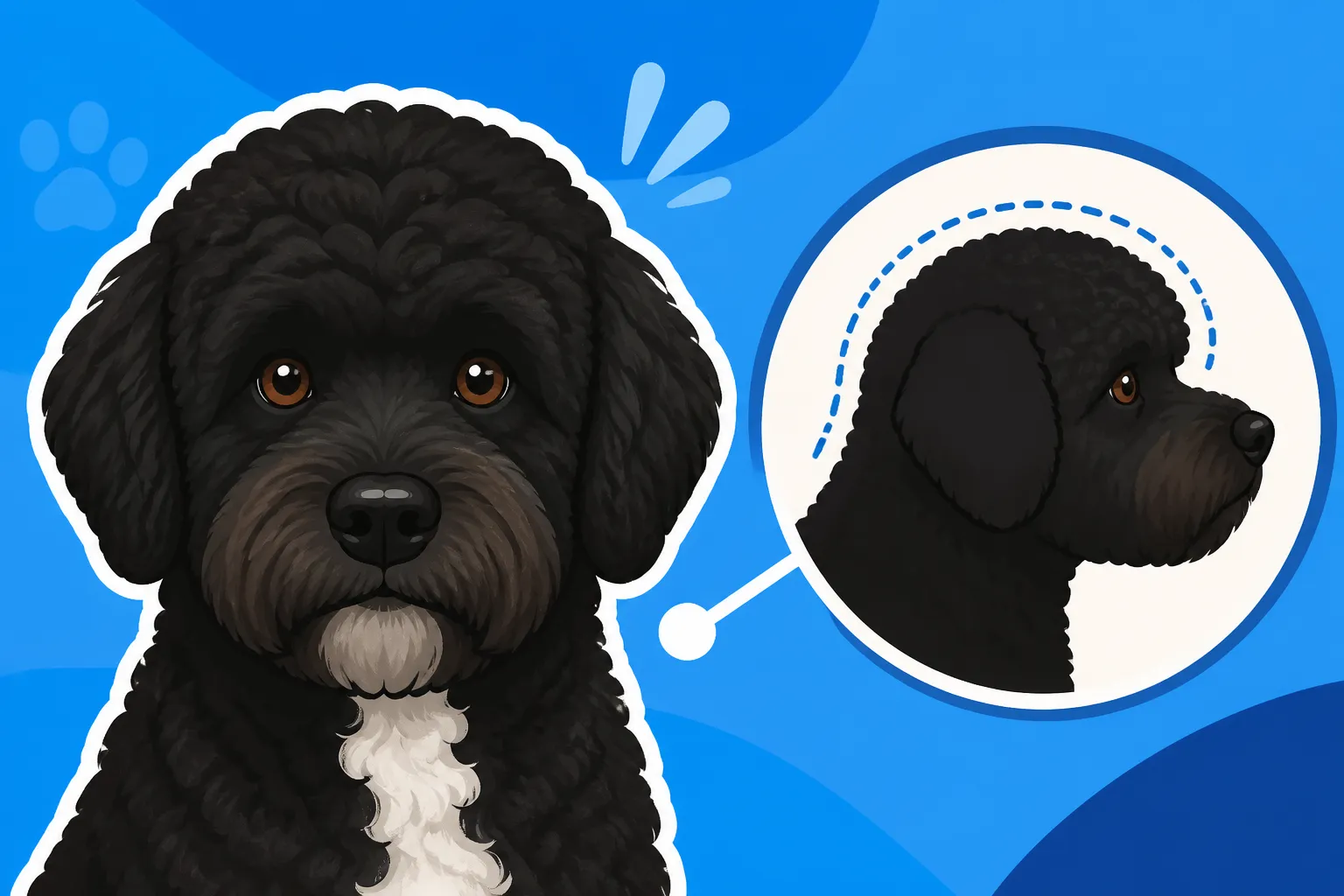
A Portuguese Water Dog has a large, well-proportioned head that should look substantial without appearing coarse or out of balance with the body. The skull is broad, and the muzzle is strong rather than pointed or fine. Viewed from the side, the muzzle is slightly narrower than the skull, creating a defined transition instead of one long, tapered line.
That balance matters. A narrow muzzle can make the face look more delicate than the breed’s characteristic working-dog expression. A very short or blunt muzzle, on the other hand, can make the head look compressed. The breed’s intended look is sturdy and capable, with enough length in the muzzle to complement the broad skull.
The head is not meant to look like a perfect circle. The skull’s width, the muzzle’s shape, and the stop—the indentation between the eyes where the forehead meets the muzzle—all contribute to the outline. Because the coat often frames the face, it can be difficult to judge these proportions from a casual glance. The head’s underlying structure is easier to assess when the coat is clean, dry, and brushed away from the eyes.
If you’re learning the overall breed outline, it helps to compare the head with the body rather than judging the face in isolation. The head should fit a sturdy, athletic dog, not appear disproportionately large or unusually fine. What a Correct Portuguese Water Dog's Outline Looks Like explains how the head fits into the breed’s broader shape.
A noticeable stop and a defined profile
The stop is well defined, meaning the forehead changes direction noticeably as it meets the muzzle. It should be clear without looking abrupt or exaggerated. In profile, you can usually see the transition more easily than you can through a mass of facial curls.
The stop helps give the Portuguese Water Dog its recognizable expression. A very gradual transition can make the face look longer and more refined; an extremely abrupt one can make it seem short or overly blocky. Neither impression, by itself, tells you whether a dog is healthy or a good companion. Breed standards describe an ideal outline, while individual dogs naturally vary.
A wet coat can make the head look narrower, flatter, or more angular than it does when dry. Conversely, a freshly fluffed coat may create extra width around the cheeks and forehead. If you are comparing two dogs, look beyond the hairstyle: consider the skull, muzzle, and stop together, and remember that coat length can disguise the real outline.
The head is one part of a complete picture. The breed’s size, movement, coat, and overall proportions all matter when assessing appearance. For the breed’s general height and build, see What a Portuguese Water Dog Weighs and How Tall It Stands.
The features that shape the face
Eyes, ears, and expression
Portuguese Water Dog eyes are medium-sized, round, and set well apart. They should not look bulging or deeply sunken. Eye color varies with coat color, and the eyes may be difficult to see clearly under a long topknot or heavy facial coat. A groomer can tidy the hair around the eyes, but trimming should preserve visibility without making the face look artificially bare.
The ears are set slightly above eye level and lie close to the head. They are relatively small and heart-shaped, with thin leather. Their position and close carriage help the head retain a neat outline rather than appearing wide because of ears sticking out to the sides. The ear leather should not extend below the lower jaw.
A Portuguese Water Dog’s expression can shift dramatically depending on its coat. A short, practical trim may show the eyes and outline more clearly, while a longer coat can soften the face and make it seem rounder. That difference is mostly about presentation, not a change in the dog’s actual skull shape. Curly or Wavy, Black or Brown: What a Portuguese Water Dog Looks Like offers a broader look at the breed’s appearance.
If the hair regularly falls into the eyes, ask a groomer how to keep the area tidy and comfortable. Don’t cut close to the eye yourself if your dog is wiggly or anxious; a sudden movement around scissors can cause an injury. For routine grooming supplies, owners sometimes look at pet retailers such as Chewy, but the safest choice depends on the dog’s coat, tolerance for handling, and the tool’s suitability.
Nose, lips, and bite
The nose is broad, with well-opened nostrils. Its color generally relates to the dog’s coat color, and the nose contributes to the strong, practical look of the muzzle. The lips fit closely rather than hanging loosely, helping the lower face look clean and defined.
The jaws are strong, and the breed standard describes a scissors bite. In that bite, the upper incisors overlap the lower incisors. A dog’s bite is best assessed by a veterinarian or qualified breed professional, especially if you have concerns about chewing, discomfort, or teeth that do not meet normally. A head’s appearance alone cannot confirm whether the bite is correct or whether a dog has a dental problem.
It can be tempting to interpret every difference in muzzle shape as a fault. In reality, dogs vary, and small visual differences may be influenced by age, coat, camera angle, or grooming. If you are choosing a puppy, focus on the whole dog and ask the breeder to explain health screening and the traits they prioritize. What Portuguese Water Dog Owners Wish They Had Known can help prospective owners think beyond appearance when considering the breed.
How coat and grooming change the head’s appearance
Curls can disguise the underlying shape
Portuguese Water Dogs have curly or wavy coats, and both coat types can frame the head differently. Tight curls may add visible volume over the skull and around the muzzle. A wavy coat can fall in longer sections and make the face appear softer or more elongated. Neither coat type changes the bones underneath.
Facial hair can also obscure the stop, cover the eyes, or create the impression of fuller cheeks. After bathing, the coat may sit differently as it dries, so a dog can look quite unlike its usual self for a day. Regular brushing helps prevent tangles that pull hair into the eyes or bunch up around the ears.
Owners often find that the puppy’s face changes as the coat grows and matures. A puppy may have a softer outline, while adult coat length and grooming create a more defined or more heavily framed look. If the hair mats around the ears or under a collar, keep the routine gentle and consistent rather than waiting until a large tangle needs to be removed. How a Curly Coat Differs From a Wavy Coat explains why coat texture affects the overall appearance.
For a simple home routine, use a comb to check whether you can reach the skin through the coat, especially behind the ears and under the jaw. If you’re unsure which tools are appropriate, a groomer can demonstrate them; pet supply shops, including Chewy, may also carry basic combs and brushes, though a product should suit the dog’s coat and your own handling skills.
Clips can make the face look quite different
A shorter trim often reveals the skull and muzzle more clearly. A longer trim can create a fuller head shape, particularly if the topknot and facial furnishings are left long. This is why photographs of the same dog can give very different impressions depending on the clip, coat condition, and camera angle.
The traditional Lion Clip and the Retriever Clip are both associated with the breed, but they leave different amounts of coat in different places. Pet owners may choose a practical trim based on home care, comfort, and preference. A groomer can help preserve a balanced outline while keeping the coat manageable. Which Clip Suits a Pet Portuguese Water Dog goes into the practical differences.
If you’re preparing for a grooming appointment, describe what you want in everyday terms: how much hair you want around the eyes, how short you prefer the muzzle, and whether you want a fuller topknot. Bringing a photo of a trim you like can help, but ask the groomer whether it is realistic for your dog’s coat and maintenance routine. Retailers such as Chewy can be useful for routine coat-care supplies, but they do not replace a groomer’s guidance when a coat is matted or a dog is uncomfortable.
| Feature | Typical appearance | What can change the impression |
|---|---|---|
| Skull | Broad and substantial | Heavy curls can make it look wider |
| Muzzle | Strong and slightly narrower than the skull | A short trim can make it look more defined |
| Stop | Noticeable transition from forehead to muzzle | Long facial hair may hide it |
| Eyes | Medium-sized, round, and set apart | Topknot or face furnishings can cover them |
| Ears | Set slightly above eye level and held close | Coat length can make the ears seem larger |
| Nose and lips | Broad nose, close-fitting lips | Lighting and coat color affect how clearly features show |
What to look for when assessing a Portuguese Water Dog’s head
Focus on balance, not one isolated feature
When looking at a Portuguese Water Dog, start with the head’s proportions. Does the broad skull work with the muzzle? Is the face substantial without looking exaggerated? Do the features appear in balance with the dog’s body? These questions are more useful than fixating on whether the head looks “round” or “long” in a single photograph.
Try to view the dog from the front and side, if possible. The front view can show the skull’s width and the spacing of the eyes; the side view reveals the stop and muzzle profile. A photo taken close to the face can distort proportions, making the muzzle seem larger or smaller than it is. Grooming can have a similar effect by changing the amount of hair around the outline.
If you are evaluating a puppy, remember that its appearance will change as it grows. A puppy’s coat, face furnishings, and proportions may not resemble those of a fully mature dog. Ask the breeder how the parents look as adults and what health tests have been completed. Appearance should not substitute for health information. What a Portuguese Water Dog Breeder Should Have Tested covers the health questions that matter when speaking with a breeder.
Know when a change calls for a vet visit
A head shape that looks different because of grooming or coat growth is not usually a health concern. A sudden change in facial symmetry, swelling, pain when touched, difficulty opening the mouth, or trouble eating deserves veterinary attention. Likewise, persistent eye discharge, squinting, or a sudden change in vision should not be treated as a grooming issue.
It is also worth checking the ears regularly, particularly if your dog swims or has dense hair around the ear opening. Redness, odor, repeated head shaking, or sensitivity can signal a problem that needs a veterinarian’s assessment. Don’t put tools or unprescribed products deep into the ear canal. Why a Portuguese Water Dog's Ears Need Checking Every Week explains a sensible routine.
A dog’s face is part of its identity, but it is only one piece of the picture. The Portuguese Water Dog’s characteristic head combines breadth, strength, and a defined muzzle, with coat and grooming influencing how clearly those traits show. If you are uncertain whether a feature is simply individual variation or a concern, ask a veterinarian or a knowledgeable breed professional to examine the dog in person.
Disclaimer
This article is for general informational purposes only and does not constitute professional advice. Laws, prices and regulations vary by location and change over time. Consult a qualified professional for guidance on your specific situation.