How Webbed a Portuguese Water Dog’s Feet Should Be
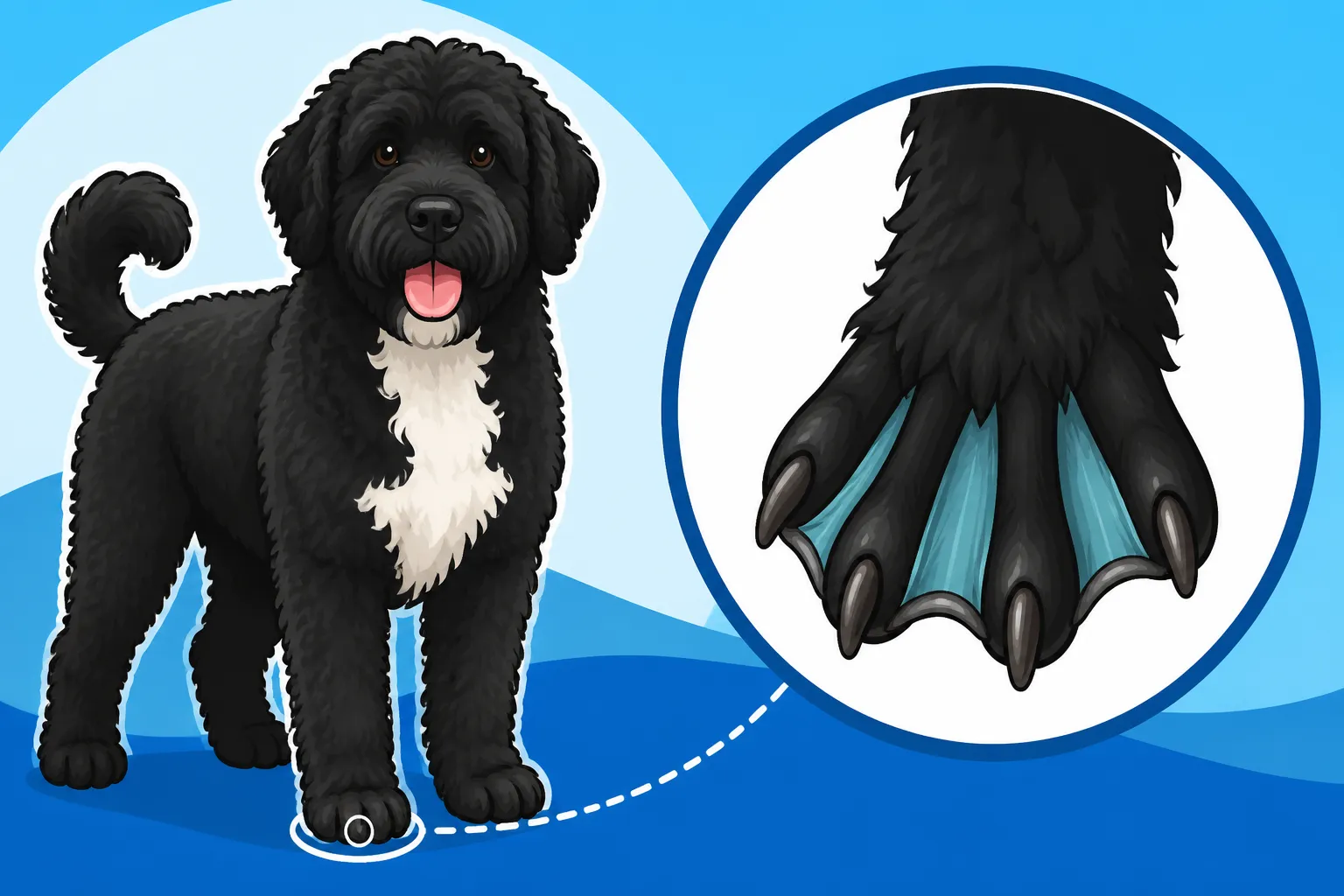
A Portuguese Water Dog’s feet should have noticeable webbing between the toes, helping create a broad, efficient paddle in the water. The webbing is skin connecting the toes, not a solid membrane covering the whole foot. Its amount can vary from dog to dog, so appearance alone is not a reliable measure of health, swimming ability, or breed quality.
What webbed feet look like on a Portuguese Water Dog
The webbing sits between the toes
Look at the underside of a Portuguese Water Dog’s paw with the toes gently spread. You should see skin extending between the toes, rather than separate toes connected only at their bases. That skin is what people mean when they describe the breed as web-footed.
The webbing is not a thin sheet that completely joins the toes into a single paddle. The toes remain distinct, with nails at their ends and the ability to flex and spread. How far the skin reaches between the toes can look different depending on the dog’s foot shape, coat length, and how relaxed the paw is when you examine it.
It can also be hard to see clearly through long foot hair. A thick coat between the pads and around the toes may make the webbing look more extensive than it is—or conceal the skin entirely. If you are checking your dog’s paws, gently move the hair aside rather than pulling the toes apart forcefully.
For a broader look at how the breed is built for swimming, see Why a Portuguese Water Dog Has Webbed Feet and What a Portuguese Water Dog's Feet Should Look Like.
Webbing is part of the breed’s working design
Portuguese Water Dogs were developed as working dogs along Portugal’s coast, where they helped fishing crews with tasks around boats and nets. A webbed foot can help a dog push against water as the toes spread during a stroke. The feature fits the breed’s history, but it should not be treated as a guarantee that an individual dog will be a strong or enthusiastic swimmer.
Dogs still vary in confidence, conditioning, health, and experience. One Portuguese Water Dog may paddle readily, while another may be uncertain around water or prefer to keep its feet dry. Safe, gradual introductions matter more than how dramatic the webbing looks. Never assume that a dog can manage a current, deep water, cold conditions, or a long swim simply because it belongs to a water-working breed.
If you are introducing a puppy to swimming, keep the experience calm and supervised. Let the puppy choose to approach shallow water, use a well-fitted life jacket when appropriate, and avoid forcing or tossing the dog into the water. The guide Teaching a Portuguese Water Dog Puppy to Enter Water offers more on making those first experiences manageable.
Webbing does not make the toes disappear
A common misconception is that a Portuguese Water Dog should have fully joined toes. That is not what webbing means. The toes remain separate and functional, and the paw should still look and work like a dog’s paw.
The amount of visible skin can also seem to change when a dog is standing versus when the paw is relaxed. A dog that is tense may curl or tighten its toes, making it harder to see the space between them. On a relaxed paw, the toes may spread enough to show the webbing more clearly.
Breed features should be considered as a whole, rather than judged by one close-up detail. A photo of a paw is especially easy to misread because camera angle, wet fur, clipped hair, and lighting can all change what you see. If you are comparing a dog with a breed description, evaluate its overall structure and health with help from a knowledgeable breeder or veterinarian.
How to check your dog’s webbing and paw health
Look gently and compare all four feet
Choose a calm moment when your dog is comfortable, such as after a walk or while resting at home. Touch the leg first, then the paw, and reward your dog for staying relaxed. If your dog pulls away, growls, or seems painful, stop rather than wrestling the foot into position.
Check one paw at a time. Look between the toes and around the pads for redness, swelling, cuts, stuck debris, or unusual discharge. Compare the same area on the other feet. Some differences in foot shape are normal, but a sudden change in one paw—especially with limping or repeated licking—deserves attention.
It helps to make the check brief and routine. For example, after a swim or a muddy walk, you can rinse the paws, dry them carefully, and have a quick look between the toes. A dog who learns that paw handling predicts calm praise and a small treat is often easier to examine later, including during nail trims.
If the coat makes it difficult to see the skin, carefully part the hair with your fingers. If you use a comb or grooming tool, work slowly and do not scrape the delicate skin between the toes. Chewy carries general grooming supplies, but choose tools that suit your dog’s coat and use them gently; a veterinarian or professional groomer can show you safe handling if you are unsure.
Keep hair, nails, and pads in good condition
The webbing itself usually does not need special grooming. The hair around the feet may need periodic trimming so it does not cover the pads or collect burrs, sand, and wet debris. Avoid cutting close to the skin between the toes unless you can see exactly what you are doing. A dog’s skin can be difficult to distinguish from damp or tangled hair.
Long nails can change how the toes sit on the ground and may make walking uncomfortable. Check nail length regularly, and trim gradually rather than taking off too much at once. If your dog dislikes nail handling, practice touching the feet in short sessions before introducing clippers or a grinder. Chewy is one place owners may look for basic nail-care tools, but the right choice depends on your comfort and your dog’s tolerance.
Paw pads also need attention, especially after walks on hot pavement, rough trails, ice, or rocky beaches. Look for cracks or abrasions, and rinse away salt or grit after a coastal outing. If you use paw balm, select a product intended for dogs and prevent your dog from licking a large amount off. Chewy may be useful for comparing routine pet-care supplies, though persistent irritation or injury calls for veterinary advice rather than another grooming product.
For more on foot maintenance, see Whether a Portuguese Water Dog's Foot Hair Needs Trimming and Whether a Portuguese Water Dog's Webbing Needs Checking. If your dog swims regularly, What to Do With a Portuguese Water Dog After a Swim explains why drying and checking the coat and paws is part of the routine.
Know when a paw needs professional attention
Webbing is a normal feature, but swelling, tenderness, bleeding, a foul smell, or a sudden change in the skin between the toes is not something to explain away as “just webbed feet.” A dog that licks one paw repeatedly, avoids putting weight on it, or reacts sharply when touched may have an injury, irritation, or another problem that needs assessment.
Small objects can lodge between the toes, particularly after walks through grass, brush, or sandy areas. If you can see a loose piece of debris sitting on the surface and remove it easily, do so gently. Do not dig into the skin with tweezers or scissors if an object is embedded or your dog is painful. That can worsen the injury.
A veterinarian is the right person to assess persistent discomfort, infection concerns, or a paw that looks markedly different from the others. Bring a clear description of when you first noticed the problem and whether your dog has been swimming, hiking, or walking on a new surface. Photos taken over time can help show whether a change is progressing.
| What you notice | What it may mean | Sensible next step |
|---|---|---|
| Skin visible between the toes | Typical webbing | No special action is needed if the paw is comfortable |
| Hair obscures the spaces between toes | Coat is making the webbing hard to see | Part the hair gently or ask a groomer to show you |
| Redness, swelling, or repeated licking | Possible irritation or injury | Check gently and contact a veterinarian if it persists or worsens |
| Limping or pain when the paw is touched | Possible injury or another painful condition | Stop handling the paw and arrange veterinary advice |
| One paw looks suddenly different | A recent change may need investigation | Compare with the other feet and seek professional guidance |
What webbed feet do and do not tell you
They do not predict whether your dog will love swimming
A webbed paw can help with movement through water, but it does not tell you whether your dog will enjoy swimming. Temperament, early experiences, the water’s temperature, the shoreline, and the dog’s confidence all matter. A dog may be physically suited to swimming and still dislike waves, slippery docks, pool steps, or being lifted into the water.
If your Portuguese Water Dog hesitates, start on dry land and let it investigate the water’s edge at its own pace. Keep sessions short and end while the dog is still comfortable. Avoid calling a nervous dog into water it cannot easily leave. A positive experience builds more trust than trying to prove that the breed is “supposed” to swim.
Swimming also is not automatically safe exercise. Water temperature, currents, fatigue, boat traffic, and water quality can all create risks. Supervise closely, provide breaks, and use a life jacket when conditions or the dog’s skill make one appropriate. How Naturally a Portuguese Water Dog Swims and When a Portuguese Water Dog Needs a Life Jacket are useful related reads.
They are not a health test or a measure of breed purity
Webbing is a visible physical feature, not a DNA result or a complete health assessment. It cannot tell you whether a dog has inherited disease risks, whether its joints are healthy, or whether it comes from carefully planned breeding. Those questions require different kinds of information, including veterinary evaluation and relevant health records.
If you are researching a puppy, ask the breeder about health screening and how they assess the parents, not just whether the puppies’ feet look webbed. A responsible conversation should cover the dog’s overall health, temperament, and care needs. For context, read What Health Tests a Portuguese Water Dog Breeder Should Run and Whether a Portuguese Water Dog Is a Healthy Breed.
It is also worth remembering that a dog does not need to meet someone’s idea of an ideal-looking paw to deserve good care. Owners sometimes worry that a less obvious feature means something is wrong. If your dog walks comfortably and the paws look healthy, a difference in how visible the webbing is may simply be individual variation. If you are concerned about a structural difference or a new symptom, have a veterinarian examine the dog rather than relying on a photo comparison.
The practical answer for owners
When someone asks how webbed a Portuguese Water Dog’s feet should be, the useful answer is: the toes should have skin between them, but the toes remain separate, and the visible amount can vary. There is no need to spread the toes forcefully or measure the skin to decide whether a pet is healthy.
Focus on what affects daily comfort: keep the paws clean, inspect them after swimming or rough walks, trim nails as needed, and watch for changes such as redness, swelling, pain, or limping. Make paw handling a calm routine instead of a stressful event. That practical care matters more than whether the webbing looks especially prominent.
If you are unsure whether what you see is normal, take a clear photo and ask your veterinarian during a routine visit. For pain, sudden swelling, bleeding, or difficulty walking, contact the clinic sooner. Your dog’s webbed feet are a useful part of its breed design—but healthy, comfortable paws are the real goal.
Disclaimer
This article is for general informational purposes only and does not constitute professional advice. Laws, prices and regulations vary by location and change over time. Consult a qualified professional for guidance on your specific situation.