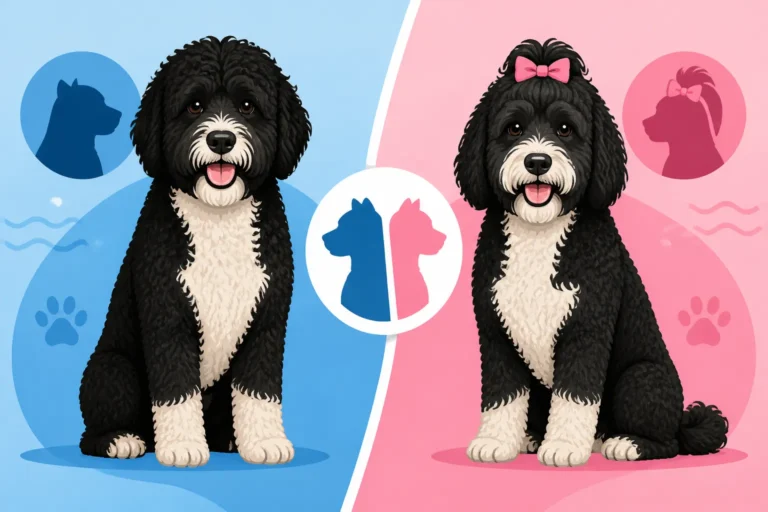
Whether a Portuguese Water Dog Mix Keeps the Coat
A Portuguese Water Dog mix may inherit a coat that resembles the breed’s curly or wavy, low-shedding coat—but there is no guarantee. Coat texture, shedding, and grooming needs can vary even among puppies in the same litter. This guide explains what a mix might inherit, what to ask a breeder or rescue, and how to prepare for coat care without relying on appearance alone.
What coat traits can a Portuguese Water Dog mix inherit
Texture and length are not guaranteed
Portuguese Water Dogs have either curly or wavy coats. A mix may inherit a similar texture, but it can also have a coat that looks quite different from either purebred parent. Genes from the other breed contribute too, so a puppy might have loose waves, tight curls, straighter hair, or a combination of textures across its body.
Even full siblings can turn out differently. One puppy might develop a dense, curly coat while another has looser waves and sheds more. The puppy coat can also change as the dog matures, making its adult texture difficult to predict from a few weeks of fluff. Which Coat Types a Portuguese Water Dog Comes In explains the two coat types found in the purebred breed; a cross can add more variation.
The coat’s appearance is only one piece of the picture. A curly-looking puppy is not necessarily low-shedding, and a wavy coat does not automatically mean a dog will shed heavily. If you are choosing a puppy, be prepared for a range of outcomes rather than treating one parent’s coat as a promise.
Shedding can differ from one mix to another
A Portuguese Water Dog’s coat is often described as low-shedding, but crossing the breed with another dog does not ensure that its offspring will inherit that trait. Some mixes may shed little; others may leave noticeable hair on clothing, furniture, or car seats. The amount can also vary with coat changes, health, and routine grooming.
It helps to consider the other parent’s coat as well as the Portuguese Water Dog’s. If that breed typically sheds, the mix may inherit more shedding than you expect. If both parents have low-shedding coats, that still does not provide a guarantee for every puppy. Individual inheritance is more complicated than simply averaging the parents’ appearances.
For a practical sense of what might show up around the house, see Whether a Portuguese Water Dog's Hair Shows on Furniture. If you are preparing for a new dog, it is sensible to keep a lint roller and vacuum handy until you know what your particular dog’s coat does.
Adult coats can look different from puppy coats
A puppy’s soft coat can give way to a denser, longer, or more textured adult coat. During that transition, loose hair and tangles may become more noticeable, and brushing needs may change. The timing and extent of coat changes vary, especially in a mixed-breed dog with an unpredictable combination of traits.
Rather than judging the adult coat from a puppy photo, ask to see pictures of related adult dogs when possible. In a planned cross, the breeder may be able to show adult dogs from previous litters or explain how the parents’ coats changed with age. That history can help set expectations, although it still cannot predict exactly what one puppy will inherit.
What determines the coat in a cross
A puppy inherits from both sides
A Portuguese Water Dog mix receives genetic material from both parents. The Portuguese Water Dog parent may pass on traits associated with its coat, while the other parent contributes its own pattern of texture, length, density, and shedding. The puppy’s result depends on the combination it inherits, not just on which breed it looks more like.
That is why labels such as “Portuguese Water Dog mix” or a popular cross name do not tell you exactly how the adult coat will behave. Two dogs described with the same cross can have different coat types, even when they share a similar breed mix. Appearance is a clue, not a dependable coat-care forecast.
For background on coat structure in the purebred breed, What a Portuguese Water Dog's Coat Is Made Of is a useful companion. In a mix, however, the other parent’s traits matter just as much. Ask about the actual parents and relatives rather than relying on a breed label alone.
Curl, furnishings, and shedding are separate questions
People often use “curly,” “low-shedding,” and “hypoallergenic” as if they mean the same thing. They do not. Curl describes the shape of the hair; shedding describes how much hair is released; and allergy reactions involve a person’s response to proteins associated with dogs, which can be present in dander and saliva as well as on hair.
A dog can have a curly coat and still shed. A low-shedding dog can still trigger allergies. Likewise, a puppy that appears to have the classic Portuguese Water Dog look is not automatically a good fit for someone with dog allergies. How Portuguese Water Dog Is Hypoallergenic discusses why that label needs careful interpretation.
If allergies are a concern, spend time with the specific dog or adult relatives before making a decision, if that is possible. Reactions vary between people and between individual dogs. A short visit may not reveal how someone will respond after living with a dog, but it is more informative than relying on a coat description alone. Whether a Portuguese Water Dog Suits an Allergy Household offers more context for making that choice.
How to assess a mix before bringing it home
Ask specific questions about both parents
Whether you are speaking with a breeder or a rescue, ask what is known about each parent’s coat. Find out whether either sheds noticeably, how often the dog needs brushing, and whether it mats easily. If the dog is already grown, ask how its coat behaves through the seasons and what grooming routine has worked.
For a puppy, ask whether adult relatives or previous litters can be seen. Photos can be helpful, especially when they show the dog at different ages, but they are not proof that a puppy will develop the same coat. If a seller promises a particular coat texture, minimal shedding, or allergy suitability, treat that as a claim to investigate rather than a certainty.
A short checklist can keep the conversation focused:
- What does each parent’s adult coat look and feel like?
- Does either parent shed noticeably at home?
- How often do the parents need brushing and professional grooming?
- Have previous puppies from the same parents developed different coat types?
- Is the puppy’s coat changing, or is it still its early puppy coat?
These questions are more useful than asking only whether the mix is “hypoallergenic.” No coat description can guarantee that a dog will not shed or trigger an allergy.
Consider the dog in front of you
If you are considering an adult rescue, you have a better chance of seeing the dog’s established coat and shedding pattern than you would with a young puppy. Ask how the coat feels after bathing, how quickly tangles form, and whether the dog tolerates brushing and drying. A rescue may not know the dog’s full parentage, but its current coat-care needs are still important information.
For a puppy, plan around uncertainty. A curly coat may require regular combing to prevent knots, while a straighter or more shedding coat may need a different routine. Either way, wait until you understand the individual dog’s coat before investing in a full set of specialized tools.
If you are gathering basic supplies, retailers such as Chewy carry general grooming items, but the right brush depends on the dog’s actual coat and comfort. Start with a gentle brush and comb, and ask a groomer or veterinarian for advice if you are unsure what is suitable. The aim is to make grooming calm and manageable, not to force a tool through knots.
What coat care may look like at home
Expect grooming needs even if the coat sheds little
Low shedding does not mean low maintenance. Hair that stays in the coat can tangle, particularly in areas where there is friction or moisture. A dog that swims, wears a harness, or spends time outdoors may need extra checks because dampness and debris can contribute to knots.
A useful routine is to examine the coat regularly, paying attention to places that rub or are easy to overlook. Where a Portuguese Water Dog Mats First highlights common trouble spots in the purebred breed; a mix can have similar problem areas depending on its coat. If your dog forms tangles easily, How Often a Portuguese Water Dog Needs Brushing can help you think through a consistent schedule.
For everyday care, work in short, comfortable sessions. Gently part the hair and check down to the skin rather than brushing only the surface. If a comb catches, stop and work carefully instead of tugging. Persistent or tight mats can be uncomfortable, and a professional groomer can advise whether they can be safely removed or whether the coat needs a shorter trim.
Make a flexible plan for bathing and trimming
The coat your dog inherits should guide its grooming routine. A thick, curly coat may need more frequent detangling than a shorter, straighter one. A coat that gets wet often may also need thorough rinsing and drying, with attention to the skin beneath the hair. The right routine is the one that keeps your individual dog comfortable and the coat free of painful tangles.
If you are not sure how to manage a coat, ask a groomer to show you how to brush it properly and what tools are appropriate. Some dogs are more comfortable with gradual handling practice at home before a full grooming appointment. Chewy is one place owners may look for basic grooming supplies, but tools should be chosen for the dog’s coat and introduced gently rather than purchased on the assumption that every Portuguese Water Dog mix needs the same kit.
Keep expectations realistic as the dog grows. You may need to adjust the brushing schedule or haircut as the adult coat becomes clearer. A mix might retain a recognizable Portuguese Water Dog texture, or it might not. Either way, regular coat checks and a patient routine matter more than trying to make the dog’s coat match a particular breed image. For health context, Whether an Improper Coated Portuguese Water Dog Is Healthy explains that coat appearance and overall health are not the same question.
Disclaimer
This article is for general informational purposes only and does not constitute professional advice. Laws, prices and regulations vary by location and change over time. Consult a qualified professional for guidance on your specific situation.