Whether GM1 Can Be Treated in a Portuguese Water Dog
When you receive that devastating diagnosis of GM1 Gangliosidosis for your beloved Portuguese Water Dog puppy, a wave of despair often washes over you. The first, most urgent question that leaps to mind is always, "Can it be treated? Is there hope?" It's a gut-wrenching moment, and the reality can be incredibly tough to process. This guide aims to shed light on the current understanding of GM1 treatment, offering a realistic look at what medical science can and cannot do right now, and providing insights into managing this challenging condition.
Understanding GM1 Gangliosidosis in Portuguese Water Dogs
Before we dive into the complexities of treatment, it's essential to truly grasp what GM1 Gangliosidosis is and how it impacts our active, intelligent Portuguese Water Dogs. This isn't just a simple illness; it's a profound genetic disorder that affects the very building blocks of their neurological function.
What Exactly is GM1 and How Does It Affect Them?
GM1 Gangliosidosis is a lysosomal storage disease, which sounds incredibly scientific and abstract, but essentially means there's a critical enzyme missing or not working correctly in the dog's body. Specifically, it's the beta-galactosidase enzyme. This enzyme is responsible for breaking down a fatty substance called GM1 ganglioside. Without enough functional beta-galactosidase, this GM1 ganglioside starts to accumulate in cells, particularly in the brain, spinal cord, and other organs. Imagine a microscopic trash compactor in every cell that suddenly stops working for one specific type of trash. That trash starts to pile up, eventually overwhelming and damaging the cells.
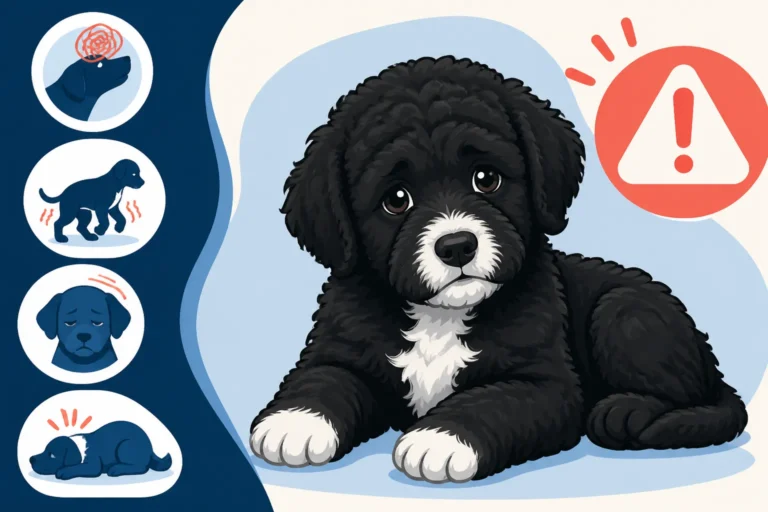
For a Portuguese Water Dog puppy affected by GM1, this cellular accumulation manifests as progressive neurological decline. Initially, you might notice subtle signs – perhaps a slight clumsiness, a less coordinated gait than their littermates, or a tremor that comes and goes. As the disease progresses, these symptoms become much more pronounced. They might struggle with balance, have difficulty walking, develop muscle weakness, and experience seizures. The cheerful, energetic spirit of a Portuguese Water Dog can slowly be overshadowed by these debilitating physical symptoms. Understanding What GM1 Gangliosidosis Does to a Portuguese Water Dog really helps paint a picture of the disease's progression.
The Genetic Basis of GM1 in PWDs
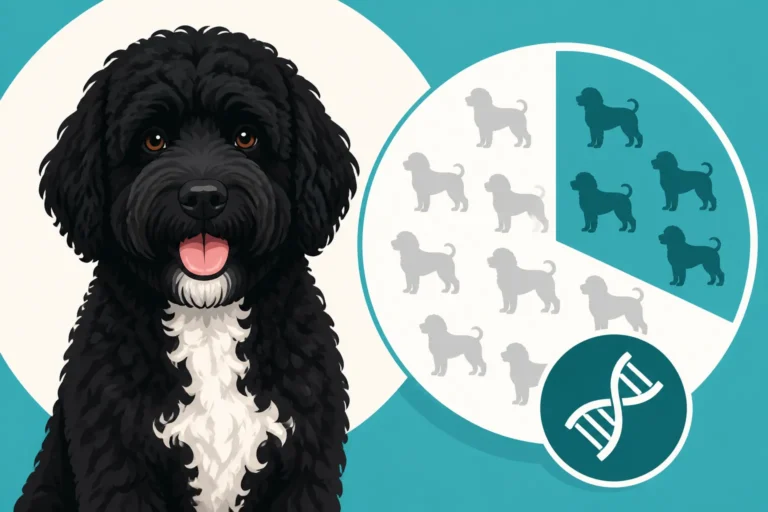
GM1 is an inherited condition, passed down through generations in an autosomal recessive pattern. This means that a puppy must inherit two copies of the defective gene – one from each parent – to be affected by the disease. Dogs that inherit only one copy of the defective gene are considered carriers. They don't show any symptoms of GM1 themselves, but they can pass the gene on to their offspring. This is a crucial point, as it's why the disease can unexpectedly pop up even when parents appear perfectly healthy.
The existence of a reliable DNA test has been a monumental step forward for the Portuguese Water Dog breed. Before its widespread use, breeders were often unaware they had carriers in their lines, leading to heartbreaking surprises in litters. Now, responsible breeders routinely screen their breeding stock for GM1 and other genetic conditions. This helps prevent the breeding of two carriers together, which is the only way an affected puppy can be produced. You can learn more about When the GM1 DNA Test Became Available and How the GM1 Test Changed Portuguese Water Dog Breeding. It truly transformed the landscape for conscientious breeders.
The Harsh Reality: Current Treatment Limitations for GM1
It's agonizing to watch a beloved companion suffer, and the natural human instinct is to find a cure. Unfortunately, when it comes to GM1 Gangliosidosis in Portuguese Water Dogs, the current medical reality is incredibly challenging. While research is ongoing, a definitive cure remains elusive.
Why There's No Cure Yet
The primary reason a cure for GM1 is so difficult to achieve lies in the very nature of the disease. It's a genetic disorder, meaning the fundamental problem is rooted in the dog's DNA, affecting every cell that needs that specific enzyme. Furthermore, the accumulation of GM1 ganglioside happens extensively within the central nervous system – the brain and spinal cord. Treating neurological disorders is inherently complex due to the blood-brain barrier, a protective mechanism that tightly regulates what substances can enter the brain. This barrier, while vital for protection, also makes delivering therapeutic agents incredibly difficult.
Current scientific understanding hasn't yet yielded a consistent, effective way to deliver the missing enzyme or correct the genetic defect throughout the entire body, especially to all the affected neurons in the brain, in a way that reverses or even halts the disease's progression. The damage caused by the accumulating gangliosides is also widespread and progressive, meaning by the time symptoms become obvious, significant cellular harm has already occurred, making reversal a monumental task.
Symptomatic and Supportive Care Approaches
Given the lack of a cure, the focus for owners of GM1-affected Portuguese Water Dogs shifts to symptomatic and supportive care. This means managing the signs of the disease to improve the dog's comfort and quality of life for as long as possible. It's about providing the best care you can, even when facing a difficult prognosis.
Here are some approaches often employed:
- Medication for Seizures: If the dog experiences seizures, anticonvulsant medications (like phenobarbital or Keppra) can be prescribed to help control their frequency and severity. This is a common and often effective way to manage one of the more distressing symptoms.
- Pain Management: As neurological function declines, dogs can experience discomfort or pain. Your veterinarian might prescribe pain relief medications to keep them as comfortable as possible. This is crucial for maintaining a good quality of life.
- Mobility Support: Weakness and coordination issues can make walking difficult. Providing soft, non-slip surfaces, ramps instead of stairs, and even a supportive harness can help. Physical therapy, though not curative, can sometimes help maintain muscle mass and range of motion for a period.
- Nutritional Support: Ensuring adequate nutrition is important, especially if eating becomes challenging. Special diets or assistance with feeding might be necessary.
- Environmental Adjustments: Making the home environment safe and accessible is key. Removing obstacles, providing soft bedding, and ensuring easy access to food and water can significantly improve their daily experience. This might involve setting up a secure, padded area where they can move freely without risk of injury.
- Emotional Support: This is for you, the owner. Caring for a dog with a progressive, untreatable condition is emotionally draining. Lean on your support system, connect with other PWD owners who understand, and prioritize your own well-being alongside your dog's.
It's a testament to an owner's love and dedication to provide such comprehensive care, knowing the long-term prognosis. Many owners find that while the disease takes a toll, the bond with their dog only deepens during this challenging time. For financial assistance with such long-term care, pet insurance providers like Healthy Paws can be incredibly helpful for covering chronic condition treatments, though it’s always best to enroll before any symptoms or diagnoses appear.
The Ethical Considerations of Managing a GM1 Dog
Caring for a Portuguese Water Dog with GM1 Gangliosidosis inevitably brings complex ethical considerations to the forefront. These are never easy decisions, and they weigh heavily on the hearts of owners. The central question revolves around the dog's quality of life.
| Aspect of Care | Goal | Ethical Consideration |
|---|---|---|
| Symptom Management | Minimize suffering, enhance comfort | Is comfort truly being achieved? Are side effects manageable? |
| Financial Burden | Provide necessary medical intervention | Can I afford ongoing care without undue hardship? |
| Emotional Toll | Maintain owner well-being | Am I capable of providing adequate care without burnout? |
| Prognosis | Understand disease progression | When does continued care become detrimental to the dog's welfare? |
| Euthanasia Decision | Prevent prolonged suffering, ensure peaceful end | When is the right time to say goodbye? |
It’s about balancing the desire to keep your beloved companion with you for every possible moment against the reality of their progressive decline and potential suffering. There will come a point where the "bad" days significantly outnumber the "good" days, and where treatments no longer effectively manage symptoms. This is an incredibly personal decision, made in consultation with your veterinarian, who can help assess your dog's true quality of life. Resources like the Ohio State University's Quality of Life Scale can be a helpful tool in these difficult evaluations. It's an agonizing discussion, but one that comes from a place of deep love and compassion.
The Future of GM1 Research and Hope
While the present reality for GM1 treatment in Portuguese Water Dogs is somber, it's vital to remember that scientific research is always advancing. There is continuous effort to understand these genetic diseases better and to develop potential therapies.
Gene Therapy and Other Promising Avenues
One of the most promising areas of research for lysosomal storage diseases like GM1 is gene therapy. The idea behind gene therapy is to introduce a functional copy of the missing gene into the affected cells, thereby allowing the body to produce the necessary beta-galactosidase enzyme. Imagine installing the missing "trash compactor" part directly into the cellular machinery. This approach holds incredible potential because it targets the root cause of the disease.
Clinical trials, often involving other animal models or even human patients with similar conditions, are underway globally. For example, some studies are exploring viral vectors (harmless viruses engineered to deliver genetic material) to carry the healthy gene to the brain and other tissues. While the challenges of effectively and safely delivering these therapies to all necessary cells, especially across the blood-brain barrier, are immense, progress is being made. Breakthroughs in one species or breed can often pave the way for treatments in others. We live in an era of rapid scientific discovery, and what seems impossible today might be standard treatment tomorrow. For those tracking research, it's a field to watch with cautious optimism.
The Role of Responsible Breeding in Eradicating GM1
While we wait for a definitive treatment or cure, the most powerful tool we currently have to combat GM1 Gangliosidosis in Portuguese Water Dogs is responsible breeding. This isn't just a feel-good phrase; it's a concrete, actionable strategy that has already made a huge difference.
Because GM1 is an autosomal recessive genetic disease, it can be systematically eliminated from breeding lines through careful DNA testing. Breeders can test their dogs to determine if they are clear, carriers, or affected. A clear dog has two normal copies of the gene. A carrier has one normal and one defective copy. An affected dog has two defective copies.
The strategy is simple:
- Never breed two carriers together. This is the only pairing that can produce affected puppies.
- Breed carriers only with clear dogs. When a carrier is bred with a clear dog, all puppies will either be clear or carriers, but none will be affected. This allows breeders to carefully maintain genetic diversity while gradually reducing the presence of the GM1 gene in their lines.
The availability of the GM1 DNA test means there is no longer any excuse for producing GM1-affected puppies. Responsible breeders take this very seriously, and it's one of the non-negotiable health tests you should expect any reputable breeder to perform and provide results for. This dedication to health testing is part of a broader commitment, which includes The Four DNA Tests Every Portuguese Water Dog Breeder Runs and ensuring What a Portuguese Water Dog Breeder Should Have Tested. By choosing a puppy from parents who have been fully health-tested, including for GM1, you are actively supporting the health and longevity of the breed. It ensures that future generations of these wonderful dogs can live out their full The Twelve to Fifteen Years a Portuguese Water Dog Gets without the threat of this devastating disease.
Disclaimer
This article is for general informational purposes only and does not constitute professional advice. Laws, prices and regulations vary by location and change over time. Consult a qualified professional for guidance on your specific situation.