What an Improper Coated Portuguese Water Dog Looks Like
It can be incredibly confusing and sometimes disappointing when you bring home a Portuguese Water Dog puppy, or are considering one, and its coat doesn't quite match the pictures you've seen or the breed standard descriptions. This isn't just about aesthetics; a dog's coat is intrinsically linked to its historical purpose and care requirements. This comprehensive guide will meticulously detail what an improper coated Portuguese Water Dog looks like, contrasting it with the accepted breed standard and explaining the implications for care and ownership.
Understanding the Standard Portuguese Water Dog Coat
To truly understand what an improper coat looks like, we first need to appreciate the beauty and functionality of the two accepted coat types in the Portuguese Water Dog breed. These coats are not just for show; they are a testament to the breed's working heritage, designed for life in and around the water.
The Distinct Curly and Wavy Types
The breed standard for the Portuguese Water Dog recognizes two main coat types: curly and wavy. Both are single-layered, meaning they lack an undercoat, which is a key reason they are often touted as being "hypoallergenic" and why they don't shed in the traditional sense, though they do lose hair. The curly coat is denser, forming tight, compact cylinders that feel soft to the touch, often described as lambswool. These curls are not loose ringlets but rather lie close to the body. Imagine a tight perm, but entirely natural and robust.
On the other hand, the wavy coat is, as its name suggests, softer and less tightly curled. It still forms waves that cascade across the body, often with a slight sheen. It might feel a bit silkier than the curly type, but it should never be thin or sparse. Both types are thick enough to provide excellent insulation against cold water and protection from the elements, a vital characteristic for a dog bred to work alongside fishermen on the often-chilly Portuguese coast. This natural robustness is part of the charm and utility of the breed. You can dive deeper into the nuances of these textures in our article on Curly or Wavy: the Two Portuguese Water Dog Coats.
Why the Coat Matters for Water Work
The unique texture and density of a proper Portuguese Water Dog coat are perfectly adapted for its aquatic duties. This breed's coat is naturally water-repellent, meaning water tends to bead up and roll off rather than saturate the hair down to the skin. When a properly coated PWD emerges from the ocean or a lake, a quick shake often leaves them surprisingly dry. This ability to shed water quickly prevents the dog from becoming waterlogged and chilled, which would be a significant disadvantage for a working dog spending hours in the Atlantic.
Moreover, the coat provides a protective barrier against abrasions from nets, boat ropes, and other hazards associated with a fisherman's life. It's truly a functional coat, not just an aesthetic feature. Owners often speak about What a Portuguese Water Dog's Coat Is Made Of with pride, knowing its unique properties.
Identifying an Improper Coated Portuguese Water Dog
Now that we've established what a proper PWD coat looks like, let's turn our attention to the improper coat. This is where the confusion often lies, as an improper coat can vary in its appearance, but it consistently deviates from the protective, non-shedding characteristics of the breed standard. It's not a health defect, but it is a significant departure from the expected physical trait.
The "Flat" or "Open" Appearance
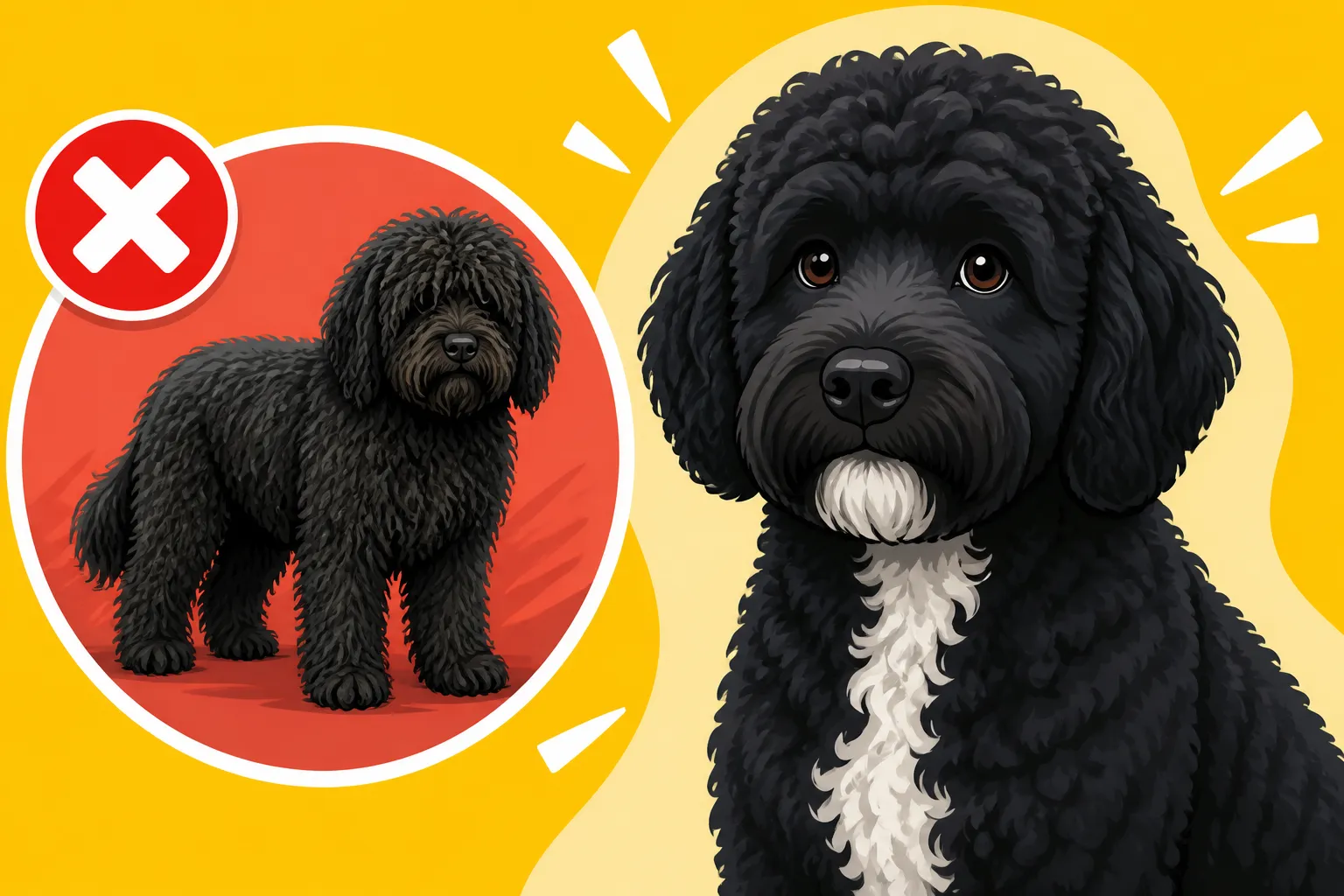
An improper coat on a Portuguese Water Dog is often described as "flat," "open," or "shaggy." Unlike the dense, uniform curls or waves of a proper coat, an improper coat typically lacks structure. Instead of tight, cylindrical curls or distinct waves, you'll see hair that lies relatively flat against the body, sometimes with a softer, fluffier texture in places, and other times more coarse or wiry. The key is the lack of the characteristic tight curl or defined wave pattern.
Imagine a Labrador Retriever's coat, but perhaps a bit longer or with some wispy feathering, especially on the legs and tail. It will not have the distinctive water-shedding quality of a proper PWD coat; instead, water will soak into it easily, much like a typical double-coated dog. This means an improperly coated dog will stay wet for much longer after a swim, requiring more extensive drying to prevent skin issues.
Common Areas Where the Improper Coat Shows
While an improper coat affects the entire dog, some areas tend to show the deviation more distinctly. You might notice the most obvious differences along the dog's back, flanks, and chest, where the hair will lay flat or appear distinctly shaggier and less dense than the expected PWD coat. The legs might have feathering that is not seen in a standard coat, and the tail, instead of a natural plume that helps as a rudder in the water, might be thin or have a coarser, less dense covering.
The head and ears might also give clues, with hair that is softer, straighter, or less profuse than on a properly coated dog. It's not necessarily sparse, but it just doesn't have that typical PWD "fluff" or "lambswool" feel. This visual difference is quite striking once you know what to look for, and it often leads to questions from those familiar with the breed. If you're wondering, Whether an Improper Coat Sheds More is a common concern, and the answer is usually yes, significantly more than a standard PWD.
The Genetic Reality Behind Improper Coats
The existence of improper coats isn't a random occurrence or a result of poor grooming; it's rooted deeply in the breed's genetics. Understanding the science behind it helps clarify why it happens and why responsible breeders go to great lengths to avoid it.
The Recessive IC Gene
The improper coat trait in Portuguese Water Dogs is caused by a recessive gene, often referred to as the "IC gene" or more formally, the fibroblast growth factor 5 (FGF5) gene mutation. This means that for a puppy to display an improper coat, it must inherit two copies of this specific recessive gene—one from its mother and one from its father. If a puppy inherits only one copy, it will be a "carrier" and will have a proper coat itself, but it can pass the gene on to its offspring. If it inherits two copies of the dominant "proper coat" gene, it will have a proper coat and will not carry the improper coat gene.
This genetic mechanism is why it's possible for two perfectly coated Portuguese Water Dogs to produce a litter that includes puppies with improper coats. If both parents are carriers of the recessive gene, there's a 25% chance with each puppy that it will inherit two copies of the recessive gene and thus display the improper coat. This complex inheritance pattern is why DNA testing is so vital for responsible breeding programs.
DNA Testing for Responsible Breeding
Thankfully, there's a reliable DNA test available to identify whether a Portuguese Water Dog is clear, a carrier, or affected by the improper coat gene. This test is a game-changer for breeders, allowing them to make informed decisions about breeding pairs. By testing their breeding stock, breeders can avoid breeding two carriers together, thereby eliminating the possibility of producing puppies with improper coats.
Responsible breeders will always provide documentation of their dogs' DNA test results for improper coat, among other critical health screenings. This proactive approach ensures that they are breeding for health, temperament, and adherence to the breed standard. For anyone looking to acquire a Portuguese Water Dog, asking to see these DNA test results is not just good practice; it's essential. Our article on Which Gene Causes Improper Coat in a Portuguese Water Dog delves even deeper into the scientific specifics. Breeders who run What a Portuguese Water Dog Breeder Should Have Tested will always include this, along with other genetic panels like GM1 and PRA.
Living with an Improper Coated Portuguese Water Dog
While an improper coat might not be what someone expects when picturing a Portuguese Water Dog, it's crucial to understand that these dogs are still wonderful companions. The implications largely revolve around grooming and showing, with little to no impact on their overall health or temperament.
Health and Temperament Are Unaffected
One of the most important things to remember about an improper coat is that it is purely an aesthetic and functional trait, not a health condition. An improper coated Portuguese Water Dog is just as healthy, intelligent, and spirited as its properly coated counterparts. They will have the same vibrant personality, the same love for water, and the same need for mental and physical stimulation. They are still excellent family pets, eager to please and full of life.
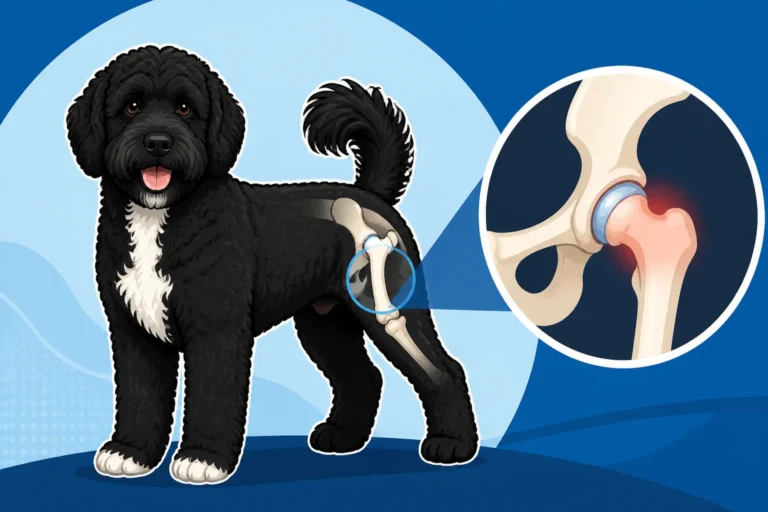
You might be wondering, Whether an Improper Coated Portuguese Water Dog Is Healthy. The resounding answer is yes, absolutely. The gene responsible for the improper coat does not carry any other known health risks or predispositions to disease. So, while their fur might look different, their heart, hips, and overall well-being are typically just as robust as any other Portuguese Water Dog. Of course, like all dogs, they benefit from good nutrition, regular exercise, and preventative veterinary care. Even with a healthy improper coat, regular vet check-ups are vital, and having pet insurance from a provider like Healthy Paws can give you added peace of mind for any unexpected health issues that might arise.
Grooming Considerations for Improper Coats
Grooming an improper coated PWD will differ from grooming a standard one. Since these coats often shed more, you might find more dog hair around your home, something typically unexpected with the breed. While they may not mat as easily as a dense, curly coat, they still benefit from regular brushing to remove loose hair and keep their coat clean and healthy. Depending on the texture, an improper coat might also grow longer and shaggier, necessitating professional grooming or home clipping to maintain a tidy appearance.
You might not need the same intense drying regimen after a swim that a proper PWD requires, as the water will penetrate the coat more readily. However, because they will stay wet longer, diligent drying, especially in damp, warm weather, is important to prevent skin issues like hot spots. Consider investing in a good quality pet dryer, or ensuring ample towel drying. While an improper coat typically doesn't lead to health issues, knowing your dog is covered for unexpected illness or injury with a plan like those from Healthy Paws is always a smart move for any PWD owner.
Show Ring Restrictions and Pet Status
For those aspiring to show their Portuguese Water Dog in conformation events, an improper coat is a disqualifying fault according to breed standards worldwide, including the American Kennel Club (AKC). This means an improperly coated PWD cannot compete in the show ring. This isn't a judgment of the dog's worth, but rather a reflection of adherence to breed-specific physical traits that define the Portuguese Water Dog.
However, this restriction only applies to conformation showing. An improper coated PWD is still eligible to compete in all other performance events, such as agility, obedience, rally, and, of course, water trials and dock diving—areas where their natural athleticism and drive truly shine. These dogs make fantastic pets and working partners, regardless of their coat type. For prospective owners, it's important to clarify your intentions. If you're seeking a beloved family companion, an improper coat means nothing for their ability to bring joy to your home. But if showing is your dream, then a proper coat is a must. If you're curious about the costs, Whether an Improper Coated Puppy Is Sold Cheaper is sometimes the case, reflecting the inability to show them in conformation.
Here's a quick comparison of the two coat types:
| Feature | Proper Portuguese Water Dog Coat | Improper Portuguese Water Dog Coat |
|---|---|---|
| Appearance | Dense, tight curls (curly) or defined waves (wavy) | Flat, open, shaggy, sometimes wiry or fluffy |
| Texture | Lambswool-like (curly) or soft/silky (wavy) | Varies from soft/fluffy to coarse/wiry |
| Shedding | Minimal to none (hair shed into coat, not widely) | Noticeable shedding, similar to other dog breeds |
| Water Repellency | Excellent; water beads off, quick drying | Poor; coat absorbs water, takes longer to dry |
| Grooming Needs | Regular brushing to prevent matting, clipping | Regular brushing for shedding, clipping for length/tidiness |
| Show Eligibility | Eligible for conformation shows | Disqualified from conformation shows |
| Health Implications | None related to coat type | None related to coat type |
| Temperament | Unaffected | Unaffected |
| Genetic Basis | Homozygous dominant (CC) or heterozygous (Cc, carrier) | Homozygous recessive (cc) |
| Breeding Consideration | Desirable; carriers (Cc) can be bred responsibly with Clear (CC) dogs | Avoided in breeding programs to maintain standard |
Final Thoughts on the Improper Coat
Ultimately, an improper coat on a Portuguese Water Dog is a genetic variation that affects its physical appearance and grooming needs, but not its heart or soul. These dogs are just as capable, loving, and engaging as any other Portuguese Water Dog. Responsible breeders are diligent in using DNA testing to prevent the propagation of the improper coat gene, but sometimes it happens, or an owner might encounter a rescue dog with this coat type.
If you find yourself with an improper coated Portuguese Water Dog, you have a unique and wonderful companion. The most important thing is to understand its specific grooming requirements and to embrace your dog for the incredible individual it is, regardless of its coat. After all, the true essence of a Portuguese Water Dog lies in its joyful spirit, intelligence, and unwavering loyalty, not just the texture of its fur.
Disclaimer
The information provided in this article is for general informational purposes only and is not intended to be a substitute for professional veterinary advice, diagnosis, or treatment. Always seek the advice of your veterinarian or other qualified health provider with any questions you may have regarding a medical condition.