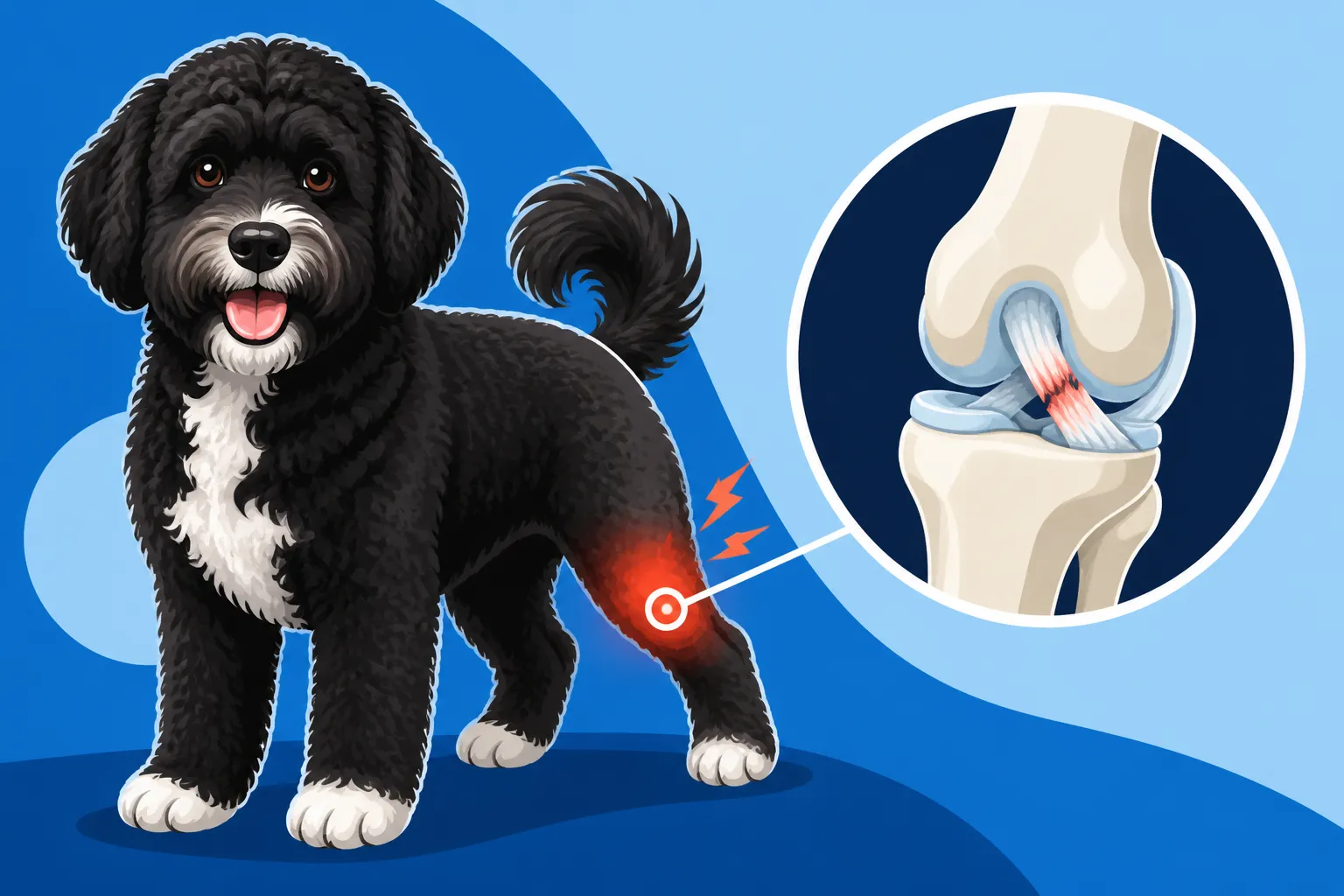
Cruciate Tears in a Portuguese Water Dog
There’s a unique kind of dread that washes over you when your energetic Portuguese Water Dog, a breed known for its boundless enthusiasm and love for all things aquatic, suddenly lets out a yelp and holds up a hind leg. One minute they’re bounding across the yard or splashing joyfully in the water, the next, they’re limping, perhaps refusing to put any weight down at all. This sudden onset of lameness is often a hallmark of a cranial cruciate ligament (CCL) tear, a common yet devastating knee injury that can derail the active lifestyle your PWD thrives on. This comprehensive guide will walk you through what a cruciate tear is, why your water dog might be prone to it, how to recognize the signs, and what you can expect during diagnosis, treatment, and long-term management to get them back on all fours.
Understanding the Anatomy of a Cruciate Tear
When we talk about a "cruciate tear" in dogs, we're essentially referring to an injury to the cranial cruciate ligament (CCL), which is the equivalent of the anterior cruciate ligament (ACL) in humans. This ligament is a crucial band of fibrous tissue located inside the knee joint (stifle joint in dogs). Its primary job is to connect the femur (thigh bone) to the tibia (shin bone), preventing the tibia from sliding forward relative to the femur and limiting internal rotation of the joint. In simple terms, it's a vital stabilizer that keeps the knee working as it should.
The Role of the Cranial Cruciate Ligament
Imagine your dog's knee as a complex hinge, designed for powerful flexion and extension, essential for running, jumping, and all those joyful water retrieves. The CCL is one of two cruciate ligaments (the other being the caudal cruciate ligament) that cross over each other within the joint, providing both stability and a full range of motion. Without an intact CCL, the knee becomes unstable. Every time your dog puts weight on that leg, the tibia can thrust forward, causing pain, inflammation, and further damage to the joint cartilage and meniscus (a C-shaped piece of cartilage that acts as a shock absorber). This instability isn't just uncomfortable; it sets the stage for progressive arthritis, a truly heartbreaking prospect for an active breed like the Portuguese Water Dog.
How Tears Occur in Dogs
Unlike human ACL tears, which often result from a single, acute, high-impact athletic injury (think a football player twisting their knee), CCL tears in dogs are frequently a degenerative process. This means the ligament often weakens and frays over time, like a rope slowly wearing down. Years of normal activity, compounded by factors we’ll discuss shortly, can lead to micro-tears and chronic inflammation, gradually compromising the ligament's integrity. Eventually, even a seemingly minor misstep, a playful twist, or a hard jump off the dock can be the "final straw" that causes the already weakened ligament to partially or completely rupture.
It's this chronic, insidious nature that makes CCL disease so frustrating. You might think your dog just "stepped wrong," but often, the groundwork for that injury has been laid over months or even years. This explains why sometimes the lameness appears suddenly, yet the underlying issue has been brewing for a while, just waiting for the right moment to manifest dramatically.
Why Portuguese Water Dogs Are Susceptible
Portuguese Water Dogs are a fantastic breed, celebrated for their intelligence, athleticism, and boundless energy. They were literally bred to work alongside fishermen, retrieving gear from the water and even herding fish into nets. This history has given them a physique built for action – strong muscles, powerful legs, and that iconic webbed foot. But this very genetic predisposition for an active, robust life can, paradoxically, make them more vulnerable to certain injuries, including cruciate tears.
The Impact of Their Active Lifestyle
A Portuguese Water Dog isn't content with just a leisurely stroll around the block. They thrive on vigorous exercise, often involving running, jumping, twisting, and, of course, swimming. Activities like dock diving, agility, and retrieving games are not just fun for them; they are essential for their physical and mental well-being. However, these high-impact and twisting movements place significant stress on their knee joints. Think about the explosive push-off from the ground when they jump for a toy, or the sudden turns they make while chasing a ball. Each of these actions puts strain on the CCL.
While Why Swimming Protects a Portuguese Water Dog's Joints is generally true because it offers low-impact exercise that builds muscle without stressing joints, even water activities can involve sudden, awkward movements when entering or exiting the water, or if they slip on a slick surface near the pool or lake. The sheer exuberance of a PWD can sometimes override caution, making them prone to pushing their bodies beyond safe limits. Owners are often thrilled by their dog's enthusiasm but must also be mindful of the cumulative stress on their joints over time.
Genetic and Conformational Factors
While CCL disease is considered multifactorial, meaning many things contribute to it, genetics and conformation play a role in breed susceptibility. Larger, more active breeds are generally at higher risk. While Portuguese Water Dogs aren't typically classified among the giant breeds, their sturdy build and powerful hindquarters mean their knees bear significant load. Some theories suggest certain knee angles (tibial plateau angle) can predispose dogs to CCL tears by increasing the forward thrust on the tibia during weight-bearing.
There isn't a specific DNA test for CCL rupture, unlike some other genetic conditions like GM1 Gangliosidosis and the Portuguese Water Dog Puppy That Never Reaches Six Months or Juvenile Dilated Cardiomyopathy Kills a Portuguese Water Dog Puppy Fast. However, responsible breeders will still prioritize overall structural soundness and good joint health in their breeding dogs, often ensuring parents have good hip and elbow scores, as overall good joint health can reduce the likelihood of other orthopedic issues. It's a continuous effort to breed healthy dogs for The Twelve to Fifteen Years a Portuguese Water Dog Gets.
The Critical Role of Weight Management
This cannot be stressed enough: maintaining your Portuguese Water Dog at an ideal, lean body weight is perhaps one of the most crucial preventative measures you can take against a cruciate tear. Every extra pound your dog carries significantly increases the load on their joints, especially their knees. It's like asking a building to carry an extra ton of weight every single day – eventually, something is going to give.
Overweight dogs experience accelerated wear and tear on their ligaments and cartilage, and inflammation becomes a chronic issue. This doesn't just increase the risk of a tear; it also makes recovery from a tear much harder and exacerbates arthritis post-injury. What a Portuguese Water Dog Weighs and How to Keep It There is vital, and ensuring you are Feeding an Athletic Portuguese Water Dog appropriately, without overdoing the treats, is paramount. Even a few extra pounds can make a significant difference to a dog's joint health, putting them at a higher risk for this debilitating injury.
Spotting the Signs and Getting a Diagnosis
Recognizing the signs of a cruciate tear early can make a difference in your Portuguese Water Dog's prognosis and recovery. The signs can vary depending on whether the tear is sudden and complete, or a more gradual, partial rupture that has worsened over time.
Acute Onset Versus Chronic Lameness
Most owners witness an acute onset of lameness. Your dog might be running, suddenly cry out, and then be unable to bear weight on the affected hind leg. They might hold the leg up completely or just "toe-touch," barely skimming the ground with their paw. This is often indicative of a complete tear where the ligament has fully ruptured. The initial pain is intense, and your dog will likely be visibly distressed.
However, sometimes the lameness is more subtle and intermittent. This often happens with a partial tear. You might notice a slight limp after heavy exercise that seems to improve with rest, only to reappear later. Your PWD might be reluctant to jump into the car, hesitant to climb stairs, or seem generally less enthusiastic about their usual activities. Over time, this subtle lameness can worsen until it becomes constant, signaling that the partial tear has progressed to a complete rupture, or that the joint has become significantly arthritic. This gradual presentation can be frustrating for owners, as it’s easy to dismiss as a minor strain or just an older dog slowing down, but for an active breed like a PWD, even subtle changes in gait should warrant attention. If you notice your dog slowing down or showing discomfort, it's always best to have them checked.
Common Symptoms to Watch For
Beyond the obvious lameness, here are some specific symptoms that might indicate a cruciate tear:
- Sudden, Severe Lameness: As mentioned, a sudden "three-legged gait" where the dog holds the hind leg up is a classic sign.
- "Toe-Touching": The dog might lightly touch the toes of the affected limb to the ground, but not put full weight on it.
- Difficulty Rising or Jumping: You might notice hesitation when getting up from a lying position, or refusal to jump on furniture or into the car, which was previously effortless.
- Sitting with Leg Extended: A dog with a CCL tear will often avoid flexing the painful knee. When sitting, they might stretch the affected leg out to the side rather than tucking it underneath them, which is often called the "sit test."
- Swelling Around the Knee Joint: While often subtle due to the thick coat of a Portuguese Water Dog, you might feel some warmth or fullness around the knee.
- Muscle Atrophy: If the injury has been present for a while, the muscles in the thigh of the affected leg will start to shrink due to disuse. You might notice this when comparing the two hind legs.
- "Clicking" or "Popping" Sounds: Sometimes, if the meniscus is also damaged, you might hear or feel a clicking sensation when the dog moves the joint.
Veterinary Diagnosis: What to Expect
When you suspect a cruciate tear, a trip to your veterinarian is essential. They will perform a thorough orthopedic examination. The key diagnostic tests for a CCL tear are specific manual manipulations of the knee:
- Cranial Drawer Test: The vet will attempt to manually slide the tibia forward relative to the femur. In a healthy knee, the CCL prevents this "drawer" motion. If the ligament is torn, the tibia will move freely, indicating instability.
- Tibial Compression Test: The vet will flex the ankle, which puts tension on the gastrocnemius muscle. If the CCL is torn, this will cause the tibia to thrust forward.
These tests can be painful, and sometimes a very muscular or tense dog might resist, making a definitive diagnosis challenging. In such cases, your vet might recommend light sedation to allow for a more accurate examination.
Beyond these manual tests, X-rays are usually taken. While X-rays don't show the ligament itself, they are crucial for several reasons:
- Ruling out other conditions: Conditions like Hip Dysplasia in a Portuguese Water Dog, patellar luxation, or even bone tumors can cause similar lameness. X-rays help differentiate these.
- Assessing for arthritis: X-rays can reveal signs of osteoarthritis within the joint, which is a common sequela of CCL disease, even with partial tears.
- Pre-surgical planning: If surgery is recommended, specific X-ray views are needed for planning procedures like TPLO or TTA.
When a Portuguese Water Dog is X-rayed for orthopedic issues (see When a Portuguese Water Dog Should Be X Rayed), it’s important they are positioned correctly to get clear, diagnostic images.
It's important to understand that a cruciate tear is a serious injury that requires professional veterinary assessment and intervention to ensure the best possible outcome for your beloved Portuguese Water Dog.
Navigating Treatment Options and Recovery
Once a cruciate tear is diagnosed, the conversation quickly shifts to treatment. For active, medium-to-large breeds like the Portuguese Water Dog, surgical intervention is almost always recommended as the most effective path to restoring stability and function to the knee joint. Non-surgical management, while an option, often leads to chronic lameness and accelerated arthritis in these dogs.
Surgical Interventions: The Gold Standard
The goal of surgery is to stabilize the knee joint, preventing the abnormal forward movement of the tibia. There are several surgical techniques, each with its own approach:
- Tibial Plateau Leveling Osteotomy (TPLO): This is widely considered the gold standard for active dogs, particularly those weighing over 30-40 pounds. The surgeon makes a curved cut in the tibia (shin bone) and rotates the top portion of the bone, effectively leveling the tibial plateau. This changes the biomechanics of the joint so that the thrust of weight-bearing no longer causes the tibia to slide forward, even without a functional CCL. A bone plate and screws are then used to secure the bone in its new position. TPLO has a high success rate in restoring excellent function and is well-suited for the powerful hindquarters of a Portuguese Water Dog. It does require significant recovery time but often allows dogs to return to a very active lifestyle.
- Tibial Tuberosity Advancement (TTA): Similar to TPLO, TTA also aims to alter the biomechanics of the knee. In this procedure, the front part of the tibia (tibial tuberosity) is cut and advanced forward, changing the angle of the patellar ligament and neutralizing the forward thrust on the tibia. A titanium cage and plate are used to hold the bone in its new position. TTA also yields excellent results for many active dogs.
- Extracapsular Repair (Lateral Suture): This older, simpler technique involves placing a strong suture material (often nylon or fishing line-like material) outside the joint capsule, from the femur to the tibia. This suture mimics the function of the torn CCL, providing stability until the body can lay down scar tissue to further stabilize the joint. While less invasive and often less costly, it is generally considered less robust for large, active dogs like the PWD compared to TPLO or TTA, and carries a higher risk of re-injury or continued instability. It might be considered for very small, less active dogs, or for partial tears, but usually not for a fully ruptured CCL in an athletic PWD.
The choice of surgical technique often depends on the individual dog's size, activity level, conformation, and the surgeon's preference and expertise. It's crucial to consult with a board-certified veterinary surgeon who has extensive experience with these procedures.
Rehabilitation and Aftercare: A Critical Phase
Surgery is only half the battle; proper post-operative care and rehabilitation are paramount for a successful recovery. This is a commitment that typically spans several months.
- Strict Rest and Controlled Exercise: Immediately after surgery, strict confinement and limited activity are essential. This means leash walks only, no running, jumping, or playing for many weeks. The specific timeline will be provided by your surgeon.
- Pain Management: Your vet will prescribe pain medications and anti-inflammatories to keep your dog comfortable during recovery.
- Physical Therapy (Rehabilitation): This is crucial. It might include:
- Cold Laser Therapy: To reduce pain and inflammation.
- Therapeutic Exercises: Gentle range-of-motion exercises, passive flexion and extension, then gradually introducing weight-bearing exercises.
- Hydrotherapy/Underwater Treadmill: Once cleared by the vet, swimming or walking on an underwater treadmill is excellent for building muscle and improving range of motion without putting excessive stress on the healing joint. This is where your Portuguese Water Dog's natural affinity for water can be a huge asset!
- Massage: To reduce muscle stiffness and improve circulation.
- Controlled Walks: Gradually increasing duration and intensity over weeks and months.
The rehabilitation process requires patience and dedication, but it’s what helps your PWD regain strength, flexibility, and confidence in their limb. Overdoing it too soon can lead to setbacks or even re-injury.
Cost Implications and Pet Insurance
Let’s be realistic: cruciate ligament surgery is expensive. Depending on the procedure, your geographic location, and whether a specialist surgeon is involved, the cost can range from $3,000 to $7,000 or more per knee, not including the extensive rehabilitation. This is a significant unexpected expense that can put a strain on any household budget.
This is precisely where pet insurance becomes invaluable. A comprehensive policy from a provider like Healthy Paws can literally be a lifesaver in such situations, helping to cover a substantial portion of the surgical costs, veterinary visits, medications, and rehabilitation therapies. Many PWD owners find that investing in a robust pet insurance plan early in their dog's life provides immense peace of mind, knowing they can make the best medical decisions without financial distress if an emergency like a cruciate tear arises. It's important to check policy details regarding waiting periods for orthopedic conditions and whether pre-existing conditions are excluded. Getting coverage for What Insurance Covers on a Portuguese Water Dog while your PWD is young and healthy is always the best strategy.
| Treatment Option | Description | Pros | Cons | Typical Cost (Estim. per knee) | Recovery Time |
|---|---|---|---|---|---|
| TPLO (Tibial Plateau Leveling Osteotomy) | Bone cut and rotated to stabilize joint geometry. | High success rate, excellent for active dogs. | Most invasive, highest cost, longer recovery. | $4,500 – $7,000+ | 4-6 months to full activity. |
| TTA (Tibial Tuberosity Advancement) | Tibia cut and advanced forward to stabilize joint. | Excellent results, often faster initial recovery. | Invasive, high cost, involves bone cutting. | $4,000 – $6,500+ | 4-6 months to full activity. |
| Extracapsular Repair (Lateral Suture) | Suture placed outside joint to stabilize it. | Less invasive, lower cost, quicker surgery. | Less stable for large/active dogs, higher re-injury risk. | $2,500 – $4,500+ | 3-5 months for joint stability. |
| Non-Surgical Management | Strict rest, anti-inflammatories, physical therapy. | Avoids surgery, lower initial expense. | Rarely successful for active PWDs, leads to chronic lameness and severe arthritis. | $500 – $2,000 (meds, PT, bracing) | Lifelong management, often with limited activity. |
*Costs are estimates and can vary significantly by region and veterinary practice.
Prevention and Long-Term Joint Health
While you can’t completely prevent every injury, there’s a great deal you can do to minimize the risk of a cruciate tear and promote optimal joint health throughout your Portuguese Water Dog's life. Prevention really is the best medicine, especially when it comes to an injury as debilitating as a CCL rupture.
Maintaining Ideal Body Weight
This is paramount. As discussed, excess weight puts enormous strain on all joints, including the knees. Regularly assess your PWD's body condition – you should be able to easily feel their ribs without seeing them, and they should have a discernible waist when viewed from above. Work with your veterinarian to establish and maintain an ideal weight, and ensure you're providing a balanced diet tailored to their activity level. Feeding an Athletic Portuguese Water Dog means providing adequate nutrition without overfeeding, which can be tricky with a dog that loves their food! Small adjustments to calorie intake can make a big difference over time.
Controlled and Appropriate Exercise
Your PWD needs a lot of exercise, but it needs to be the right kind of exercise. Avoid sudden, explosive movements on hard, unforgiving surfaces like asphalt or concrete, especially if your dog is not conditioned for it. High-impact activities such as repetitive fetching with abrupt stops and turns, or intense agility training without proper warm-ups and cool-downs, can increase risk.
Focus on activities that build muscle and stamina gradually. Swimming is a fantastic low-impact option that strengthens muscles supporting the joints without the pounding stress. Whether a Portuguese Water Dog Puppy Should Swim for Exercise highlights the benefits of water activities for developing muscles without stressing growth plates. Once your PWD is mature, integrating varied activities that challenge them mentally and physically, like long hikes on varied terrain or controlled retrieves in water, is ideal. Listen to your dog; if they seem stiff or tired, give them adequate rest.
Joint Supplements: A Proactive Approach
Many owners of active breeds choose to use joint supplements proactively, even before any signs of trouble appear. Common ingredients include glucosamine, chondroitin sulfate, MSM, and omega-3 fatty acids. While scientific evidence for preventing tears is mixed, these supplements are believed to help support cartilage health, reduce inflammation, and improve joint lubrication. Brands like Nutramax's Dasuquin Advanced or Cosequin are popular choices recommended by many veterinarians. Discuss with your vet if and when these supplements might be beneficial for your Portuguese Water Dog, especially as they approach their senior years, which for a PWD usually starts around The Age a Portuguese Water Dog Is Considered Senior.
Regular Veterinary Check-ups
Don't underestimate the power of routine veterinary care. Regular check-ups allow your vet to monitor your dog’s weight, assess their gait, and feel their joints for any subtle changes, swelling, or discomfort. Early detection of joint issues, even minor lameness, can lead to earlier intervention and potentially prevent a full-blown cruciate tear or minimize its severity. Your vet can also advise on the best exercise regimen and nutritional plan tailored to your dog's age and activity level.
The Indispensable Role of Pet Insurance
We’ve touched on this, but it bears repeating: pet insurance is one of the most proactive and responsible decisions you can make as a Portuguese Water Dog owner. A cruciate tear is not just painful for your dog; it's a financial burden for you, with surgical and rehabilitation costs easily reaching thousands of dollars. An unexpected vet bill of this magnitude can force difficult decisions.
Having a comprehensive policy from a reputable provider, such as Healthy Paws, means you can focus on getting your dog the best possible care without worrying about the prohibitive costs. Healthy Paws, for example, is known for its comprehensive coverage for accidents and illnesses, including those significant orthopedic surgeries. It’s important to enroll your PWD when they are young and healthy, as policies typically have waiting periods for orthopedic conditions, and pre-existing conditions are usually not covered. For a breed so active and prone to joint challenges, investing in pet insurance offers invaluable peace of mind for their entire lifespan. Thinking about a dog's health for The Twelve to Fifteen Years a Portuguese Water Dog Gets means planning for potential medical needs.
By being proactive with weight management, providing appropriate exercise, considering joint supplements, and securing comprehensive pet insurance, you’ll be giving your Portuguese Water Dog the best chance at a long, healthy, and active life, minimizing the risks of painful and costly injuries like cruciate tears.
Disclaimer
The information provided in this article is for general informational purposes only and is not intended as a substitute for professional veterinary advice, diagnosis, or treatment. Always seek the advice of your veterinarian or other qualified animal health provider with any questions you may have regarding a medical condition. Never disregard professional veterinary advice or delay in seeking it because of something you have read in this article.