Whether an Improper Coat Sheds More
It's a common and totally understandable concern when you're looking into a breed like the Portuguese Water Dog, especially with their reputation for being "hypoallergenic." You hear tales of these wonderful, energetic companions, and then you stumble upon the term "improper coat," and suddenly you're wondering if that means all your hopes for a low-shedding dog are out the window. Many prospective owners worry that an improper coat will bring with it all the shedding woes they were trying to avoid. This guide is here to unravel the mystery of the Portuguese Water Dog's improper coat and, most importantly, address whether it truly sheds more than the breed's characteristic curly or wavy coat.
Understanding the Portuguese Water Dog's Proper Coat
Before we dive into what an "improper coat" entails, it's crucial to understand what a "proper" Portuguese Water Dog coat is all about. This breed is quite unique, and their coat is one of their most defining features, intricately linked to their historical role as a working water dog.
The "Hypoallergenic" Misconception
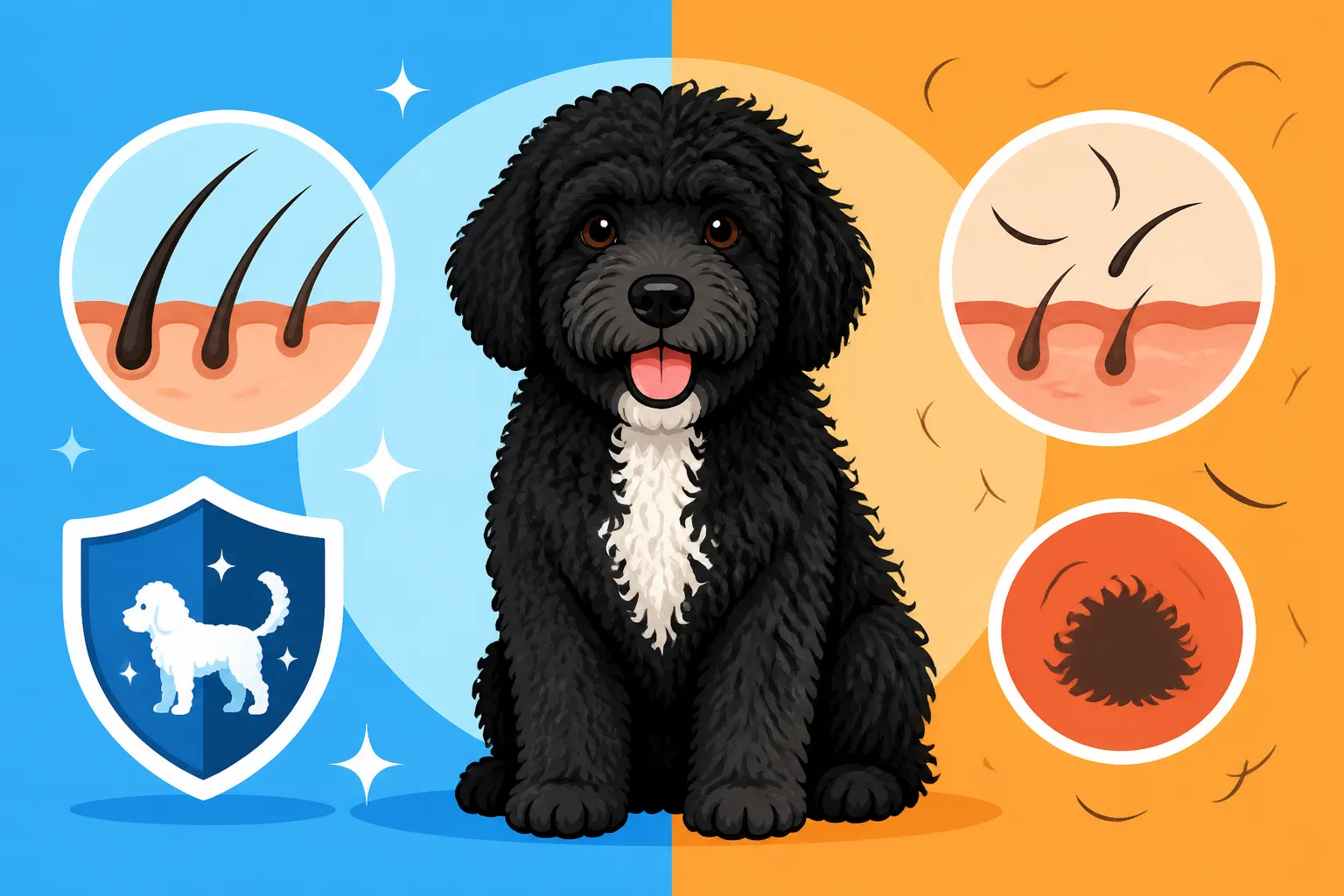
When people talk about a Portuguese Water Dog being "hypoallergenic," what they usually mean is that these dogs are generally better tolerated by individuals with dog allergies. But let's be realistic here: no dog is 100% hypoallergenic. The term simply means they tend to produce less dander and shed less hair, which are the primary culprits for allergic reactions. A proper Portuguese Water Dog (PWD) has a single coat, meaning no undercoat, which is a big part of why they shed minimally. Their coat comes in two main textures: curly or wavy. Both types are dense, waterproof, and designed to protect them from the elements, whether they're retrieving fishing nets from the icy waters of the Atlantic or diving for lost tackle. The texture of their coat is key to managing shedding; it’s not that they don't lose hair, but rather how their hair behaves when it is shed.
How a Proper Coat Manages Shedding
Instead of falling out freely and coating your furniture, clothes, and floors, the loose hairs from a proper PWD coat tend to get caught within the surrounding curls or waves. This is why regular grooming and brushing are absolutely non-negotiable for these dogs. If you don't brush them frequently, that trapped hair will quickly lead to mats, which can be incredibly painful for your dog and a nightmare to remove. So, while a proper PWD coat doesn't "shed" in the traditional sense of leaving tumbleweeds of fur around the house, it absolutely requires diligence to remove the dead hair through brushing. This is a fundamental aspect of Whether a Portuguese Water Dog Sheds and keeping their coat healthy. The hair itself has a specific structure; What a Portuguese Water Dog's Coat Is Made Of helps explain how it works to hold onto those loose strands, making it appear as if they don't shed.
What Exactly is an Improper Coat in a Portuguese Water Dog?
Now that we've set the stage with the proper coat, let's turn our attention to the "improper coat." This is a topic that can cause some confusion and concern for those new to the breed, but it's important to approach it with accurate information.
The Genetic Basis of Improper Coat
First and foremost, an improper coat is not an illness or a health defect. It's purely a cosmetic genetic trait. It's caused by a specific recessive gene, often referred to as the IC gene. Both parents must carry this gene for a puppy to inherit an improper coat. If a puppy inherits two copies of this recessive gene (one from each parent), they will display an improper coat. If they inherit one copy, they will be a carrier, capable of passing it on to their offspring, but will have a proper coat themselves. If they inherit zero copies, they have a proper coat and are not carriers. Understanding Which Gene Causes Improper Coat in a Portuguese Water Dog is vital for breeders and future owners alike, as it highlights that this isn't a random occurrence but a predictable genetic outcome. In essence, Improper Coat in a Portuguese Water Dog Is Genetic, Not Illness, which is a huge relief for anyone worried about their dog's well-being.
Visual Characteristics of an Improper Coat
So, what does an improper coat actually look like? It varies, but generally, a PWD with an improper coat will have hair that is much smoother, straighter, and often coarser in texture than the characteristic curly or wavy coat. They often lack the abundant "furnishings" – the longer hair on the face, beard, eyebrows, and legs – that give the Portuguese Water Dog its distinctive appearance. Sometimes, they're described as having a "flat face" because their facial hair is short and sleek, rather than bearded. You might also notice their coat feels thinner to the touch. The differences between How a Curly Coat Differs From a Wavy Coat are subtle compared to the stark contrast you see with an improper coat. If you've ever seen What an Improper Coated Portuguese Water Dog Looks Like, you'll quickly recognize the visual departure from the breed standard. This coat type might not be what people expect when they envision a PWD, but it's still a Portuguese Water Dog through and through.
Does an Improper Coat Shed More?
This is the million-dollar question for many prospective owners, especially those drawn to the breed for its low-shedding reputation. Let's get straight to the point and tackle this head-on.
The Truth About Shedding with an Improper Coat
Yes, a Portuguese Water Dog with an improper coat does shed more than one with a proper curly or wavy coat. This isn't just anecdotal; it's a direct consequence of the different hair texture. Remember how a proper PWD's curls and waves trap loose hair? An improper coat lacks that texture. Its smoother, straighter hair doesn't have the same ability to hold onto shed strands. As a result, the hair falls out more freely, much like a typical shedding breed. You'll likely find more hair on your furniture, floors, and clothing than you would with a properly coated PWD. It won't be as extreme as, say, a German Shepherd or a Labrador Retriever, which are known for heavy shedding, but it will certainly be more noticeable than the minimal shedding associated with the breed standard. This increased shedding also means that for those with dog allergies, an improper coated PWD is much less likely to be "hypoallergenic" and could trigger reactions.
Managing an Improper Coat's Shedding
While an improper coat sheds more, it doesn't mean it's unmanageable. The good news is that these coats are typically much easier to care for in terms of matting because they don't form the dense knots that proper coats do. However, you'll need to shift your grooming focus from mat prevention to shedding control. Regular brushing, perhaps two to three times a week, with a deshedding tool or a slicker brush can help significantly reduce the amount of loose hair that ends up around your home. Investing in a good vacuum cleaner is always a smart move for any dog owner, but particularly if you have a PWD with an improper coat. You might also find that regular baths help loosen dead hair, making it easier to brush out. It's a different grooming routine compared to a standard PWD, where How Often a Portuguese Water Dog Needs Brushing is primarily dictated by mat prevention. For improper coats, it's about minimizing the shed.
Living with a Portuguese Water Dog with an Improper Coat
It's easy to get caught up in the aesthetics or the shedding aspect, but it's vital to remember that a dog is much more than its coat.
Health and Temperament Considerations
One of the most important things to understand is that an improper coat is purely a cosmetic trait. It does not affect the dog's health, temperament, intelligence, or ability to be a loving, active companion. A PWD with an improper coat is just as healthy, intelligent, and full of that wonderful, exuberant personality as any properly coated PWD. They still possess that keen working drive, love for water, and desire to be with their family. So, if you find yourself with an improperly coated PWD, rest assured that you have a healthy, happy dog. Whether an Improper Coated Portuguese Water Dog Is Healthy is a common question, and the answer is a resounding yes! The trait only impacts the visual and shedding characteristics of the fur.
Grooming Routine Adjustments
As mentioned, the grooming needs will differ. You won't face the same constant battle against mats that owners of properly coated PWDs do, which can be a relief. You might even save a bit on professional grooming if you're clipping them regularly, as the simpler coat texture is often quicker and easier for groomers to work with, though some might argue it takes less skill. However, you'll be spending more time on brushing specifically to remove shedding hair. Many owners choose to keep their improper coated PWDs in a shorter clip year-round, which makes managing shedding even easier. When considering costs, Whether an Improper Coated Puppy Is Sold Cheaper is a point of discussion for breeders, as the cosmetic difference can sometimes affect pricing, though this is not always the case, especially if the puppy is otherwise from excellent health-tested lines. Regardless of the coat type, investing in good pet insurance like Healthy Paws can provide peace of mind for unexpected veterinary expenses, covering illnesses or accidents that can arise regardless of coat type.
Here’s a quick comparison of proper versus improper Portuguese Water Dog coats:
| Feature | Proper Coat (Curly/Wavy) | Improper Coat (IC) |
|---|---|---|
| Shedding | Minimal shedding, loose hairs trapped in coat. | More noticeable shedding, hairs fall out freely. |
| Allergy Impact | Generally considered "hypoallergenic" due to less dander. | Less suitable for allergy sufferers due to increased shedding. |
| Texture | Dense, waterproof, distinctly curly or wavy. | Smoother, straighter, often coarser, less dense. |
| Appearance | Abundant furnishings (beard, eyebrows, leg hair). | Lacks furnishings, often "flat-faced" appearance. |
| Matting | Prone to matting; requires diligent brushing. | Less prone to matting. |
| Grooming Focus | Prevent matting, daily/every-other-day brushing. | Control shedding, regular brushing with deshedding tools. |
| Genetic Cause | Homozygous dominant (no IC gene) or heterozygous (carrier). | Homozygous recessive (two copies of the IC gene). |
| Health | Healthy | Healthy (cosmetic difference only) |
It's worth noting that breeders who diligently test their breeding stock for genetic diseases like GM1 Gangliosidosis and Juvenile Dilated Cardiomyopathy will also test for the improper coat gene. This allows them to make informed breeding decisions and avoid producing puppies with improper coats, especially if that is their goal for the breed standard. However, Whether Two Carriers Produce an Improper Coat is a key point to understand: if two carriers are bred, there's a 25% chance per puppy of having an improper coat. For families seeking a truly low-shedding dog, confirming the genetic status of the parents is crucial.
Ultimately, while an improper coat will shed more than the standard curly or wavy coat, it doesn't diminish the spirit or health of a Portuguese Water Dog. It simply means a slightly different grooming approach to keep your home tidy and your pup comfortable. Remember, the true joy of a Portuguese Water Dog lies in their vibrant personality, their boundless energy, and their unwavering loyalty, regardless of their coat type. If you're concerned about health issues beyond coat type, you might be interested in resources like The Four DNA Tests Every Portuguese Water Dog Breeder Runs to ensure you're getting a puppy from responsible lines. For general wellness, a comprehensive pet insurance plan from a provider like Healthy Paws can certainly help manage the costs of keeping your beloved PWD in top shape, no matter their coat.
Disclaimer
This article is intended for informational purposes only and does not constitute veterinary advice. Always consult with a qualified veterinarian for any health concerns or before making any decisions about your pet's health or treatment.