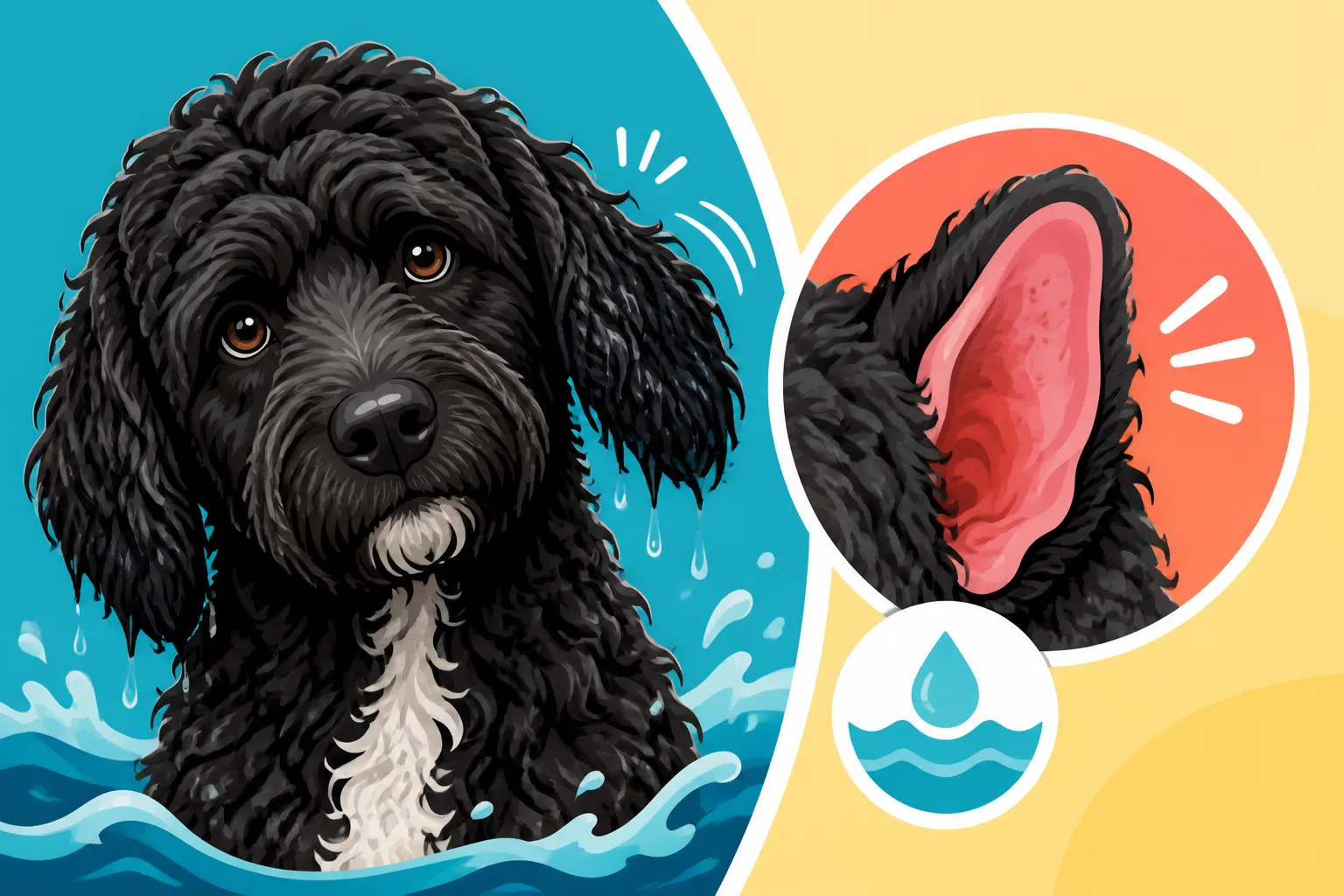
Why a Swimming Dog Gets Ear Infections
If you're a Portuguese Water Dog owner, or considering becoming one, you've probably already realized these amazing dogs are absolute water magnets. They live for a dip, a swim, a dock dive, or just splashing around, but this deep love for all things aquatic often comes with a frustrating downside: chronic ear infections. It’s incredibly common to find yourself in a constant battle against red, itchy, smelly ears, and this guide is here to walk you through exactly why this happens and, more importantly, what you can do about it to keep your PWD happy and healthy.
The Unique Ear Anatomy of a Portuguese Water Dog
The very design of a Portuguese Water Dog's ear, while beautiful and characteristic of the breed, unfortunately makes it a prime candidate for trapping moisture and developing infections. It's not just a matter of "my dog swims a lot"; it's how their ears are constructed that sets them up for trouble.
The Dangers of a Drop Ear and Hair-Filled Canal
Unlike breeds with upright, open ears that allow for good air circulation, Portuguese Water Dogs have "drop ears." This means their ears hang down, covering the ear canal opening. This physical barrier immediately creates a dark, warm, and enclosed environment – essentially a cozy little incubator. Add to this the fact that PWDs have a glorious, dense coat that extends right into their ear canals. This hair isn't just on the outer flap; it grows quite profusely inside the ear, acting like a tiny, furry dam.
Imagine trying to dry a wet, densely carpeted hallway without much airflow. That’s what’s happening inside your PWD's ear after a swim. The hair traps water deep within the canal, holding it against the skin. This constant moisture softens the delicate lining of the ear canal, making it more vulnerable to irritation and bacterial or yeast overgrowth. The more frequently your dog swims, the more often this damp, confined environment is re-established, providing an ongoing opportunity for pathogens to flourish. This is why you hear so often about How Often a Portuguese Water Dog Gets an Ear Infection.
How Moisture Gets Trapped Deep Inside
It's not just surface water we're talking about here. When your Portuguese Water Dog dives into a lake, ocean, or even a pool, water often penetrates much deeper into the ear canal than you might realize. The drop ear acts like a funnel, guiding water down, and the internal hair provides countless surfaces for that water to cling to. Gravity, combined with the dog's head movements, doesn't always allow this water to easily drain back out.
Furthermore, the structure of the ear canal itself isn't a straight shot. It has a vertical and a horizontal component, creating a natural bend that further complicates drainage. So, even if the outer ear looks dry, there could be residual moisture lurking deep within. This moist, humid microclimate drastically alters the natural balance of microorganisms typically present in a healthy ear, paving the way for opportunistic infections. It's a constant concern that Whether a Portuguese Water Dog's Ear Canal Stays Wet after a good splash.
Why Water Creates a Breeding Ground for Trouble
Water itself isn't the enemy, but the conditions it creates within a PWD's ear are. Understanding this "perfect storm" helps you appreciate why diligent care is so crucial.
The Perfect Storm: Warmth, Darkness, and Humidity
Think about what bacteria and yeast love: warmth, darkness, and humidity. A wet Portuguese Water Dog's ear canal provides all three in abundance. After a swim, the dog's body heat warms the trapped water, creating a steamy, humid environment. The drop ear ensures darkness, and the lack of airflow maintains that humidity for extended periods. This isn't just uncomfortable; it's an invitation for trouble.
In these conditions, the skin inside the ear canal can become macerated – essentially, soggy and weakened. This breakdown of the skin's natural protective barrier makes it easier for microorganisms to invade and cause inflammation. The constant irritation can also lead to excessive wax production, which only adds to the problem by providing more organic material for bacteria and yeast to feed on and further block proper airflow. It’s a vicious cycle that can leave both you and your beloved PWD feeling miserable.
Common Pathogens Thriving in Wet Environments
The most frequent culprits behind Portuguese Water Dog ear infections are bacteria and yeast.
- Yeast (Malassezia Pachydermatis): This is a very common inhabitant of dog ears, but in a warm, moist environment, it can overgrow rapidly. A yeast infection often presents with a greasy, brownish discharge and a distinct, sweet, often pungent odor that some describe as "corny" or "yeasty bread."
- Bacteria (e.g., Staphylococcus, Pseudomonas): Various types of bacteria can take hold, especially if the ear canal's defenses are compromised. Bacterial infections can cause a range of discharge, from yellowish to greenish, and often have a foul smell. Pseudomonas infections, in particular, can be very painful and produce a lot of pus.
- Mixed Infections: It's incredibly common for a PWD to suffer from a mixed infection, meaning both bacteria and yeast are present, making treatment more complex.
- Allergies: While not directly caused by water, allergies (environmental or food-related) can lead to inflammation and irritation in the ear canal, making it even more susceptible to secondary infections when water is introduced. If your PWD seems to get ear infections constantly, even with diligent drying, it's worth exploring underlying allergies with your vet.
Swimming in natural bodies of water like lakes and ponds can also introduce new bacteria and fungi directly into the ear canal, some of which might be more resistant to common treatments. This is why preventive care is always better than trying to treat an established infection.
Proactive Ear Care Strategies for Swimming PWDs
Prevention truly is the best medicine when it comes to keeping your water-loving Portuguese Water Dog's ears healthy. Establishing a consistent routine can make a world of difference.
The Importance of Post-Swim Ear Cleaning
This is arguably the most critical step. Every single time your Portuguese Water Dog goes for a swim, their ears need attention afterward. The goal is to remove trapped water and debris before it can cause problems.
- Rinsing: Immediately after swimming, especially in saltwater or chlorinated pools, a quick rinse of the outer ear flap with fresh water can help remove irritants.
- Drying: Gently but thoroughly dry the outer ear flap and as much of the ear canal as you can reach with a soft towel or cotton balls. Do not use cotton swabs (Q-tips) deep inside the ear canal, as this can push debris further in and potentially damage the eardrum.
- Ear Cleaning Solution: This is where the magic happens. Use a veterinary-recommended ear cleaning solution designed to dry and acidify the ear canal. Products containing ingredients like acetic acid, boric acid, or witch hazel are excellent choices. Gently squirt the solution into the ear canal (following product instructions), massage the base of the ear for 20-30 seconds to help break up debris, and then let your dog shake their head. Wipe away any loosened gunk with cotton balls. Repeat if necessary until the cotton comes out clean. Be sure to find out What a Portuguese Water Dog's Ear Cleaner Costs a Year as this will be an ongoing expense.
Brands like Epi-Otic Advanced or Zymox Ear Cleanser are often recommended by veterinarians for their efficacy. Consistency is key here. Make this part of your post-swim ritual, just like drying off their beautiful coat.
Grooming for Ear Health and Airflow
The dense hair inside a Portuguese Water Dog's ear canal is a major contributor to trapping moisture. Regular grooming, specifically trimming or plucking this hair, can significantly improve air circulation and reduce the humid environment.
- Plucking: Many PWD owners and professional groomers opt to pluck the hair from the inner ear canal. This should be done carefully, ideally by a groomer or vet who can show you the proper technique. It's often less painful than it sounds if done correctly and can dramatically increase airflow.
- Trimming: If plucking isn't an option or is too sensitive for your dog, carefully trimming the hair at the entrance of the ear canal can still help. Again, seek guidance from a professional to avoid accidental injury.
- Regular Overall Grooming: Keeping your PWD’s coat well-groomed, especially around the face and ears, contributes to overall hygiene and helps prevent mats that can trap additional moisture and dirt. This means regular brushing and professional grooming appointments. Understanding How Often a Portuguese Water Dog Needs a Groomer is crucial not just for aesthetics but for health.
Nutritional Support and Regular Vet Checks
While not directly preventing water entry, a dog with a strong immune system and healthy skin is generally more resilient to infections.
- Balanced Diet: Feed your Portuguese Water Dog a high-quality, balanced diet rich in omega fatty acids. These fatty acids support healthy skin and coat, which can in turn contribute to a healthier ear environment.
- Allergy Management: If your PWD is prone to ear infections, discuss potential allergies with your veterinarian. Managing environmental or food allergies can reduce inflammation in the ear canal, making it less susceptible to secondary infections from moisture. Your vet might suggest an elimination diet or allergy testing.
- Routine Veterinary Visits: Regular check-ups are essential for catching potential issues early. Your vet can perform a thorough ear examination, checking for signs of inflammation, excessive wax, or budding infections that might not be obvious to you. This is also a good opportunity to discuss What a Portuguese Water Dog's Yearly Health Screen Costs and ensure all bases are covered. Investing in pet insurance from providers like Healthy Paws can help manage the costs of routine care and unexpected ear infection treatments, providing peace of mind.
Recognizing and Addressing Ear Infections
Even with the best preventive care, ear infections can still crop up. Knowing the signs and when to seek professional help is vital for your PWD's comfort and long-term health.
Telltale Signs and Symptoms to Watch For
Portuguese Water Dogs, like many breeds, can be stoic about discomfort, but ear infections usually present with clear indicators if you know what to look for.
- Head Shaking and Ear Scratching: This is often the first and most obvious sign. If your PWD is constantly shaking their head or pawing at their ears, it’s a strong signal that something is irritating them.
- Redness and Swelling: Gently lift your dog's ear flap and inspect the inner surface of the ear and the entrance to the ear canal. You might notice redness, swelling, or crusting.
- Discharge and Odor: A healthy ear should have minimal discharge and no strong odor. An infected ear, however, might produce a brownish, yellowish, or greenish discharge, and often has a distinct, unpleasant smell – sometimes sweet and yeasty, other times foul and pungent.
- Pain or Sensitivity: Your dog might resist you touching their ears. They might yelp, pull away, or even snap if the ear is particularly painful.
- Changes in Behavior: They might seem generally irritable, less energetic, or even lose their appetite due to discomfort. In severe cases, they might even develop a head tilt if the infection is affecting their balance.
Don't ignore these signs, even if they seem mild. An untreated ear infection can become chronic, more difficult to treat, and incredibly painful for your dog.
When to Seek Veterinary Intervention
As soon as you notice any of the above symptoms, it's time to call your veterinarian. While you might be tempted to try an over-the-counter solution, a proper diagnosis from a vet is crucial.
- Accurate Diagnosis: Your vet will use an otoscope to look deep into the ear canal, checking for foreign bodies, ruptured eardrums, or tumors, and will likely take a swab of the discharge. This sample is examined under a microscope to identify whether yeast, bacteria, or both are present, and which specific types. This guides the choice of medication.
- Prescription Medication: Based on the diagnosis, your vet will prescribe appropriate ear drops or ointments. These often contain antibiotics, antifungals, and/or steroids to reduce inflammation. Trying to guess the right medication yourself can be ineffective and potentially worsen the problem or lead to drug resistance.
- Underlying Issues: Your vet can also help identify and address any underlying issues like allergies that contribute to recurrent infections. Without addressing these, the infections will likely keep coming back. Pet insurance, such as a plan from Healthy Paws, can be incredibly helpful for covering these diagnostic and treatment costs, especially if your PWD is prone to recurrent issues.
Understanding Treatment Options and Preventing Recurrence
Treating an ear infection usually involves a course of prescribed ear medication, typically for 7-14 days, sometimes longer for severe cases. It's incredibly important to follow your vet's instructions precisely and complete the entire course of medication, even if the ear appears to be improving. Stopping early can lead to a resurgence of the infection.
- Medication Administration: Your vet or vet tech can demonstrate the correct way to administer ear drops, ensuring the medication reaches deep into the canal.
- Follow-Up: A follow-up visit is often necessary to ensure the infection has completely cleared. Your vet will re-examine the ear and might take another sample to confirm.
- Long-Term Management: For dogs with chronic ear infections, your vet might recommend a more rigorous long-term management plan, which could include weekly preventive ear cleanings, dietary changes, or allergy medications. Remember, prevention is your best friend. Diligent post-swim drying and cleaning, along with regular grooming, will be your primary tools in keeping those beautiful PWD ears healthy and infection-free, allowing your companion to enjoy their swimming without the painful aftermath. It's a commitment, but one that is well worth it for the health and happiness of your Portuguese Water Dog.
| Factor | Contributes to Infection | Prevention Strategy |
|---|---|---|
| Drop Ear | Yes | No direct prevention, but increases need for diligence |
| Hair in Canal | Yes | Regular plucking/trimming by groomer/vet |
| Trapped Water | Yes | Thorough drying & ear cleaning immediately after swimming |
| Warm, Dark Environment | Yes | Maximizing airflow by keeping hair clear; drying |
| Yeast/Bacteria Overgrowth | Yes | Regular cleaning with appropriate solution; vet-prescribed meds |
| Allergies | Can predispose | Allergy management (diet, medication) with vet guidance |
| Excessive Wax | Yes | Routine cleaning to prevent buildup |
Disclaimer
The information provided in this guide is for general educational purposes only and should not be considered a substitute for professional veterinary advice. Always consult with a qualified veterinarian for any health concerns or before making any decisions related to your pet's medical care.