Whether a Second Portuguese Water Dog Doubles the Swimming
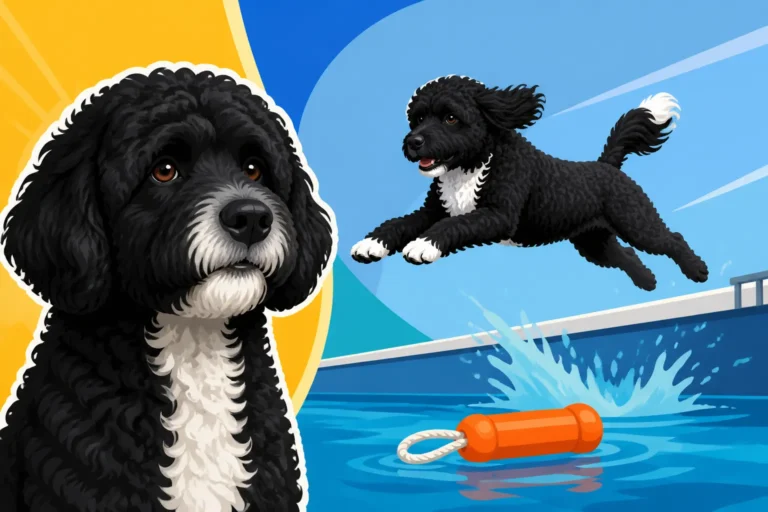
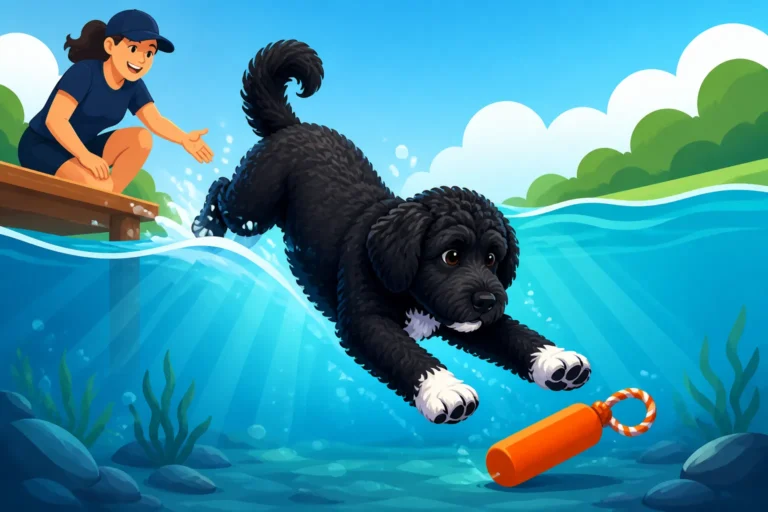
Oh, the dream! You're picturing it right now, aren't you? Two magnificent, curly-coated Portuguese Water Dogs, frolicking in the lake, retrieving bumpers in perfect synchronicity, tiring each other out while you sit back with a good book. It’s a beautiful vision that often sparks the thought: "If one Portuguese Water Dog needs so much swimming, surely two will just play together and halve my effort, right?" Well, let's dive into that delightful thought and see what the reality truly looks like. This guide will help you understand whether adding a second Portuguese Water Dog to your family truly doubles your swimming commitment or creates a self-sufficient aquatic duo.
The Innate Drive for Water in Portuguese Water Dogs
Before we even consider a second dog, it's crucial to remember why swimming is so central to the Portuguese Water Dog. It's not just a pastime; it's a deeply ingrained part of their heritage and physical makeup.
More Than Just a Dip: The Historical Purpose of PWDs in Water
To understand a Portuguese Water Dog's relationship with water, you have to look back to their roots along the coasts of Portugal. These dogs weren't just passengers on fishing boats; they were integral members of the crew. Their job was tough and vital: they retrieved lost fishing gear that went overboard, herded fish into nets, and even carried messages between boats or from boat to shore. This wasn't a game; it was their livelihood, a task they performed with unwavering dedication and immense skill.
This historical purpose means that for many Portuguese Water Dogs, the drive to work in and around water isn't a quirk; it's a fundamental part of their genetic coding. When they see water, it's often more than just an invitation to cool off; it's a call to action, a reminder of generations of purposeful work. This deep-seated instinct means that engaging with water satisfies not just their physical needs but also their intelligent, problem-solving minds. You can read more about their historical role in What a Portuguese Water Dog Was Bred to Do on a Boat. They're not just splashing; they're working, problem-solving, and fulfilling an ancient calling.
The Physical and Mental Benefits of Swimming for the Breed
Swimming is, quite frankly, one of the best forms of exercise for a Portuguese Water Dog. Physically, it's a full-body workout that's incredibly low impact. This is particularly beneficial for a breed that can be prone to joint issues like hip dysplasia. Hours spent gracefully gliding through the water strengthen their muscles without the pounding stress on their joints that comes from extensive running or jumping on hard surfaces. It's a fantastic way to maintain a healthy weight and build lean muscle, which in turn helps support their skeletal structure. You can learn more about how water activities benefit their physical health in Why Swimming Protects a Portuguese Water Dog's Joints.
Beyond the physical, the mental stimulation from water work is invaluable. Retrieving objects, navigating currents, and focusing on a task in a dynamic environment all provide a significant mental workout. This engagement helps to prevent boredom and the behavioral problems that can stem from an intelligent dog with too much idle time on its paws. A Portuguese Water Dog who doesn't get enough appropriate exercise, including water time, might become destructive, overly vocal, or simply restless and difficult to live with on land. This can lead to issues like The Portuguese Water Dog That Has Not Had Enough Exercise. Satisfying this innate drive with regular swimming helps to create a calm, contented companion indoors.
The Reality of Multi-PWD Households and Shared Activities
Now, let's imagine you've decided to take the plunge and add a second Portuguese Water Dog to your household. You're dreaming of them as a team, a dynamic duo. And while that can absolutely happen, it's important to temper expectations with a dose of realism about individual personalities and group dynamics.
Individual Personalities and Water Preferences
The biggest misconception people have is assuming that because two dogs are the same breed, they will have identical personalities and preferences. Nothing could be further from the truth, especially with a breed as intelligent and individualistic as the Portuguese Water Dog. You might have one dog who is an absolute water demon, launching themselves into the deepest part of the lake with joyful abandon. Meanwhile, your second PWD might be a more cautious swimmer, preferring to wade in the shallows, or perhaps is more interested in a land-based game of fetch before a polite dip.
Age also plays a significant role in how two PWDs interact with water. A young, exuberant puppy might be constantly trying to engage an older, more sedate dog in vigorous play, which the older dog might tolerate for a bit before seeking a quiet spot on the shore. As a PWD ages, their stamina and enthusiasm for long, vigorous swims might naturally decrease, as discussed in When a Portuguese Water Dog Slows Down With Age. You might find yourself needing to tailor water activities to accommodate different energy levels. While it's wonderful to hope they'll be inseparable aquatic playmates, it's essential to recognize that each dog is an individual with their own unique relationship with water. For more on this, check out Whether Every Portuguese Water Dog Likes Water.
The "Herd" Instinct and Group Play Dynamics
Despite individual differences, Portuguese Water Dogs often do bond incredibly strongly, especially with other PWDs. This "herd" instinct can be a real boon when it comes to water activities. If one dog is a keen swimmer, the sight of them splashing and retrieving can often encourage a more hesitant companion to join in. They often egg each other on, turning a solo retrieve into a synchronized chase, or a simple swim into a joyful wrestling match in the water. This mutual encouragement can be highly motivating, and sometimes, the sheer joy of watching them play together can be infectious for you, too.
However, this doesn't always translate to less work for you. While they might entertain each other, their combined energy can also mean double the chaos, double the splashes, and double the mud if your swimming spot isn't pristine. Their collective enthusiasm can be incredible, but it also means you're managing two active, intelligent dogs simultaneously. You'll need to be vigilant to ensure that play remains fair and friendly, and that one dog isn't monopolizing toys or attention. Managing two Portuguese Water Dogs requires a deep understanding of their individual dynamics, as highlighted in How Two Portuguese Water Dogs Live Together. Their bond is often strong, but it's a dynamic relationship that needs your thoughtful supervision.
Assessing the True Impact on Your Swimming Commitments
So, the big question: does adding a second Portuguese Water Dog truly double your swimming commitment, or do they become a self-sufficient swimming team? The answer, like most things in life with dogs, is nuanced.
The Self-Entertaining Factor vs. Supervised Play
It's tempting to envision a scenario where your two Portuguese Water Dogs spend hours throwing the bumper for each other, tiring themselves out without much human intervention. While they will engage in play with each other in the water, the reality is that PWDs thrive on interaction with their human companions. You are still the primary source of the retrieve, the praise, the direction, and the sheer fun. Even when they're playing together, they'll often look to you for guidance, encouragement, or just to show off their latest catch.
Expecting them to manage their own water exercise every day without supervision is unrealistic and potentially unsafe. Whether it's in a lake, ocean, or even a fenced pool, vigilance is key. You need to be present to ensure their safety, prevent them from getting into trouble, and provide that crucial human-dog bond that makes the activity so rewarding for them. Activities like What Dock Diving Asks of a Portuguese Water Dog are inherently single-dog endeavors, meaning you'll still dedicate individual time for each dog if they participate in such sports. While their combined presence might make a session feel more dynamic, it rarely truly reduces your active participation. This is why Whether Swimming Replaces Walking for a Portuguese Water Dog is a complex question; it supplements, it doesn't always replace, your role.
Doubled Logistics: Drying, Cleaning, and Post-Swim Care
This is where the "doubling" aspect really becomes apparent, and it's less about the time in the water and more about the time after the water. Two wet, curly, or wavy Portuguese Water Dog coats mean twice the effort in drying, twice the potential for mats if not done thoroughly, and twice the need for meticulous ear cleaning to prevent those pesky infections. If you thought drying one PWD was a commitment, prepare for an expedition with two!
You'll quickly find yourself needing more than just a couple of old towels. Investing in heavy-duty, super-absorbent towels, or even a dedicated pet chamois, becomes essential. Many multi-PWD owners swear by having a powerful force dryer, which is almost a necessity to properly and efficiently dry two dense coats. Drying a Portuguese Water Dog After Every Swim is non-negotiable for their skin and coat health. After every swim, you’ll be on ear-check duty for both, clearing out any water to prevent infections. Your car will need industrial-strength seat covers, or you might find yourself needing larger crates or even a dedicated wet-dog section to contain the dampness and dirt on the ride home. Amazon and other online retailers offer a fantastic range of car boot protectors and water-absorbent crate pads that become indispensable. This post-swim routine isn't just a chore; it's a critical part of owning a water dog that multiplies with each additional canine companion. For a deeper dive into the drying process, see How Long a Portuguese Water Dog Takes to Dry.
Practical Strategies for Multi-PWD Water Work
Embracing the multi-Portuguese Water Dog life, especially when it comes to their water work, is about smart planning and the right tools. It’s not about avoiding the effort, but optimizing it so you can enjoy the double joy without feeling perpetually overwhelmed.
Scheduling and Equipment for Two Water Lovers
When you have two Portuguese Water Dogs, your approach to their water activities might need a little restructuring. While you might not necessarily double the number of swimming sessions you do each week, you'll certainly find that the total time spent on water-related activities—from preparation to drying—will increase significantly. You can make sessions more efficient by throwing two bumpers at once, allowing both dogs to retrieve simultaneously, or by rotating turns if one dog needs a break. Some dogs might even enjoy retrieving the same object in a friendly, competitive manner.
Investing in appropriate equipment is crucial. You'll need at least two life jackets, even for the strongest swimmers, as safety is paramount in any water environment. Durable, floating retrieve toys are a must, as are plenty of absorbent towels. As mentioned, a high-velocity force dryer is practically a non-negotiable item for two PWDs. It drastically cuts down drying time and is vital for preventing skin issues and mats. Many dedicated Portuguese Water Dog owners consider it one of their best investments. For a deeper look at this essential tool, check out What a Force Dryer Does for a Portuguese Water Dog.
To help visualize the difference in logistics, here’s a quick comparison:
| Aspect | One Portuguese Water Dog | Two Portuguese Water Dogs |
|---|---|---|
| Play Dynamics | Primarily human-centric retrieval and interaction. | Potential for peer play and mutual encouragement, but still relies heavily on human guidance and engagement. |
| Exercise Time | Dedicated individual sessions, easy to manage solo. | Can be combined for efficiency, but overall session time might extend due to managing two dogs and double retrieves. |
| Drying Time | Significant, but manageable for one coat. | Doubles or more; necessitates efficient techniques and powerful equipment to prevent mats and skin issues. |
| Equipment Needs | One set of essentials (towel, floating toy, life jacket). | Two sets minimum, possibly larger towels, multiple toys, and a robust force dryer. |
| Post-Swim Care | Regular ear checks, thorough brushing as needed. | Twice the ear checks, double the potential for mats if not diligently brushed and dried. |
| Supervision Level | High, ensuring safety and engagement. | Still high, if not higher, to manage interactions, prevent resource guarding, and ensure both dogs are safe and happy. |
Training for Harmonious Group Water Play
Successful, harmonious water play with two Portuguese Water Dogs hinges on solid individual obedience training. Each dog needs to reliably respond to commands like "stay," "come," and "drop it" on land, and even more importantly, in and around water. Imagine one dog bolting towards the water while you're still getting the other ready; reliable recall is your absolute best friend. Resources like BAXTER & Bella’s online training programs can provide excellent foundational skills that translate beautifully to real-world scenarios, including those challenging wet environments.
It's also beneficial to teach "wait your turn" or "fetch your own" to prevent squabbles over toys. Start with simple retrieves, perhaps one dog waiting on the bank while the other retrieves, then switching. Gradually introduce playing together, always ensuring positive experiences and stepping in if competition gets too intense. Remember, consistency and positive reinforcement are key. If your dogs can reliably recall out of the water, as discussed in Whether a Portuguese Water Dog Recalls Out of Water, it makes managing two so much easier. Taking the time to build this foundation ensures that your multi-PWD water adventures are fun and safe for everyone involved. For tips on patience by the water, check out Teaching a Portuguese Water Dog to Wait on the Bank.
Embracing the Joys (and Realities) of a Multi-PWD Water Life
Let's be honest, the logistics can sometimes feel like double the work, but the joy of watching two Portuguese Water Dogs play and swim together is truly unparalleled. Their synchronized movements, their boundless energy, and their sheer delight in the water can be incredibly heartwarming and endlessly entertaining. You'll witness unique interactions, shared moments of triumph as they bring in a retrieve, and an incredible bond that forms between them, often reinforced by their shared passion for water.
It's not about finding ways to avoid the work; it's about fully embracing the unique lifestyle that comes with a multi-Portuguese Water Dog household. It's a commitment to an active, often wet, and always entertaining existence. While there are certainly more towels, more drying, and more ear checks, the rewards of having two loyal, intelligent, and water-loving companions can far outweigh the challenges. It's a journey, a lifestyle choice, and for many, it's a decision they would make again in a heartbeat. The everyday needs of a PWD are substantial, as seen in What a Portuguese Water Dog Needs Every Day, but the doubling of that can also double the love and laughter. Many owners, despite the extra effort, often share Whether Portuguese Water Dog Owners Would Choose One Again.
Disclaimer
This article is for general informational purposes only and does not constitute professional advice. Laws, prices and regulations vary by location and change over time. Consult a qualified professional for guidance on your specific situation.