Whether a Portuguese Water Dog Knocks Over Small Children
Bringing a Portuguese Water Dog into a home with small children can be a wonderfully enriching experience, but it’s entirely valid to wonder if their renowned exuberance might lead to accidental bumps or even tumbles for little ones. The truth is, a PWD’s playful energy and solid build can indeed result in a child being knocked over if not properly managed and trained, but this guide will walk you through exactly why this happens and, more importantly, how you can proactively prevent such incidents to ensure a safe and harmonious environment for everyone.
Understanding the Portuguese Water Dog's Energetic Nature
Portuguese Water Dogs are not your average couch potatoes; they are a breed steeped in a history of active, challenging work. Their very essence is tied to boundless energy, intelligence, and an enthusiastic approach to life. Understanding this innate drive is the first step in managing their interactions with the most vulnerable members of your family.
The Boisterous Enthusiasm of a Working Breed
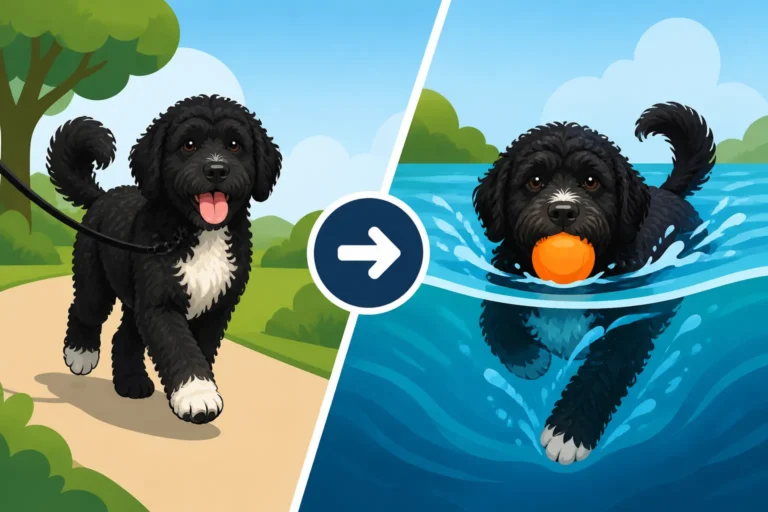
Imagine a dog bred to spend its days working on fishing boats off the coast of Portugal, diving into icy waters, retrieving lost gear, and even herding fish into nets. This isn't a job for a shy or low-energy canine. The Portuguese Water Dog inherited a powerful drive, an agile body, and a mind that thrives on activity and engagement. When you bring one of these dynamic dogs into your home, you're not just getting a pet; you're adopting a partner with a deep-seated need for physical and mental stimulation.
This historical purpose translates directly into their demeanor today. A Portuguese Water Dog approaches life with a joyful, almost unbridled enthusiasm. When they're happy, excited, or ready to play, they can burst into motion with impressive speed and strength. This effervescence, while charming, means they might express their joy with full-body wags, playful pounces, or quick dashes that can be disorienting or overwhelming for a small child who isn't steady on their feet. Their natural impulse to "work" and engage can often manifest as exuberant play, which, if not channeled correctly, can inadvertently bowl over a toddler.
Puppy Antics and Adolescent Zoomies
The journey with a Portuguese Water Dog often begins with an adorable, fuzzy puppy, but don't let their small size fool you into complacency. PWD puppies are bundles of boundless energy, prone to clumsy leaps, sharp turns, and a general lack of spatial awareness. They explore the world with their mouths and their bodies, often bumping into things and people in their excitement. This puppy stage, particularly between 8 weeks and 6 months, is a critical time for careful supervision, especially around young children.
As they transition into adolescence, typically from 6 months to about two years, their energy levels peak, and their bodies grow, sometimes faster than their brains. This is the era of "zoomies" – sudden bursts of high-speed running and jumping that seem to come out of nowhere. An adolescent PWD, full of playful hormones and bursting with energy, might forget its manners or its size when a child makes a sudden sound or movement, interpreting it as an invitation to chase or play. It’s during this phase that many owners feel challenged to keep up with their dog's mental and physical needs, and it's also a time when accidents with small children are more likely if vigilance and training slacken. When a Portuguese Water Dog Hits Adolescence is a time when boundaries are often tested.
Factors Contributing to Accidental Tumbles with Children
When we talk about a Portuguese Water Dog potentially knocking over a small child, it's rarely malicious intent. Instead, it's usually a confluence of their physical attributes, their training, and the unpredictable nature of both dogs and children. Understanding these factors can help you put preventative measures in place.
Size, Strength, and Unintended Impact
Let’s be realistic about the physical presence of a Portuguese Water Dog. An adult male PWD can weigh between 42 and 60 pounds and stand 20 to 23 inches tall at the shoulder. Females are slightly smaller, but still substantial. What a Portuguese Water Dog Weighs and How Tall It Stands. Compare this to a toddler or a small child who might weigh 20 to 40 pounds and stand under 3 feet tall. The size difference alone means that any enthusiastic movement from the dog carries significant potential for impact.
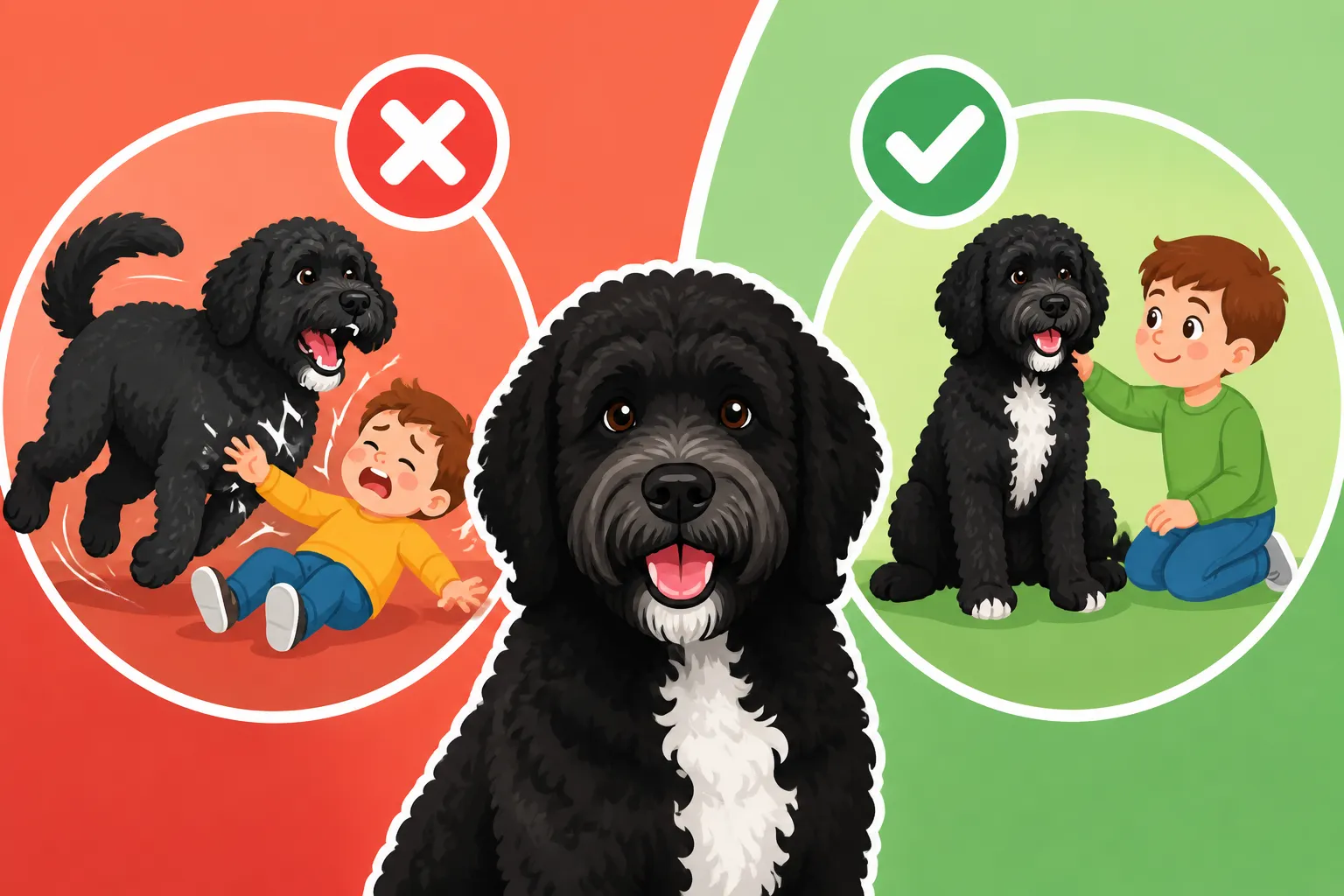
Imagine a scenario: a child squeals with delight and takes off running across the yard. Your PWD, seeing this as an invitation to play, bounds after them, tail wagging furiously. Even if the dog intends only to play, a clumsy pounce, an excited turn, or a vigorous tail thump at full speed can easily send a small child sprawling. Their sturdy build and muscular legs are designed for propelling them through water and over rugged terrain, not for delicate maneuvering around tiny humans. The dog's intent might be pure, but the physical reality can still lead to a child losing their balance and falling.
Lack of Impulse Control and Training Gaps
A key element in preventing accidental tumbles is a Portuguese Water Dog's impulse control. A well-trained PWD learns to manage its excitement and defer to its handler, even when highly stimulated. However, without consistent training and clear boundaries, a PWD might struggle with impulse control, especially when faced with the irresistible allure of a playful child. Teaching a dog polite greetings, like "four on the floor" (keeping all paws on the ground when greeting people), is fundamental.
If a dog hasn't been consistently taught not to jump or to remain calm in exciting situations, it's going to rely on its natural instincts. And for a PWD, those instincts often involve an enthusiastic leap or a full-body lean into interaction. These training gaps become particularly apparent when children, with their unpredictable movements and often high-pitched voices, inadvertently trigger an excited response from the dog. A Portuguese Water Dog bred to think for itself needs clear guidance on how to behave around young children. Training a Portuguese Water Dog That Was Bred to Think for Itself is crucial for impulse control.
Child Behavior and Dog Response
It's not just about the dog; a significant part of the equation involves understanding child behavior and how dogs perceive it. Small children are often a whirlwind of unpredictable motion – running, skipping, flailing arms, sudden shouts, and sometimes even clumsy attempts to pet or hug. To a dog, especially an energetic one like a PWD, these actions can be confusing or, more often, highly stimulating.
A child’s quick dash might look like an invitation for a chase game to a PWD, which has a natural retrieving drive. Their high-pitched squeals can amp up a dog’s excitement. Moreover, children might inadvertently get too close to a dog's face, pull an ear or tail, or try to grab a toy, all of which can provoke an unexpected reaction or simply an energetic withdrawal that knocks them over. Therefore, education for both the dog and the child on respectful interaction is paramount. A Portuguese Water Dog With Children and Other Dogs needs specific guidance.
Strategies to Prevent Accidents and Ensure Safe Interactions
Preventing accidental tumbles and fostering a safe relationship between your Portuguese Water Dog and small children requires a multi-pronged approach rooted in proactive training, vigilant supervision, and clear boundaries for both species. It’s about setting everyone up for success.
Proactive Training and Socialization from Day One
The foundation of a safe household begins the moment your Portuguese Water Dog puppy comes home. Early and consistent training is absolutely non-negotiable. Focus on basic obedience commands such as "sit," "stay," "down," and a reliable "leave it." Most critically, instill the "four on the floor" rule immediately: teach your PWD that all greetings, especially with children, must occur with all four paws firmly on the ground. Reward calm behavior enthusiastically. Online training programs, such as those offered by BAXTER & Bella, can be invaluable resources, providing structured lessons and support that guide you through these crucial developmental stages.
Beyond basic commands, deliberate and positive socialization is key. Introduce your puppy to children of various ages in controlled, positive environments. Always ensure these interactions are supervised and brief, allowing the puppy to associate children with good experiences, like calm pets and treats, rather than overstimulation. This early exposure helps them understand how to behave politely around young humans. Remember, The First Year With a Portuguese Water Dog Puppy is incredibly important for setting these foundational behaviors.
Consistent Supervision and Management Techniques
Perhaps the most critical rule in a multi-species household with children and dogs is this: never, ever leave a Portuguese Water Dog unsupervised with small children, even for a moment. Accidents happen in a blink, and even the most well-behaved dog can react unexpectedly to a child's sudden movement, or vice-versa. Consistent, active adult supervision is your best defense.
Beyond direct supervision, employ management techniques to create safe zones. Utilize baby gates or dog gates to separate your PWD from children when you can’t provide your undivided attention. A sturdy crate, introduced as a positive den, can also provide your dog with a safe retreat when things get too hectic. Many families find a range of practical solutions, from indoor gates to sturdy outdoor kennels, readily available on platforms like Amazon, indispensable for managing household dynamics. This allows both your dog and your children to have their own space and prevents unwanted interactions when you're busy with other tasks. Teaching a Portuguese Water Dog to Wait on the Bank is a critical skill for managing their proximity to children.
Teaching Children How to Interact Respectfully
While much of the focus is on training the dog, it's equally important to educate children on how to interact respectfully and safely with dogs. Children, especially toddlers, don't instinctively know dog body language or proper etiquette. Teach them gentle hands: to pet softly on the back or shoulder, avoiding the face, ears, or tail. Emphasize quiet voices and calm movements around the dog.
One invaluable lesson for children is the "be a tree" technique: if a dog jumps on them or gets too excited, they should stand still, cross their arms, look at their feet, and be quiet. This removes the "fun" from the interaction for the dog, teaching it that calm behavior is rewarded, not jumping. Also, teach children never to disturb the dog when it's eating, sleeping, or in its crate, and never to take toys or food directly from its mouth. These simple rules empower children to contribute to their own safety and build a foundation of mutual respect with their canine companion.
Creating a Harmonious Household for Portuguese Water Dogs and Children
Achieving a peaceful and safe cohabitation between your energetic Portuguese Water Dog and your children involves a holistic approach that goes beyond just reactive management. It means meeting your dog's core needs, understanding their communication, and proactively shaping their environment.
Exercise, Mental Stimulation, and Calmness
A tired Portuguese Water Dog is a good Portuguese Water Dog, especially around children. These dogs were bred for endurance and intense activity, so they require a significant amount of daily exercise to be truly content and calm indoors. Without it, they can become restless, destructive, and excessively boisterous, increasing the likelihood of accidental roughhousing. Think long walks, vigorous games of fetch, swimming sessions, or even dog sports. How Much Exercise a Portuguese Water Dog Needs is often underestimated by new owners.
Beyond physical exercise, mental stimulation is equally vital. Puzzle toys, scent work, short training sessions, and learning new tricks can tire their intelligent minds just as effectively as a long run. A PWD that is both physically and mentally stimulated is far less likely to channel its excess energy into less desirable behaviors, such as knocking over a child out of sheer boredom or pent-up excitement. Remember, What an Under Exercised Portuguese Water Dog Does can manifest as a range of problematic behaviors, including over-excitement around people.
Recognizing and Managing Over-Excitement
Learning to "read" your Portuguese Water Dog's body language is a powerful tool in preventing mishaps. Pay attention to early signs of escalating excitement, such as stiff body posture, intense staring, hyper-focused interest in a child, or increased vocalization. Intervene before the excitement boils over into unwanted behavior. This might mean redirecting their attention with a toy, asking for a calm "sit" or "down" command, or initiating a brief "time out" in a separate, quiet space until they calm down.
Consistent routines also contribute significantly to a dog's overall calmness. Knowing what to expect throughout the day can reduce anxiety and unpredictability, making them less prone to sudden bursts of unmanaged energy. Incorporating regular training refreshers, even for adult dogs, helps reinforce good manners and keeps their minds engaged. By recognizing and proactively managing moments of high excitement, you can guide your PWD towards more appropriate interactions and prevent those accidental bumps with your little ones. What a Portuguese Water Dog Needs Every Day typically includes both exercise and mental challenges to keep them balanced.
Here's a quick reference for ensuring safe interactions:
| Scenario | Dog Behavior (Potential Risk) | Child Behavior (Potential Risk) | Prevention Strategy (Dog) | Prevention Strategy (Child) |
|---|---|---|---|---|
| Greeting | Jumping, enthusiastic pouncing, full-body wags | Running towards dog, squealing, reaching out | Teach "four on the floor," sit/stay commands. | Teach calm approach, gentle petting, "be a tree" if jumped on. |
| Playtime | Chase games, mouthiness, nipping | Roughhousing, pulling ears/tail, wrestling | Redirect with appropriate toys, teach "leave it," no rough play with humans. | Teach gentle play, no teasing, respect boundaries. |
| Eating/Resting | Resource guarding, startled if disturbed | Approaching dog while eating, waking dog | Provide a safe, quiet space (crate) for eating/resting. | Teach "don't disturb" rules, respect dog's space. |
| Walks/Outings | Pulling on leash, bolting at distractions | Running ahead, sudden movements | Leash training, consistent recall, proper harness (Amazon). | Hold hands, clear instructions, no sudden movements near dog. |
| General Excitement | Zoomies, barking, hyperactivity | Running around, loud noises | Ensure adequate exercise/mental stimulation; time-outs. | Teach quiet play, "be a tree" during zoomies. |
Disclaimer
This article is for general informational purposes only and does not constitute professional advice. Laws, prices and regulations vary by location and change over time. Consult a qualified professional for guidance on your specific situation.