Why a Portuguese Water Dog Mouths Everything
Bringing home a Portuguese Water Dog is an absolute joy, but for many new owners, the sheer amount of mouthing, nipping, and carrying objects they exhibit can be a real head-scratcher. It often leaves you wondering if your beautiful, intelligent companion will ever learn to keep their teeth to themselves, or if your hands will ever be free from playful (but sometimes painful) nips. This guide is here to unravel the mystery behind why Portuguese Water Dogs seem to put everything in their mouths and, more importantly, equip you with the strategies and understanding to manage this inherent behavior.
The Deep Roots of Portuguese Water Dog Mouthing Behavior
It’s easy to feel frustrated when your Portuguese Water Dog seems to be constantly exploring the world with their mouth, whether it’s your hand, the furniture, or every loose object they can find. But understanding why they do this is the first step toward managing it. This isn't usually an act of defiance; it's often deeply ingrained in their very being, a blend of their historical purpose and natural canine development.
An Ancient Instinct: Herding and Retrieving
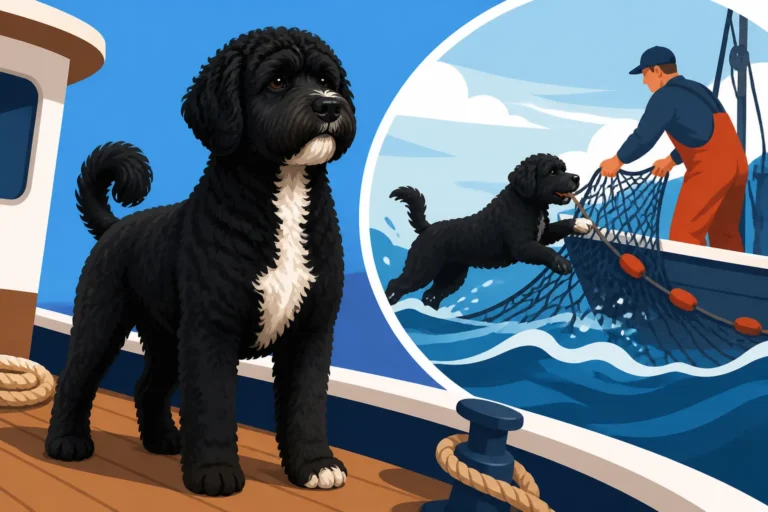
Let's not forget the "Water Dog" part of their name! These magnificent dogs were bred for centuries to work alongside fishermen on the coasts of Portugal. Their job wasn't just to swim; it was to retrieve broken nets, lost tackle, and even herd fish into nets. Think about that for a moment: herding fish. It requires a precise, controlled mouth, a "soft mouth" that can grasp without injuring, and a natural inclination to pick up and carry. This isn't just about swimming; it's about active engagement with objects in their environment, often with their mouth.
This historical role translates directly into the modern Portuguese Water Dog's desire to mouth and carry. They are hardwired to use their mouths as tools, much like a Border Collie is hardwired to herd sheep with its eyes and body. It's not just a hobby for them; it's a fundamental part of their genetic makeup. When your PWD takes your sleeve in their mouth, they might not be trying to drag you to the fishing boat, but they are certainly engaging that ancient retrieving and guiding instinct. It's their way of interacting with you and their surroundings, a direct echo of their working ancestors.
Puppy Explorations: Learning About Their World
Just like human babies explore with their hands and mouths, puppies use their mouths to learn about the world around them. For a Portuguese Water Dog puppy, this is amplified due to their breed's natural tendencies. Every texture, every object, every hand that comes near them is an opportunity for oral investigation. This is completely normal developmental behavior for any puppy, but for a PWD, it might feel a little more intense because of that inherent mouthiness we just discussed.
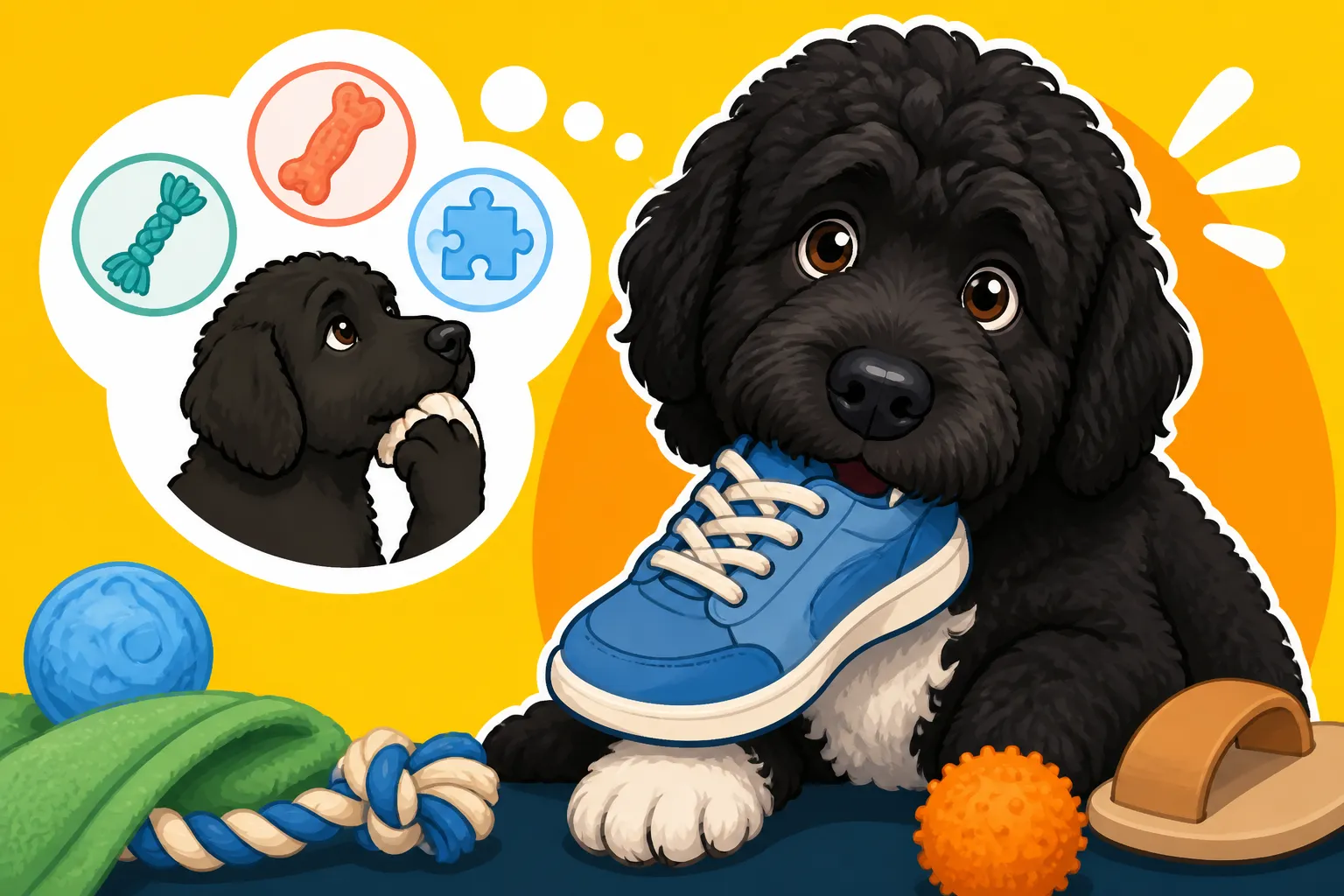
During their early months, puppies are also teething, which adds another layer to the mouthing equation. Their gums are sore, and chewing provides immense relief. This is why you'll find them gnawing on everything from chair legs to your favorite slippers. Providing appropriate outlets for this natural need is crucial. Without suitable chew toys, they'll inevitably turn to items that aren't meant for canine dental relief. It's a phase, but one that requires proactive management and redirection to ensure they learn what's okay to chew and what's not. For more on what to expect, check out The First Year With a Portuguese Water Dog Puppy.
Boredom and Under-Stimulation: The Active Mind and Body
A bored Portuguese Water Dog is a destructive Portuguese Water Dog. These dogs are intelligent, energetic, and thrive on having a job to do. If they don't get enough mental and physical stimulation, they will absolutely find their own "work," and that often involves their mouths. Chewing on furniture, tearing up cushions, or constantly nipping at family members can be a clear sign that their needs aren't being met.
Consider their original purpose: actively working for hours on a boat, in and out of the water. They weren't lounging around a yard all day. Modern PWDs retain this incredible drive. If they're not getting adequate exercise, whether it's long walks, vigorous play, or especially water activities, they will become restless and channel that pent-up energy into mouth-related behaviors. This is why What a Portuguese Water Dog Needs Every Day is so critical to understand. They need outlets for their energy, both physical and mental, to prevent these issues from escalating.
Distinguishing Mouthing from Biting
When your Portuguese Water Dog uses their mouth, it's natural to sometimes feel a pang of worry. Is this just playful mouthing, or is it something more concerning? It's really important for PWD owners to understand the distinction, as misinterpreting the behavior can lead to ineffective training or unnecessary fear. Most of the time, PWD mouthing is not aggressive, but there are key indicators to help you tell the difference.
The "Soft Mouth" vs. Hard Pressure: What to Look For
Portuguese Water Dogs are known for having a "soft mouth," a trait prized in retrieving breeds because it means they can carry objects, or even living things like fish, without causing harm. When your PWD is using a soft mouth, you'll feel their teeth, but there should be little to no pressure, and certainly no breaking of the skin. It might feel like a gentle grip, a "hold" rather than a "nip." This is them exploring, communicating, or simply engaging their natural instincts in a controlled way.
In contrast, hard pressure or biting involves a deliberate tightening of the jaws, often accompanied by a stiff body, growling, or a direct stare. This is where you might feel actual pain, and the dog's intent is no longer playful. If you feel sustained, painful pressure that causes you to pull your hand away quickly, that’s moving beyond acceptable mouthing. It's crucial to differentiate these two, as your reaction and training approach will be vastly different for each. A dog with a genuinely soft mouth can often be redirected, while a dog exhibiting hard pressure needs more immediate and serious intervention to address potential underlying issues.
Playful Nips vs. Aggressive Bites: Understanding Intent
The context and the dog's overall body language are vital clues to understanding the intent behind a mouthy interaction. Playful nips are often quick, accompanied by a loose, wiggly body, a wagging tail, and sometimes a "play bow." The dog's eyes will be soft, and the overall demeanor will be light and engaging. These nips might happen during a game of tug, or when they're particularly excited to see you. They're trying to initiate play or get your attention, not cause harm.
An aggressive bite, however, typically comes with a very different suite of signals. The dog might stiffen, raise the hackles, growl, snarl, or show the whites of their eyes. Their ears might be pinned back or held stiffly forward. The bite itself will be deliberate and forceful, with the intent to deter or injure. If your Portuguese Water Dog ever exhibits these signs, it's a serious matter that needs immediate professional attention, as it indicates a much deeper behavioral problem than simple mouthing. Luckily, true aggression is rare in well-socialized and properly managed PWDs, but knowing the signs is essential for any dog owner.
Common Mouthing Scenarios and Triggers
Portuguese Water Dogs tend to mouth in specific situations, and recognizing these triggers can help you anticipate and manage the behavior more effectively. It’s often about excitement, attention, or just their inherent drive to interact with the world through their mouths.
Greeting Rituals: Excitement and Attention-Seeking
Many PWD owners experience intense mouthing when they arrive home or when guests come over. The dog gets incredibly excited, and that excitement often manifests as mouthiness. They might grab your arm, your clothing, or jump up and try to mouth your face. This is often an attempt to initiate interaction, to say "hello!" in their most enthusiastic (and sometimes inconvenient) way, and to garner your attention. They learn quickly that mouthing sometimes gets a reaction, even if that reaction is you telling them "no."
For a PWD, the thrill of a new person or their beloved human returning can be overwhelming. They might jump, vocalize, and of course, use their mouth. It's not malicious; it's just their way of expressing joy and trying to engage. The key here is to teach them alternative, more acceptable ways to greet people. Consistent training, such as asking for a "sit" before receiving attention, can make a huge difference. Think about what your dog is trying to achieve – usually connection and attention – and teach them a polite way to ask for it. You can find excellent advice on structured greetings in online training programs like those offered by BAXTER & Bella.
Handling and Grooming: Resistance or Communication
Portuguese Water Dogs have a dense, single coat that requires regular grooming, whether it's brushing, clipping, or drying after a swim. Many PWDs, especially if not introduced to grooming early and positively, can become mouthy during these sessions. They might nip at the brush, your hands, or the clippers. This can stem from discomfort, fear, or simply a lack of understanding that grooming is a necessary part of their routine. Some might also view it as an opportunity for play, especially if they haven't learned impulse control around handling.
Similarly, during routine handling like nail trims, ear cleaning, or even just being petted in certain areas, some PWDs will turn their head and gently (or not so gently) mouth your hand. This is often their way of communicating "I'm uncomfortable," "I don't like that," or "Please stop." It’s important to pay attention to these signals. Rather than punishing the mouthing, which can suppress the warning signs and potentially lead to a more serious bite down the line, it’s better to desensitize them to handling and make grooming a positive, rewarding experience. Patience and positive reinforcement are your best friends here. You can also explore Teaching a Portuguese Water Dog to Stand for Grooming.
Objects and Furniture: Exploring and Alleviating Boredom
This is perhaps the most common and often frustrating form of PWD mouthing for owners: their tendency to chew on anything and everything. From table legs to shoes, rugs to remote controls, if it fits in their mouth and provides an interesting texture, it's fair game. As mentioned earlier, this fulfills their innate desire to use their mouth as a tool, and it's also a primary way for them to alleviate boredom, stress, or even just puppy teething discomfort.
An unstimulated Portuguese Water Dog will find ways to entertain themselves, and destructive chewing is a prime candidate. This isn't just a puppy phase; adult PWDs who are under-exercised or lacking mental engagement can also resort to chewing household items. The type of object they choose often depends on its texture and how satisfying it is to chew. Harder items might be for dental relief, while softer items might be for comfort or simply the joy of shredding. It’s a powerful motivator for them, so understanding this drive is key to providing appropriate alternatives. Without a "job" for their mouth, they'll invent one, and you probably won't like it. For more on this, consider Why a Portuguese Water Dog Puts Everything in Its Mouth.
Effective Strategies for Managing Mouthing
Dealing with a mouthy Portuguese Water Dog requires consistency, patience, and a multi-faceted approach. It's not about stopping them from using their mouth entirely – that's impossible and goes against their nature – but rather teaching them what and when it's appropriate to mouth.
Redirection and Appropriate Chews: Giving Them a Job
The single most effective strategy for managing mouthing is redirection. Every time your PWD goes to mouth something inappropriate, whether it's your hand or a piece of furniture, immediately interrupt the behavior (without punishment) and offer them an acceptable chew toy. Make the chew toy exciting! Wiggle it, offer praise when they take it, and let them know this is what they should be chewing. Consistency is paramount here; every single time.
Invest in a variety of durable, interesting chew toys. Portuguese Water Dogs are strong chewers, so flimsy toys won't last. Look for toys made from tough rubber, natural bones (appropriate for dogs), or durable nylon. Rotating toys keeps them novel and exciting. If they have a "job" for their mouth that is acceptable, they're less likely to create their own. For example, if your PWD is always taking your hand, immediately offer a Kong stuffed with peanut butter or a puzzle toy that dispenses treats. This gives them something satisfying and appropriate to focus on. Many excellent options for durable chews can be found on Amazon.
| Type of Chew Toy | Benefits for PWD Mouthing | Ideal Usage |
|---|---|---|
| Kongs (Rubber) | Extremely durable, can be stuffed with treats, mentally stimulating. | Excellent for crate time, boredom, redirecting from hands. |
| Nylabones/Benebones | Long-lasting, good for heavy chewers, various textures and flavors. | Independent chewing, satisfying dental needs. |
| Natural Chews (Bully Sticks, etc.) | Highly palatable, keeps them occupied, provides dental benefits. | Supervised chewing, special treats. |
| Rope Toys (Thick) | Good for interactive play (tug), provides oral satisfaction. | Supervised play, careful with ingestion. |
| Puzzle Toys | Mentally stimulating, releases treats slowly, provides a "job." | Solo play, enrichment, reducing boredom-driven mouthing. |
Consistent Training and Boundaries: Teaching What's Acceptable
Portuguese Water Dogs are incredibly intelligent, but they need clear, consistent rules. Establish boundaries early and stick to them. If you don't want them to mouth your hands, never allow them to mouth your hands, even gently. This means no "play biting" during puppyhood, as it confuses them about what's acceptable. Instead, teach them a "Leave It" cue for inappropriate objects and a "Drop It" cue for when they have something in their mouth they shouldn't.
Enroll in positive reinforcement training classes. These classes provide structure, socialization, and teach you how to communicate effectively with your PWD. They also learn valuable impulse control exercises. The goal isn't to suppress their natural mouthiness, but to channel it appropriately. For instance, you can teach them to retrieve toys on command, or engage in structured tug games where they learn to release on cue. Training platforms like BAXTER & Bella offer comprehensive online courses that can guide you through these steps from the comfort of your home, reinforcing good habits and teaching proper manners. Training a Portuguese Water Dog That Was Bred to Think for Itself is key here – they need to understand your rules, not make up their own.
Management of Environment and Interactions: Setting Them Up for Success
Prevention is a huge part of managing mouthing. "Puppy-proof" your home thoroughly. This means keeping anything you don't want your Portuguese Water Dog to mouth or chew out of reach. If they can't access your expensive shoes or the remote control, they can't chew them. This simple step significantly reduces opportunities for inappropriate mouthing and helps you avoid frustration.
Beyond physical management, also manage their interactions. When greeting people, teach your PWD to sit politely rather than jumping up and mouthing. If guests are uncomfortable with a mouthy dog, have your PWD on a leash or behind a gate during initial greetings, allowing them to settle before interaction. Ensure they are getting ample exercise, especially swimming, which is a fantastic way to tire out a PWD physically and mentally. A tired dog is a good dog, and less likely to engage in destructive or attention-seeking mouthing behaviors. Consider What a Portuguese Water Dog Does All Day to ensure their activity needs are fully met.
Tools and Resources to Help with Mouthing
Navigating a mouthy Portuguese Water Dog can feel overwhelming, but there are many tools and resources designed to help. From physical items to educational support, leveraging these can make a significant difference in shaping appropriate behavior.
High-Quality Chew Toys: Durable and Engaging Options
As we discussed, a Portuguese Water Dog's mouth needs a job, and high-quality chew toys are essential for fulfilling this need appropriately. Look for toys specifically designed for strong chewers. Brands known for their durability include Kong (their extreme rubber line is fantastic), Nylabone, and Benebone. These aren't just for puppies; adult PWDs benefit immensely from having access to a rotating selection of engaging chews.
When choosing toys, consider their texture, size, and whether they can be stuffed with treats. A frozen Kong filled with peanut butter, yogurt, or wet dog food can keep a PWD occupied for a significant amount of time, providing mental stimulation along with satisfying their chewing urges. Interactive puzzle toys, often available on Amazon, are also excellent. They require your dog to figure out how to get a treat, turning chewing into a problem-solving activity. Remember, the goal is to make the approved chew toys far more appealing than your furniture or your hands.
Interactive Training Programs: Structured Learning
For truly effective management of mouthing, especially if it's persistent, structured training is invaluable. Online training programs or local puppy classes can teach you the skills to communicate effectively with your PWD and establish consistent boundaries. Programs like BAXTER & Bella offer comprehensive, step-by-step guidance covering everything from puppy basics to advanced obedience, including specific modules on bite inhibition and redirection.
These programs provide frameworks for teaching cues like "Leave It," "Drop It," and appropriate greeting behaviors. They often include video tutorials, live Q&A sessions, and personalized support, which can be a lifeline for owners dealing with challenging behaviors. The beauty of online platforms is that you can work at your own pace, fitting training into your busy schedule, and reinforcing lessons consistently in your home environment. This structured approach helps ensure both you and your PWD are on the same page regarding acceptable behavior. For more on their intelligence and training, read How Trainable a Portuguese Water Dog Is.
Specific Gear for Mouthing: Harnesses and Muzzles (for Training, Not Punishment)
While chew toys and training are primary, sometimes specific gear can aid in management. For dogs that are particularly jumpy and mouthy during greetings, a front-clip harness can provide better control than a flat collar, making it easier to manage their enthusiasm and prevent them from reaching to mouth. Brands like Freedom Harness or Ruffwear offer durable options that can be purchased through retailers on Amazon.
In more serious cases, or during specific training protocols, a basket muzzle might be recommended by a professional trainer. It's crucial to understand that a muzzle is a training tool, not a punishment. A well-fitted basket muzzle allows the dog to pant, drink, and take treats, but prevents them from nipping or biting. It can be a valuable tool for desensitization training during grooming or handling if mouthing has become problematic, ensuring safety for both dog and handler while working on behavior modification. This should always be introduced positively and under professional guidance to ensure a good experience for the dog.
When to Seek Professional Help
While most Portuguese Water Dog mouthing can be managed with consistent training and redirection, there are times when it escalates beyond what a typical owner can handle. Knowing when to call in the professionals is crucial for the safety of your family and the well-being of your dog.
Persistent or Escalating Behavior: When It's More Than Just Mouthing
If your Portuguese Water Dog's mouthing is persistent despite your best efforts at redirection, consistent training, and providing ample exercise and appropriate chews, it might be time for expert intervention. This is especially true if the mouthing seems to be escalating in intensity, meaning the pressure is getting harder, or if it's happening in an increasing variety of situations, not just when over-excited.
Another red flag is if the mouthing seems to be accompanied by other concerning behaviors, such as guarding resources (toys, food, space), growling, or signs of true aggression. While PWDs are generally friendly, every dog is an individual, and sometimes underlying anxieties, fear, or even pain can manifest as inappropriate mouthy behavior. Don't wait until someone gets seriously hurt or until you're at your wit's end. Early intervention can prevent minor issues from becoming major problems.
Professional Trainers and Behaviorists: Who to Call
If you're noticing these warning signs, your first call should be to a certified professional dog trainer or a veterinary behaviorist. A certified professional dog trainer (CPDT-KA) can assess your dog's behavior, identify triggers, and help you implement a tailored training plan using positive reinforcement techniques. They can offer hands-on guidance and help you refine your communication with your PWD. Look for trainers who specialize in working with energetic working breeds and use ethical, force-free methods.
For more complex or deeply ingrained behavioral issues, or if aggression is suspected, a veterinary behaviorist is the ideal choice. These are veterinarians with advanced training in animal behavior, who can rule out any underlying medical causes for the behavior and prescribe medication if necessary, in addition to developing a comprehensive behavior modification plan. They are uniquely qualified to address severe behavioral problems that might have a physiological component. Investing in professional guidance is investing in a harmonious relationship with your beloved Portuguese Water Dog. It's truly a game-changer for many families.
Disclaimer
This article is for general informational purposes only and does not constitute professional advice. Laws, prices and regulations vary by location and change over time. Consult a qualified professional for guidance on your specific situation.