Whether a Slicker Reaches a Portuguese Water Dog’s Skin
Anyone who’s ever brought a Portuguese Water Dog into their home quickly learns that their beautiful, distinctive coat is both a blessing and, at times, a formidable challenge. One of the most common grooming frustrations new owners face is trying to get a regular slicker brush to actually penetrate that dense, curly, or wavy fur down to the skin. This guide will dive deep into why your slicker brush might not be reaching where it needs to go and, more importantly, what tools and techniques you can use to ensure your PWD's coat stays healthy, tangle-free, and comfortable.
Understanding the Portuguese Water Dog's Unique Coat
The Portuguese Water Dog's coat isn't just fluffy; it's a marvel of canine evolution, specifically designed for its historical role as a seafarer's companion. But this amazing waterproof, non-shedding (or very low-shedding) coat comes with its own set of grooming demands. Understanding its structure is the first step to mastering its care.
Curly vs. Wavy: The Two PWD Coat Types
Portuguese Water Dogs come in two distinct coat types: curly and wavy. While both are single-coated, meaning they lack an undercoat, their textures present different grooming challenges. A Curly or Wavy: the Two Portuguese Water Dog Coats article can offer more in-depth specifics.
- The Curly Coat: This type is typically softer to the touch and forms compact, cylindrical curls that can range from loose spirals to tight ringlets. It often has a slightly woolly feel. These curls are incredibly efficient at trapping debris and, more importantly, moisture. If not regularly brushed, these curls will felt together, forming dense mats close to the skin. The tight nature of the curls means a slicker brush, designed to detangle straighter or less dense fur, might only skim the surface, catching the outer layer of the curl but failing to separate the hairs underneath or reach the skin entirely.
- The Wavy Coat: This coat is generally coarser and has a more flowing, rippling appearance, often with a slight sheen. While still dense, the waves can appear less tightly packed than the curls. However, don't let the appearance fool you; wavy coats are just as prone to matting, especially in high-friction areas like behind the ears, under the legs, and around the collar. The waves can create layers that a slicker brush struggles to penetrate, gliding over the top layer while deeper tangles remain untouched.
The Single Coat Advantage (and Challenge)
Unlike double-coated breeds that have a soft, insulating undercoat and a protective outer coat, the Portuguese Water Dog boasts a single coat. This is often touted as "hypoallergenic" because it sheds very little, making it popular with allergy sufferers. However, this non-shedding characteristic is precisely what makes it prone to matting. Shed hairs don't fall out; they get caught within the existing coat. If these dead hairs aren't brushed out regularly, they intertwine with the living hairs, forming knots and eventually solid mats that pull at the skin. These mats are not just unsightly; they can cause significant discomfort, restrict movement, lead to skin infections, and even hide parasites.
The Challenge of Reaching the Skin
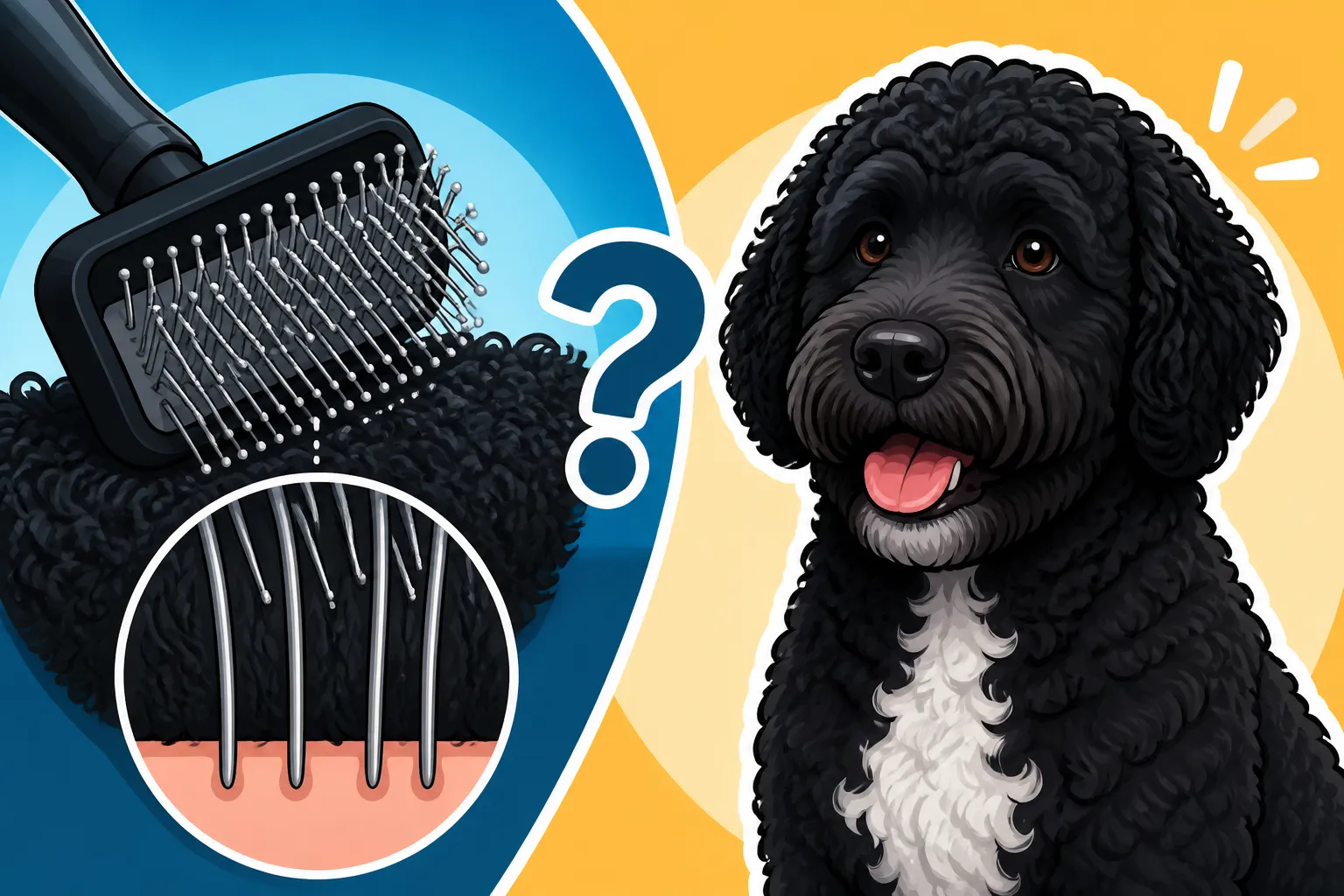
The dense, intricate nature of a Portuguese Water Dog's coat means that simply brushing the surface isn't enough. The real work of grooming involves penetrating through the entire coat, from tip to root, to ensure the skin is healthy and mat-free. This is where many owners find themselves asking: "Whether a slicker reaches a Portuguese Water Dog's skin?"
Why Slicker Brushes Often Fall Short
A standard slicker brush, with its tightly packed wire pins, is excellent for removing loose hair and surface tangles on many breeds. For a Portuguese Water Dog, however, its design often limits its effectiveness. The pins are relatively short and rigid, and because of the density and springiness of the PWD's coat, they tend to bounce off the outer layer or get caught in the top few inches of hair.
Imagine trying to brush a thick wool rug with a stiff broom – you'd clean the very top, but all the dust and debris deeper down would remain. It's much the same with a PWD's coat. The slicker might pull out some loose hair and smooth the immediate surface, giving the appearance of a well-groomed dog. But underneath, closer to the skin, smaller tangles begin to form and tighten, eventually becoming painful mats. This can be incredibly frustrating, as you spend time brushing, yet the underlying problem persists, often unnoticed until it's severe.
The Danger of Matting and Skin Issues
When mats form close to the skin, they create a hostile environment. The tightly matted fur restricts air circulation, trapping moisture and creating a breeding ground for bacteria and yeast. This can lead to:
- Skin Irritation and Hot Spots: Constant pulling from the mat on the skin can cause redness and inflammation. If moisture is trapped, it can quickly develop into painful "hot spots" – moist, raw skin lesions that are incredibly itchy and can become infected.
- Pain and Discomfort: Mats pull on the skin with every movement your dog makes. Imagine having your hair constantly tugged – it's incredibly uncomfortable. Severe matting can make even simple activities like walking, sitting, or lying down painful.
- Hidden Problems: Mats can conceal skin conditions, lumps, bumps, or even parasites that might otherwise be spotted during a routine check. When a dog comes to a groomer with severe matting, often the only humane option is to shave the coat down completely, which can be stressful for the dog and may expose underlying skin issues.
- Restricted Movement: Large, dense mats can physically restrict your dog's ability to move their legs, neck, or tail properly, impacting their gait and overall well-being. This is especially true in areas like the armpits, groin, and behind the elbows.
Regular and proper grooming that reaches the skin is essential not just for aesthetics but for your Portuguese Water Dog's overall health and comfort. Neglecting to penetrate the coat adequately with the right tools can lead to serious and expensive veterinary and grooming interventions down the line.
Choosing the Right Tools for Effective Grooming
Given the unique challenges of a Portuguese Water Dog's coat, relying solely on a slicker brush is often insufficient. A comprehensive grooming kit, tailored to this breed, is key to keeping their coat in prime condition. You'll want to invest in quality tools, many of which can be found on sites like Amazon or Chewy.
When a Slicker Brush Might Be Useful
While a slicker brush might not be your primary tool for deep coat penetration, it still has a place in your grooming arsenal. It's best used for:
- Surface Tangles and Feathering: For very light, superficial tangles on the outer layer of the coat, or for tidying up the longer "feathering" hair on the legs if your PWD has a wavy coat, a slicker can be effective. It can help smooth the coat and remove some loose hairs before deeper work begins.
- Final Fluffing: After a thorough line-brushing with a pin brush and comb, a slicker can be used for a quick all-over fluff or to give the coat a bit of lift, especially if you're trying to achieve a particular style.
- Gentle Dematting (Very Small, Loose Mats): For very small and newly formed tangles that aren't tight to the skin, a gentle flicking motion with the edge of a slicker brush might help to tease them apart, but this should be done with extreme caution to avoid skin irritation. Always follow up with a comb to ensure the tangle is completely gone.
It's crucial to remember that a slicker brush should never be your only tool, nor should it be used aggressively. The fine wire pins can scratch the skin if pressed too hard, causing discomfort and potentially leading to irritation.
The Indispensable Comb and Pin Brush
These are the unsung heroes of Portuguese Water Dog grooming. If you want to ensure you're reaching the skin, a good quality metal comb and a sturdy pin brush are non-negotiable.
- The Metal Comb: This is your ultimate truth-teller. After using any brush, you must be able to run a metal comb (preferably one with both wide and narrow teeth) cleanly through the coat, from the tip of the hair down to the skin, without snagging. If the comb snags, there's a tangle or mat there that the brush missed.
- How to Use It: Section the coat and start at the very ends, working your way towards the skin, bit by bit. When you encounter a tangle, use the comb to gently tease it out. For denser areas or during coat change, a wider-toothed comb might start the job, followed by a finer-toothed one. You can find excellent durable combs on Chewy designed for thick, curly coats.
- The Pin Brush: This brush features widely spaced, rounded metal pins set into a flexible rubber base. Its design allows it to penetrate deeper into the dense coat than a slicker, separating the individual hairs and reaching the skin without scratching.
- How to Use It: Like with the comb, work in sections. Use long, sweeping strokes, ensuring the pins are actually contacting the skin. This not only helps to detangle but also stimulates blood flow to the skin and distributes natural oils throughout the coat, promoting a healthy sheen. A good pin brush is perfect for the initial pass to open up the coat and find the larger tangles. Which Brush a Portuguese Water Dog Needs can offer further details.
Specialized Grooming Aids
Beyond the basic brushes and combs, a few other tools can make your PWD grooming routine more effective and comfortable for your dog.
- Dematting Tools/Rakes: For stubborn mats that are too tight for a comb, a dematting rake with blunted blades can be carefully used to cut through the mat without damaging the surrounding healthy coat. Use these with extreme caution, as improper technique can easily cut the dog's skin. If you're unsure, it's always better to take your dog to a professional groomer.
- Grooming Sprays/Conditioners: A good conditioning spray can be a lifesaver. Applied before brushing, it helps to lubricate the hair, making it easier for brushes and combs to glide through and reducing breakage. This is especially useful for preventing mats after swimming, as mentioned in Whether a Portuguese Water Dog Mats After Swimming. Many high-quality sprays are available on Amazon.
- Force Dryer: While not a brush, a good force dryer is invaluable, especially after baths or swims. The powerful, cool air helps to separate the individual hairs, making it much easier to brush and preventing mats from forming as the coat dries. It also significantly speeds up drying time, which is critical for a breed prone to skin issues if left damp. What a Force Dryer Does for a Portuguese Water Dog details its benefits.
- Clippers: For truly unmanageable mats, or for maintaining a shorter, more practical "retriever clip," clippers are essential. Always use appropriate blade sizes and exercise caution, especially around sensitive areas. Many Portuguese Water Dog owners learn to do basic clipping at home to manage the coat between professional grooming appointments.
Using a combination of these tools, with the comb as your final check, ensures that your Portuguese Water Dog's skin is consistently reached, keeping their coat healthy and comfortable.
| Tool Type | Primary Use | Effectiveness for PWD Coat (Reaching Skin) | Notes |
|---|---|---|---|
| Slicker Brush | Surface tangles, removing loose hair, fluffing | Limited; often only skims the surface | Use for light work; can irritate skin if used aggressively. |
| Pin Brush | Penetrating dense coat, detangling, stimulating | Good; pins can reach the skin | Excellent for initial pass, separating hairs and finding tangles. |
| Metal Comb | Detecting and working out tangles, checking work | Essential; the ultimate "mat checker" | Must run smoothly to the skin for a truly tangle-free coat. Two widths are ideal. |
| Dematting Rake | Cutting through very dense, stubborn mats | High for severe mats (use with extreme care) | Can damage coat/skin if used improperly. Professional guidance recommended. |
| Grooming Spray | Lubricating coat, preventing tangles, conditioning | Indirect; aids brush/comb penetration | Makes detangling easier, reduces hair breakage. |
| Force Dryer | Drying coat, separating hairs, preventing mats | Indirect; prepares coat for brushing | Essential for efficient drying and mat prevention after water exposure. |
Best Practices for Grooming Your Portuguese Water Dog
Consistent and correct grooming isn't just about owning the right tools; it's about developing a routine and technique that works for both you and your Portuguese Water Dog. It’s a marathon, not a sprint, especially with their remarkable coats.
Sectioning the Coat for Thoroughness
Trying to brush a Portuguese Water Dog's entire coat at once is like trying to clean a huge house all at once – overwhelming and ineffective. The key to success is to break it down into manageable sections. This "line brushing" technique ensures that every single hair from the skin outwards gets attention.
Start by laying your PWD down on their side or standing them on a sturdy grooming table (which can save your back!). Choose a section, perhaps a small square on their leg or flank. Hold the coat above this section up and away with one hand, exposing the skin and roots of the hair. With your other hand, use your pin brush or comb to systematically brush down through that small section of hair, from the skin out. Once that area is tangle-free, drop a thin layer of the held-up coat over it and repeat the process, working your way across the body and down the limbs. This methodical approach ensures no spot is missed and no mat is left hidden. This is especially vital in Where a Portuguese Water Dog Mats First, which are often the hidden areas.
Brushing Technique for Skin Penetration
The goal is always to reach the skin. This isn't just about detangling; it's about checking for skin health, lumps, and distributing natural oils.
- Pin Brush First: Begin your main brushing session with the pin brush. Use firm, but gentle, strokes that extend from the tips of the hair all the way to the skin. You should feel the pins gently massaging the skin. Work systematically through your sections.
- Follow with the Comb: Once you've gone over a section with the pin brush, immediately follow up with your metal comb. This is your quality control. Start from the roots of the hair, right next to the skin, and pull the comb through. If it glides smoothly, that section is mat-free. If it snags, stop. Don't pull through a snag! Gently work it out with the comb, using your fingers to help separate the hair if needed. This is where patience is paramount; ripping through tangles is painful and causes damage.
- Dealing with Knots: For any stubborn knots, use your fingers to isolate the mat, then gently pick apart the edges of the mat with the wider teeth of your metal comb. A spritz of conditioning spray can help loosen the hair. Only when it’s significantly loosened should you try to comb through it. If a mat is too tight or large, do not attempt to cut it out yourself unless you are experienced, as it's very easy to accidentally cut the skin. A professional groomer can safely address these. You can learn more about this in When a Mat Should Be Cut Out of a Portuguese Water Dog.
Frequency and Routine
The frequency of brushing depends on your Portuguese Water Dog's coat type, activity level, and how long you keep their coat. A general guideline for a pet PWD is 2-3 times a week, with a full, thorough session once a week that includes line brushing and combing.
- Puppies: Start grooming early! Even short, daily sessions with a soft puppy brush or pin brush will get your puppy accustomed to the process. This early positive association makes future grooming much easier. Plus, their puppy coat will transition to an adult coat, which is a prime time for matting, as detailed in When a Portuguese Water Dog's Puppy Coat Changes.
- Active Dogs: If your PWD is frequently swimming, hiking, or rolling in dirt, they will need more frequent brushing. Water, especially saltwater or lake water, can cause the coat to tighten and mat quickly if not properly rinsed and dried, and then thoroughly brushed out. A force dryer is your best friend here.
- Coat Length: A longer coat will naturally require more diligent and frequent grooming. Many owners opt for a shorter "retriever clip" for easier maintenance, but even then, regular brushing is still necessary to prevent matting at the base of the hair.
Establishing a consistent routine, making grooming a calm, positive experience with plenty of treats and praise, will benefit both you and your Portuguese Water Dog. It reinforces your bond and ensures your companion remains happy and healthy in their beautiful, albeit high-maintenance, coat. Remember, a thorough grooming session with a PWD, especially if they have a longer coat, can take some time, as discussed in How Long Brushing a Portuguese Water Dog Takes.
Disclaimer
This article is for general informational purposes only and does not constitute professional advice. Laws, prices and regulations vary by location and change over time. Consult a qualified professional for guidance on your specific situation.