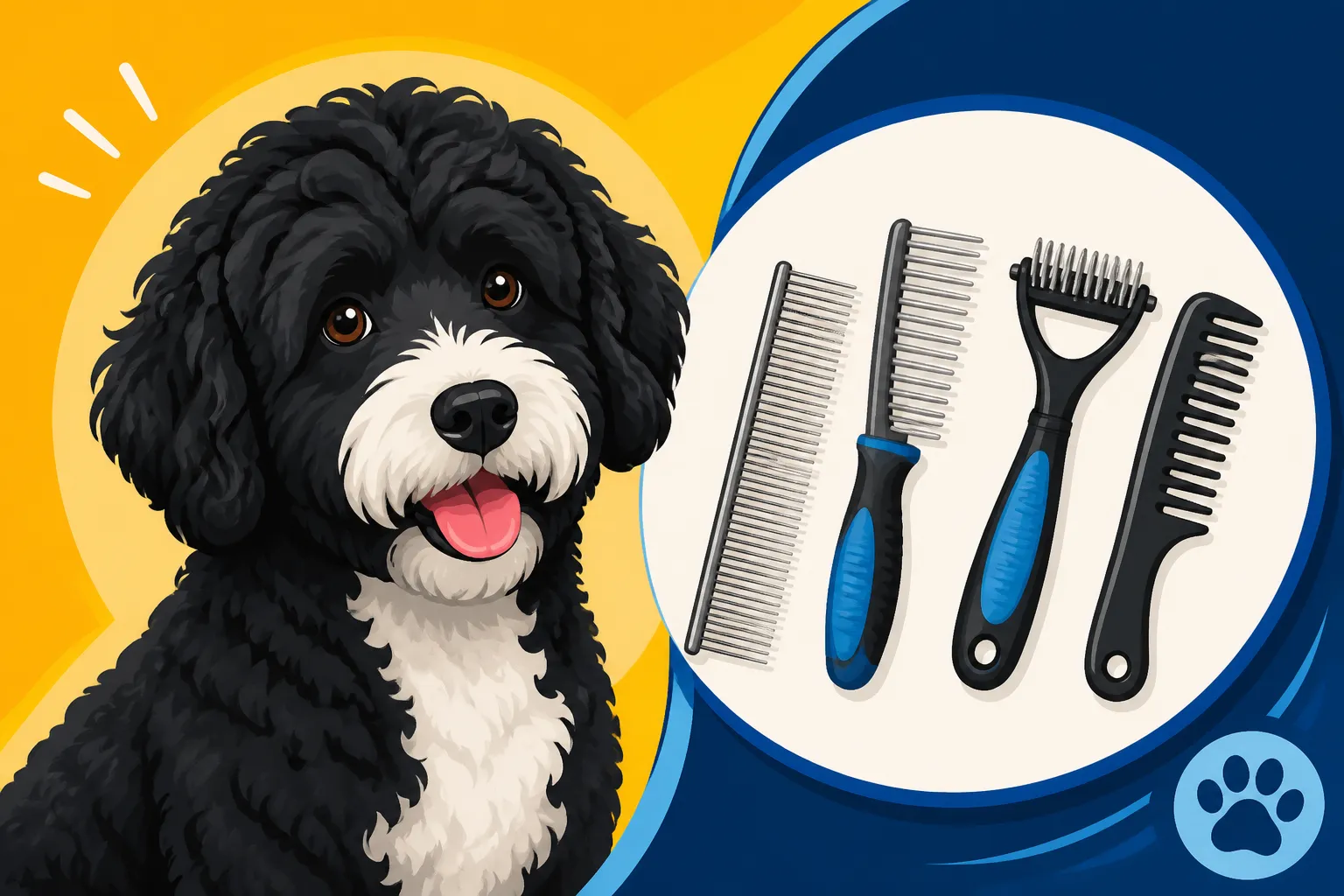
Which Comb a Portuguese Water Dog Owner Needs
The distinctive, water-resistant coat of a Portuguese Water Dog is a defining characteristic, but it also presents a unique grooming challenge. Many new owners quickly discover that what looks like an easy-care, non-shedding coat can become a matted mess without the right tools and techniques. This guide will walk you through choosing and using the essential combs every Portuguese Water Dog owner needs to keep their companion's coat healthy, comfortable, and mat-free.
Understanding the Portuguese Water Dog Coat's Unique Demands
Before we dive into specific combs, it’s crucial to understand what makes the Portuguese Water Dog coat so special and, frankly, so prone to tangles. This isn't a simple dog coat; it's a finely tuned, working garment designed by nature to protect them in chilly waters.
Curly vs. Wavy: Two Textures, One Goal
Portuguese Water Dogs come in two distinct coat types: curly and wavy. Both are single-coated, meaning they lack an undercoat, which is why they're often considered a better fit for people with allergies. The curly coat is typically dense, compact, and forms tight, cylindrical curls that can feel springy to the touch. The wavy coat, on the other hand, is softer, less tightly curled, and has a more flowing, shaggy appearance.
Despite their visual differences, both coat types share a crucial characteristic: they don't shed in the traditional sense. Instead, loose, dead hair gets trapped within the live growing hair. This is fantastic for keeping your furniture fur-free, but it creates a perfect storm for matting. Whether your PWD has a tight curl or a flowing wave, the dense texture and the way shed hair is retained means that daily attention to the coat, including getting down to the skin, is paramount. Understanding What a Portuguese Water Dog's Coat Is Made Of helps you grasp why specific tools are needed. Without the right tools, these beautiful coats quickly turn into felt.
Why Mats Are the Enemy of the PWD Coat
Mats aren't just an unsightly nuisance; they are a serious welfare issue for your Portuguese Water Dog. These tight clumps of tangled hair pull on the dog's skin, causing discomfort, pain, and even open sores or skin infections if left untreated. Imagine constantly having your hair pulled, everywhere on your body – that's what a matted dog experiences. The skin under mats can't breathe properly, creating a warm, moist environment ripe for bacteria and fungi. They can also hide parasites like fleas and ticks, making them harder to detect and treat.
Mats form from a combination of factors: friction from movement, swimming, lying down, and even just the natural growth and shedding cycle of the coat. When your dog plays, rolls, or rubs against things, tiny tangles start. These tangles collect shed hair, and if not brushed out immediately, they compact into dense, painful mats. Water can significantly exacerbate the problem; if a Portuguese Water Dog swims and is allowed to air dry without being thoroughly brushed and combed, any existing tangles will tighten up into solid mats as the coat dries. Whether a Portuguese Water Dog Mats After Swimming is a common concern, and the answer is a resounding yes, if not properly cared for. The process of removing severe mats is often painful for the dog, stressful for the owner, and can be quite costly if done by a professional groomer, sometimes even requiring the dog to be shaved down. Prevention truly is the best medicine here, and the right combs are your primary defense.
The Essential Combs Every Portuguese Water Dog Owner Should Have
You'll quickly learn that a single brush simply won't cut it for a Portuguese Water Dog. Combs are your secret weapon, providing the precision and depth that brushes can't always achieve. Think of them as the quality control step in your grooming routine.
The Workhorse: Steel Greyhound Comb
If there’s one comb every Portuguese Water Dog owner absolutely must have, it’s the steel Greyhound comb. This isn't just a fancy name; it describes a specific type of comb designed for serious detangling and coat maintenance. Typically, these combs are long, often 8 to 10 inches, and made from high-quality stainless steel. They usually feature two sections of teeth: one side with wider spacing and another with finer, more closely set teeth. The steel construction is crucial; it’s durable, easy to clean, and, unlike plastic, it won't build up static electricity that can make grooming even more frustrating.
The primary use of a steel Greyhound comb is to ensure you're getting all the way down to the skin and that no mats have been missed by your slicker brush. After you’ve thoroughly brushed a section of your dog’s coat, run the wide-toothed side of the Greyhound comb through it. If the comb glides smoothly from root to tip, you've done a great job! If it snags, you've found a tangle that needs more attention. The finer-toothed side is excellent for double-checking smaller sections, especially around the face, ears, and legs, where the hair can be denser or more prone to collecting tiny knots. This comb is your ultimate mat-checker and an indispensable tool for daily maintenance. Many owners find quality Greyhound combs on platforms like Amazon or Chewy, often looking for well-regarded brands known for professional grooming tools.
The Detangler: Wide-Tooth Comb
While the Greyhound comb offers a combination of wide and fine teeth, a dedicated wide-tooth comb with even greater spacing can be incredibly useful, especially when you encounter an existing tangle or are working through damp hair. These combs typically have longer, more robust teeth that are spaced quite far apart. This isn't a comb you'd use for general daily maintenance, but rather as your first line of attack against knots that have already started to form.
When you find a mat, your immediate instinct might be to pull or try to force a comb through it. Resist that urge! Instead, use the wide-tooth comb to gently pick at the edges of the mat. Work from the outside of the tangle inwards, always separating just a few strands at a time. The wider spacing allows you to tease apart the hair without excessive pulling, which can be painful for your dog and cause damage to the coat. This method requires patience and a gentle touch, but it’s far more effective and humane than trying to rip through a knot. It’s also excellent for fluffing up a dense coat or for an initial pass through hair that’s damp from a swim or bath, helping to prevent those wet tangles from becoming solid mats once dry.
The Finisher: Fine-Tooth Comb (and its Cautions)
A fine-tooth comb, sometimes simply called a flea comb (though its utility extends beyond flea removal), has very tightly spaced, short teeth. This comb is not for general body grooming or working through anything but already perfectly smooth hair. Its purpose is precision and final detail work, ensuring even the smallest debris or tiny tangles are removed from delicate areas.
You’ll find this comb invaluable for specific spots: carefully grooming around your Portuguese Water Dog’s eyes, cleaning up any tear stains, working through the hair on their beard or mustache, and ensuring there are no tiny snags in the hair directly behind their ears, which is a notorious matting hotspot. Where a Portuguese Water Dog Mats First is often behind the ears due to rubbing and motion. It’s also useful for a final check of the sanitary areas. The fine teeth are exceptional at catching loose hairs or tiny particles that wider combs might miss.
However, a critical caution comes with this comb: never attempt to use a fine-tooth comb to pull through a mat on the main body of your dog. Its tightly spaced teeth will grab too much hair, pulling on your dog's skin, causing pain, and potentially breaking the hair or even injuring the skin. It is strictly for areas where the hair is already detangled or for very delicate, fine-textured areas. If you feel any resistance, switch immediately to a wide-tooth comb or your fingers to gently work through the snag.
How to Use Combs Effectively on Your Portuguese Water Dog
Having the right tools is only half the battle; knowing how to use them effectively is where you truly succeed in keeping your Portuguese Water Dog's coat pristine. Consistent technique and a patient approach will make all the difference.
Sectioning and Technique: The Foundation of Mat Prevention
The most critical technique for effective combing, and really, for all Portuguese Water Dog grooming, is sectioning and line brushing. You can’t just haphazardly comb the top layer of hair; you need to get all the way down to the skin. To do this, imagine dividing your dog’s body into manageable sections. Start with a leg, or perhaps a portion of their flank. Use one hand to hold up the top layers of hair, exposing the skin and roots of a smaller section below.
Now, with your comb (usually starting with the wide side of your Greyhound comb), comb through that small section from the root to the tip. Once that section is smooth, release a little more hair from your upper hand, comb that new section, and repeat, slowly working your way across and up your dog's body. This "line brushing" method ensures you are systematically checking every single inch of the coat down to the skin. When you encounter a snag, don't pull! Gently hold the hair at the base near the skin with one hand to prevent pulling on your dog, and then use the wide-tooth comb or even your fingers to carefully pick and tease apart the tangle. Remember, consistency is key; How Often a Portuguese Water Dog Needs Brushing is often daily, even if just for short sessions.
Integrating Combs into Your Grooming Routine
Combs are not standalone tools; they work in conjunction with brushes and other grooming aids. Think of your slicker brush as the primary tool for removing loose hair and most tangles, but your comb is the quality control, the final check to ensure nothing was missed. Always follow up a thorough brushing session with a comb. If your comb glides through, you know you’ve done a good job. If it snags, you need to go back over that area with your brush and then re-comb until it's smooth. This is especially important for ensuring Whether a Slicker Reaches a Portuguese Water Dog's Skin adequately.
Combing is also critically important after bathing and drying. Water has a magical (and often frustrating) ability to tighten up any small tangles, turning them into solid mats once dry. After shampooing and rinsing, gently blot your dog with towels. Then, as you dry them – ideally with a force dryer, which helps separate the coat – use your wide-tooth comb and then your Greyhound comb to thoroughly work through the hair. This ensures that as the coat dries, it stays separated and knot-free. Waiting until the coat is fully dry before attempting to comb a wet tangle can be a recipe for disaster.
Beyond the Comb: Other Essential Tools and Tips
While combs are vital, they are just one part of a comprehensive grooming kit for your Portuguese Water Dog. Your arsenal should also include a high-quality slicker brush, which is excellent for general coat maintenance and removing loose hair. For particularly stubborn mats that have unfortunately formed, a dematting rake can be used with extreme caution, though these tools can cut hair and should only be used as a last resort before shaving.
Don't underestimate the power of a good grooming spray or conditioner. Applied before or during combing, these products can lubricate the hair, making it easier for the comb to glide through and helping to prevent breakage. There are many excellent detangling sprays available at pet retailers like Chewy or on Amazon. Finally, remember that consistency and patience are your best tools. Short, frequent grooming sessions are far more effective and less stressful for both you and your dog than marathon sessions. If you ever feel overwhelmed, don't hesitate to seek guidance from a professional groomer. They can demonstrate proper techniques and provide invaluable personalized advice for your dog’s specific coat type and condition. How Often a Portuguese Water Dog Needs a Groomer will depend greatly on how much home grooming you commit to.
Choosing the Right Comb and Where to Find It
Investing in good quality grooming tools is a marathon, not a sprint. While the upfront cost might seem higher, durable, effective tools will save you money, time, and frustration in the long run.
Factors to Consider When Buying a Comb
When it comes to Portuguese Water Dog combs, quality over quantity is the golden rule. A cheap, flimsy plastic comb will quickly bend, lose teeth, pull on your dog’s delicate coat, and ultimately just add to your frustration. Instead, prioritize well-constructed tools. Stainless steel is the industry standard for a reason: it's incredibly durable, resistant to rust, and can be easily sanitized, which is important for preventing skin issues.
Consider the ergonomics of the comb's handle. You'll be spending a fair amount of time holding this tool, so a comfortable, non-slip grip is essential to prevent hand fatigue. Combs come in various sizes; a longer, wider comb might be ideal for the body and legs, while a shorter comb could be better for detailed work around the face and feet. Lastly, pay attention to the tooth spacing and pin strength. For a PWD, you need teeth that are strong enough to penetrate dense coat without bending, and ideally, a comb that offers a range of spacing, like the Greyhound comb, to handle different areas and levels of tangles. If your Portuguese Water Dog has an Improper Coat in a Portuguese Water Dog Is Genetic, Not Illness, the combing needs might differ slightly due to the texture difference, often being silkier and less prone to matting.
Online and Specialty Store Options
The good news is that high-quality grooming combs are readily available. Major online retailers like Amazon and Chewy offer a vast selection, allowing you to compare different brands, read reviews from other Portuguese Water Dog owners, and often find competitive pricing. Many owners find great success with established grooming brands that are known for their quality and durability.
For those seeking truly professional-grade tools, consider exploring online or local stores that specifically cater to professional dog groomers. Brands such as Chris Christensen, #1 All Systems, or Pet Edge often produce combs of exceptional quality that are built to withstand heavy use and provide superior performance. While these might represent a higher initial investment, they are often a one-time purchase that will last for years. Don't forget to tap into the knowledge of your Portuguese Water Dog breeder or local breed club; they are often a treasure trove of recommendations, having tried countless tools over the years and knowing what works best for their specific lines. Their experience can guide you towards tried-and-true products that save you from costly trial and error.
| Comb Type | Primary Use | Key Features | Ideal For | Cautions |
|---|---|---|---|---|
| Steel Greyhound | General detangling, mat checking | Combination fine/wide teeth, stainless steel, long handle | Full body, ensuring no mats remain after brushing | Always hold hair at base when encountering snags |
| Wide-Tooth Comb | Initial detangling of tangles | Widely spaced, long, strong teeth, often stainless steel | Working through developing mats, damp coat | Avoid pulling, work from outer edges of mat inwards |
| Fine-Tooth Comb | Finishing, facial/delicate areas | Tightly spaced, short teeth, often smaller | Around eyes, mouth, ears, sanitary areas, flea checks | Never use on main body mats; will pull and hurt the dog |
This article is for general informational purposes only and does not constitute professional advice. Laws, prices and regulations vary by location and change over time. Consult a qualified professional for guidance on your specific situation.