Which Portuguese Water Dog Coat Mats More
One of the biggest concerns for anyone bringing a Portuguese Water Dog into their life, besides their boundless energy, is often centered around their unique coat. You've heard they don't shed much, which is a huge plus for many, but then the whispers of "matting" start to surface, and it can leave you wondering which coat type, curly or wavy, is truly going to be the bigger battle. This guide is here to untangle the truth, offering a comprehensive look at both coat types, why they mat, and how you can best manage them to keep your PWD happy and comfortable.
Understanding the Unique Portuguese Water Dog Coat
The Portuguese Water Dog is renowned for its distinctive, single coat. Unlike many breeds with a double coat that sheds seasonally, the PWD's hair grows continuously, much like human hair. This continuous growth, combined with its texture, is precisely what makes it so prone to matting if not properly maintained. Before we dive into the nitty-gritty of matting, let's get a clearer picture of the two primary coat types you'll encounter.
The Curly Coat: Texture and Characteristics
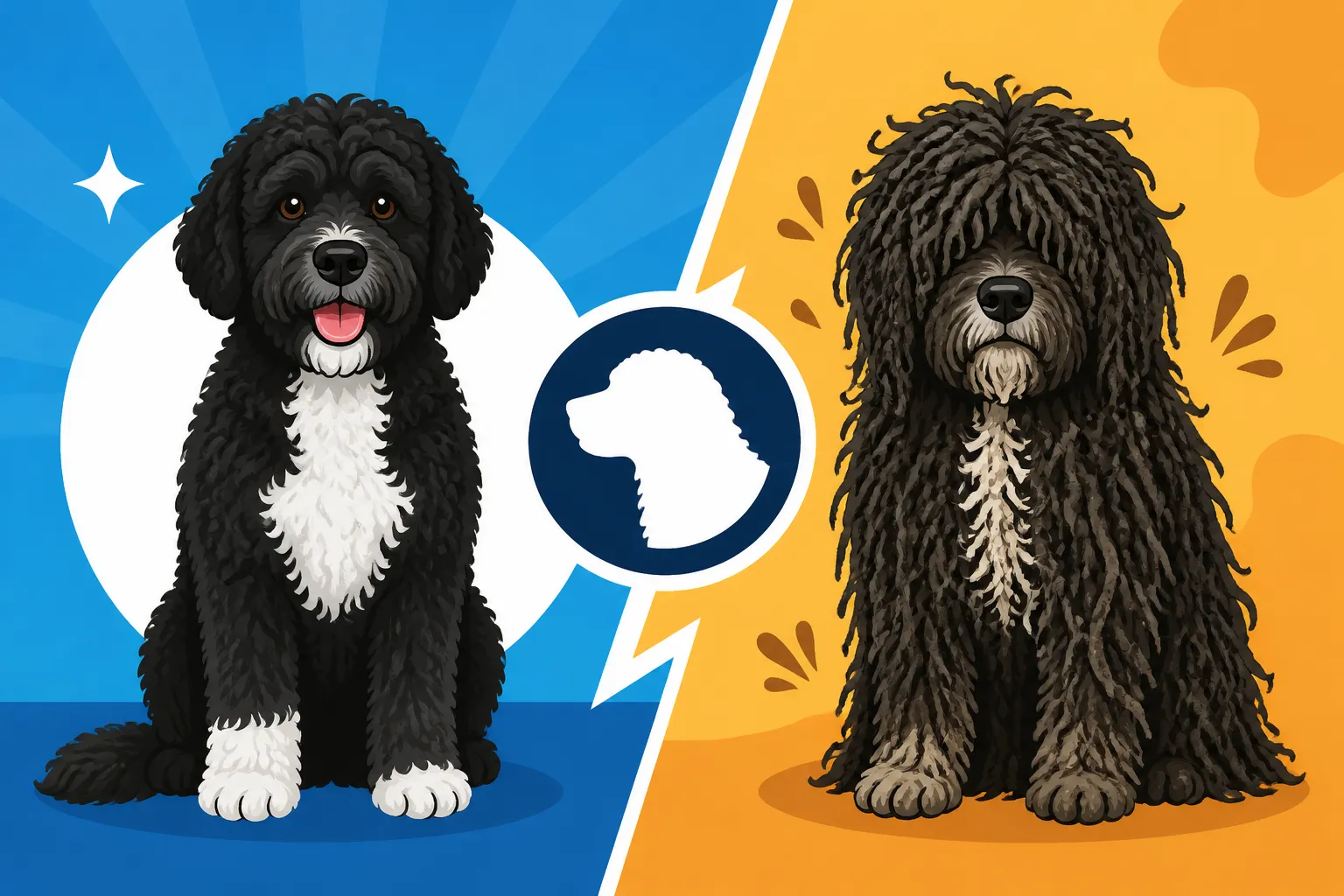
The curly coat is exactly what it sounds like: a dense, cylindrical curl that can range from loose waves to tight ringlets, often described as lambswool or corkscrews. Imagine a tight spring or a very dense wool sweater, and you're getting close. This coat tends to be quite thick and holds its shape well, which is part of its charm. When your Portuguese Water Dog has this type of coat, it's typically very soft to the touch, and it usually gives the dog a much fuller, more robust appearance. It’s also the coat type that many people envision when they think of a classic PWD.
The individual hairs themselves are strong and resilient, designed to protect the dog in cold water environments. However, this density and curl also mean that shed hairs don't easily fall out; instead, they get caught within the existing coat. This trapping of dead hair is the primary instigator of matting, especially when moisture is added to the equation.
The Wavy Coat: Texture and Characteristics
The wavy coat, while still dense, presents a softer, more flowing appearance than its curly counterpart. It's often likened to a shaggy, tousled look, with noticeable waves rather than tight curls. Think of it as having a slight sheen, often feeling a bit silkier or softer than the curly coat, though still possessing a woolly texture at its base. Sometimes it might even have a slight wispy quality to it. Many owners find this coat type to be incredibly beautiful, giving their PWD an almost windswept charm. How a Curly Coat Differs From a Wavy Coat can give you an even deeper dive into the visual differences.
While it might look less prone to matting due to its looser texture, don't be fooled. The wavy coat, precisely because it has more length and less tightly wound curls, can still be a magnet for mats. The longer, softer strands can intertwine quite readily, especially when encountering friction or moisture. It might not form the same tight, dense mats right against the skin as quickly as a curly coat, but the mats can spread out and become quite extensive if neglected.
The Science of Matting: Why PWD Coats Are Prone
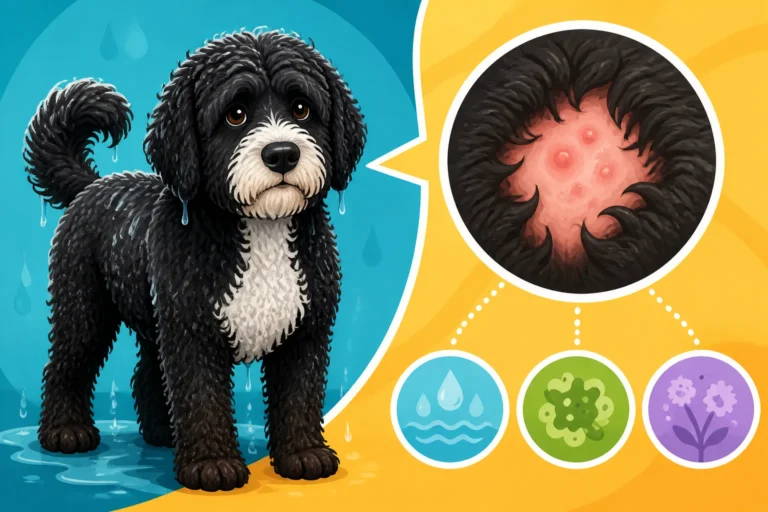
Matting isn't just about a messy look; it's a serious issue that can cause pain, skin problems, and even restrict your dog's movement. For Portuguese Water Dogs, their unique coat structure inherently sets them up for matting if a consistent grooming routine isn't in place. It’s not a flaw in the breed; it's simply a characteristic of their working coat that requires diligent care. Understanding how mats form is the first step in preventing them.
How Shed Hair and Live Hair Combine
The main culprit behind matting in PWDs is the fact that their "non-shedding" coat does shed, just not in the way a Labrador's coat does. Instead of releasing dead hairs to fall on your furniture, those shed hairs get trapped within the actively growing coat. Imagine trying to comb loose strands of hair out of a dense, curly wig – it’s a similar concept. These dead hairs, when not brushed out, become entangled with the live, healthy hair. Over time, and with movement, friction, and moisture, these tangles tighten into dense knots, forming mats. It's a continuous process that requires daily intervention. Whether a Portuguese Water Dog Sheds provides more detail on this often-misunderstood aspect of their coat.
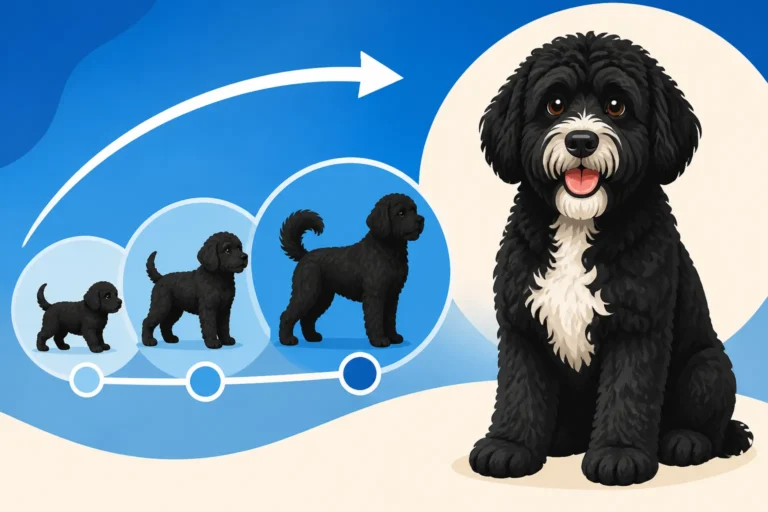
This is particularly true during their "blowing coat" phase, which often occurs around 8-18 months of age, where the puppy coat transitions to the adult coat. During this period, matting can become an almost overwhelming challenge for new owners. Why a Portuguese Water Dog Mats Worst During the Change highlights this tricky developmental stage.
Environmental Factors That Accelerate Matting
Beyond the natural shedding cycle, several environmental factors significantly speed up the matting process. Moisture is a huge one. After a swim, if your PWD isn't thoroughly dried and brushed, the wet hair shrinks as it dries, pulling shed hairs tighter into knots. This is why you absolutely cannot just let your Portuguese Water Dog air dry after a dip. Drying a Portuguese Water Dog After Every Swim is critical advice. Similarly, rubbing against collars, harnesses, or even just lying down on rough surfaces creates friction that can quickly turn loose tangles into solid mats. Think about the areas behind the ears, under the armpits, and around the harness — these are prime matting spots.
Mud, dirt, and burrs also become instantly embedded in the dense coat, creating a nightmare of tangles if not removed immediately. Even things like sticky treats or sap from trees can stick to the coat and quickly create a matted mess. These everyday occurrences make diligent post-adventure grooming absolutely essential.
Direct Comparison: Curly vs. Wavy Matting Tendencies
This is the question everyone asks! Which Portuguese Water Dog coat mats more? The simple answer is: they both mat. Neither coat type is "easier" in the sense that it requires less attention. However, the type of matting and how it manifests can differ, leading to different challenges for owners.
The Curly Coat's Matting Challenges
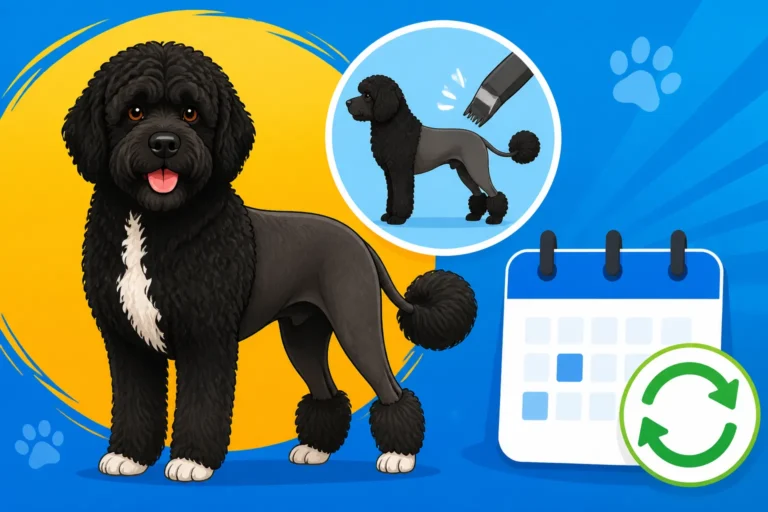
With a curly coat, mats tend to be tighter, denser, and often form closer to the skin. The individual curls act like Velcro, clinging to each other and to any shed hair that gets caught. Because the hair itself is so tightly coiled, these mats can quickly become rock-hard and pull on the skin, causing discomfort. It’s like trying to untangle a ball of yarn that’s been felted. These mats are often harder to detect initially, as the dense curls can obscure them until they become quite severe. You might feel a lump before you see it. The density also means that if you let a curly coat go, a small mat can quickly escalate into widespread felting across large sections of the body. This is why many owners opt for professional grooming every 6-8 weeks, alongside consistent home care.
| Characteristic | Curly Coat Matting | Wavy Coat Matting |
|---|---|---|
| Density | Very dense, tight curls | Dense, but with looser waves |
| Mat Texture | Tighter, harder, closer to skin, can felt quickly | More spread out, softer initially, can become extensive |
| Visibility | Often harder to see until severe, hidden by dense curls | Easier to spot tangles early, but mats can grow large |
| Formation Speed | Can form quickly and become dense rapidly | Tangles can form quickly, mats can spread over larger areas |
| Discomfort | More prone to pulling on skin, causing pain | Can also pull skin, but might initially be less localized |
| Grooming Effort | Requires thorough sectioning, root-to-tip brushing, careful dematting | Requires thorough brushing, attention to length, careful dematting |
The Wavy Coat's Matting Challenges
While the wavy coat might appear less dense, its longer, more flowing strands are still highly prone to tangling and matting. The mats in a wavy coat might initially feel softer and less dense than those in a curly coat, but they can quickly spread over a wider area. Because the hair is longer and has more "play," it can create extensive sheets of matting, particularly in areas of high friction. Think of how a long, fine piece of string can tangle around itself – the wavy coat acts similarly, just on a larger scale.
Many owners mistakenly believe the wavy coat is "easier" because it doesn't look as dense, but this can lead to complacency. A mat in a wavy coat can become just as painful and problematic as one in a curly coat, often requiring extensive dematting or even shaving if left too long. The wavy coat’s tendency to pick up debris, such as leaves and twigs, can also accelerate matting.
Surprising Truths About Both Coat Types
The surprising truth is that both coat types demand a significant amount of grooming attention. The difference is often in the strategy you employ. With a curly coat, you're fighting density and tight knots that form close to the skin. With a wavy coat, you're managing longer strands that can weave into larger, flatter mats. Ultimately, neither is a "wash-and-wear" coat. Both require dedicated time, the right tools, and a consistent routine to prevent discomfort and maintain coat health. It's less about which mats more and more about how each mats and the specific techniques required to keep them tangle-free. This commitment to grooming is one of the most important things to consider when bringing a Portuguese Water Dog into your home.
Proactive Grooming: Preventing Mats Before They Start
Prevention truly is the name of the game when it comes to Portuguese Water Dog coats. Waiting until mats have formed is a painful and time-consuming endeavor for both you and your dog. Establishing a regular grooming routine from puppyhood will not only save you headaches but will also help your PWD learn to tolerate and even enjoy the process.
The Right Tools for Each Coat Type
Having the correct grooming tools is non-negotiable. For both curly and wavy coats, you'll need a high-quality slicker brush, a sturdy metal comb (preferably a greyhound comb with both wide and fine teeth), and a good pair of blunt-tipped scissors for emergencies (like cutting out a very small, stubborn mat, but only if you know what you're doing and can do it safely!). For a curly coat, a pin brush might also be helpful to work through the dense curls, followed by the slicker. For wavy coats, the slicker and comb are your primary weapons. Which Brush a Portuguese Water Dog Needs can offer more specific recommendations. Many owners find quality tools on Amazon or Chewy, making them accessible.
You also need to invest in a good dog-specific shampoo and conditioner to keep the coat healthy and manageable. Conditioners help to smooth the hair shaft, making it less prone to tangling. A force dryer is also an invaluable tool, especially if your dog spends time in the water, as it quickly and thoroughly dries the dense coat, preventing wet mats from forming.
The Importance of Consistent Brushing
Consistent, thorough brushing is the cornerstone of mat prevention. For most Portuguese Water Dogs, this means brushing at least every other day, and often daily, particularly if they are active or have a longer coat. During the coat change from puppy to adult, daily brushing is non-negotiable. You can't just brush the top layer; you must brush all the way down to the skin. This means working in sections, starting from the extremities and moving towards the body, using a technique called "line brushing."
To do this, use your comb or slicker brush to create a part in the coat, then brush downwards from the part, working through small sections at a time. This ensures you're getting through all the layers and removing any trapped dead hair before it can form a mat. How Often a Portuguese Water Dog Needs Brushing is a popular question for a reason – it’s frequent! Make it a positive experience with treats and praise from an early age.
Post-Swim Care to Avert Matting
Given their love for water, post-swim care is absolutely crucial for a Portuguese Water Dog. Simply letting your dog shake off and air dry is an open invitation for mats to form, especially in the dense underlayers. After every swim, whether it's in the ocean, a lake, or a pool, your PWD needs to be thoroughly rinsed with clean water to remove any salt, chlorine, or debris. This helps prevent skin irritation and further tangling.
Once rinsed, towel-dry your dog thoroughly. Then, use a force dryer to completely dry the coat, section by section, while brushing simultaneously. This combination of heat/air and brushing helps to separate the hairs and prevent them from clinging together as they dry. Pay extra attention to the areas prone to matting, like behind the ears, armpits, and groin. Skipping this step, even once, can lead to a significant matting problem that's much harder to fix later. Whether a Portuguese Water Dog Mats After Swimming is a common concern that is easily addressed with this rigorous routine.
Dealing with Mats: When Prevention Isn't Enough
Despite your best efforts, sometimes a mat or two will sneak in. It happens to the best of us! The key is to address them immediately, before they grow larger and become impossible to manage. Ignoring a small mat is the fastest way to create a large, painful problem for your dog.
Gently Dematting Small Knots
For small, loose tangles, you can attempt to gently work them out. First, spray the mat with a conditioning spray or a detangling solution. This helps to lubricate the hair and make it easier to separate. Then, using your fingers, try to gently pull the mat apart into smaller sections. Once it’s broken down a bit, use the wide-toothed side of your metal comb, starting from the outside edge of the mat and working your way in, a few strands at a time. Hold the base of the hair near the skin with your other hand to prevent pulling on your dog's skin, which can be very uncomfortable.
Never try to rip or force a comb through a mat. This will only cause pain and likely make the mat worse by tightening it further. Patience is key. If the mat is stubborn, you can use a mat breaker tool, but use it with extreme caution to avoid cutting your dog's skin. If the mat is small and easily accessible, and you're confident, you can carefully snip it out with blunt-tipped scissors, cutting away from the skin, not towards it. When a Mat Should Be Cut Out of a Portuguese Water Dog offers guidance on this delicate task.
When to Seek Professional Help
There comes a point when a mat is simply too large, too tight, or too close to the skin for you to safely remove it at home. If you're struggling with a mat that's causing your dog pain, or if you're not confident in your ability to remove it without injuring your dog, it's time to call a professional groomer. Groomers have specialized tools and techniques, including powerful clippers and various blade lengths, to safely remove matted coats.
In severe cases, a professional groomer may recommend shaving down your entire dog. While this can be a shock visually, it's often the most humane and safest option for a heavily matted dog. A shaved-down coat allows the skin to breathe, reveals any underlying skin issues caused by the matting, and provides a fresh start for regrowth and a proper grooming routine. Never feel guilty about taking this step; your dog's comfort and health are paramount. Many groomers offer advice on preventing future matting too, so don't be afraid to ask for their expertise.
Impact of Lifestyle on Matting
Beyond the inherent characteristics of the coat types and your grooming routine, your Portuguese Water Dog's daily life and environment play a significant role in how prone they are to matting. A highly active dog, for instance, will generally require more frequent and thorough grooming than a less active one.
Active Lifestyles and Their Grooming Demands
Portuguese Water Dogs are, by nature, active and athletic animals. They thrive on exercise and often love engaging in water sports, hiking, and exploring. This active lifestyle, while wonderful for their physical and mental health, comes with increased grooming demands. A dog that regularly swims, plays in muddy fields, or romps through brush will pick up more debris and experience more friction on their coat, leading to more frequent and stubborn mats. What Water Sports Cost a Portuguese Water Dog Owner details the activities that bring so much joy but also require extra care.
For a PWD involved in activities like dock diving or water trials, or even just daily swims at the local lake, the post-swim rinse and thorough drying become an almost daily ritual. Imagine trying to untangle a coat full of sand, twigs, and damp, matted hair every day – it’s a commitment. Even just a vigorous run in the park can create tangles from the friction of their legs rubbing against their body. Owners of active Portuguese Water Dogs need to integrate grooming as a regular, non-negotiable part of their dog's routine, just like feeding or walking.
Climate, Diet, and Coat Health
The environment your Portuguese Water Dog lives in, as well as their diet, can subtly influence their coat health and susceptibility to matting. In humid climates, coats can sometimes become softer and more prone to tangling. Conversely, very dry environments can lead to static electricity, which can also contribute to tangles. Regular bathing with appropriate moisturizing shampoos and conditioners can help mitigate these environmental effects, as can the use of anti-static sprays if needed.
Diet also plays a crucial, though often overlooked, role in coat health. A high-quality diet, rich in essential fatty acids (like Omega-3 and Omega-6), contributes to a healthy, strong coat that is less prone to breakage and, therefore, less prone to matting. Dogs on a poor diet might have a duller, coarser, or more brittle coat, which can tangle more easily. Supplements like fish oil can also be beneficial for coat health, making the hair stronger and silkier. Many high-quality dog food brands, available on platforms like Chewy or Ollie, prioritize these nutrients for overall canine well-being, including coat health. A well-nourished coat is easier to brush and less likely to become a matted mess. Ensuring your dog drinks plenty of water is also vital for skin and coat hydration, especially during warmer months or after intense exercise.
Disclaimer
This article is for general informational purposes only and does not constitute professional advice. Laws, prices and regulations vary by location and change over time. Consult a qualified professional for guidance on your specific situation.